 Clearwater Roofing
 Belleair Bluffs Sits in a Tough Spot for Siding
Belleair Bluffs earns its name honestly — it's one of the higher, more exposed residential pockets along the Intracoastal Waterway in Pinellas County, with homes catching harbor breezes, open sun, and salt-laden air with less tree buffer than you'd find further inland. That elevation and water proximity are part of what makes the area desirable, but they also mean exterior materials here take a harder hit than the same materials would a few miles east.
Add in Clearwater's broader climate profile — hurricane-force wind events, wind-driven rain that gets forced sideways into wall assemblies, and near year-round UV intensity — and you have a siding environment that punishes anything not built and installed for it. Board and batten siding, with its vertical boards and raised battens, has more seams and more edges exposed to that weather than a flat lap profile. Get the material or the installation wrong, and those seams are exactly where moisture finds its way in.
Why Homeowners Choose Board & Batten in This Neighborhood
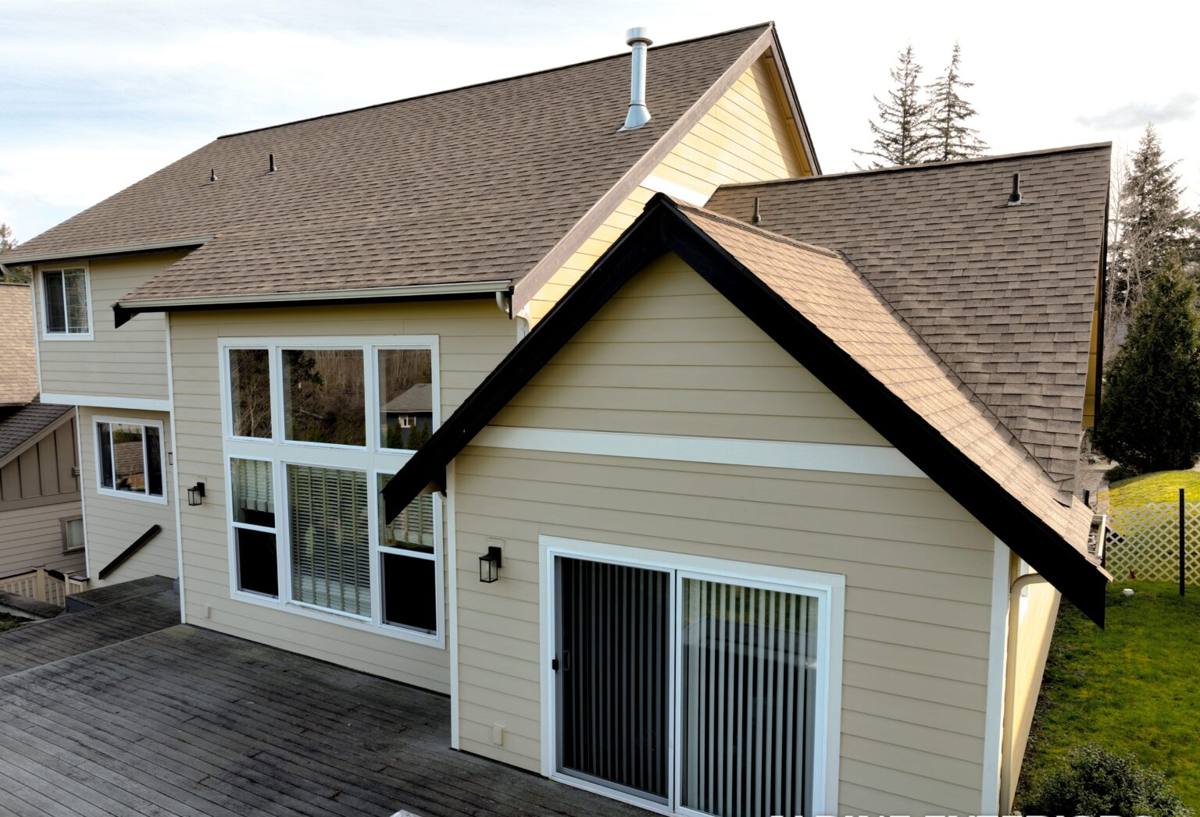
Board and batten has a clean, vertical, slightly coastal-farmhouse look that fits well with the mix of architectural styles around Belleair Bluffs — from older Florida cottages to newer builds. It's also a practical choice for accent walls, gables, and dormers where a vertical line breaks up a roofline or adds visual interest without a full re-side.
Where It Works Best
- Full exterior re-sides on homes wanting a coastal or modern-farmhouse look
- Gable ends and dormers as an accent against lap siding
- Front entry features, porches, and column wraps
- Additions or renovations where a distinct look separates old from new construction
Why We Only Install It in James Hardie Fiber Cement
Board and batten can be built out of several materials — natural wood, engineered wood, vinyl panel systems, or fiber cement. We've made a deliberate decision to install James Hardie fiber cement exclusively, and in a climate like Belleair Bluffs', the reasoning holds up.
The Trade-Offs of the Alternatives
Natural wood board and batten looks great on day one, but wood is organic material in a humid, wet climate — it absorbs moisture at the joints, and once it does, rot and insect damage follow. Keeping it sound means a real maintenance commitment: recaulking, repainting, and watching the battens for the first signs of swelling or cracking, indefinitely.
Engineered wood products (wood strand or wood fiber composites) close some of those gaps with factory treatments, but they're still wood-based at the core, which means they're more sensitive to sustained moisture exposure at cut edges and fastener penetrations than a cement-based product. In a market with this much wind-driven rain, that sensitivity matters.
Vinyl board and batten panels are low-maintenance and budget-friendly, but vinyl is a petroleum-based product that softens in heat and can become brittle with UV exposure over years, and it doesn't hold up well to wind-driven debris the way a rigid fiber cement board does. It also can't be finished with the depth of factory color that fiber cement can, and repairs tend to be visible rather than seamless.
James Hardie fiber cement is non-combustible, dimensionally stable in humidity swings, and engineered specifically for climates like this one through its HZ5 product line — formulated for high-humidity, high-moisture regions. Paired with a factory-applied ColorPlus finish, it holds color and resists the fading that a field-painted product can't avoid in this much sun. That combination is why it's the only material we put on a home.
Material Comparison for Board & Batten Applications
| Material | Moisture & Rot Resistance | UV/Fade Resistance | Wind & Impact Durability | Typical Maintenance |
|---|---|---|---|---|
| James Hardie Fiber Cement (HZ5) | Excellent — cement-based, engineered for humid climates | Excellent — factory ColorPlus finish | Very strong, rigid board | Occasional wash, repaint only if not ColorPlus |
| Engineered Wood | Moderate — treated, but wood-based core | Moderate — field finish fades over time | Good, but edge sensitivity to moisture | Regular caulk and paint upkeep |
| Natural Wood/Cedar | Poor to moderate without diligent upkeep | Poor — untreated wood grays and checks | Fair — prone to splitting, insect damage | High — ongoing sealing, painting, inspection |
| Vinyl Panel Systems | Good — won't rot, but seams can trap water | Fair — can fade and become brittle in UV | Fair — can crack or blow off in high wind | Low, but repairs are visible |
What a Correct Board & Batten Installation Actually Involves
Board and batten looks simple from the street, but it's less forgiving of shortcuts than standard lap siding because of how many vertical seams and fastener lines are exposed to weather. A correct install isn't just nailing boards up — it's a moisture-management system.
The Details That Matter
- Proper weather-resistive barrier and rainscreen or furring strip application behind the boards so water that does get past the surface can drain and dry, rather than sitting against the wall sheathing
- Correct board spacing and batten placement over seams, sized and fastened per manufacturer engineering
- Fastener selection and placement that meets Hardie's published requirements for wind zone and substrate — this is not optional in a hurricane-exposed area
- Flashing and sealant detailing at every penetration: windows, doors, hose bibs, light fixtures, and anywhere trim meets siding
- Proper clearance at grade and at roof-to-wall intersections so boards don't wick moisture from standing water or trapped debris
Skipping any one of these doesn't show up on install day. It shows up two or three storm seasons later, as staining, soft spots, or boards that have pulled away at the fasteners — which is exactly the kind of failure a homeowner in this area is trying to avoid by choosing fiber cement in the first place.
Our Process for Belleair Bluffs Projects
Because we work this stretch of Pinellas County regularly, we already understand the wind exposure and salt air conditions specific to waterfront-adjacent properties here, which shapes how we approach every step.
How a Project Runs
- On-site assessment — we look at your home's current siding condition, sheathing and moisture barrier status, and exposure (wind direction, sun exposure, proximity to water) before recommending a scope
- Product and color selection — choosing the right Hardie board profile, batten spacing, and ColorPlus color for your home's style and HOA or neighborhood expectations
- Substrate prep — addressing any existing rot, damaged sheathing, or moisture barrier issues before a single new board goes up, since covering a problem only delays it
- Installation to manufacturer spec — fastening, flashing, and spacing done to Hardie's engineering requirements for our wind zone, not a generic install
- Final walkthrough — checking every seam, penetration, and trim line before we call the job finished
What Board & Batten Siding Typically Costs
Board and batten in fiber cement generally runs a bit higher than standard lap siding per square foot, mainly due to the additional battens, trim, and labor time for precise spacing and fastening. Exact pricing depends on several factors specific to your project.
Factors That Drive Cost
| Factor | Why It Matters |
|---|---|
| Scope (accent wall vs. full re-side) | Full re-sides involve more tear-off, prep, and material volume |
| Substrate condition | Rot repair or sheathing replacement adds labor before installation begins |
| Board and batten width/spacing | Custom spacing or wider reveals change material takeoff and labor time |
| Trim and penetration complexity | Homes with more windows, vents, and architectural detail take more flashing and cutting |
| Height and access | Multi-story sections or difficult access increase equipment and labor needs |
We provide a written, itemized estimate after the on-site assessment so you know exactly what you're paying for and why — not a rough number pulled from a square footage formula.
Signs Your Current Siding May Already Be Failing
Board and batten problems often start small and hide in plain sight, especially at seams and low corners where water collects.
What to Look For
- Soft or spongy spots when you press on boards near the bottom edge or at seams
- Visible gaps opening up between boards and battens
- Peeling or bubbling paint, especially concentrated near joints
- Staining or streaking that suggests water is tracking behind the siding rather than off of it
- Fasteners backing out or visible nail pops along batten lines
- Fading or chalking that's noticeably worse on the sun-facing or water-facing side of the home
Why Hiring a Crew That Already Works This Area Matters
Wind zone requirements, moisture management priorities, and even color choices that hold up against this much sun aren't things you want a crew learning on your project. A contractor who already installs siding regularly along the Clearwater Harbor and Intracoastal corridor has already seen how the exposure here treats different materials and details, and builds accordingly — rather than applying a generic install method and hoping it holds.
That familiarity also means fewer surprises during the estimate and installation process: we know what wind-rated fastening looks like for this area, what flashing details actually get tested by Pinellas County storms, and how to spec a project so it performs for decades, not just until the next major weather event.
If you're weighing board and batten siding for a home in Belleair Bluffs, we're glad to take a look and walk you through what your specific property needs. Fill out the form below for a free, no-pressure estimate — there's no obligation, just a straight answer on scope and cost.