 Clearwater Roofing
 Why Roof Replacement Pricing Varies So Much
Ask five homeowners in Pinellas County what they paid for a new roof and you'll get five different numbers, even for houses that look nearly identical from the street. That's not because contractors are making up prices as they go. Roof replacement cost is the sum of several independent variables — material, roof size and shape, the condition of the deck underneath, code requirements, and the labor a crew needs to do the job correctly. Change any one of those and the total shifts. Our goal on this page isn't to hand you a single number, because a single number would be misleading. It's to walk through what actually moves the price so you can look at a written estimate and understand exactly what you're paying for.
Clearwater sits on a peninsula with a specific set of stresses that don't apply everywhere in Florida, let alone the country. Hurricane-force winds are a real design load here, not a theoretical one. Year-round UV exposure ages roofing materials faster than in northern climates. Wind-driven rain finds every gap in flashing and underlayment during a strong storm. And salt air off the Gulf accelerates corrosion on fasteners, vents, and metal components. Those four factors show up throughout this guide because they genuinely change what a roof needs to hold up here.
Material Choice: The Biggest Single Line Item
Material is usually the largest cost driver on any roof replacement, and it's also the decision homeowners have the most control over. Below is a general comparison of the main options installed in this market. These are relative cost tiers, not quotes — actual pricing depends on your roof's size, pitch, and access.
| Material | Relative Cost | Typical Lifespan | Notes for This Climate |
|---|---|---|---|
| Architectural asphalt shingle | Lower | 15-25 years | Needs a high wind rating; look for products rated for coastal exposure |
| 3-tab asphalt shingle | Lowest | 10-15 years | Lower wind resistance; we rarely recommend it this close to the Gulf |
| Metal (standing seam or panel) | Higher | 30-50 years | Excellent wind and UV performance; fastener quality matters near salt air |
| Tile (concrete or clay) | Higher | 30-50+ years | Heavy — requires structural check; underlayment quality drives real-world lifespan |
| Flat/low-slope membrane (TPO, modified bitumen) | Varies | 15-25 years | Common on additions and older Florida ranch homes with low-pitch sections |
Notice that lifespan and upfront cost don't move together in a straight line. A metal roof costs more today but can outlast two or three shingle roofs over the life of the house. Whether that trade-off makes sense depends on how long you plan to own the home, your budget right now, and your insurance situation — which we'll get to below.
Why We're Selective About Certain Low-Cost Options
We'll install what a homeowner chooses within a given material category, but we're upfront when a product isn't a good match for this specific location. Basic 3-tab shingles, for example, generally carry lower wind ratings than architectural shingles at a similar price tier once you factor in labor. In a county that sees tropical storm and hurricane conditions on a recurring basis, that's a real trade-off, not a hypothetical one — it affects how the roof performs in the exact conditions it will actually face. We'd rather explain that trade-off plainly than let a homeowner find out about it during the next named storm.
Roof Size, Pitch, and Complexity
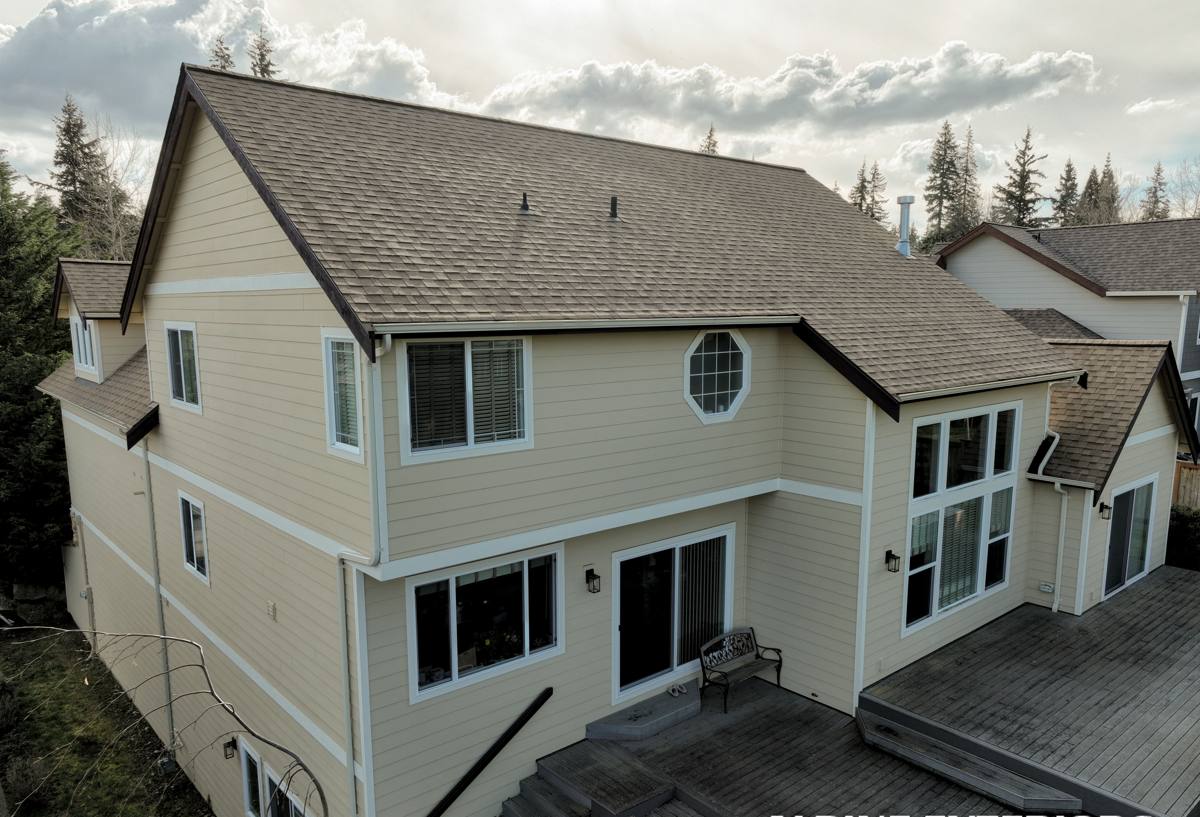
Material sets the per-square price range; the roof itself determines how many squares you're buying and how hard they are to install. A "square" in roofing is 100 square feet of coverage. Two houses with the same footprint can have very different roof costs if one has a simple gable roof and the other has multiple hips, valleys, dormers, and roof-to-wall transitions.
- Steeper pitches require more safety equipment and slow down crews, which adds labor cost.
- Valleys and hips multiply the amount of flashing and cutting work, both of which take skilled labor time.
- Dormers, skylights, and chimneys each need their own flashing detail — more penetrations, more places water can find a weak point if it's not done right.
- Multiple roof levels (like a single-story section meeting a two-story section) add staging and access complexity.
- Steep or limited-access lots can require additional equipment for material staging and debris removal.
A simple ranch-style roof with a single pitch and no penetrations is close to the most economical shape to cover, dollar for dollar. Complexity adds up fast, and it's worth understanding before you compare a bid on your house to a number a neighbor mentioned for theirs.
What's Under the Shingles Matters as Much as What's On Top
The visible roofing material gets all the attention, but the layers underneath do most of the real work of keeping water out, and their condition directly affects cost. When we tear off an old roof, we're checking the deck (usually plywood or oriented strand board) for rot, delamination, and soft spots — often from years of small leaks that never showed up as a stain on the ceiling. Deck repair or replacement is priced separately from the roofing material itself because it isn't something you can accurately estimate until the old roof is off.
Underlayment is the other piece that matters more here than in drier, calmer climates. In an area with wind-driven rain, underlayment is the backup system that keeps water out if wind ever forces moisture up under the shingles or tiles. Self-adhering, high-wind-rated underlayment costs more than basic felt, but it's the layer doing the real work during a sideways rainstorm, and we consider it a baseline expectation rather than an upgrade in this market.
Local Building Code and Permitting
Pinellas County and the City of Clearwater both enforce the Florida Building Code, which includes specific wind-uplift and product-approval requirements for roofing in high-velocity hurricane and windborne-debris regions. This isn't optional paperwork — it directly affects what materials and installation methods are allowed on your roof, and it's factored into an honest estimate from the start.
- Permits are required for roof replacement and are pulled by the contractor, not the homeowner, on most jobs.
- Materials must carry the correct product approval for wind resistance in this zone.
- Inspections happen at defined stages of the job — typically dry-in and final.
- Secondary water barrier requirements may apply depending on the scope of work and current code cycle.
Skipping or shortcutting permitting is a red flag, not a discount. A roof installed without proper permits and inspections can create real problems at resale and, more importantly, may not actually perform the way it's supposed to when a storm hits.
Tear-Off, Disposal, and Layers
If your current roof already has two layers of shingles on it (a common situation on older homes that were re-roofed over an existing layer years ago), a full tear-off is required before a new roof goes on — code doesn't allow a third layer. Tear-off and disposal cost scales with the number of layers coming off and the total roof area. It's a straightforward, quantifiable part of the estimate, but it's one homeowners sometimes forget to budget for when they're mentally pricing "just the new roof."
Ventilation and Flashing Details
Attic ventilation and flashing work are smaller line items individually, but they matter enormously to how long the roof actually lasts, and they're often where cost differences between bids come from. Proper ventilation reduces attic heat buildup, which matters under Florida's intense, near-constant UV exposure — a hot, poorly ventilated attic can shorten shingle life regardless of the product's rated lifespan. Flashing around chimneys, walls, skylights, and valleys is where the majority of roof leaks actually originate, not in the open field of shingles or tiles. Corrosion-resistant flashing and fasteners are worth the modest added cost this close to the Gulf, where salt air attacks lower-grade metal over time.
Getting an Estimate You Can Actually Compare
The best way to evaluate roofing quotes is to make sure they're pricing the same scope of work. A low bid that skips proper underlayment, uses minimum-code fasteners, or doesn't account for potential deck repair isn't actually cheaper — it's a different, lesser job wearing a lower price tag.
| Ask about | Why it matters |
|---|---|
| Underlayment type and wind rating | Determines backup protection during wind-driven rain |
| Deck repair — included or allowance? | Avoids surprise change orders once tear-off starts |
| Fastener and flashing material | Affects corrosion resistance in salt-air exposure |
| Permit and inspection handling | Confirms code compliance and clean resale history |
| Warranty structure — material vs. workmanship | Clarifies who's responsible if something fails later |
A written estimate should spell out material, underlayment, expected labor scope, and how deck repair (if needed) will be handled and priced. If a quote is vague on any of those points, ask before you sign — not after tear-off has already started.
Insurance and Timing Considerations
Roof age and material can affect homeowners insurance premiums and, in some cases, eligibility for coverage in Florida's current insurance market. Some insurers offer premium credits for higher wind-rated materials or newer roofs. That's worth factoring into the cost conversation as a long-term offset, not just an upfront expense — though the specifics of any credit or requirement should always be confirmed directly with your insurance carrier, since policies and underwriting standards vary and change.
Every roof and every budget is different, and the only way to get real numbers instead of ranges is to have someone look at your specific roof. We're happy to provide a free, no-pressure estimate — we'll walk the roof, explain what we find, and give you a clear, itemized quote with no obligation.