 Clearwater Roofing
 Roofing in Harbor Oaks: Built for the Climate You Actually Live In
Harbor Oaks homeowners deal with a specific combination of stresses that inland Florida properties simply don't face to the same degree. You're close enough to the water for salt-laden air to accelerate corrosion on fasteners, flashing, and metal components. You get the full brunt of Gulf Coast humidity and intense, near year-round UV exposure that breaks down roofing materials faster than manufacturers' generic warranty language tends to admit. And when a tropical system or hurricane tracks through Pinellas County, wind-driven rain doesn't just fall on a roof — it gets pushed sideways and upward into every gap, seam, and vent that isn't properly sealed. A roof that would hold up fine in a drier, calmer climate can fail here in a fraction of the time.
That's the baseline we design around for every roofing job in Harbor Oaks: not just "will this roof shed water," but "will this roof hold up to sustained coastal humidity, UV breakdown, and a direct hit from high wind." Those are different engineering questions, and treating them as the same is how homeowners end up with premature leaks, lifted shingles, or a roof that technically passed inspection but still fails in the first real storm.
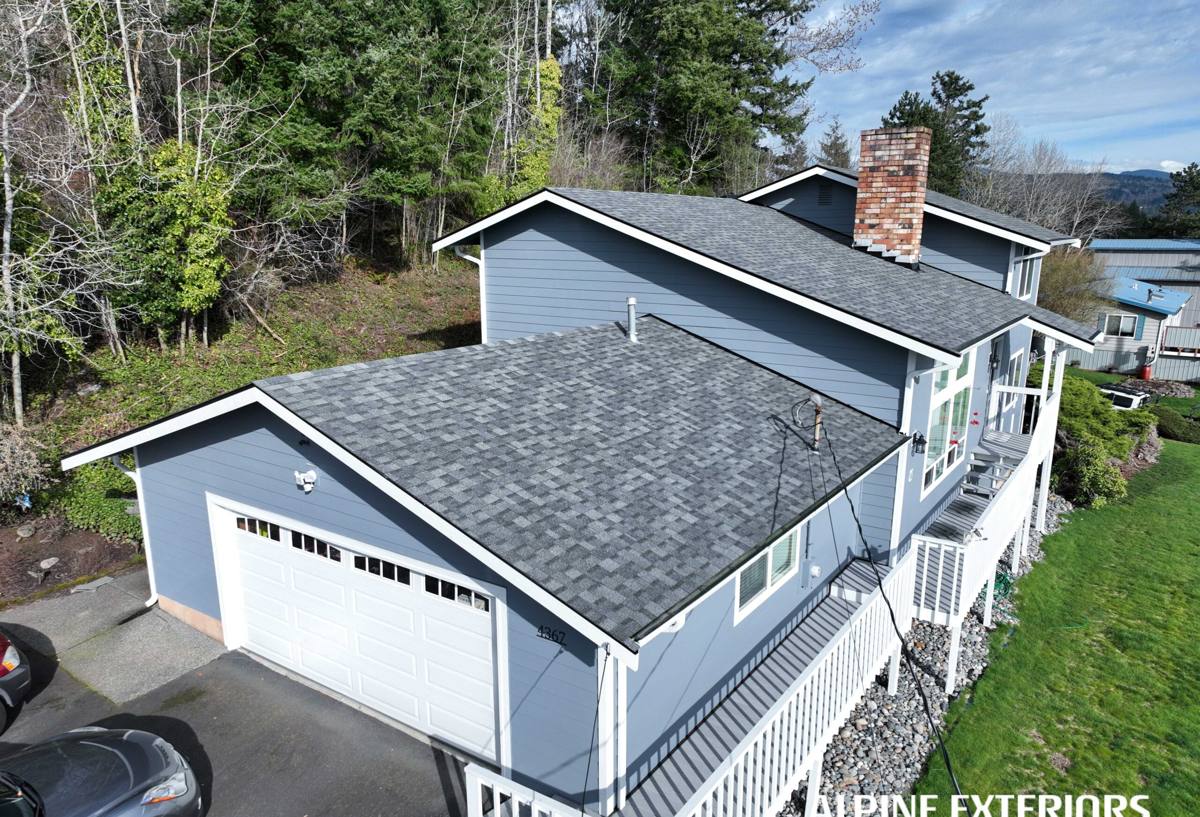
What We See on Harbor Oaks Roofs
Every neighborhood has its own roofing profile based on when most of the homes were built and what materials were standard at the time. In established Clearwater-area neighborhoods like Harbor Oaks, we typically find a mix of aging asphalt shingle roofs, some older tile roofs, and a growing number of metal roof replacements as homeowners upgrade for wind performance and longevity. Mature tree canopy in older neighborhoods also means more debris load, more granule loss from branches scraping shingles in wind, and more organic buildup in valleys and gutters — all of which shorten a roof's usable life if left unaddressed.
We also see a lot of roofs that were installed correctly for the code standards of their era but haven't been touched since, even though Florida's wind and moisture requirements have gotten meaningfully stricter. A roof that's 15-20 years old in this climate isn't just cosmetically dated — the underlayment, flashing, and fastening pattern underneath may no longer reflect what a coastal Pinellas County home actually needs.
Signs a Harbor Oaks Roof Needs Attention
- Granule buildup in gutters or at downspout outlets (a sign of accelerating shingle wear)
- Curling, cupping, or cracked shingle edges, especially on south- and west-facing slopes
- Streaking or dark staining, which can indicate algae growth from persistent humidity
- Soft spots or slight sagging when walked or viewed from a ladder
- Rust staining around vent boots, flashing, or metal fasteners
- Daylight visible through the attic decking, or musty odor in the attic
- Missing or lifted shingles/tiles after any wind event, even a minor one
Roofing Materials: What Actually Performs Here
There's no single "best" roofing material for every home — it depends on your roof's slope, your budget, your home's structure, and how long you plan to stay in the house. What we won't do is sell you a material that looks fine on paper but has known weak points in a high-wind, high-UV, salt-air environment without being upfront about the trade-off. Here's how the common options actually compare for a Harbor Oaks home.
| Material | Typical Lifespan | Wind Performance | Maintenance Considerations |
|---|---|---|---|
| Architectural asphalt shingle | 20-30 years | Good, when rated and installed for high-wind zones | Periodic inspection for granule loss and sealant strip integrity |
| Standing seam metal | 40-50+ years | Excellent when properly fastened | Low; watch fastener and sealant points at penetrations |
| Concrete or clay tile | 40-50+ years | Very good, but individual tiles can crack or dislodge in impact | Underlayment beneath tile is the real lifespan driver, not the tile itself |
| 3-tab asphalt shingle | 15-20 years | Lower wind rating than architectural shingles | More prone to early lifting; we generally steer homeowners toward architectural instead |
Where tile is involved, we're candid with homeowners that the tile on top is often not the limiting factor — the underlayment system underneath is what actually determines whether the roof stays watertight for its full lifespan. A beautiful tile roof with degraded underlayment will leak regardless of how good the tile itself looks.
Wind Mitigation and Why It Matters for Insurance
Florida requires wind mitigation inspections that document specific construction features — roof deck attachment, roof-to-wall connections, secondary water barrier, opening protection, and roof shape — because insurers use those features to calculate your windstorm premium. When we replace a roof, we build it to current code and document the features that qualify for wind mitigation credits: properly nailed or clipped roof-to-wall connections, a sealed or taped secondary water barrier, and correct deck attachment. Getting these details right isn't just about surviving the next storm; it directly affects what you pay for insurance every year afterward. We recommend homeowners get an updated wind mitigation inspection any time a roof is replaced, since the old form on file no longer reflects the new roof's actual construction.
Our Roofing Process
We keep the process straightforward and don't cut corners on the parts that don't show once the new roof is on.
- Inspection and assessment — we check the roof deck, existing flashing, ventilation, and any signs of hidden moisture damage before quoting anything.
- Tear-off — complete removal of old roofing material down to the deck, so we can actually see what condition the substrate is in rather than layering over problems.
- Deck repair — any soft, rotted, or delaminated decking gets replaced, not patched over.
- Underlayment and water barrier — installed per current Florida code requirements for wind and moisture protection, which matters more in coastal Pinellas County than almost anywhere else in the state.
- Flashing and penetrations — all vent boots, valleys, and wall flashing are replaced or resealed, since these are the most common leak points on any roof.
- Material installation — shingles, tile, or metal installed to the fastening pattern required for our wind zone.
- Final inspection and cleanup — including a magnetic sweep for stray nails and full site cleanup.
Repair vs. Replacement: How We Help You Decide
Not every roofing problem in Harbor Oaks means a full replacement. A localized leak from a single failed flashing point or a handful of storm-damaged shingles can often be repaired cleanly, especially on a roof that's otherwise in good shape and not close to the end of its expected life. We'll always tell you honestly when a repair makes more sense than a replacement — a roof with years of life left doesn't need to be torn off just because one area failed.
That said, once a roof is past roughly 15-18 years old in this climate, repeated repairs start to become a poor use of money compared to replacement, especially if the underlayment has degraded broadly rather than in one spot. We'll walk you through the actual condition we find, not just quote a number, so the decision is yours to make with real information.
Roof Maintenance Checklist for Harbor Oaks Homeowners
- Have gutters and downspouts cleared at least twice a year, more often under heavy tree canopy
- Trim back tree limbs that overhang or brush against the roofline
- Schedule a professional inspection after any named storm, even without visible damage
- Check attic ventilation annually — poor airflow accelerates deck and shingle deterioration in Florida heat
- Look at flashing around chimneys, skylights, and vent stacks once a year for cracking or rust
- Keep an eye on caulking and sealant at roof penetrations, which breaks down faster under intense UV
- Document roof condition with photos periodically for insurance purposes
Beyond the Roof: Siding, Windows, and Decks
The same coastal conditions that wear down a roof — salt air, UV, wind-driven rain — work on the rest of a home's exterior at the same time. It's common for us to be called out for a roof inspection in Harbor Oaks and find siding that's absorbed moisture at the seams, window seals that have failed and are letting humidity into the frame, or a deck where fasteners have started to corrode. Because we handle siding, roofing, windows, and decks as one crew rather than subcontracting each trade separately, we can look at your home's exterior as a connected system instead of four unrelated projects. A leak that seems roof-related sometimes traces back to siding or window flashing, and vice versa — having one team responsible for diagnosing the whole envelope avoids the finger-pointing that happens when separate specialty contractors each blame the other's work.
Why a Local Crew Matters in Harbor Oaks
Roofing code requirements, permitting processes, and wind zone standards are set at the county and municipal level, and Pinellas County's requirements reflect its coastal exposure. A crew that works across this specific area regularly knows the local permitting process, understands what inspectors here are actually checking for, and isn't learning wind mitigation documentation on your project for the first time. Local presence also matters after a storm — when multiple homes need attention at once, a contractor based in the area can respond faster than one dispatching crews from across the state. We treat every Harbor Oaks roof as a system that has to survive real Gulf Coast weather, not just pass a one-time inspection.
If you're dealing with a specific problem — a leak, storm damage, or a roof that's simply reaching the end of its service life — or you just want an honest read on where your roof currently stands, we're happy to take a look. Use the form below to request a free, no-pressure estimate, and we'll give you a straight assessment of what your roof actually needs.