 Clearwater Roofing
 Board & Batten Siding on a Barrier Island: What's Different
Indian Rocks Beach sits on a narrow strip of land between the Gulf of Mexico and the Intracoastal Waterway, and that geography changes what "good siding" means. Homes here take on salt-laden air from two directions, sit exposed to wind with almost nothing to break it, and bake under Gulf Coast sun for most of the year. Board and batten siding — with its bold vertical lines, wide flat boards, and narrow battens covering the seams — is a popular look on this stretch of Pinellas County because it reads as coastal and clean without looking generic. But the same design that makes it attractive also makes material choice and installation quality more important than they'd be on a typical inland street.
We install board and batten in Indian Rocks Beach regularly, and almost every job starts with the same conversation: what's on the house now, why it's failing (if it is), and what needs to change so the next installation actually holds up to this specific environment rather than just looking good on install day.
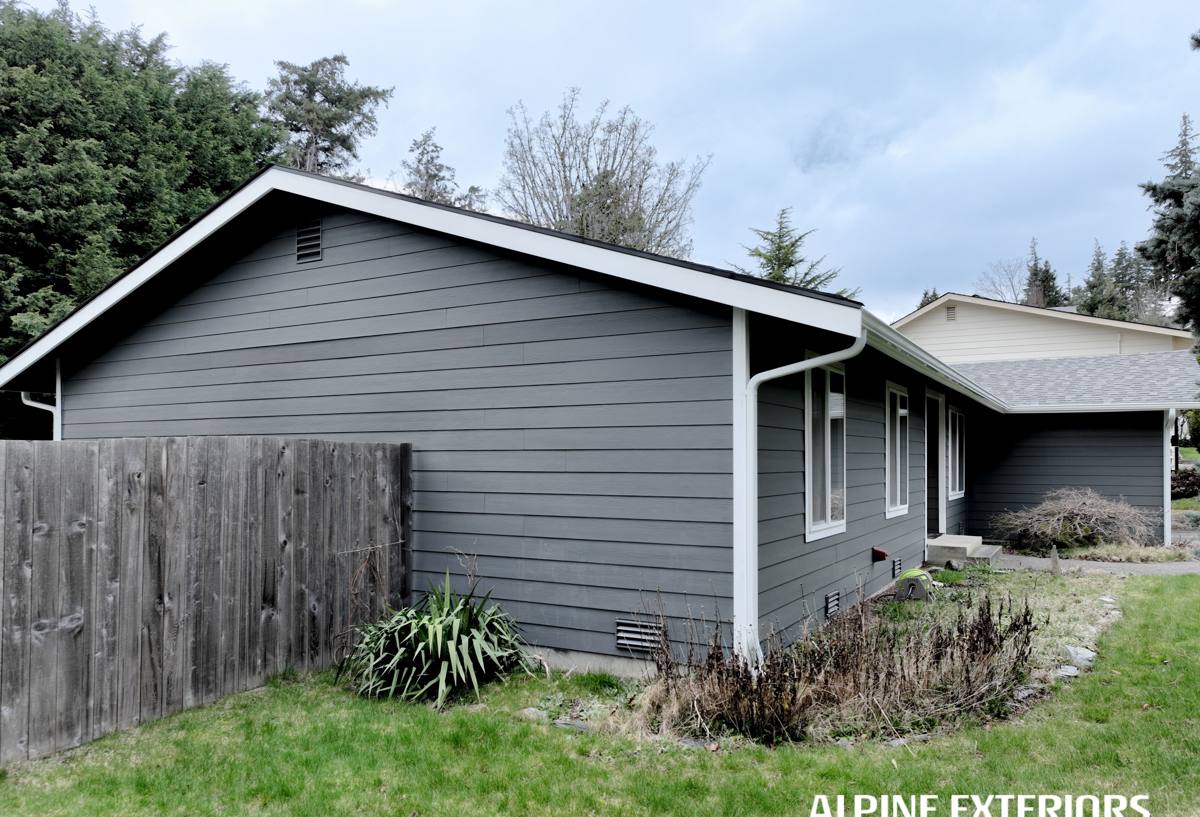
What Indian Rocks Beach Homes Actually Need From Their Siding
Salt Air, Not Just Rain
Being this close to open Gulf water means airborne salt settles on exterior surfaces year-round, not just during storms. Salt is corrosive to fasteners and hard on paint films, and it accelerates the breakdown of materials that aren't built to resist it. Siding, trim, and the fasteners holding them on all need to be rated for a coastal environment — not just "exterior grade" in a generic sense.
Wind-Driven Rain and Board Movement
Board and batten's vertical seams are only as good as the water management behind them. In wind-driven rain — which this coastline gets during summer storms and the occasional tropical system — water gets pushed sideways and upward, not just straight down. If the boards, battens, and the weather-resistive barrier behind them aren't detailed correctly, water finds its way behind the siding and into the wall assembly, where problems stay hidden until they're expensive.
UV Exposure Without a Break
Florida sun is intense nearly every month of the year, and board and batten's flat, wide board faces catch a lot of direct exposure. Paint and finishes that aren't formulated for this level of UV chalk, fade, and crack faster than homeowners expect, which means more frequent repainting or, worse, moisture getting into a finish that's already failing.
Storm-Force Wind Loads
Hurricane-force wind is a real design consideration here, not a hypothetical. Fastening schedules, board thickness, and attachment methods all need to account for uplift and lateral pressure specific to a barrier island location, not just a standard suburban wind exposure.
Why We Install Board & Batten Only in James Hardie Fiber Cement
We don't install board and batten in vinyl, LP SmartSide, primed spruce, or cedar. We install it exclusively in James Hardie fiber cement, and on a property like one in Indian Rocks Beach, the reasoning is straightforward:
- Non-combustible material — fiber cement doesn't burn, melt, or warp under direct sun exposure the way some alternatives can over time.
- Engineered for humid, coastal climates — James Hardie's HZ5 product line is specifically formulated for the moisture and humidity profile of the Gulf Coast, rather than a one-size-fits-all national product.
- ColorPlus factory finish — a baked-on finish applied under controlled conditions holds color and resists fading far better than field-applied paint exposed to Florida UV from day one.
- Dimensional stability — fiber cement doesn't swell, cup, or rot the way wood-based products can when they take on repeated moisture exposure.
- A real transferable warranty — backed by the manufacturer, not just the installer, and structured around correct installation practices.
Wood-based board and batten can look great initially, but it asks a homeowner to stay on top of repainting and moisture monitoring indefinitely — a heavier maintenance burden in a salt-air environment than most people want to sign up for. Vinyl board and batten is low-maintenance but it's a thinner, more UV-sensitive material that can visibly show heat distortion in intense, sustained sun. Fiber cement gives us a material that's engineered for exactly this combination of sun, salt, wind, and rain, which is why it's the only thing we put on a home in this area.
What a Correct Board & Batten Installation Involves
The board and batten look is simple, but the assembly behind it is not. A correct installation in a wind- and moisture-exposed location includes:
- Inspection and repair of the existing wall sheathing before anything new goes up — covering rot or damage with new siding just hides the problem.
- A properly lapped and sealed weather-resistive barrier, with attention to every penetration, corner, and transition where water tries to get in.
- Correct flashing at windows, doors, and rooflines, since board and batten's vertical joints rely on flashing detail more than horizontal lap siding does.
- Fiber cement boards and battens installed with corrosion-resistant fasteners, at the spacing and pattern specified for the local wind exposure.
- Proper joint spacing and sealant selection so boards can handle thermal movement without cracking the finish.
- Factory-finished ColorPlus boards installed and caulked using manufacturer-approved products, so the warranty stays intact.
Skipping or rushing any one of these steps is how board and batten siding ends up with hidden moisture problems five or ten years down the road, well before it should.
Board & Batten vs. Other Siding Profiles: What to Weigh
| Factor | Board & Batten | Traditional Lap Siding |
|---|---|---|
| Look | Bold vertical lines, strong shadow lines, distinct coastal/farmhouse feel | Classic horizontal shadow line, broadly familiar look |
| Water management complexity | More seams and vertical joints to detail correctly | Simpler, well-proven lap-and-overlap water path |
| Best fit | Accent walls, gables, full-home statement look | Whole-home coverage, straightforward re-siding jobs |
| Installation sensitivity | Higher — flashing and fastening detail matter more | Lower — more forgiving of minor variation |
Board and batten isn't more or less durable than lap siding when both are installed in James Hardie fiber cement — the difference is that board and batten leaves less room for installation error. That's exactly why the crew doing the work matters as much as the material itself.
Why Hiring a Crew That Already Works Indian Rocks Beach Matters
A contractor who works this specific stretch of coastline regularly already understands things a crew from further inland has to learn on the job: how far salt spray travels inland on this barrier island, how local wind exposure affects fastening requirements, and what permitting and inspection expectations look like for Pinellas County coastal properties. That familiarity shows up in the details — corner flashing, fastener choice, board spacing — that a homeowner won't see once the job is done but will absolutely feel in ten or fifteen years, either through a wall system that held up or one that didn't.
We also know what existing siding failures on this coastline tend to look like, which helps us catch problems during tear-off rather than after the new siding is already up.
What to Expect From Our Process
- An on-site inspection of your current siding, trim, and wall condition — not just a quote based on square footage.
- An honest assessment of whether repair, partial replacement, or full replacement makes sense for your situation.
- A clear explanation of the James Hardie board and batten profile, colors, and finish options relevant to your home.
- A written scope covering water management details, not just "siding install" as a line item.
- A realistic timeline that accounts for weather, since we don't rush installation quality to hit an arbitrary date.
Simple Checklist: Is Your Current Siding Telling You Something?
- Visible cracking, chalking, or fading on board faces, especially on sun-exposed elevations
- Soft spots or give when you press on boards near the bottom of walls or below windows
- Peeling or bubbling paint that keeps returning after repainting
- Visible gaps at seams, corners, or trim that weren't there when the siding was new
- Rust staining around fasteners or hardware
- Musty smell or visible staining on interior walls that back up to exterior siding
Any one of these is worth a professional look before it becomes a larger repair. On a barrier island property, small gaps and softening spots tend to progress faster than they would further inland, simply because there's more moisture and salt in the air working against the material every day.
A Long-Term View for a Coastal Property
Siding on an Indian Rocks Beach home isn't a one-and-done cosmetic decision — it's a long-term investment decision about how well the exterior will hold up to Gulf Coast conditions year after year. Board and batten in a properly installed James Hardie system gives you a distinctive look without asking you to take on the maintenance burden that comes with wood-based alternatives, and without the UV sensitivity that thinner vinyl products can show under sustained Florida sun. Getting the installation right the first time — flashing, fastening, joint detailing, all of it — is what determines whether that investment pays off.
If you're considering board and batten siding for your Indian Rocks Beach home, we're happy to take a look at your property and walk you through what we'd recommend. Reach out for a free, no-pressure estimate using the form below.