 Clearwater Roofing
 Clearwater Beach Siding Lives a Harder Life Than Inland Siding
A house three miles inland in Clearwater deals with Florida heat and the occasional tropical system. A house on Clearwater Beach deals with all of that plus something inland homes rarely see in the same concentration: constant salt-laden air moving off the Gulf, reflected UV bouncing off open water, and wind-driven rain that hits siding at angles a standard rain event never produces. Add the fact that many Clearwater Beach homes and condos sit exposed with little windbreak from other structures, trees, or terrain, and the siding takes a beating year-round, not just during hurricane season.
Salt air is corrosive to fasteners and trim hardware, and it accelerates the breakdown of caulk and paint film faster than most homeowners expect. Combine that with Pinellas County's intense, nearly year-round UV exposure and the wind-driven rain that comes with Gulf storms, and you get siding that fails from the outside in — chalking, fading, and seam failure — well before it fails structurally. That's the environment any siding product on Clearwater Beach has to survive, and it's why we're selective about what we install and how we install it.
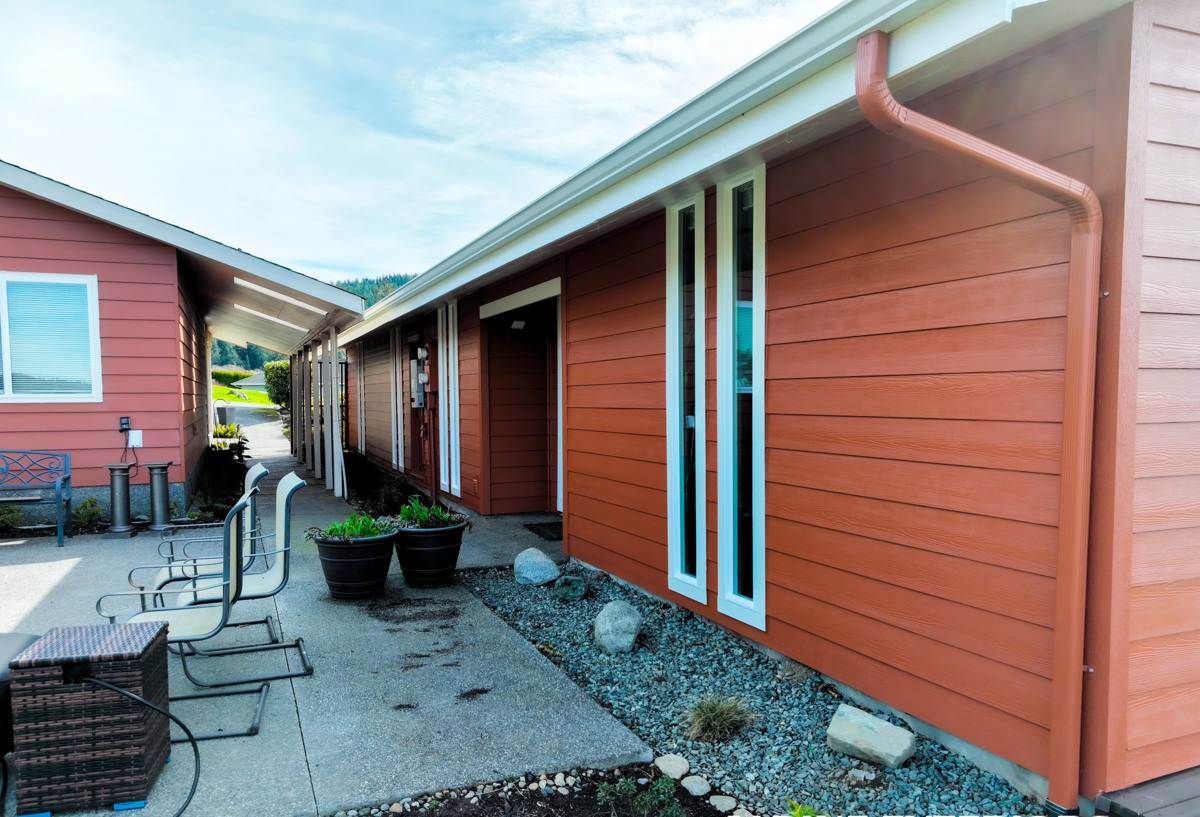
Signs a Clearwater Beach Home Needs Siding Replacement, Not Just Repair
Not every siding problem calls for a full tear-off. But on a barrier island, small problems compound faster because moisture and salt exposure don't give a house time to dry out and rest between weather events. Here's what tells us a full replacement is the right call rather than a patch:
- Soft or spongy spots when you press on the siding, especially near the bottom courses or around window and door trim
- Visible warping, buckling, or separation at seams, which often means moisture has already gotten behind the material
- Paint that's failing in patches rather than fading evenly, which usually points to trapped moisture pushing the finish off from underneath
- Persistent chalky residue that keeps returning shortly after cleaning — a sign the surface coating is breaking down, not just dirty
- Siding that's original to a home built decades ago and has already been patched more than once
- Visible gaps, cracks, or missing caulk at trim and corner boards that let wind-driven rain track behind the cladding
If you're only seeing one or two of these in a limited area, repair may still make sense. Once several show up together, or the siding is old enough that the underlying material is fatigued, patching becomes a short-term fix on a house that needs a long-term one.
Why Age Matters More on the Beach
Siding rated for a 30-year service life inland often doesn't get anywhere close to that on Clearwater Beach because the salt and UV load is so much higher. When we inspect a beach-side home, we're not just asking how old the siding is — we're asking how many hurricane seasons of wind-driven rain and how many years of direct Gulf-facing sun exposure it's absorbed.
What a Correct Siding Replacement Actually Involves
Siding replacement is not simply removing old panels and nailing up new ones. On a coastal property, the work that happens before the new siding goes on matters as much as the siding itself.
Full Tear-Off and Substrate Inspection
We remove the old siding down to the sheathing so we can actually see what's underneath. On older homes near the water, this is often where hidden problems show up — soft sheathing, rotted framing at window and door openings, or corroded fasteners. Any of that gets addressed before anything new goes on, because covering a compromised substrate with new siding just hides the problem for a few more years.
Weather-Resistive Barrier and Flashing
A correctly installed weather-resistive barrier, properly lapped and sealed, plus correctly integrated flashing at every window, door, and penetration, is what actually keeps wind-driven rain out of the wall assembly. This is the step that's easiest to rush and hardest to inspect once the siding is up, which is why we treat it as non-negotiable rather than optional.
Fastening for Wind Zone
Pinellas County's coastal areas fall under wind-load requirements that are stricter than inland zones, and Clearwater Beach's direct Gulf exposure means fastening patterns and clearances need to be right, not approximate. Correct nailing schedules and clearances at butt joints and corners are what keep siding attached in sustained high wind rather than becoming storm debris.
Trim, Caulking, and Finish Details
The finish work — corner boards, trim, caulking at joints — is where a lot of long-term failures start if it's done carelessly. On a salt-air property, the right caulk and the right gaps for material movement matter more than they do inland, because the freeze-thaw cycle isn't the threat here — moisture cycling and thermal expansion are.
Why We Install Only James Hardie Fiber Cement
We get asked fairly often why we don't offer vinyl siding, LP SmartSide, or other engineered wood products, since they're common and often cheaper up front. The honest answer is that we've made a professional standard out of what actually holds up in this specific environment, and fiber cement is what we're willing to stand behind.
Vinyl siding is affordable and low-maintenance in mild climates, but it softens and can distort in intense, sustained heat, and high wind can catch and peel panels at the edges if it isn't rated and installed with care. Engineered wood siding products perform well in many parts of the country, but wood-based substrates are more sensitive to moisture intrusion over time, and a coastal environment with salt air and wind-driven rain is exactly the kind of moisture exposure that punishes any product with a wood-fiber core if water finds a way in.
James Hardie fiber cement siding is engineered from cement, sand, and cellulose fiber. It's non-combustible, it doesn't support rot the way wood-based products can, and it holds its shape in heat rather than softening. Its ColorPlus factory-applied finish is baked on under controlled conditions rather than field-painted, which gives it better fade and wear resistance against Clearwater's UV load than site-applied paint typically achieves. None of that means zero maintenance forever — every siding product needs periodic attention on a barrier island — but it means we're installing a product designed to hold up to the specific combination of salt, sun, and wind that Clearwater Beach delivers.
James Hardie Product Lines Built for Coastal Exposure
James Hardie engineers different product lines (called HZ zones) for different climate exposures. Homes on Clearwater Beach sit squarely in the higher-exposure zone James Hardie designs for, which affects the specific formulation and moisture-resistance engineering of the boards we use.
| Product Line | Best Suited For | Key Trait |
|---|---|---|
| HardiePlank Lap Siding | Most single-family homes, classic lap look | Widest color and texture selection, ColorPlus finish |
| HardiePanel Vertical Siding | Modern facades, gable accents, mixed-material homes | Clean vertical lines, works well with board-and-batten detailing |
| HardieTrim Boards | Corner boards, window and door trim | Matches siding durability so trim doesn't fail before the field siding does |
| HardieSoffit Panels | Eaves and overhangs exposed to humidity and salt air | Engineered for ventilation compatibility and moisture resistance |
The HZ5 formulation, which is what climate-engineered James Hardie products for coastal and humid regions are built around, is designed with the moisture behavior of an environment like Clearwater's Gulf-front exposure in mind. Getting the right product line and formulation matched to a specific home's exposure is part of what a correct installation plan looks like here — it's not one-size-fits-all siding.
Our Process From Estimate to Finished Job
- On-site inspection of your Clearwater Beach home's current siding, trim, and any visible substrate concerns
- A written estimate that spells out the scope — tear-off, substrate repair if needed, weather barrier, siding, trim, and finish — with no vague allowances
- Material selection: HardiePlank profile, color, and trim details that fit the home
- Full tear-off and substrate inspection before any new material goes on
- Weather-resistive barrier, flashing, and fastening done to spec for the wind zone
- Siding, trim, and finish installation, followed by a final walk-through with you
We don't skip the substrate inspection step to save time, and we don't quote a job without seeing the house in person first — on a barrier island property, too much depends on the specific exposure and condition of what's underneath the old siding to estimate it sight-unseen.
What Drives the Cost of Siding Replacement on Clearwater Beach
Every home is different, but the same handful of factors move the price up or down on most Clearwater Beach siding jobs. We go over these specifically during the in-person estimate rather than quoting a flat number over the phone, because skipping that step is how homeowners end up with change orders mid-project.
| Factor | Why It Matters |
|---|---|
| Home size and number of stories | More surface area and access complexity (scaffolding, lifts) on multi-story beach homes |
| Substrate condition underneath old siding | Rot or moisture damage found during tear-off adds repair scope before new siding goes on |
| Trim and architectural detail | Homes with more corners, dormers, and trim lines take more labor per square foot |
| Product line and color selection | ColorPlus colors and specialty profiles vary in cost versus standard options |
| Site access | Beach lots, seawalls, and limited driveway space can affect staging and disposal logistics |
Broad ranges get thrown around online for siding replacement, but on Clearwater Beach specifically, access and substrate condition swing the number more than almost anything else. That's why we'd rather walk your property and give you real numbers than quote from a formula that ignores your actual house.
Why Local Experience on Clearwater Beach Specifically Matters
Siding installers who mostly work inland can do a technically fine job and still get a coastal install wrong, because the details that matter here — fastening for wind zone, flashing built to shed wind-driven rain rather than just vertical rain, and choosing a product formulated for salt-air exposure — aren't things you learn from a general contractor's license. They're things you learn from doing the work on this specific stretch of coastline, permit after permit, storm season after storm season.
Working regularly on Clearwater Beach and elsewhere in Pinellas County also means we're familiar with the area's wind-load and permitting expectations for exterior work, and we know what condo associations and HOAs in the area typically expect in terms of documentation and product approval. That familiarity saves homeowners time and avoids the kind of delays that come from a contractor discovering local requirements for the first time on your project.
Living With Your New Siding: Maintenance on a Salt-Air Property
James Hardie siding is low-maintenance, not no-maintenance, and that distinction matters more on the beach than almost anywhere else in the county. A periodic rinse to clear salt residue, keeping an eye on caulk lines at trim and penetrations, and addressing any impact damage promptly will keep the siding performing the way it's designed to. None of that is heavy upkeep — it's just realistic about what living a few blocks from the Gulf actually asks of an exterior.
If your Clearwater Beach home's siding is showing its age, or you just want an honest read on whether repair or full replacement is the right call, we're glad to take a look. Fill out the form below for a free, no-pressure estimate — we'll walk the property, tell you what we actually see, and give you real numbers to work with.