 Clearwater Roofing
 Composite Decking in Coachman Ridge: What This Climate Actually Demands
Coachman Ridge sits in Clearwater, Pinellas County, and like the rest of this stretch of the Gulf Coast, it gets the full package: long stretches of intense UV, sudden wind-driven downpours, salt-laden air moving in off the water, and the real possibility of hurricane-force wind loads during storm season. A deck built here does not get a break for half the year the way one in a northern climate would. It is under some kind of stress almost every day, and that changes what "good decking" means for this neighborhood specifically.
UV and Heat Exposure
Florida sun is relentless, and it does two things to decking materials over time: it fades color and it can break down surface bonding if the product wasn't engineered for high-UV climates. Cheaper composite boards, or boards installed without attention to manufacturer UV ratings, can chalk, fade unevenly, or get uncomfortably hot underfoot. We factor UV performance into every material recommendation for Coachman Ridge jobs, not as an afterthought.
Wind-Driven Rain and Moisture Cycling
Composite decking is prized here because it resists rot the way wood can't, but "resists" doesn't mean "immune." Wind-driven rain gets up under railings, into end grain, and around fastener points. A deck that isn't detailed correctly at those points — proper flashing, correct board spacing for drainage, sealed or capped cut ends — will trap moisture even in a composite system. That trapped moisture is where problems start, whether it's mold on the surface or slow deterioration of the substructure underneath.
Salt Air and Metal Fasteners
Clearwater's proximity to the Gulf means salt air travels further inland than people expect, and it's hard on anything metal. Fastener choice matters as much as board choice — the wrong hardware corrodes, stains the decking, and eventually loosens. We spec fasteners and structural hardware rated for coastal exposure on every Coachman Ridge project, not just the ones closest to the water.
Hurricane Wind Loads
Pinellas County code accounts for hurricane-force wind, and a deck attached to your home is part of that structural picture. Railings, post connections, and ledger attachment all have to be built to hold up under real wind pressure, not just look sturdy. This isn't optional detailing — it's the difference between a deck that rides out a storm and one that becomes a hazard.
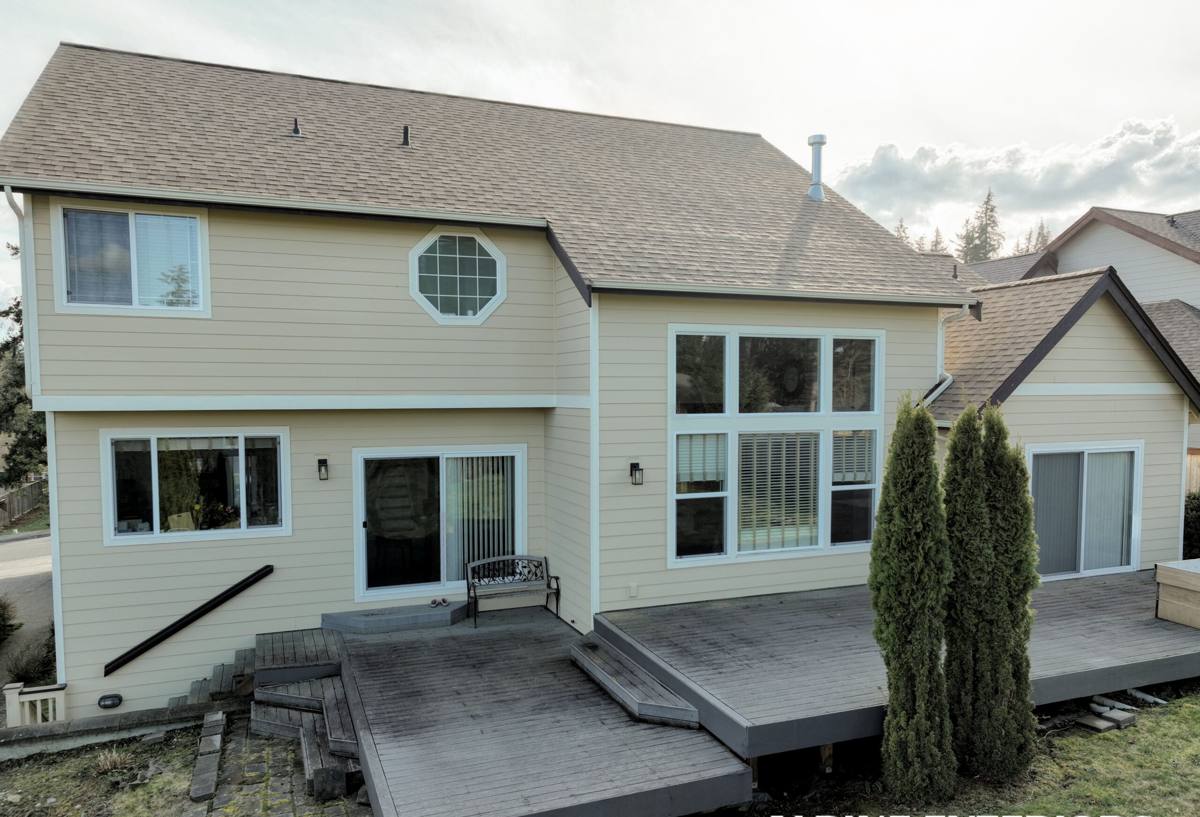
What "Composite" Actually Means — And Why the Product You Choose Matters
"Composite decking" covers a range of products, and they are not interchangeable. Most modern composite boards are a blend of wood fiber and recycled plastic, and many now come with a polymer cap (a protective outer shell) that handles most of the UV and moisture resistance work. Uncapped composite boards are generally cheaper but take on more of the sun and moisture load directly into the board material, which matters a lot in a climate like this one.
| Decking Type | How It Handles Clearwater Sun & Moisture | Maintenance Burden | Typical Lifespan Here |
|---|---|---|---|
| Pressure-treated wood | Needs regular sealing to resist UV fading and moisture intrusion; more prone to splintering and rot in humid coastal air | High — annual sealing/staining recommended | 10-15 years with upkeep |
| Uncapped composite | Resists rot better than wood but can fade, scratch, and absorb some moisture at cut ends over time | Low — occasional cleaning | 20-25 years |
| Capped composite | Polymer shell resists UV fading, staining, and moisture intrusion; best fit for intense sun and salt air | Very low — soap and water | 25-30+ years, manufacturer-warrantied |
For most Coachman Ridge homes we recommend capped composite as the standard, given how much direct sun and moisture cycling this location sees. That said, budget and the specific use of the deck (full sun exposure vs. a shaded, tree-covered lot) both factor into the right call, and we'll walk through those trade-offs honestly rather than push the most expensive option by default.
What a Correct Composite Deck Build Involves
The decking boards themselves get the attention, but the structure underneath is what actually determines whether the deck lasts. In this climate, a few details separate a deck that performs for decades from one that develops problems within a few years.
- Footings set to local frost and load requirements — Florida doesn't have a frost-heave concern like colder states, but footings still need to be sized and set correctly for the soil and structural load, per Pinellas County code.
- Joist spacing matched to the board manufacturer's spec — composite boards flex differently than wood, and manufacturers publish specific joist spacing requirements. Ignoring those specs voids warranties and can lead to a springy, uneven deck surface.
- Coastal-rated fasteners and structural hardware — stainless steel or coated hardware rated for coastal/marine exposure, used consistently, not just at visible points.
- Proper ledger attachment and flashing — where the deck ties into the house is the single most common source of water intrusion problems if it's not flashed correctly.
- Board gapping for expansion and drainage — composite boards expand and contract with heat; correct gapping prevents buckling and lets water drain through rather than pool on the surface.
- Railing and post connections built to wind load — not just screwed to the surface, but tied into the structural frame to meet code wind resistance.
Skipping any one of these doesn't necessarily show up on day one. It shows up two or three years in, usually after the first serious storm season, which is exactly when it's most expensive and disruptive to fix.
Our Process, From Estimate to Final Walkthrough
We keep the process straightforward because most homeowners are doing this once and want to know what to expect.
- On-site assessment. We look at the existing structure (if there is one), the ground/foundation conditions, sun exposure, and how the deck ties into the house.
- Honest material recommendation. Based on exposure and budget, we'll recommend capped or uncapped composite, walk through color and board profile options, and explain the trade-offs plainly.
- Written estimate. Scope, materials, and cost laid out clearly before any work starts — no vague allowances.
- Permitting. We handle the Clearwater/Pinellas County permit process, including any structural review needed for the attachment to your home.
- Demo and structural build. Old decking removed if applicable, footings and framing built or repaired to spec.
- Decking, railing, and hardware installation. Boards, railings, and fasteners installed to manufacturer spec and coastal-rated hardware standards.
- Final walkthrough. We go over the finished deck with you, including care and maintenance specific to the product installed.
Coachman Ridge-Specific Considerations
Every neighborhood has its own quirks, and a crew that's worked Coachman Ridge before knows them going in rather than discovering them mid-project. That includes typical lot layouts and setbacks in the area, how existing homes were originally built (which affects what a new deck ties into structurally), and any HOA guidelines that may apply to exterior additions in the community. If your property has an HOA with design or material guidelines, we'll work within them rather than finding out about a conflict after the deck is built. We also account for tree cover where it exists — a shaded lot has different drainage and debris considerations than a lot in full sun, even within the same neighborhood.
Maintenance and Longevity in Pinellas County Sun
One of the main reasons homeowners choose composite over wood is the lower maintenance burden, but "low maintenance" isn't "no maintenance." A little regular attention goes a long way toward getting the full lifespan out of the investment in this climate.
- Rinse or sweep off pollen, salt residue, and debris regularly — buildup left in place can trap moisture against the board surface.
- Clean with soap and water (or the manufacturer-recommended cleaner) a couple of times a year; avoid pressure washers on the highest settings, which can damage the cap layer.
- Check railing and post connections annually, especially after a significant storm — hardware can loosen slightly over time even when correctly installed.
- Keep gutters and downspouts near the deck clear so runoff isn't dumping extra water onto or under the deck surface.
- Trim back vegetation that shades or touches the deck surface, which can trap moisture and organic debris against the boards.
- Watch for any soft spots, gaps, or movement in the substructure and address it early rather than waiting.
Permitting and Code in Clearwater
Composite deck construction in Clearwater and unincorporated Pinellas County generally requires a permit, particularly for any structural attachment to the home, elevated decks, and railings. Permitting exists to make sure the structure can actually handle Florida's wind loads and weather, not just to add paperwork. We handle the permit application and inspection scheduling as part of the project so you're not navigating county requirements on your own, and so the finished deck is documented and up to code — which also matters for resale and insurance down the road.
Why Hiring a Crew That Already Works This Neighborhood Matters
A composite deck is a structural project as much as a cosmetic one, and the two biggest risk points — bad ledger attachment and improper hardware for a coastal climate — are the two mistakes that are hardest to see after the fact and most expensive to fix later. A crew that regularly works Coachman Ridge and the broader Clearwater area has already built for this soil, this wind exposure, and this permitting process. That familiarity shows up in fewer surprises during the build and in a deck that's actually specified correctly for where it sits, not built to a generic national standard and hoped to hold up.
If you're weighing composite decking for a Coachman Ridge property, we're glad to come take a look, walk the site, and give you a straightforward, no-pressure estimate. There's a form below to get that started.