 Clearwater Roofing
 Composite Decking Built for Countryside's Climate
Countryside is one of Clearwater's larger established residential areas, and like the rest of Pinellas County, it sits squarely in a climate that is hard on outdoor building materials. Hurricane-force wind gusts during storm season, intense year-round UV exposure, wind-driven rain that finds its way into every gap and seam, and salt air drifting in off the Gulf all work against a deck that isn't built and installed correctly. A deck that looks fine going in can start showing problems within a couple of seasons if the material, fasteners, or substructure weren't chosen with this environment in mind.
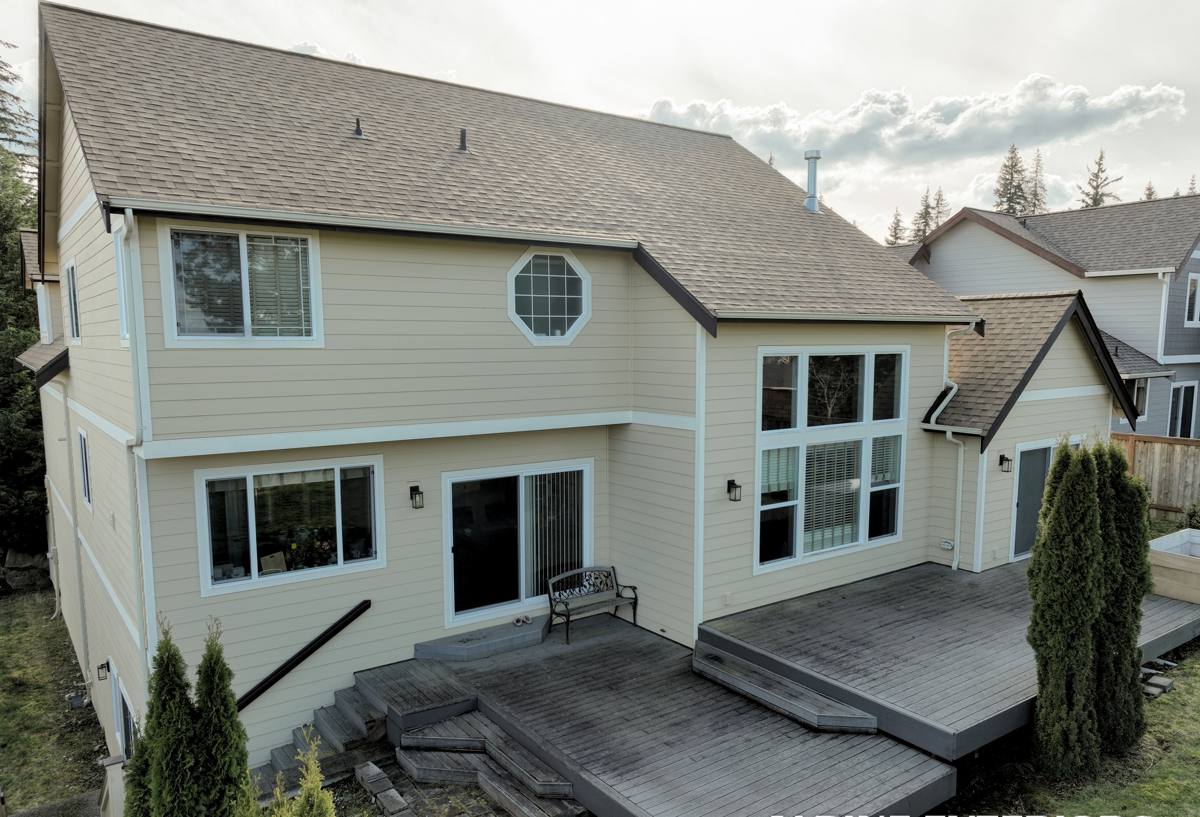
This page is about one thing: composite decking, done right, for homes in the Countryside area. Not a generic overview of decking in general — the specifics of what this climate demands, what a correct installation looks like, and how our process works for homeowners in this part of Clearwater.
Why Composite Decking Fits Countryside Homes
Standing Up to Sun and Salt
Florida sun is relentless on exposed decking. Composite boards, especially capped composite, are engineered specifically to resist UV fading and won't dry out, crack, or splinter the way wood does after repeated sun exposure. That matters more here than in most parts of the country — Pinellas County gets long stretches of direct, high-intensity sun for most of the year, and a deck surface has nowhere to hide from it.
Salt air is the other factor people underestimate. Even a few miles inland from the Gulf, airborne salt accelerates corrosion in exposed metal fasteners and hardware, and it can dry out and degrade untreated wood fibers faster than inland climates. Composite decking's polymer-based composition doesn't corrode, and when it's paired with the right stainless or coated fastening hardware, the whole system holds up to salt exposure far better than a standard wood deck assembled with off-the-shelf hardware.
Less Upkeep Than Wood, Without Wood's Weaknesses
Wood decking has a real place in some projects, and we're upfront about its trade-offs rather than pretending it doesn't work. But wood in this climate needs regular sealing, sanding, and inspection for rot, and skipping that maintenance for even a season or two in Florida's humidity and rain cycles can shorten its life significantly. Composite decking doesn't need sealing or staining, resists moisture absorption, and doesn't provide the same food source for the rot and insect issues that show up in humid coastal climates. The trade-off is a higher upfront material cost — which is why we walk homeowners through the real numbers rather than just pushing one product.
What a Correct Composite Deck Installation Actually Involves
Composite decking is only as good as the structure and installation underneath it. Most of the composite deck failures we get called out to inspect trace back to substructure or fastening mistakes, not the board material itself.
Framing and Ledger Attachment
The ledger board — where the deck attaches to the house — is the single most safety-critical connection on the entire structure, and it's also the point most exposed to wind uplift during a storm. It needs proper flashing to keep wind-driven rain from working behind the siding, and lag or through-bolt connections sized for the load and spans involved, not just nailed on. Joist spacing also needs to account for composite board flex, which behaves differently than solid wood under load — following the manufacturer's span tables for the specific board profile is not optional.
Fastening Systems and Spacing
Composite boards expand and contract with heat more than wood does, which is a real consideration given how hot deck surfaces get under direct Florida sun. Hidden fastener clip systems, when used, need the correct gap spacing built in from the start — too tight, and boards can buckle or creak as they expand; too loose, and boards can work loose or rattle in high wind. All exposed metal — screws, brackets, joist hangers — should be stainless steel or a coating rated for coastal/salt-air exposure, not standard galvanized hardware that will corrode faster this close to the coast.
Drainage and Airflow Underneath
Wind-driven rain doesn't just fall on a deck, it gets pushed sideways and underneath it. Composite decking sheds water well on the surface, but the substructure below still needs proper drainage slope and ventilation so moisture doesn't sit trapped against joists and ledger connections. This is one of the most commonly overlooked parts of a deck build, and it's where a lot of long-term structural problems start, even when the visible decking looks perfect.
Choosing the Right Board for This Climate
Capped vs. Uncapped Composite
Capped composite boards have a protective polymer shell wrapped around a wood-plastic composite core, which is what actually gives them their fade, stain, and moisture resistance. Uncapped composite is more affordable but more porous, meaning it takes on more UV and moisture exposure over time — a bigger consideration in a climate with this much sun and rain than it would be somewhere drier and cooler. For most Countryside homes, we recommend capped composite specifically because of how much sun and moisture cycling this area sees over a typical year.
Color and Heat Considerations
Darker composite boards absorb more heat and can get noticeably hot underfoot during peak summer afternoons — worth factoring in for a pool deck or an area where kids or pets will be walking barefoot. Lighter and mid-tone colors reflect more heat and tend to be a better practical fit for full-sun Florida decks, even when a darker tone might be the first pick aesthetically. We talk through this trade-off with homeowners before ordering material, not after installation.
Composite Decking vs. Other Materials
| Factor | Capped Composite | Pressure-Treated Wood | PVC / Cellular |
|---|---|---|---|
| Upfront cost | Moderate-high | Lowest | Highest |
| Ongoing maintenance | Occasional wash | Annual sealing/staining | Occasional wash |
| UV fade resistance | Strong | Weak without upkeep | Strong |
| Salt air / coastal performance | Strong | Moderate, hardware-dependent | Strong |
| Moisture/rot resistance | Strong | Moderate, needs sealing | Very strong |
| Heat underfoot (dark colors) | Can run hot | Moderate | Can run hot |
| Typical lifespan with normal upkeep | 25–30+ years | 10–15 years | 25–30+ years |
PVC decking has its own place, particularly right along the water where moisture exposure is extreme, but it carries the highest material cost and a different installation sensitivity around thermal expansion. For most Countryside properties — a step or two back from direct waterfront but still well within the reach of coastal weather — capped composite is usually the more practical balance of cost, durability, and appearance.
Our Process for a Countryside Deck Project
- Site assessment — we look at sun exposure, drainage patterns, existing structure (if replacing a deck), and how the space will actually be used.
- Material walkthrough — we go over board options, color, and cost trade-offs specific to your home's exposure, not a one-size answer.
- Permitting and structural check — pulling the correct permit and confirming the framing plan meets local wind-load and structural requirements before any lumber is cut.
- Substructure build — framing, ledger attachment, joist layout, and drainage slope, inspected before boards go down.
- Decking installation — proper fastener spacing, expansion gaps, and trim/fascia work.
- Railings and stairs — built to the same structural and hardware standard as the deck itself.
- Final walkthrough — we go over the finished deck with you, including basic care, before we consider the job done.
Maintaining a Composite Deck in Pinellas County
Composite decking is low-maintenance, not no-maintenance. A little seasonal attention goes a long way toward getting the full lifespan out of the material in this climate.
- Rinse or sweep off salt residue and pollen buildup periodically, especially after windy stretches off the Gulf.
- Wash with mild soap and water a couple of times a year to prevent surface mildew, which is more common here than in drier climates.
- Keep gutters and downspouts clear so runoff isn't dumping extra water onto or under the deck during heavy rain.
- Check railing posts and stair connections annually for looseness — wind and temperature cycling can work fasteners over time.
- Clear leaves and debris from between boards so moisture doesn't sit trapped against the surface.
- After a major storm, do a quick visual check of the ledger connection and any exposed hardware for movement or corrosion.
Permitting and Structural Requirements in Clearwater
Deck construction in Clearwater and Pinellas County is subject to the Florida Building Code's structural and wind-load provisions, which is one more reason the framing and ledger connection matter as much as the decking material itself. Permits and inspections exist because an undersized or improperly attached deck is a real hazard in a region that sees hurricane-strength wind events. We handle the permit process as part of the job rather than treating it as optional paperwork, and we build to pass inspection the first time, not to the minimum that happens to look finished.
Why a Crew That Already Works Countryside Matters
A contractor who already works regularly in this part of Clearwater has a practical advantage: they've seen how homes in this area age under this specific combination of sun, salt, and storm exposure, and they know which shortcuts show up as problems two or three years down the line. That's not a substitute for doing the engineering and installation correctly — it's what informs the choices we make on material, fasteners, and structure before the first board ever goes down.
If you're weighing a new composite deck or replacing an aging one in Countryside, we're happy to take a look and give you a straightforward, no-pressure estimate — what your project actually needs, what it will cost, and why. Use the form below to get in touch.