 Clearwater Roofing
 Building a Deck That Actually Holds Up in Dunedin
Dunedin sits right on the Pinellas County coastline, which means any deck built here is going to work harder than a deck built inland. The combination of hurricane-force wind gusts, intense year-round UV exposure, wind-driven rain, and salt-laden air doesn't just wear down the surface boards over time — it attacks fasteners, framing connections, and finishes from multiple directions at once. A deck that would hold up fine in a drier, calmer climate can start showing problems within a few seasons here if it wasn't designed with these conditions in mind from the start.
We build custom decks for homeowners throughout the Dunedin area, and the approach we take reflects what actually happens to outdoor structures on this stretch of the Gulf Coast: material choices that resist moisture and UV breakdown, fastening systems rated for corrosion resistance, and framing details sized for real wind loads, not just the minimum a code book allows on paper.
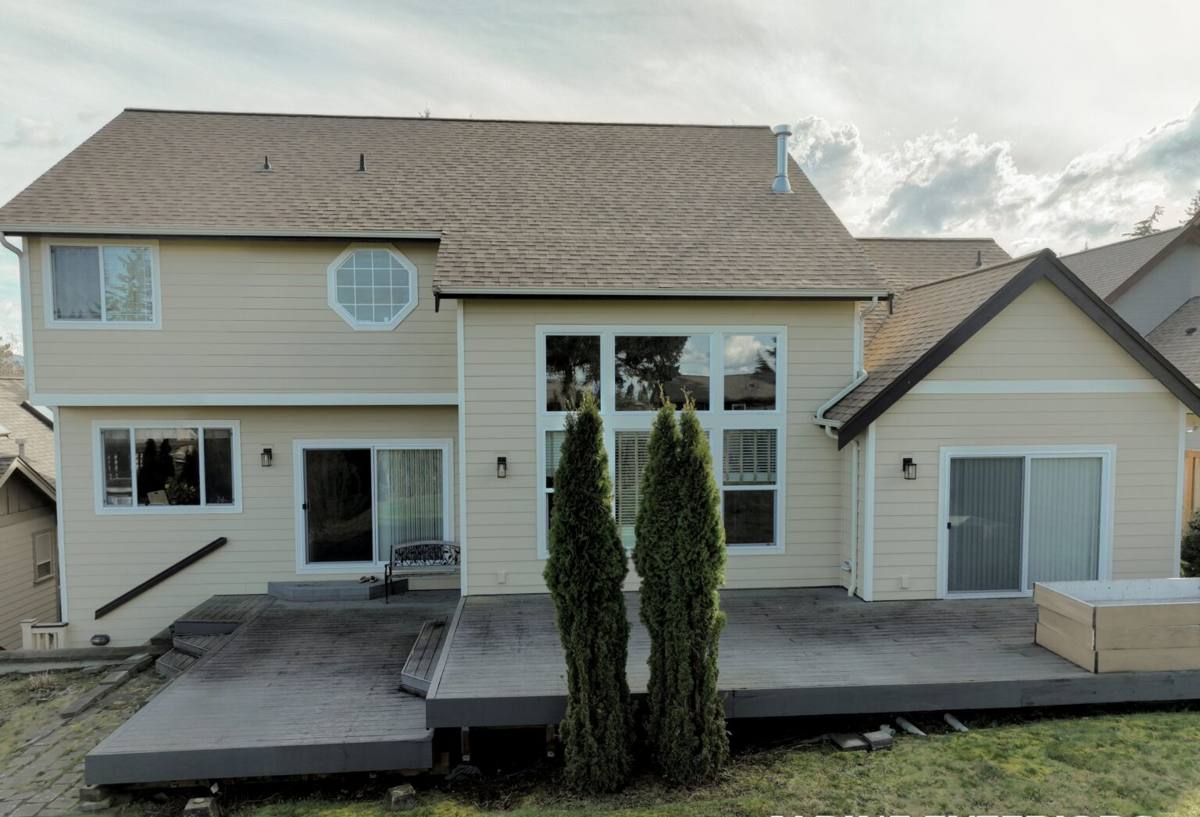
What Dunedin's Climate Does to an Outdoor Deck
Wind
Pinellas County sees tropical storm and hurricane-force wind events on a regular enough basis that "it probably won't happen" isn't a reasonable design assumption. Wind doesn't just push against a deck — it creates uplift on railings and any roofed or covered structure, and it puts repeated cyclical stress on every connection point over the years, even in storms well below hurricane strength. Loose railings, popped ledger boards, and shifted footings are almost always a sign that connections were undersized for what this climate actually delivers.
UV Exposure
Florida sun is intense for most of the year, not just in summer. UV breaks down the lignin in untreated wood fibers, fades stains and finishes faster than manufacturers' national averages suggest, and accelerates the brittleness that leads to splintering and checking in wood decking. Composite and PVC products vary a lot in how well their UV inhibitors actually perform, which is part of why product selection matters more here than in milder climates.
Wind-Driven Rain and Moisture Cycling
Storms here don't just drop rain straight down — wind pushes it sideways into fastener heads, board gaps, and end grain that would otherwise stay relatively dry. Combined with Florida humidity, decking goes through constant wet-dry cycling. That cycling is what causes cupping, warping, and fastener backout in materials or installations that weren't built to handle it.
Salt Air
Even a few miles inland from the water, salt in the air accelerates corrosion on any exposed metal — screw heads, hidden fastener clips, joist hangers, structural bolts. Standard zinc-coated hardware corrodes faster near the coast than its rating suggests, which is why fastener selection is one of the most consequential (and least visible) decisions in a coastal deck build.
What a Correctly Built Deck Requires in This Area
A deck is a structure, not just a surface to walk on, and Pinellas County's building code reflects the coastal wind environment. A properly engineered deck in the Dunedin area accounts for:
- Footing depth and diameter sized for local soil conditions and wind uplift, not just deck weight
- Ledger board attachment that's properly flashed and bolted (never just nailed) into sound structural framing
- Joist spacing and beam sizing calculated for the actual span and decking material, not a generic default
- Railing posts through-bolted with corrosion-resistant hardware, since railings take direct wind load
- Proper drainage and airflow underneath the deck to prevent moisture from being trapped against framing
Skipping any of these to save time or money doesn't usually show up as a problem on day one. It shows up two or three years later, after a few storm seasons of wind and moisture cycling have found every weak point.
Choosing the Right Decking Material for Dunedin
There's no single "best" decking material — the right choice depends on budget, maintenance tolerance, and how much direct sun and rain exposure the deck will see. Here's how the common options actually perform in this climate:
| Material | Coastal Climate Performance | Maintenance | Typical Lifespan Here |
|---|---|---|---|
| Pressure-treated pine | Affordable, but prone to checking, warping, and splintering under intense UV and moisture cycling | Annual sealing/staining recommended | 10-15 years with upkeep |
| Tropical hardwood (e.g., ipe) | Naturally dense and rot-resistant, handles moisture well; needs oiling to hold color under Florida sun | Periodic oiling to prevent graying/checking | 20-25+ years |
| Capped composite | Strong UV and moisture resistance from the cap layer; good option for humid, salt-air conditions | Occasional washing, no sealing/staining | 25-30 years |
| PVC decking | Fully synthetic, excellent moisture resistance, doesn't absorb water like wood-composite blends | Low — occasional washing | 25-30+ years |
We don't push one material on every homeowner. A shaded, low-traffic deck has different needs than a full-sun deck next to a pool. What we won't do is install a product where the manufacturer's own warranty language, moisture behavior, or installation tolerances make it a poor match for direct coastal exposure — that's a standard we hold regardless of what's cheapest to source that week.
What Actually Drives the Cost
| Factor | Why It Matters |
|---|---|
| Decking material | Pressure-treated pine costs the least upfront; PVC and premium composites cost more but need far less long-term upkeep |
| Height and footing depth | Elevated decks and decks on soft or sandy soil need deeper, more robust footings |
| Railing style and hardware | Cable, glass, and custom railing systems cost more than standard baluster railing, and all railing hardware should be corrosion-resistant here |
| Roof or pergola coverage | Any covered structure adds engineering complexity because it changes the wind load on the whole deck |
| Site access and demolition | Removing an old deck, working around tight side yards, or building over uneven grade adds labor time |
Framing and Fasteners: The Part You Won't See Once It's Built
The visible decking gets all the attention, but the framing and fasteners underneath are what actually determine whether a deck survives ten hurricane seasons or starts failing after three. For coastal builds, we use fastener and connector hardware rated for corrosion resistance appropriate to salt air exposure, not standard interior-grade fasteners that happen to be galvanized. Hidden fastener systems, joist hangers, and structural screws all matter more here than they would on a deck built fifty miles inland, because the failure mode in this climate is almost always corrosion-driven, not simple wear.
We also pay close attention to how the frame handles water. End grain gets sealed or capped, joists are spaced to allow airflow, and ledger boards are flashed to keep water from tracking behind the house siding — a detail that's easy to skip and expensive to fix later if it's missed.
Designing Around a Dunedin Property
Custom means the deck should fit the house and the yard, not just meet a minimum code checklist. Things we walk through with homeowners during design include:
- How much of the deck sits in direct afternoon sun versus shade from existing trees or the home itself
- Whether the deck connects to a pool area, and what that means for slip resistance and drainage
- Grade and drainage around the home's foundation, since a poorly placed deck can trap water against the house
- Whether a partial roof, pergola, or shade structure makes the space usable during peak summer heat
- Multi-level layouts where the yard has any slope, which is common on older Dunedin lots
None of this changes the fundamentals of building for wind and moisture — it just means the structural decisions get applied to a layout that actually fits how the homeowner wants to use the space.
Our Process, From First Call to Finished Deck
- On-site estimate. We walk the property, look at the house's structure where the deck will attach, and talk through material and layout options based on sun exposure, budget, and how the space will be used.
- Design and engineering. We put together a layout with sizing that accounts for local wind and soil conditions, not a generic template.
- Permitting. We handle the permit submission through Pinellas County/local jurisdiction and coordinate the required inspections so the homeowner isn't left managing that process alone.
- Footings and framing. This is where the structural integrity of the deck is actually determined — footing depth, ledger attachment, joist spacing, and fastener selection.
- Decking, railing, and finish work. Surface material goes down, railings are installed and through-bolted, and any final sealing or finish work is completed.
- Final walkthrough. We go over the finished deck with the homeowner and cover basic maintenance expectations for the material chosen.
Permits and Inspections
Decks over a certain height or size require a building permit in most Pinellas County jurisdictions, and inspections typically occur at the footing stage and again at final completion. This isn't paperwork for its own sake — the inspection process exists specifically because undersized footings and poorly attached ledger boards are common failure points in decks that skip proper engineering. We manage this process as part of the build rather than treating it as the homeowner's problem to sort out separately.
Protecting the Investment: Maintenance That Matters Here
Every decking material needs some maintenance in this climate — the difference is how much and how often. A basic seasonal maintenance routine goes a long way toward protecting a deck from Gulf Coast conditions:
- Rinse off salt residue, pollen, and debris regularly, especially after storms
- Inspect railings and stair connections for looseness after major wind events
- Check fastener heads for early signs of corrosion staining, particularly on wood decking
- Reseal or re-stain wood decking on the schedule recommended for the specific product, typically annually in this climate
- Keep gutters and downspouts near the deck clear so water isn't dumping directly onto or under the structure
- Clear leaves and debris from between boards to prevent trapped moisture
Composite and PVC decking cut down on most of this, but no material here is fully maintenance-free — salt air and intense sun make sure of that.
Why Local Experience Matters for This Job
A deck built by a crew that hasn't worked this specific coastal environment tends to make the same mistakes: standard fasteners instead of corrosion-resistant hardware, decking chosen for looks without accounting for full-sun UV exposure, or footing depths that meet a generic code minimum without accounting for local soil and wind conditions. We work in and around Clearwater and Dunedin regularly, which means we're not guessing at how these conditions affect a deck over time — we see the results in real structures every week, including the decks that were built without these details in mind and the repairs that follow.
If you're planning a custom deck for your Dunedin home, we're happy to come take a look at your property, talk through material and design options, and put together a straightforward estimate — no pressure, no sales script. Just an honest assessment of what your space needs and what it'll take to build it right.