 Clearwater Roofing
 Why Del Oro Decks Wear Out Faster Than Homeowners Expect
If you own a home in Del Oro, you've probably noticed your deck ages differently than one you'd find further inland. Clearwater's location in Pinellas County puts every outdoor structure through a tougher cycle than most of the country ever deals with: intense year-round UV that breaks down wood fibers and fades finishes, salt-laden air that accelerates corrosion on anything metal, wind-driven rain that gets pushed sideways into gaps and joints, and the occasional hurricane-force wind event that tests every fastener and connection point at once. None of these forces are rare exceptions here — they're the normal operating conditions for an outdoor deck in this part of Florida.
A deck built without those conditions specifically in mind might look fine for a few years, then fail all at once — a soft spot in the decking, a ledger board that's pulled away from the house, hardware that's rusted through from the inside. Replacement done right in Del Oro isn't just swapping old boards for new ones. It's rebuilding the structure to actually hold up to the environment it's sitting in.
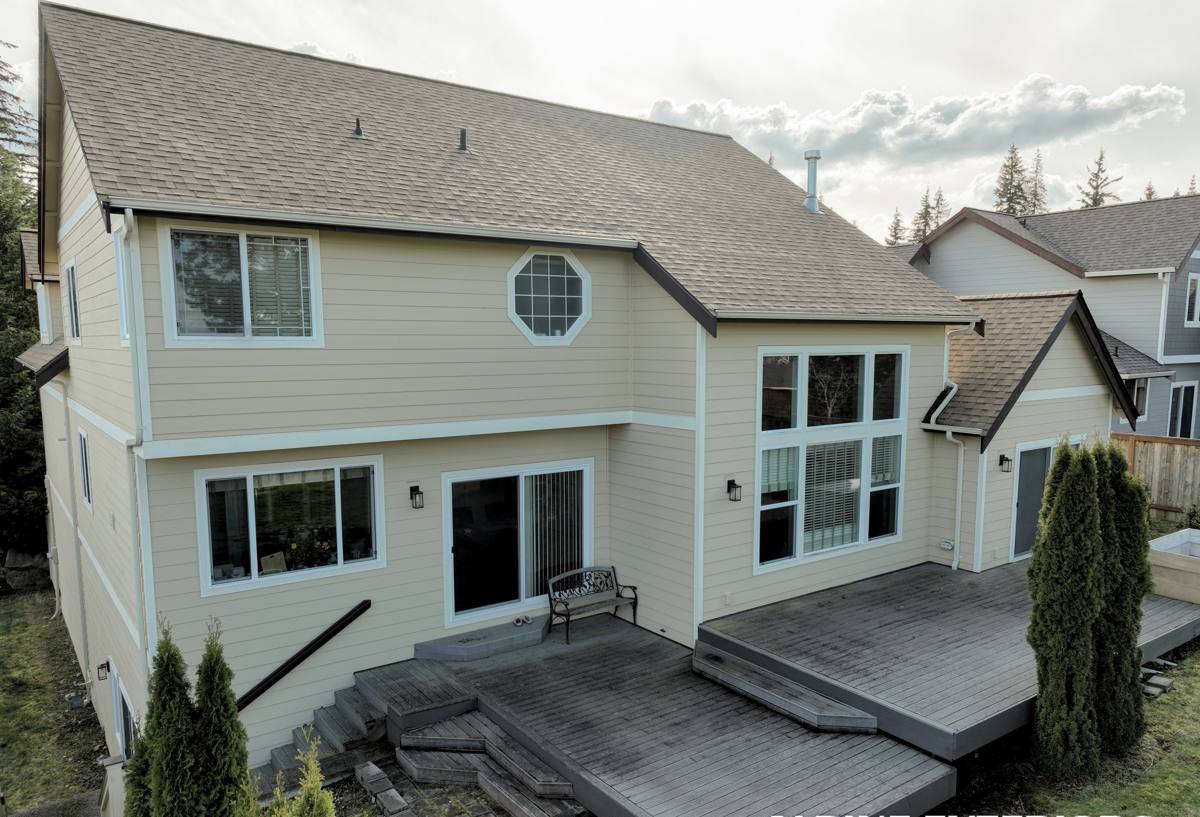
Signs Your Deck Needs Replacement, Not Just Repair
Not every deck problem means a full replacement. But there's a point where patching individual boards or re-tightening hardware stops being a real fix and starts being a way to delay an inevitable, more expensive failure. Here's how we tell the difference when we walk a property in Del Oro.
- Soft, spongy, or spring-back decking in multiple areas, not just one board
- Visible separation or gapping where the ledger board meets the house
- Rust staining bleeding out around fasteners or joist hangers
- Posts or footings that have shifted, settled, or show cracking at the base
- Structural framing (joists, beams) that's soft, discolored, or delaminating when probed
- A deck that predates current wind-load and attachment code requirements
- Railings that flex or feel loose under normal weight
If what you're seeing is limited to surface wear — some graying, a couple of loose screws, minor fading — repair is usually the honest recommendation, and we'll tell you that. Replacement makes sense when the underlying structure, not just the surface, is compromised.
What a Correct Deck Replacement Actually Involves
It Starts Below the Decking, Not At It
The part of a deck homeowners see — the boards you walk on — is the least important part of whether the deck survives the next decade. The framing underneath, the ledger attachment to the house, the footings, and the fasteners are what actually determine whether a deck stays solid through storm season after storm season. A replacement that only addresses the visible decking while leaving old, undersized, or corroded framing in place is not a real replacement — it's a cosmetic fix with a shelf life.
Ledger Attachment
The ledger board — where the deck ties into the house — is one of the most common failure points we find, and one of the most dangerous when it fails, since it's what keeps the whole structure from separating from the building. In a coastal wind environment, that connection needs correctly spaced structural lag screws or through-bolts, proper flashing to keep wind-driven rain from getting behind it, and hardware rated to resist the corrosion that salt air causes over time.
Framing and Fasteners
Joists and beams need to be sized for the actual span and load, not just whatever was there before. Every hanger, screw, and bolt should be corrosion-resistant hardware suited for coastal exposure — standard hardware that's fine in a drier inland climate corrodes noticeably faster here, and once a fastener weakens, it weakens the whole connection it's part of.
Footings and Post Bases
Footings need to be sized and set to local code depth, and post bases should keep wood posts off standing water and away from direct soil contact, which shortens their life dramatically in a humid coastal climate.
Decking Material Options: An Honest Comparison
There's no single "best" decking material for every Del Oro home — it depends on your budget, how much upkeep you're willing to do, and how long you want to go before your next major project. Here's how the common options actually compare under Clearwater's climate conditions.
| Material | UV/Fade Behavior | Moisture & Salt-Air Resistance | Maintenance | Typical Lifespan Here |
|---|---|---|---|---|
| Pressure-treated wood | Fades and grays without regular refinishing | Moderate — needs sealing to resist moisture cycling | Annual cleaning/sealing recommended | 10-15 years with upkeep |
| Composite decking | Fade-resistant, color holds well | Good — doesn't absorb water like wood | Occasional cleaning, no sealing | 20-25+ years |
| PVC/capped decking | Very fade-resistant | Excellent — fully moisture-sealed surface | Minimal — cleaning only | 25+ years |
| Tropical hardwoods | Fades to gray without oiling | Naturally dense and rot-resistant | Periodic oiling to maintain color | 20-25 years with upkeep |
We'll walk through these trade-offs with you in person rather than push one product line. The right call usually comes down to how much maintenance you actually want to do versus what you're comfortable spending upfront — both are legitimate ways to decide.
How Our Deck Replacement Process Works
1. On-Site Assessment
We inspect the existing deck from the framing out, not just the surface — probing joists, checking the ledger connection, and looking at footings and post condition. This tells us honestly whether you need a full replacement or whether targeted repair is enough.
2. Design and Material Selection
We talk through decking material, railing style, and layout based on how you actually use the space, then confirm sizing and structural requirements for your specific deck footprint.
3. Permitting
Deck replacement in Pinellas County typically requires a permit, and inspections along the way confirm framing, attachment, and footings meet current code — including wind-load requirements that apply to this area. We handle this as part of the job so you're not chasing it down yourself.
4. Demolition and Structural Rebuild
Old decking, framing, and hardware are removed down to sound structure (or the ground, if the whole thing is being rebuilt), then new framing, ledger attachment, footings, and fasteners go in to current code and to a coastal-durability standard.
5. Decking, Railing, and Finish
Decking and railing install, fasteners are set correctly for the material (composite and PVC have specific fastening requirements to avoid surface damage or premature wear), and everything is inspected for level, fastening, and finish quality before we call it done.
6. Final Walkthrough
We walk the finished deck with you, point out anything you should know for upkeep, and make sure you're clear on what maintenance (if any) the material you chose actually needs.
Built for Wind, Not Just Weather
Pinellas County's building code reflects the fact that this area sees hurricane-force wind events, and deck attachment and framing requirements are stricter here than in a lot of the country as a result. A deck that's only built to look good gets tested the first time a real wind event pushes against the railing and pulls at the ledger connection. Getting the structural side right — proper fastener spacing, correct hardware, adequate footing depth — isn't optional detail work in Del Oro. It's the difference between a deck that rides out a storm and one that doesn't.
Maintaining Your New Deck in a Coastal Climate
Whatever material you choose, a few habits go a long way toward getting the full lifespan out of it in this climate:
- Rinse salt residue off the deck surface and railings periodically, especially after storms
- Keep gutters and downspouts clear so rainwater isn't dumping directly onto or under the deck
- Check fastener heads and hardware yearly for early rust staining
- Reseal or refinish wood decking on the schedule the manufacturer recommends — don't stretch it out
- Trim back landscaping that's trapping moisture against framing or footings
- After any major storm, do a quick visual check of railings and ledger attachment before heavy use
Why Hiring a Crew That Already Works in Del Oro Matters
Deck replacement isn't a one-size-fits-all job, and a crew that mostly works inland climates doesn't always think about salt-air hardware corrosion or wind-driven rain intrusion the same way a crew working Clearwater's coastal conditions every week does. Local experience means we're not guessing at what actually fails here over time — we've seen which fastener types hold up, which ledger details keep water out, and which decking materials perform the way homeowners expect them to in this specific climate. It also means we know the Pinellas County permitting and inspection process well enough that it doesn't slow your project down.
A deck replacement is a meaningful investment, and it's one you shouldn't have to think about again for a couple of decades if it's done right the first time. We'd rather spend more time getting the structure and materials right than cut corners that show up as problems in three or five years.
Get a Free, No-Pressure Estimate
If your Del Oro deck is showing signs of wear, or you're just not sure whether repair or replacement is the right call, we're happy to take a look and give you an honest assessment — no pressure, no obligation. Use the form below to request a free estimate.