 Clearwater Roofing
 Siding That Has to Earn Its Keep in Del Oro
Homes in the Del Oro area of Clearwater sit in one of the more demanding exterior environments in the country. Pinellas County properties deal with hurricane-force wind events, months of intense subtropical UV exposure, wind-driven rain that gets forced sideways into wall assemblies, and salt-laden air that migrates inland from Tampa Bay and the Gulf. Siding here isn't just a cosmetic layer — it's a weather system that either protects the structure behind it or slowly lets moisture and sun damage work their way in. That's the lens we bring to every Del Oro siding job: not "what looks good today," but "what still performs correctly in ten or fifteen years of this climate."
This page covers exactly one thing: fiber cement siding installation for Del Oro homes, using James Hardie products exclusively. We don't install LP SmartSide, vinyl, Cemplank, Allura, or unfinished wood siding, and we'll explain why below. If you're comparing options for a Del Oro property, this is the information we'd want to know before signing a contract.
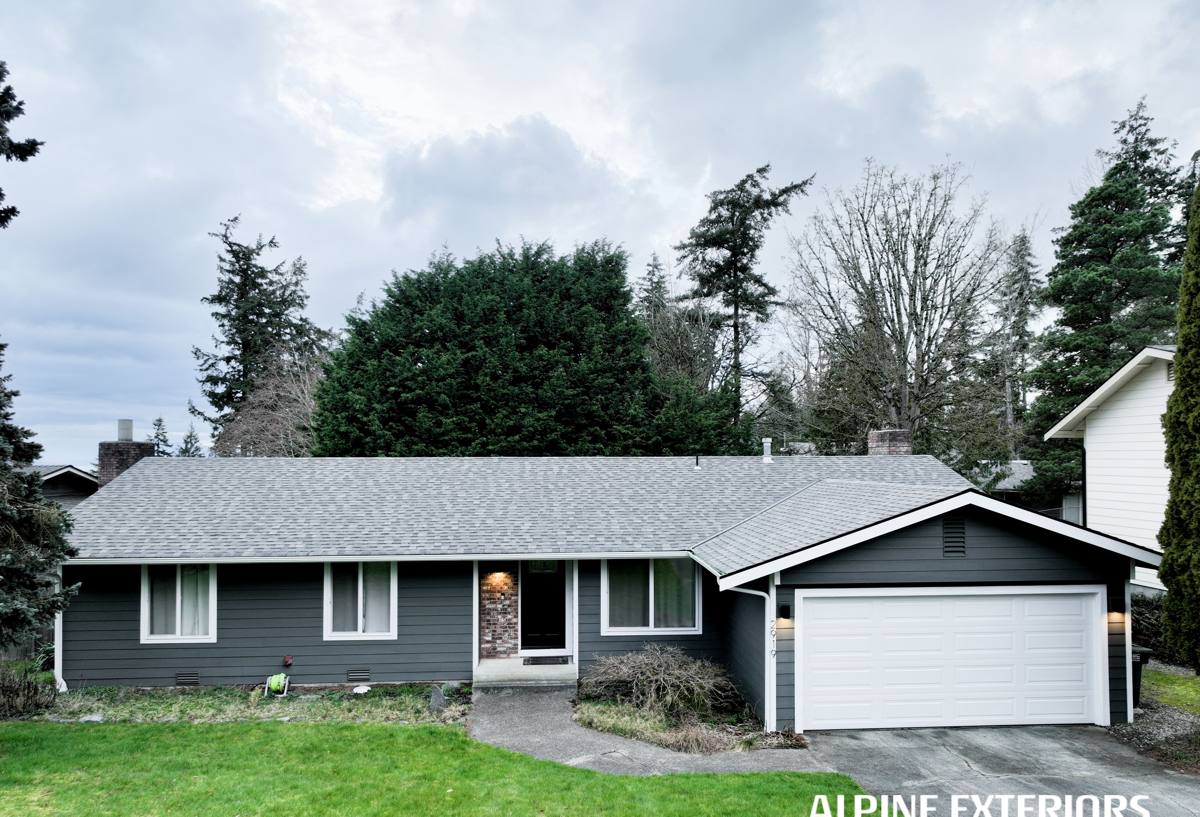
What Clearwater's Climate Actually Does to Siding
It helps to understand the specific mechanisms at work, not just the general idea that "Florida is tough on houses."
Wind and Wind-Driven Rain
During tropical storms and hurricanes, wind doesn't just push against siding — it drives rain horizontally into seams, laps, and fastener points. Siding that isn't installed with correct overlaps, proper fastening patterns, and sealed penetrations will let water behind the panel, where it can sit against sheathing and framing unseen. The siding material matters, but the installation detailing matters just as much, sometimes more.
Year-Round UV
Clearwater doesn't get a real off-season for sun exposure. Materials that rely on field-applied paint or stain go through repeated expansion, contraction, and UV breakdown cycles that eventually crack or chalk the finish, exposing the substrate underneath. A finish that's baked on at the factory under controlled conditions holds up differently than one applied on-site and touched up over the years.
Salt Air
Even away from the immediate waterfront, salt aerosol travels on Gulf breezes and settles on exterior surfaces across Pinellas County. Salt accelerates corrosion of exposed metal fasteners and trim, and it can degrade certain coatings faster than inland climates would. Material choice and fastener specification both need to account for this, not just in coastal-front homes but broadly across the Clearwater area.
Humidity and Moisture Cycling
High ambient humidity means siding assemblies rarely get to fully dry out between rain events. Materials that absorb moisture and don't release it well are more prone to swelling, rot, or delamination over time in this kind of cycle.
Why We Standardize on James Hardie, Full Stop
We install James Hardie fiber cement siding exclusively — no exceptions for other brands or materials. That's a deliberate standard, not a lack of options.
Fiber cement as a category (cement, sand, and cellulose fiber, cured into rigid boards) is inherently non-combustible and dimensionally stable in a way that wood-based composite sidings and vinyl are not. Within that category, we've chosen James Hardie specifically because of a few concrete reasons:
- Climate-engineered product lines. Hardie manufactures HZ5 products specifically formulated for Gulf Coast and Southeast humidity and moisture conditions, rather than a single one-size-fits-all formulation.
- ColorPlus factory-applied finish. The color and finish coat is baked on at the factory under controlled conditions, rather than field-applied, which affects how evenly it weathers and how long it holds up under constant UV.
- Non-combustible core material. Fiber cement doesn't feed a fire the way wood-based siding products can, which matters both for safety and for some insurance considerations.
- A transferable warranty backed by a large, established manufacturer, which matters more in a market where homes change hands and buyers want documented history on major exterior work.
- Track record when installed to spec. Hardie siding has been on the market and installed at scale in coastal and humid climates for decades, so its long-term behavior in exactly this kind of environment is well understood.
We're not going to tell you every alternative product is bad — LP SmartSide, vinyl, and other fiber cement brands all have legitimate use cases and honest trade-offs. But once we weighed maintenance burden, moisture behavior, installation sensitivity, and long-term performance in a hurricane-and-humidity climate like Clearwater's, James Hardie is what we're willing to put our name behind and warranty our labor on.
What a Correct Fiber Cement Installation Actually Involves
Fiber cement siding is only as good as its installation. A large share of the siding problems we get called out to inspect on Pinellas County homes trace back to installation shortcuts, not the material itself. A correct James Hardie install on a Del Oro home includes:
- Proper water-resistive barrier installed and lapped correctly behind the siding, so it's the primary drainage plane, not the siding face itself.
- Correct fastener type, spacing, and penetration depth per Hardie's published installation specifications — this is one of the most common places installers cut corners.
- Minimum clearances from grade, roofing, decks, and other transitions to keep the bottom edge of the siding from sitting in standing water or trapped moisture.
- Sealed and flashed penetrations at every window, door, vent, and fixture — this is where wind-driven rain finds its way in if it's not detailed correctly.
- Correct joint treatment at butt joints and inside/outside corners, using the specified gap and sealant approach rather than tight-butted or caulk-only joints that will fail under thermal movement.
- Field-cut edge sealing wherever a board is trimmed on-site, since cut edges expose the raw substrate to moisture if left untreated.
None of this is exotic — it's published in Hardie's own installation manual. But skipping any one of these steps is how a fifty-year siding material ends up with a ten-year problem.
Our Process for Del Oro Siding Projects
We run the same disciplined process on every job, adjusted for what your specific home needs:
- On-site assessment. We look at your current siding condition, the substrate underneath, existing moisture damage if any, and how your home's exposure (wind direction, sun exposure, proximity to landscaping or the coast) should inform the install.
- Written estimate. You get a clear scope: removal of existing siding, substrate repair if needed, product selection, and labor — no vague allowances.
- Substrate prep and repair. Any rotted or damaged sheathing gets addressed before new siding goes on. Covering up a compromised substrate is one of the worst things a contractor can do, and we won't do it.
- Water-resistive barrier and flashing installation. This layer goes in correctly before a single piece of siding is hung.
- James Hardie siding installation to manufacturer specification, including fastening, gapping, and joint treatment as outlined above.
- Trim, caulking, and paint touch-up at cut edges and transitions.
- Final walkthrough with you before we consider the job done.
Choosing a Siding Style and Finish for a Del Oro Home
James Hardie offers a range of profiles and finishes, and the right one depends on your home's architecture and your own preference — we're not going to push a single look on every property.
Common Profile Options
Lap siding (traditional horizontal boards) is the most common choice and works well on most Clearwater-area homes. Board-and-batten gives a more vertical, modern look and works well as an accent or full facade depending on the home. Shingle-style panels can replicate a more textured, coastal look for homes going for that aesthetic.
Color and ColorPlus Finish
Because the ColorPlus finish is factory-applied, color consistency across the whole job is more reliable than field-painted siding, and it's backed by its own finish warranty separate from the product warranty. Lighter colors tend to reflect more heat, which is worth considering given how much direct sun Clearwater homes get through the year — though the final choice always comes down to what fits your home and any HOA or deed restriction requirements that may apply in your specific neighborhood.
What Drives Cost on a Del Oro Siding Job
Every home is different, so we won't quote a number without seeing the property, but these are the main factors that move the price up or down:
| Factor | Why It Matters |
|---|---|
| Removal of existing siding | Tear-off and disposal adds labor, especially with multiple layers or asbestos-era materials |
| Substrate condition | Rotted or moisture-damaged sheathing needs repair before new siding can go on correctly |
| Home size and wall complexity | More square footage, dormers, and corners mean more material and more detail work |
| Siding profile chosen | Lap, board-and-batten, and shingle-style panels vary in material and labor cost |
| Trim and accent work | Custom trim details around windows, doors, and roof lines add labor time |
| Access and site conditions | Landscaping, fencing, or limited access around the home can affect labor time |
Maintaining Fiber Cement Siding in a Gulf Coast Climate
Correctly installed James Hardie siding is low-maintenance, not no-maintenance. A little attention goes a long way in this climate:
- Rinse siding periodically to remove salt residue and airborne grime, especially on sides of the home facing prevailing winds.
- Keep sprinklers and irrigation heads from spraying directly and repeatedly onto siding.
- Trim landscaping back from the wall line so siding can dry out fully after rain instead of staying damp against foliage.
- Inspect caulking at joints, corners, and penetrations annually, and have any cracked or missing sealant addressed before storm season.
- After major wind events, do a visual check for loose boards, damaged trim, or displaced flashing.
- Repaint (if you ever choose to, beyond the factory finish) using products compatible with fiber cement, and only when actually needed rather than on a fixed schedule.
Why Local Experience in Del Oro Matters
Siding work isn't generic. A crew that regularly works in and around Del Oro and the greater Clearwater area understands the practical realities specific to this part of Pinellas County: how local wind exposure and sun orientation tend to affect different sides of a home, what permitting and inspection processes look like with the city and county, and how to sequence a project so your home isn't left exposed during Florida's unpredictable afternoon storm pattern. That local familiarity shows up in small decisions throughout a project — decisions that matter more in a hurricane-prone coastal climate than they would somewhere milder.
If you're considering fiber cement siding for a Del Oro home, we're glad to walk the property with you, look at what your current siding is doing (or failing to do), and give you a straightforward, no-pressure estimate for correctly installed James Hardie siding built for this climate.