 Clearwater Roofing
 Board & Batten Siding Built for Dunedin's Coastal Conditions
Board and batten has a distinct look — bold vertical lines, deep shadow reveals, a clean cottage or craftsman feel that a lot of Dunedin homeowners want for a full exterior or an accent gable, porch gable, or dormer. It's a strong style choice. It's also a style that punishes a sloppy install more than almost any other siding profile, because every seam is a batten, and every batten is a place water can get behind the cladding if the job isn't done right.
We install board and batten in Dunedin using James Hardie fiber cement, and we don't cut it in vinyl, wood, or engineered wood products. This page walks through what the local climate does to vertical siding, what a correct board and batten installation actually requires, and why the system and the crew both matter more here than they would somewhere inland.
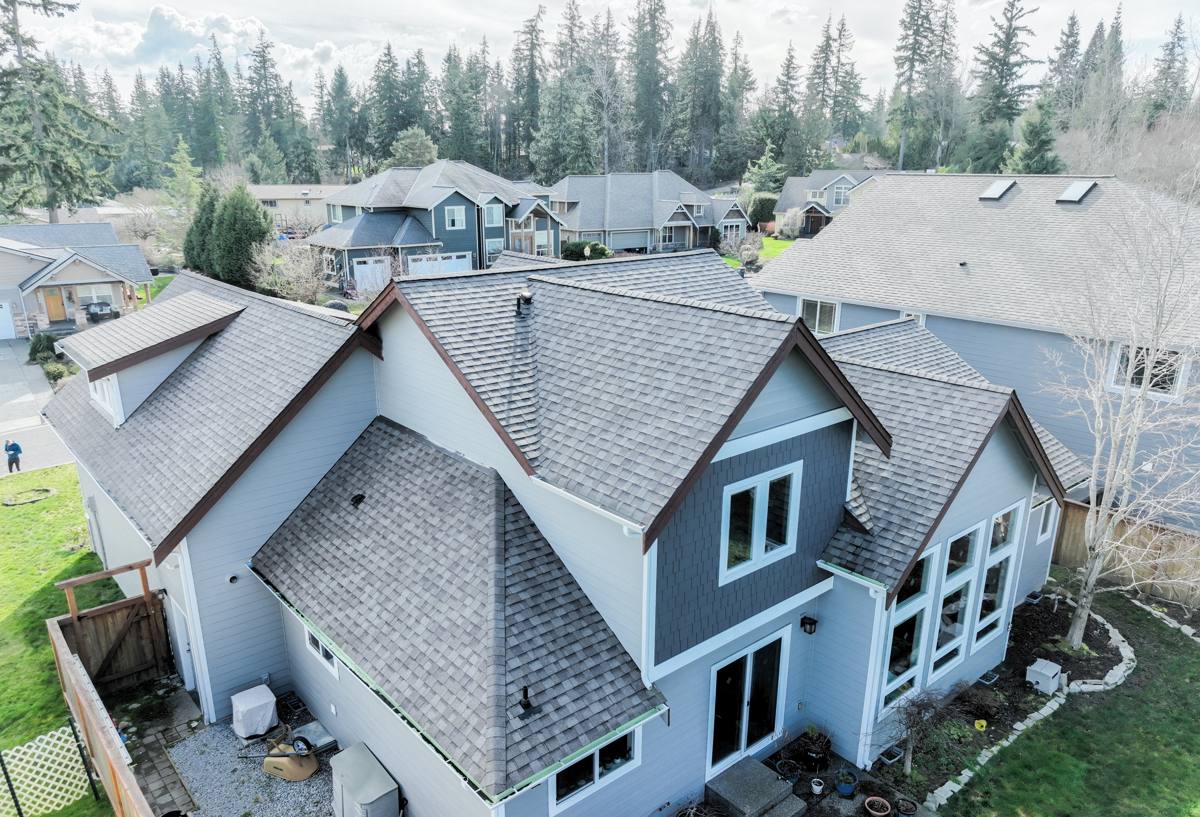
What Dunedin's Climate Does to Vertical Siding
Dunedin sits on the Pinellas County coast, which means every exterior product on a home here is dealing with a combination of stresses that most of the country never sees at the same intensity, all at once, year after year.
Hurricane-Force Wind Loads
Wind doesn't just push on siding — it creates negative pressure that pulls panels away from the wall, and it drives water sideways into any gap it can find. Board and batten has more vertical seams per square foot than horizontal lap siding, which means more places where fastening pattern and batten attachment either hold up under uplift or don't.
Intense, Year-Round UV
Florida sun is hard on paint and coatings in a way that shows up first on vertical surfaces and battens, which catch more direct light through more of the day than horizontal boards. Cheap or field-applied finishes chalk, fade, and crack faster under this kind of exposure.
Wind-Driven Rain
Rain in a coastal storm doesn't fall straight down — it comes in at an angle, sometimes nearly horizontal. That means the flashing and water-resistive barrier behind the siding, and the gap and sealant detail at every batten, do a lot more work here than they would in a dry climate.
Salt Air
Being close to the Gulf means airborne salt settles on every exterior surface. Over years, it accelerates corrosion on fasteners and hardware and degrades materials that aren't rated for a marine-influenced environment. Fastener choice on a board and batten job matters as much as the siding itself.
The James Hardie Board & Batten System We Install
We build board and batten walls in Dunedin using James Hardie vertical panel siding with Hardie batten trim over the seams, finished in factory-applied ColorPlus coatings. A few things about that system matter specifically for this climate and this look:
- Non-combustible fiber cement core — doesn't feed a fire, doesn't attract wood-boring insects, and doesn't rot the way solid wood board and batten can in a humid coastal climate.
- Factory-baked ColorPlus finish — cured under controlled conditions, not brushed on at the job site, which gives it better UV and fade resistance than field-painted wood or primed products.
- HZ10 climate-engineered formulation — Hardie's HZ10 product line is engineered for high-moisture, high-humidity climates like ours, which is what we specify for Dunedin work rather than a general-purpose formulation meant for drier regions.
- Consistent panel dimension and density — this matters more on board and batten than lap siding, because uneven panels show as crooked shadow lines the moment the sun hits the wall at an angle.
What a Correct Board & Batten Installation Actually Involves
The finished look of board and batten is simple. Getting there correctly is not. This is where most of the failures we get called out to inspect on other contractors' work actually start.
Water Management Comes First
Before any panel goes up, the wall needs a properly lapped water-resistive barrier and correctly integrated flashing at every window, door, and penetration. On a vertical profile, water that gets behind the cladding has a straight path down, so any flashing mistake near the top of a wall can show up as damage much lower down, sometimes years later.
Fastening and Batten Spacing
Battens need consistent, code-correct spacing and fastening into structural framing, not just into the panel or sheathing. In a hurricane wind zone, fastener type, length, and pattern are not places to save time — they're the difference between siding that stays on the wall in a storm and siding that doesn't.
Expansion Gaps and Sealant Details
Fiber cement expands and contracts with temperature and humidity swings. Panels and battens need the manufacturer-specified gaps at joints, corners, and trim, sealed with the correct sealant — not caulked tight, which traps moisture and causes buckling.
Corrosion-Resistant Fasteners and Hardware
Given the salt air, we use fasteners and flashing rated for coastal exposure. Standard hardware corrodes faster here than it would inland, and a corroded fastener on a board and batten wall eventually means a loose batten and a water path behind it.
A Practical Installation Checklist
- Wall sheathing inspected and repaired before any barrier goes on
- Water-resistive barrier installed with correct lap and integrated flashing at all penetrations
- Panels fastened per manufacturer and wind-zone specification, into framing
- Battens spaced and fastened to code, not just for visual spacing
- Expansion gaps maintained at all joints, corners, and trim
- Coastal-rated fasteners and flashing hardware used throughout
- Factory ColorPlus finish protected and touched up only with manufacturer-matched product
Board & Batten Material Options — An Honest Comparison
Board and batten can be built in a few different materials. Here's how they actually compare for a Dunedin exterior, which is why we standardized on one of them.
| Material | How It Handles This Climate | Long-Term Consideration |
|---|---|---|
| Solid or engineered wood | Attractive initially, but humidity and rain exposure drive rot, swelling, and insect vulnerability over time | Repainting and board replacement cycles add up; a real, ongoing maintenance commitment |
| Vinyl board and batten | Won't rot, but can warp or become brittle under intense UV and doesn't hold up as well to high wind uplift | Limited repair options — damaged sections are hard to color-match years later |
| LP SmartSide / engineered wood panel | Better than solid wood, but still a wood-based core that depends heavily on unbroken factory coating and correct field sealing at every cut edge | Any coating breach at a cut edge or fastener becomes a moisture entry point |
| James Hardie fiber cement | Non-combustible, dimensionally stable, engineered coastal formulation (HZ10) available | Requires correct installation detailing, but the material itself doesn't rot or feed insects |
We're not going to tell you wood or engineered panel board and batten never works. We are telling you why, after years of installing and repairing siding on this coast, fiber cement is the only material we're willing to warranty our labor on.
How We Approach a Dunedin Board & Batten Project
- On-site assessment — we look at your current wall condition, wind exposure, and how much of the home (full exterior, accent gable, porch feature) you're planning to cover.
- Product and profile selection — panel width, batten spacing, and reveal depth, matched to the style you're after and to Hardie's specifications for our wind zone.
- Written estimate — a clear scope covering tear-off if needed, water barrier and flashing work, materials, and finish color.
- Installation — following manufacturer fastening schedules and local code, with attention to every flashing detail before panels go up.
- Final walk-through — checking sealant lines, fastener finish, and overall alignment before we call the job done.
What Drives the Cost of a Board & Batten Job
| Factor | Why It Matters |
|---|---|
| Wall condition underneath | Rotted or damaged sheathing found during tear-off needs repair before new siding goes on |
| Scope — full exterior vs. accent area | A single gable or porch feature costs far less than a whole-house install |
| Panel and batten profile | Reveal depth and batten spacing affect material quantities and labor time |
| Height and access | Second-story walls and steep rooflines around gables take more time and equipment |
| Existing trim and flashing work | Windows, doors, and roof-to-wall transitions may need new flashing integrated during the install |
We'll walk through these factors specific to your home during the estimate rather than quoting a number before we've seen the wall.
Why Working With a Crew That Knows Dunedin Matters
Board and batten installed to a generic national spec isn't the same as board and batten installed for a specific coastal wind zone in Pinellas County. Local permitting offices, wind-load requirements, and the realities of what actually happens to an exterior wall exposed to Gulf air are things a crew learns by working here repeatedly, not by reading a manual once. We've seen what wind-driven rain does to a poorly flashed batten seam, what salt air does to the wrong fastener, and what a few Florida summers do to a coating that wasn't rated for this kind of UV. That experience shapes every detail on the checklist above, and it's the reason we don't treat board and batten as an easier or simpler job than standard lap siding — if anything, we treat it as one that demands more attention to the details nobody sees once the wall is finished.
If you're considering board and batten for your Dunedin home, we're happy to walk the property with you, talk through where it makes sense, and give you a straightforward, no-pressure estimate. There's a form below — reach out and we'll get you scheduled.