 Clearwater Roofing
 Seminole sits a few miles inland from the Gulf beaches in Pinellas County, but the distance from the water doesn't buy much protection. Salt-laden air still drifts in daily, summer storms still push rain sideways into walls, and the same intense Florida UV that fades siding on the coast works just as hard here. Add the canal and waterway lots common in this part of the county, plus a housing stock that skews toward homes built decades ago, and Seminole ends up carrying some of the same siding stress as anywhere else in the Tampa Bay area, just with its own particular mix of exposure.
We install exclusively James Hardie fiber cement siding, and this page is focused specifically on what that looks like for a Seminole home: what the local climate demands from a siding system, which Hardie product lines make sense here, what a correct installation actually involves, and why the details matter as much as the material choice itself.
What Seminole's Climate Demands From a Siding Material
A siding material in this part of Pinellas County has to do several jobs at once, not just one. It has to hold its finish under sun exposure intense enough to break down lower-grade coatings within a few years. It has to keep water out when a summer storm or a tropical system drives rain sideways into butt joints and trim intersections instead of letting it run straight down the wall. It has to tolerate salt-laden air settling on every exterior surface day after day, which accelerates corrosion on exposed fasteners and stresses coatings that weren't formulated for a marine-influenced climate. And it has to stay mechanically sound through hurricane-force wind loads that Pinellas County code takes seriously, not as a once-a-decade event but as a real design condition. Fiber cement was engineered around exactly this combination of stresses — it's rigid, non-combustible, and doesn't rely on flexibility or a thin protective shell the way vinyl does, and it doesn't have an organic wood core that swells and invites rot the way engineered wood products do. That's the baseline reason fiber cement is the right category of material for a Seminole home. The rest of this page is about what separates a fiber cement job that actually performs for decades from one that doesn't.
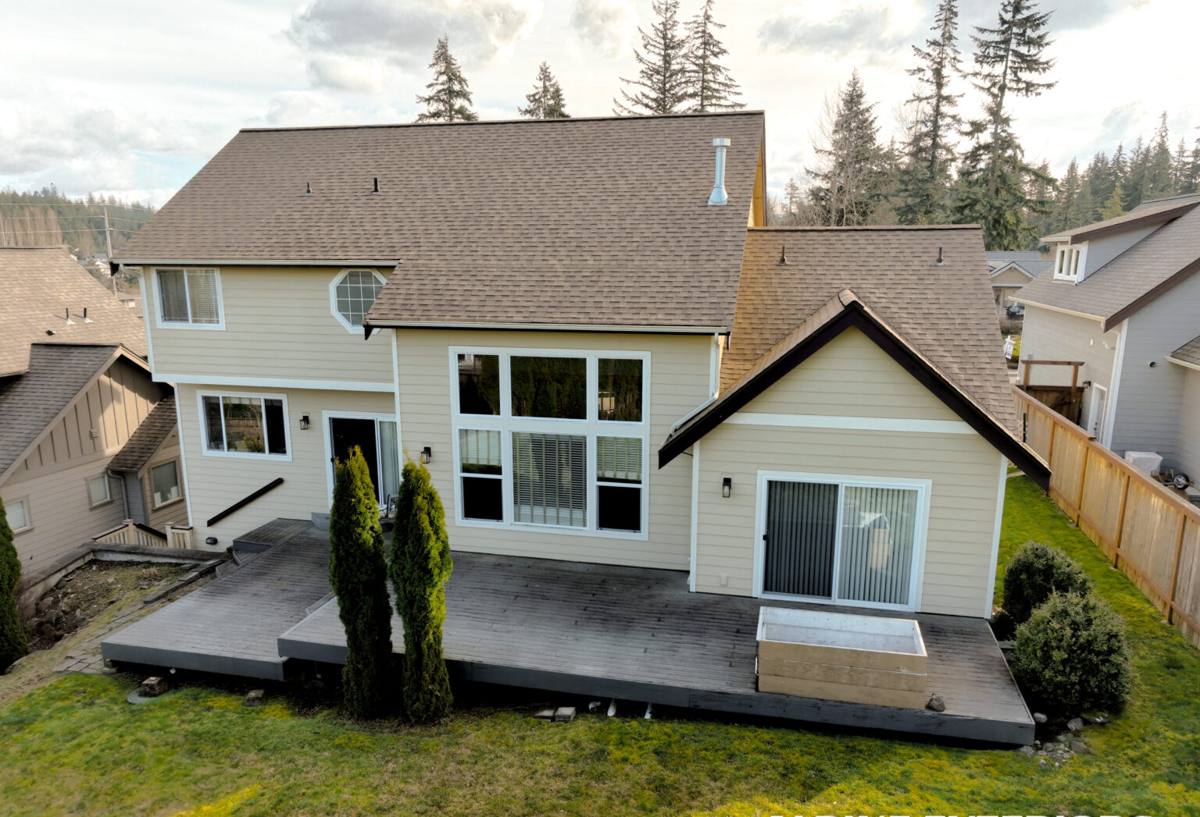
What James Hardie Fiber Cement Actually Is
James Hardie siding is manufactured from a mix of Portland cement, sand, and cellulose fiber, cured into a dense, dimensionally stable board. It doesn't absorb and release moisture the way wood or wood-composite siding does, so it doesn't swell, cup, or telegraph movement through its finish the way organic materials can over a Florida wet season. It's also non-combustible, which matters to homeowners and insurers alike and is a meaningfully different fire profile than any wood-based siding product.
HZ5 Climate Engineering
James Hardie doesn't sell one generic formulation everywhere in the country. It manufactures climate-specific product lines, and homes in our part of Florida fall under the HZ5 specification — a formulation engineered for high-humidity, high-moisture-exposure regions rather than the freeze-thaw conditions a northern climate deals with. That's not a marketing label; it's a different mix tuned to hold up where humidity stays high and rain events are frequent, which describes Pinellas County for most of the year.
ColorPlus Factory Finish
Most of the visible failures we see on older siding in this area trace back to the finish, not the substrate underneath it — chalking, fading, and peeling on sun-facing walls long before the material itself is actually compromised. ColorPlus is baked on in a factory-controlled process through multiple coats, rather than sprayed or brushed on site after installation, and it's engineered specifically to resist the UV fading and chipping that field-applied paint struggles with under sustained Florida sun. It also comes with color-matched caulk and touch-up products, so a repair years down the road doesn't leave an obvious patch.
Choosing the Right Hardie Product Line for a Seminole Home
Fiber cement isn't a single product — James Hardie makes several distinct siding profiles, and the right one depends on the home's architecture, the look a homeowner wants, and how the surfaces are exposed to sun and weather.
- HardiePlank lap siding — the most common choice for full re-sides, available in multiple exposures and in smooth or cedarmill (wood-grain) texture, giving a traditional horizontal look
- HardiePanel vertical siding — used for board and batten or modern vertical-plank looks, often paired with HardieTrim battens
- HardieShingle — a shingle-profile product used for accent gables, dormers, or a full shingle-style exterior where that architectural look is wanted
- HardieTrim — corner boards, frieze boards, and window/door trim engineered to match the siding's expansion and finish characteristics
On a lot of Seminole homes we see a mix — HardiePlank on the main elevations with a HardieShingle or HardiePanel accent on a gable or entry feature. The products are designed to be used together, with matching trim and finish, so those transitions look intentional rather than mismatched.
What a Correct Fiber Cement Installation Involves
Fiber cement is only as good as the installation behind it. The material itself resists rot and doesn't swell with humidity, but a poorly installed job can still let water behind the wall, corrode fasteners early, or crack panels that were fastened too tight or spaced wrong. Every one of these details is spelled out in James Hardie's published installation specifications, and skipping any of them is what turns a 30-to-50-year product into a 10-year problem.
- A properly lapped, continuous water-resistive barrier installed behind the siding — not just house wrap stapled up and left with gaps at seams
- Correct clearance maintained between the bottom of the siding and grade, roof lines, decks, and patios, so water and debris don't wick moisture into the board's cut edge
- Corrosion-resistant fasteners, sized and spaced to the local wind zone's fastening schedule, driven flush rather than overdriven or underdriven
- Butt joints and panel seams gapped and treated to manufacturer spec, with all field-cut edges sealed before installation
- Flashing properly integrated at every window, door, and roof-to-wall penetration, lapped in the correct direction to shed water downward and outward
- Caulk used only where specified, in a color-matched product, rather than as a substitute for proper flashing and joint design
None of this is optional detail work. It's the difference between fiber cement that performs the way the material is engineered to and fiber cement that develops the same water-intrusion problems as a poorly installed product of any material.
Our Process for a Seminole Fiber Cement Project
- Exterior inspection — we walk the home, check for soft spots and moisture near trim, windows, and the lower courses, and look at how water currently drains around the foundation and any waterfront or canal-adjacent grading
- Tear-off and sheathing check — existing siding comes off and the sheathing underneath gets inspected before anything new goes up; any rot or damage found gets repaired first, not covered over
- Water-resistive barrier and flashing — a continuous barrier and properly integrated flashing go in at every penetration before the first piece of siding is hung
- Siding installation — HardiePlank, HardiePanel, or HardieShingle installed to manufacturer clearance, fastening, and joint specifications, matched to Pinellas County's wind zone requirements
- Trim and detail work — corner boards, window and door trim, and fascia installed to match the chosen product line
- Final walkthrough — we cover caulking, any touch-up needs, and what routine care looks like going forward
Cost Factors for a Seminole Fiber Cement Project
Every home is different, and an honest number only comes from an actual inspection, but these are the factors that move the price most on jobs we quote in this area:
| Factor | Why It Matters |
|---|---|
| Home size and number of stories | More square footage and taller walls mean more material and labor, and multi-story homes require additional access equipment |
| Condition of existing siding and sheathing | Homes with hidden rot or water damage need sheathing repair before new siding goes up, which adds time and material |
| Product line and profile chosen | HardiePanel and HardieShingle installations generally involve more labor per square foot than standard HardiePlank lap siding |
| Amount of trim and architectural detail | Gables, dormers, multiple roof lines, and decorative trim all add cutting, fitting, and flashing work |
| Site access | Tight side yards, canal-front setbacks, fencing, and landscaping can slow staging and require extra care around the work area |
| Removal and disposal of old siding | Some materials, like old asbestos-cement siding on older Pinellas County homes, require special handling that affects both cost and timeline |
Why a Crew That Already Works Seminole Matters
Installation quality comes down to details that don't show up in a photo — how tight the flashing laps are, how much clearance is left at the bottom course, whether every cut edge got sealed before it went up. A crew that works this specific area regularly has already handled the quirks that come with it: the mix of older, original-construction homes and more recently updated properties, the tighter setbacks and drainage considerations that come with canal and waterway lots, and Pinellas County's wind zone requirements that dictate fastening schedules and product specifications. That last point isn't optional — permits here get reviewed against real code requirements, and a contractor who pulls permits in this county regularly knows what inspectors expect rather than applying a generic standard that doesn't match local code.
It also means faster, more reliable access to the right HZ5 product and matching trim, rather than waiting on special orders or substituting a close-enough component because the correct one isn't in regional stock.
Maintaining Fiber Cement Siding After Installation
One of the real advantages of a correctly installed Hardie system is how little it asks of a homeowner afterward. There's no annual repaint cycle to plan around and no wood core to worry about between storms. Realistic upkeep looks like this:
- An occasional rinse with a garden hose to clear salt residue, pollen, and general grime, especially on walls that face prevailing wind off the water
- A visual check after any major storm for loosened trim, damaged panels, or flashing that may have shifted
- Avoiding high-pressure washing directed straight at seams and joints, which can force water past caulk and flashing that's otherwise doing its job
- Keeping sprinklers and irrigation from spraying directly and repeatedly onto the base of the wall
- Touch-up only where actual physical damage occurs, using color-matched product — not as a routine maintenance task
If you're in Seminole and thinking about fiber cement siding — whether you're replacing aging original siding, dealing with storm damage, or planning ahead of the next hurricane season — we're happy to walk the property and put together a free, no-pressure estimate using the form below.