 Clearwater Roofing
 Why Island Estates Sits in a Category of Its Own
Island Estates is unlike most Clearwater neighborhoods we work in. It's a residential island community, surrounded by water on nearly every side, with canal-front and open-water lots that put siding within constant reach of salt spray, boat wake humidity, and reflected sun off the water. A house three miles inland in Pinellas County deals with Florida's climate. A house in Island Estates deals with that same climate plus a marine layer working on it every single day.
That distinction matters when you're choosing what goes on your exterior walls. Products that hold up fine in a typical subdivision can fail early on an island lot, and homeowners here often don't find out until moisture has already gotten behind the cladding. This page is about what fiber cement siding needs to do specifically for an Island Estates home, and how we approach that job differently than a standard Clearwater installation.
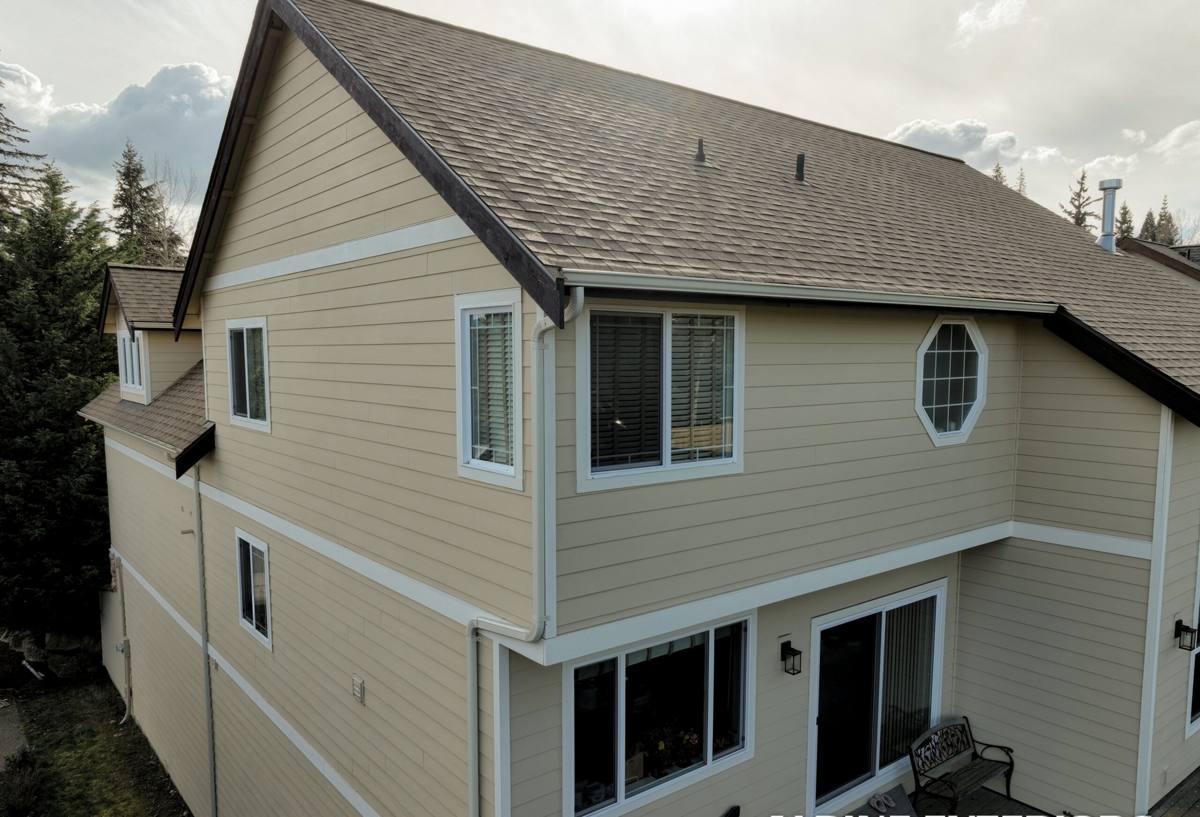
What Waterfront Exposure Actually Does to Siding
Salt Air, Every Day, Year-Round
Airborne salt doesn't just sit on the surface — it works into seams, fasteners, and any exposed edge of a building material. On a barrier-island or canal-front property, that exposure is constant rather than occasional. Metal fasteners corrode faster, caulk joints break down sooner, and any siding product with a weak factory finish will chalk, fade, or degrade well ahead of its rated lifespan.
Wind-Driven Rain
Clearwater sees intense, fast-moving storms, and on the water that rain rarely falls straight down — wind pushes it sideways into wall assemblies, window trim, and butt joints. Siding that isn't installed with the right clearances, flashing, and sealed joints will let that wind-driven rain find its way behind the cladding, where it causes rot and hidden damage long before anything shows on the surface.
UV Load and Heat Cycling
Reflected sunlight off open water adds to an already intense Gulf Coast UV load. Siding on a waterfront lot effectively takes sun exposure from two directions — direct overhead and reflected off the surface below. Paint and coatings that aren't engineered for this will fade unevenly and lose their protective properties years sooner than the same product on an inland home.
Hurricane-Force Wind
Pinellas County sits squarely in a hurricane-prone corridor, and an island property has no buffer of inland trees or terrain to slow wind speeds. Siding here needs to be rated and installed for higher wind-load performance, with attention to fastener schedule and edge detailing that a lot of standard installations skip.
Why We Only Install James Hardie Fiber Cement
We made a deliberate decision as a company: James Hardie fiber cement is the only siding product we install. We don't offer vinyl, LP SmartSide, Cemplank, Allura, or wood products like primed spruce or cedar. That's not a marketing position — it's a standard we hold because of what we've seen happen to alternative products under exactly the conditions Island Estates homes face.
Vinyl softens, warps, and can pull away from the wall in sustained high wind, and it offers essentially no resistance to wind-driven rain intrusion at the seams. Wood-based and wood-composite products — including engineered wood siding — are organic materials at their core, and organic materials in a salt-air, high-moisture environment are fighting a losing battle against rot and swelling no matter how well they're primed. Other fiber cement brands may be reasonable products in general, but James Hardie is the one we've found delivers the most consistent factory finish, the most climate-specific engineering, and the strongest track record when installed correctly in coastal Florida conditions.
James Hardie's HZ10 product line is engineered specifically for hot, humid climates like ours, and its ColorPlus factory-baked finish is designed to resist fading and chalking far better than field-applied paint. It's also non-combustible, which matters for a material that's going to spend decades in intense Florida sun and occasional lightning-driven brush fires. We install it because it's the product we're willing to stand behind on a house that's going to take this kind of daily punishment.
What a Correct Installation Actually Involves
Fiber cement siding is only as good as the installation behind it. On a waterfront property, the margin for error is smaller, because any mistake gets tested by moisture and wind almost immediately. A correct job includes:
- A proper weather-resistive barrier installed and lapped correctly behind the siding, not just stapled up as an afterthought
- Flashing at every window, door, and horizontal trim transition, directing water outward instead of behind the wall assembly
- Correct fastener type, spacing, and embedment depth — under-driven or over-driven nails are one of the most common causes of early siding failure
- Manufacturer-specified clearances from roof lines, decks, and grade, so the bottom edge of the siding isn't sitting in standing water or splash-back
- Sealed, factory-primed cut edges — any fiber cement edge cut on-site needs to be sealed before installation, not left exposed
- Joint and seam treatment appropriate for a high-wind-driven-rain environment, not just a standard caulk bead
Skipping any one of these doesn't usually cause an immediate, visible problem. It shows up two, five, or ten years later as rot, staining, or siding that's failed from behind while the face still looks fine. That lag is exactly why installation quality matters more than the brand name on the box.
Our Process for an Island Estates Project
Site Assessment
We start by walking the property and evaluating its specific exposure — which walls face open water or the canal, where wind-driven rain is most likely to hit directly, and where the existing siding or sheathing shows signs of past moisture intrusion. Waterfront lots don't all face the same direction relative to prevailing wind and sun, so this assessment shapes the detailing plan wall by wall.
Substrate Check
Before any new siding goes up, we check the condition of the wall sheathing and framing underneath. On older homes near the water, it's common to find some degree of hidden moisture damage from a prior installation that wasn't properly flashed. We address that before it gets covered up again.
Installation to Manufacturer Spec
We install James Hardie's HZ10 product line per manufacturer specification for our climate zone, with the flashing, fastening, and clearance details described above. This is also what keeps the manufacturer's warranty intact — installing outside of spec can void coverage even on a top-tier product.
Final Walkthrough
We review the completed work with the homeowner, including care and maintenance expectations specific to a waterfront property, before considering the job finished.
Cost Factors for Waterfront Fiber Cement Siding
Every project is different, but the factors that move the price on an Island Estates home are fairly consistent. This isn't a quote — it's a guide to what actually drives cost so you know what you're evaluating.
| Factor | Why It Matters Here |
|---|---|
| Existing substrate condition | Hidden moisture damage from prior siding is more common on waterfront lots and may require sheathing repair before new siding goes on |
| Wall exposure and orientation | Walls facing open water or prevailing wind need more attention to flashing and joint detail than sheltered walls |
| James Hardie product line and profile | Lap width, texture, and trim selections affect material cost and labor time |
| Trim, fascia, and soffit scope | Coordinating siding with trim replacement in the same project affects both cost and long-term water management |
| Access and site logistics | Canal-front and tight island lots can affect staging, scaffolding, and material delivery |
| Color and finish | Factory ColorPlus finishes carry a different cost than field-painted options, but hold up significantly better in salt air |
Maintenance Checklist for Island Estates Homeowners
Correctly installed James Hardie siding is low-maintenance, but "low-maintenance" doesn't mean "no maintenance" — especially this close to the water. A short annual routine catches small issues before they become expensive ones.
- Rinse salt residue off the siding periodically with a garden hose, especially on walls facing open water
- Inspect caulk lines around windows, doors, and trim once a year for cracking or separation
- Check that gutters and downspouts are directing water away from the base of the walls
- Look for any staining or discoloration near ground level, which can indicate splash-back or drainage issues
- Trim back landscaping or irrigation heads that spray directly onto the siding
- After any major storm, do a visual walk-around for cracked panels, loose trim, or exposed fastener heads
Why Local, Island-Specific Experience Matters
A siding crew that only works inland Pinellas County jobs doesn't necessarily think about wall orientation relative to open water, or the accelerated corrosion that comes with year-round salt exposure. A crew that regularly works Island Estates and similar Clearwater waterfront neighborhoods builds that judgment into every step — where extra flashing attention is worth it, which walls need the most conservative detailing, and how the local wind and rain patterns actually behave against a house on this kind of lot.
That familiarity doesn't replace manufacturer specification or good installation practice — it supplements it, by telling us where to be most careful on a given property before a single piece of siding goes up.
If you own a home in Island Estates and want a straight answer on what your siding needs — whether it's James Hardie fiber cement or an honest assessment that your current siding still has life left in it — we're happy to take a look. Request a free, no-pressure estimate using the form below.