 Clearwater Roofing
 Why Oldsmar Decks Wear Out Faster Than You'd Expect
Oldsmar sits along the northern edge of Tampa Bay, close enough to open water that every deck in the area deals with salt-laden air on top of everything else Florida throws at outdoor structures. That combination is harder on a deck than most homeowners realize until they're standing on one that's started to give underfoot.
Four things do most of the damage here. Intense, near year-round UV breaks down wood fibers and dries out the oils that keep boards flexible, which is why decking that looked fine two summers ago can turn gray, splintery, and brittle seemingly overnight. Wind-driven rain gets forced sideways during storms and works its way into joints, fastener holes, and end grain that a straight-down rain would never reach. Salt air corrodes metal hardware — nails, screws, joist hangers, bolts — from the inside out, often long before the corrosion is visible on the surface. And hurricane-force wind events put real lateral and uplift stress on ledger boards, railings, and post connections, the parts of a deck that hold it to the house and keep it from racking.
None of this means a deck is a bad investment in Pinellas County. It means a deck built or repaired without these conditions in mind will fail years before it should, usually in the connections and fasteners first, not the decking boards people tend to worry about.
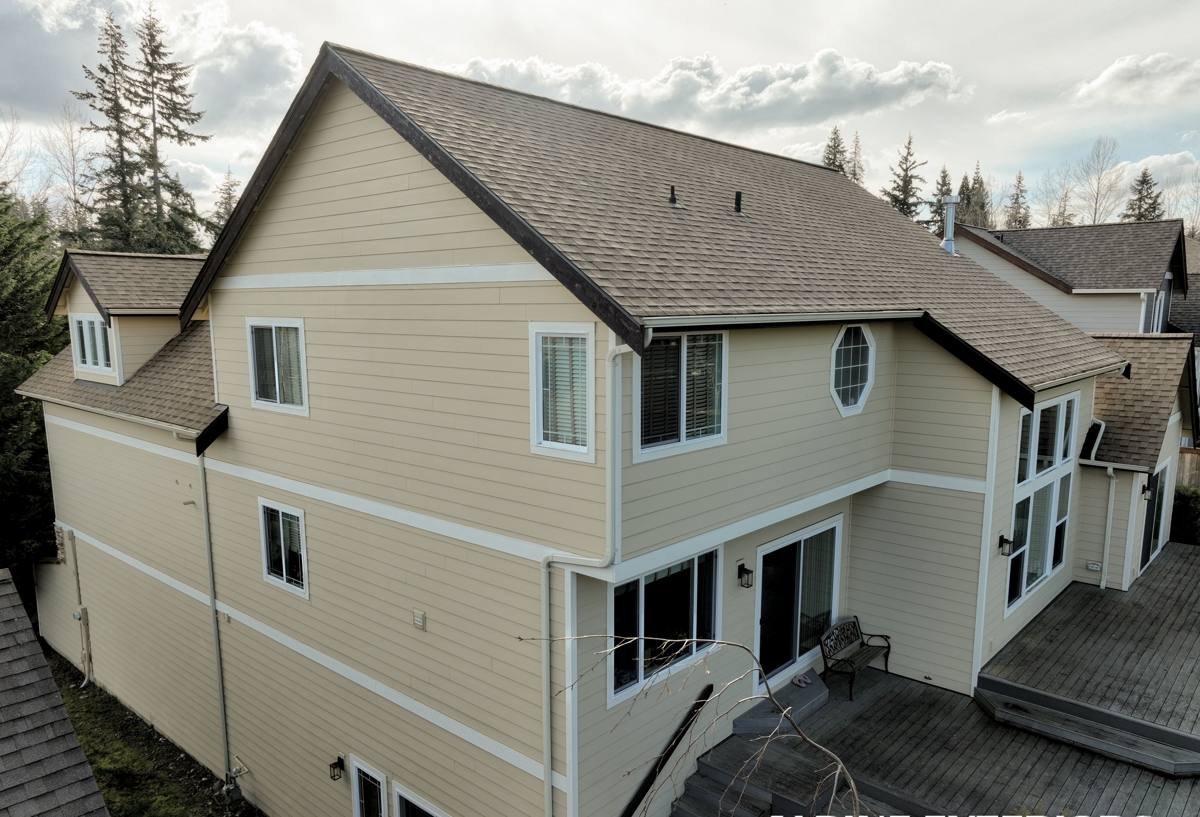
What "Deck Repair" Actually Covers
Deck repair isn't one job — it's a range of work depending on what's actually wrong. We break it into three categories when we look at a deck:
- Surface repair: replacing individual damaged or rotted boards, sanding and resealing weathered wood, fixing splintering or cupping on the walking surface.
- Hardware and connection repair: replacing corroded or failing fasteners, joist hangers, and structural screws; re-securing loose railings and stair stringers.
- Structural repair: addressing rot or damage in ledger boards, support posts, beams, or joists — the framing that carries the deck's actual load.
A deck can look fine and still have a structural problem underneath, especially around the ledger board where the deck attaches to the house. That's the connection point most responsible for serious injuries when decks fail, and it's also one of the hardest areas to inspect from a casual walk-around. Any legitimate repair estimate should include a look underneath the deck, not just an inspection of the boards you can see.
Signs Your Oldsmar Deck Needs Attention
Some warning signs are obvious. Others get ignored for a season or two because the deck still seems usable. Here's what we tell homeowners to check for, or to call us about if they'd rather not climb underneath:
- Boards that flex, bounce, or feel "spongy" when you walk on them
- Visible cracking, splintering, or graying that goes beyond surface weathering
- Railings or stair rails that wiggle or feel loose when pushed
- Rust streaks around fasteners, or visibly corroded screws and bolts
- Gaps opening up between the deck and the house at the ledger board
- A musty smell or soft, dark wood near ground contact points or under the deck
- Nails or screw heads that have backed out or popped above the surface
Any one of these on its own might be minor. Several at once, or anything involving the ledger board or support posts, is worth a professional look before the deck sees heavy use.
Wood vs. Composite: Repair Considerations
What your deck is built from changes how it fails and what repair looks like. We work on both, and we'll give you a straight read on which repair path makes sense rather than pushing a material because it's easier for us to install.
| Factor | Wood Decking | Composite Decking |
|---|---|---|
| Common failure mode | Rot, splintering, UV graying, warping | Fastener/board attachment issues, occasional swelling at cut edges |
| Repair approach | Board replacement, sanding, sealing, or staining | Board or clip replacement, matching color/lot can be a challenge |
| Salt air exposure | Accelerates fastener corrosion under the board | Shell resists moisture better, but fasteners still corrode |
| Maintenance to prevent repeat repairs | Reseal every 1–2 years in this climate | Periodic cleaning, minimal sealing needed |
| Structural framing underneath | Same pressure-treated framing either way | Same pressure-treated framing either way |
One point we're upfront about: the decking material — wood or composite — is almost never the reason a deck becomes unsafe. The framing underneath, especially fasteners and the ledger connection, is where structural problems actually start. Whatever's on top, that substructure needs the same attention.
How We Approach a Repair
We don't sell a repair off a quick look from the yard. Our process is the same whether the job turns out to be small or significant:
- Full inspection, top and bottom. We check the walking surface, but we also get underneath to look at joists, beams, posts, and — critically — the ledger board connection to the house.
- Identify the actual cause, not just the symptom. A soft board might be a bad board, or it might be a sign that moisture is getting trapped somewhere and will take out the next board too. We look for the source, not just the obvious damage.
- Written scope before any work starts. You'll know exactly what's being replaced, what's being repaired, and what hardware is going in, before we touch the deck.
- Repair using fasteners and hardware rated for coastal exposure. Given the salt air in this part of Pinellas County, standard interior-grade fasteners aren't an option — we use corrosion-resistant hardware appropriate for outdoor, coastal-adjacent conditions.
- Final check of railings, stairs, and structural connections before we call the job done, not just the boards that were the original complaint.
Repair or Replace? How We Help You Decide
Not every deck problem needs a full rebuild, and not every deck is worth patching indefinitely. A few honest factors we walk through with homeowners:
- Age and remaining framing life: A deck with sound framing and isolated surface damage is usually a good repair candidate. Widespread rot in the joists or posts often means repair costs approach replacement cost anyway.
- Extent of the damage: A few bad boards is a repair. Damage at multiple structural connection points, especially the ledger board, is a bigger conversation.
- How the deck was originally built: Decks built without proper flashing at the ledger, or with undersized or corroded original hardware, tend to have recurring problems even after a repair — those cases sometimes call for redoing the connection properly rather than patching around it.
- What you plan to do with it: A deck that gets heavy daily use or holds larger gatherings should be held to a higher standard than a rarely used side deck.
We'll tell you plainly if a repair is the right call or if you're better off putting that money toward a longer-term fix. It's not in anyone's interest — yours or ours — to repair the same soft spot twice.
Permits and Code Considerations
Structural deck work — anything involving framing, ledger board reattachment, footings, or railing systems — typically falls under Pinellas County or local building code requirements and may need a permit and inspection. This isn't a formality we skip to save time. Proper permitting matters for your safety, for insurance purposes, and for resale, since an unpermitted structural repair can become a real problem when you go to sell the house. Simple cosmetic work, like resealing or swapping a handful of worn boards without touching the frame, generally doesn't trigger the same requirements, but we'll tell you where your specific job falls before we start.
Keeping a Repaired Deck in Good Shape
A repair is only as good as the maintenance that follows it, especially in this climate. A few habits go a long way:
- Reseal or restain wood decking on a regular schedule — UV exposure here is more aggressive than in most parts of the country, so waiting too long between coats shortens the life of the repair
- Rinse salt residue off the deck periodically, especially after wind events, rather than letting it sit on the wood or hardware
- Keep gutters and downspouts clear so water isn't dumping directly onto or near the deck structure
- Check railings and stair connections a couple of times a year — loose hardware is easy to catch early and much cheaper to fix than a failure
- Address small issues (a popped screw, a slightly soft board) right away instead of waiting for them to spread
Why Hire a Crew That Already Works in Oldsmar
Deck repair done by someone unfamiliar with this area often misses the details that actually cause failures here. Fastener selection that works fine inland can corrode fast this close to Tampa Bay's salt air. Ledger connections need flashing and hardware sized for the wind loads this part of Florida sees during hurricane season, not just general building minimums. And knowing how local permitting works for structural deck repairs saves homeowners from finding out the hard way, at resale, that a repair wasn't done to code.
We work on decks throughout the Clearwater area, including Oldsmar, and we build every repair around the conditions this specific stretch of Pinellas County actually produces — not a generic national playbook.
If your deck has a soft spot, loose railing, or you just want an honest opinion on whether it needs repair or something more, we're glad to take a look. Use the form below to request a free, no-pressure estimate.