 Clearwater Roofing
 Composite Decking for Palm Harbor Homes
Palm Harbor sits close enough to the Gulf and to Old Tampa Bay that every outdoor structure on a property deals with the same three enemies: relentless UV, salt-laden air, and the heavy, wind-driven rain that comes through Pinellas County for a good chunk of the year. A deck here isn't just a place to put a grill and a couple of chairs — it's a structure that has to survive that combination season after season without turning into a maintenance chore or a safety problem. Composite decking, installed correctly, is one of the few deck materials that holds up to all three at once. This page covers what that actually means for a Palm Harbor property, what a correct installation looks like, and how our process works from first visit to finished deck.
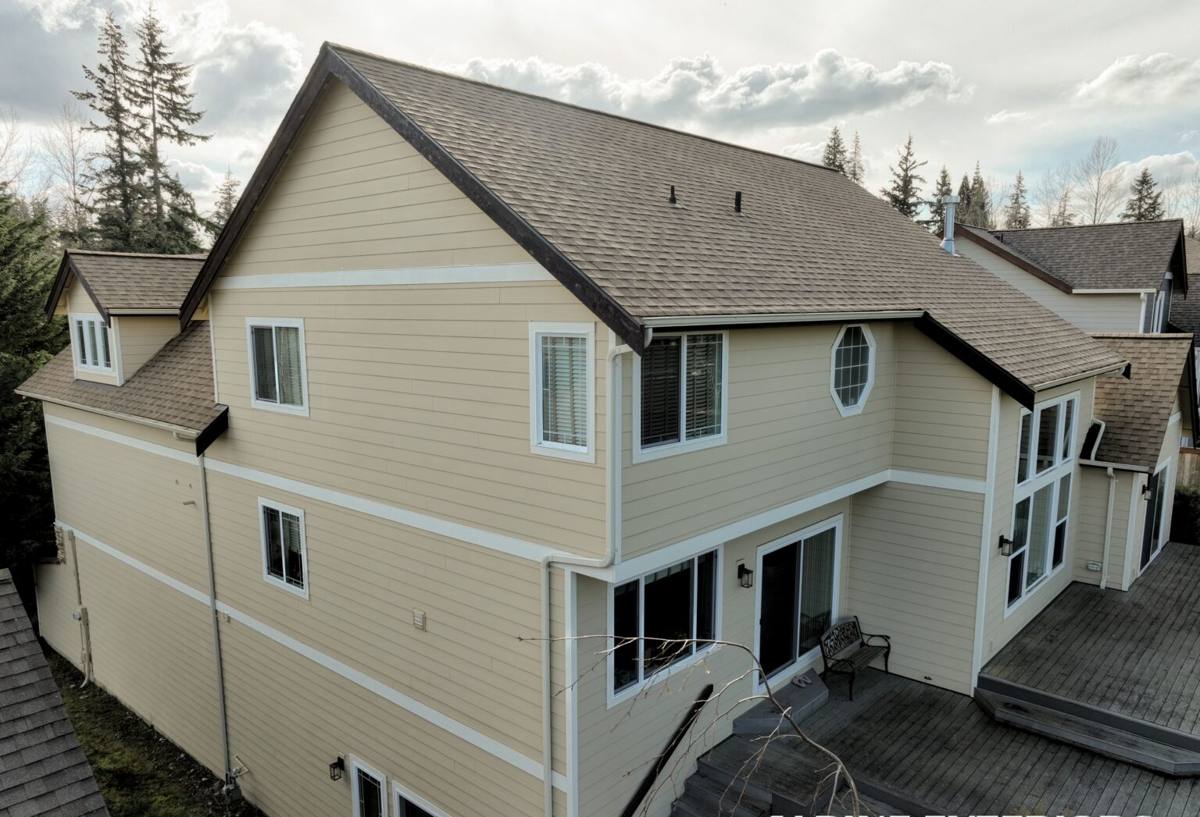
What Local Weather Actually Does to a Deck
It helps to understand the specific ways this climate attacks a deck, because it explains almost every decision that goes into a good installation.
UV and Heat
Florida sun is intense and consistent nearly year-round. Untreated or poorly finished wood grays and checks quickly under that kind of exposure, and even quality composite boards vary a lot in how well their color and surface hold up. Cheaper composites can fade unevenly or get chalky on the surface within a few seasons; better-formulated boards with a proper cap layer are built specifically to resist that.
Wind-Driven Rain and Moisture Cycling
Pinellas County doesn't just get rain — it gets rain pushed sideways by wind, which finds its way into every gap, fastener hole, and end cut that isn't properly sealed or detailed. Decks here go through constant wet-dry cycling, which is exactly the condition that causes wood to rot, cup, and loosen fasteners over time. Composite boards don't absorb water the way wood does, but the substructure underneath — the joists, the ledger board, the framing connections — still needs to be built and protected as if every board will get wet, because it will.
Hurricane-Force Wind
Any deck built in this area needs to be attached, fastened, and braced with storm-force wind loads in mind, not just everyday use. That means correct ledger attachment to the house structure, proper joist hangers and hardware rated for the fastener spacing required, and railings and stair connections that won't work loose under repeated wind loading over the years.
Salt Air
Even homes that aren't waterfront still see salt content in the air this close to the coast. Salt accelerates corrosion on any exposed metal — screws, joist hangers, post bases, railing brackets. It doesn't matter how good the decking boards are if the fasteners holding everything together start corroding within a few years.
Why Composite Makes Sense for This Area
We install a range of decking materials, and composite isn't automatically the right call for every homeowner or every budget. But for the specific combination of sun, salt, and moisture this area sees, it has real advantages over pressure-treated wood, which is why it's become the default recommendation for most Palm Harbor deck projects.
| Factor | Composite Decking | Pressure-Treated Wood |
|---|---|---|
| UV/fade resistance | Capped boards resist fading and chalking far longer than wood | Grays and roughens within 1-2 years without regular sealing |
| Moisture behavior | Doesn't absorb water into the board itself; won't rot | Absorbs moisture, prone to cupping, splitting, and rot over time |
| Maintenance | Periodic cleaning; no sealing or staining required | Needs sealing/staining every 1-2 years to hold up in this climate |
| Upfront cost | Higher material cost | Lower material cost |
| Long-term cost | Lower over the life of the deck — no refinishing labor or materials | Ongoing refinishing and repair costs add up over years |
| Surface feel in heat | Varies by product; lighter colors and certain formulations stay cooler | Can also get hot, but tends to feel more traditional underfoot |
The honest trade-off is upfront cost versus long-term maintenance. Composite costs more to install but doesn't ask for sealing, staining, or replacement of individual rotted boards down the road — which matters more in a climate that's actively working against wood every single day of the year.
What a Correct Installation Actually Involves
Composite decking is only as good as what's underneath it. Most of the deck problems we get called out to look at — in Palm Harbor and across the Clearwater area — trace back to substructure or fastening mistakes, not the decking boards themselves. A correct job includes:
- Ledger board attachment engineered and flashed to prevent water intrusion at the house connection — the single most common failure point on any deck
- Joists and framing spaced to the decking manufacturer's specification, not stretched to save material
- Corrosion-resistant, coastal-rated fasteners and hardware throughout, given the salt content in the air here
- Proper ventilation and drainage under the deck so water doesn't sit and cycle against the framing
- Hidden fastener systems or manufacturer-approved fastening methods, installed with the correct gap spacing for thermal expansion
- Railing and stair connections built to handle wind loading, not just static weight
- Board layout planned around drainage slope and picture-frame or border detailing where it's called for
Skipping any one of these doesn't show up on day one. It shows up two or three years later as a soft spot, a loose railing, or a board that's started to bow — problems that are far more expensive to fix after the fact than to build correctly the first time.
Our Process
Assessment and Design
We start with an on-site look at the existing structure (if there is one), the ledger connection point, drainage patterns around the house, and sun exposure across the day. That tells us what substructure work is needed and helps guide board color and profile choices that will actually hold up in the spot where the deck sits.
Framing and Structural Work
This is where the wind and moisture protection gets built in — correct ledger flashing, hardware rated for coastal conditions, and framing spaced and sized for both the decking product and the load requirements for this area.
Decking Installation
Boards go down with the fastening method specified by the manufacturer, correct expansion gaps, and attention to drainage slope so water sheets off rather than pooling.
Railings, Stairs, and Finishing
Railings and stairs get the same corrosion-resistant hardware treatment as the frame, and every connection is checked for wind resistance before we call the job done.
Cost Factors to Expect
Every deck is different, so we don't quote sight unseen — but these are the main variables that move the price on a composite deck project in this area.
| Factor | How It Affects Cost |
|---|---|
| Deck size and shape | Larger and more complex layouts (angles, multiple levels) increase labor and material |
| Substructure condition | Existing rot, undersized framing, or a bad ledger connection adds repair work before decking goes on |
| Board tier | Composite lines range from budget capped boards to premium high-performance formulations |
| Railing and stair scope | More linear feet of railing, and any stairs, add materials and installation time |
| Height and access | Elevated decks and difficult site access increase structural and labor requirements |
| Site drainage work | Grading or drainage corrections needed under the deck add to the scope |
Maintaining a Composite Deck in This Climate
Composite decking cuts maintenance dramatically compared to wood, but "low maintenance" doesn't mean "no maintenance" in a salt-air, high-UV environment. A little routine care keeps it looking and performing the way it should for the long haul.
- Rinse the deck periodically to clear salt residue and airborne debris before it builds up in the board texture
- Sweep off leaves, pollen, and organic debris regularly so nothing sits and stains the surface
- Clean with a soft-bristle brush and a composite-safe cleaner rather than a high-pressure setting that can damage the cap layer
- Check railing and stair hardware periodically for corrosion or loosening, especially after storm season
- Keep gutters and downspouts clear so runoff isn't dumping directly onto or under the deck
- Inspect the ledger board connection annually for any sign of moisture intrusion at the house
Why Local Experience Matters for This Job
A composite deck built to a generic spec sheet and one built for a Palm Harbor property aren't the same job. The fastener grade that holds up fine inland can start corroding within a few years this close to the Gulf. Framing that would pass in a drier climate can trap moisture here if drainage and ventilation aren't detailed correctly. A crew that already works this part of Pinellas County has already made those adjustments on other decks nearby and knows which shortcuts show up as problems two summers later. That local track record is worth more than a lower bid from a crew that's guessing at what this climate requires.
If you're considering a composite deck for a Palm Harbor or Clearwater property, we're happy to take a look and put together a straightforward, no-pressure estimate — just fill out the form below and we'll get in touch.