 Clearwater Roofing
 Siding Installation in Palm Harbor: What Local Homes Actually Need
Palm Harbor sits inside the stretch of Pinellas County that runs along the Gulf side of the Tampa Bay area, and homes here carry a specific kind of exterior wear. The siding on a Palm Harbor house isn't just a design choice — it's the barrier standing between the framing and a climate that pushes hard from several directions at once: intense sun for most of the year, hurricane-season wind and wind-driven rain, and a steady dose of salt-laden air moving in off the Gulf. Get the material or the installation wrong, and the problems don't show up as a single failure — they show up as slow, compounding damage that's expensive to catch once it's already behind the wall.
This page covers what a siding installation for a Palm Harbor home should actually involve: what the local climate demands, what correct installation looks like at the fastener and flashing level, how our process works, and why we only install one product system — James Hardie fiber cement — on homes in this area.
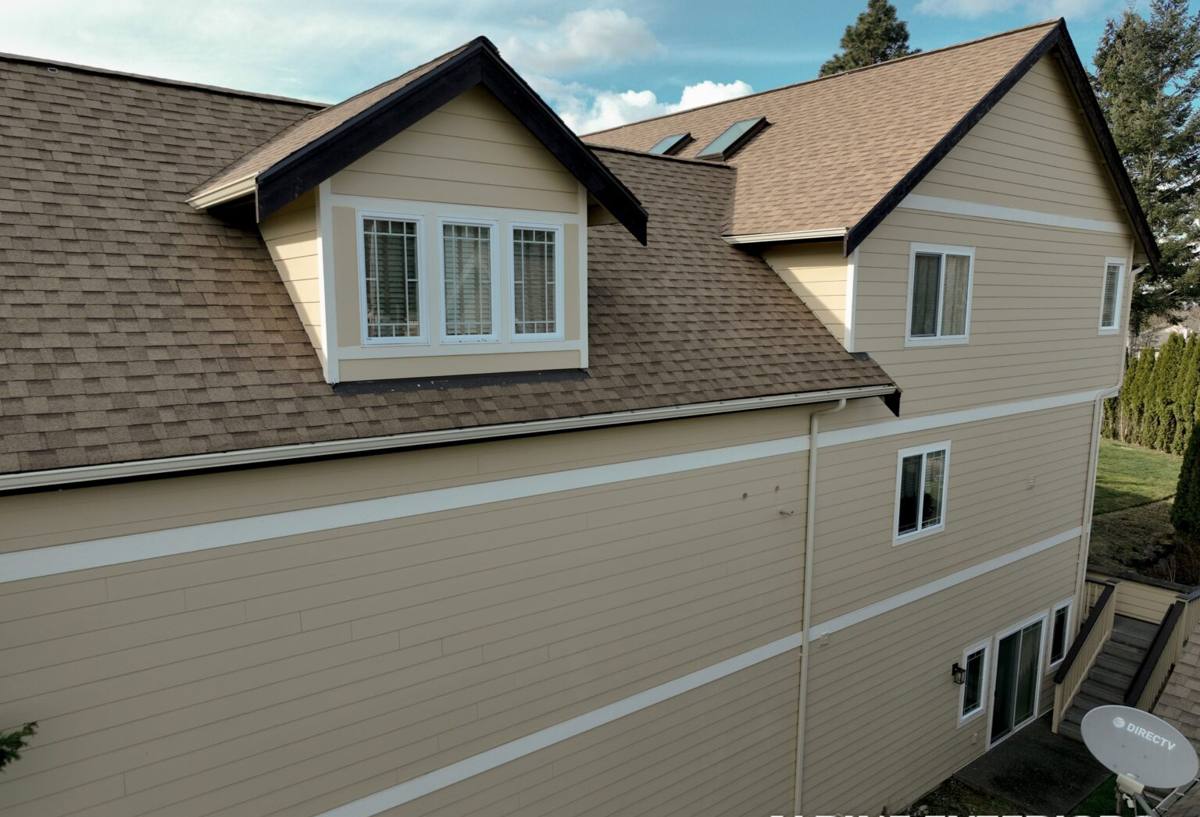
How Pinellas County's Climate Tests Every Siding Installation
Year-Round UV and Heat
Florida's sun load is one of the harshest in the continental U.S., and it doesn't ease off seasonally the way it does farther north. Siding faces months of direct UV exposure combined with surface temperatures that swing significantly between a hot afternoon and a cooler evening. Materials that aren't engineered for this cycle can fade, chalk, or soften over time, and the expansion and contraction that comes with those temperature swings puts continuous stress on seams, caulk lines, and fastener points.
Hurricane-Force Winds and Wind-Driven Rain
Palm Harbor is well within the part of Florida that plans for tropical storms and hurricanes every season. The wind itself is only half the concern — wind-driven rain is what actually gets past siding that isn't installed correctly, forcing water sideways and upward under laps and around trim in a way ordinary rain never would. A siding system can carry a good wind rating on paper and still leak if the flashing details and fastening pattern underneath weren't done to spec.
Salt Air and Humidity
Even set back from the immediate coastline, Palm Harbor homes sit in an environment with persistent airborne salt and humidity that stays elevated most of the year. Salt is corrosive to exposed metal fasteners and trim, and constant humidity gives moisture-sensitive materials very little opportunity to fully dry out between rain events. Over years, that combination is what separates siding that ages well from siding that quietly deteriorates behind its finish.
What a Correct Siding Installation Actually Involves
Fastening and Nailing Pattern
Every siding manufacturer publishes a fastening specification — nail type, spacing, and depth — and in a high-wind region like Pinellas County, that spec isn't optional detail. Overdriven nails crack fiber cement and create entry points for moisture; underdriven nails leave panels loose enough to work free in sustained wind. Correct fastening is invisible once the job is finished, which is exactly why it's the detail most likely to get shortcut by a crew that isn't used to installing to manufacturer spec.
Flashing, Clearances, and Water Management
Correct installation means flashing above windows, doors, and any horizontal trim so water is directed out and away from the wall assembly, not into it. It also means keeping the manufacturer's required clearance between the bottom of the siding and roof lines, decks, and grade — a gap that's easy to skip for a slightly cleaner look but that exists specifically to keep splash-back and standing moisture away from the cut edges of the panel.
Joints, Caulking, and Finish Integrity
Butt joints, corners, and any place siding meets trim need to be sealed with a caulk rated for exterior movement and UV exposure, not a general-purpose product that will shrink and crack within a couple of Florida summers. On factory-finished products, protecting that finish during installation matters too — field-painting over cut edges or repairing scuffed panels with the wrong product undercuts the whole reason a baked-on finish was worth paying for in the first place.
Why We Install Only James Hardie Fiber Cement Siding
We standardized on James Hardie fiber cement because it's the one siding system engineered specifically for the conditions described above. It's non-combustible, holds up to sustained UV without the fading and softening that shortens the life of some other materials, and Hardie's HZ5 product line is formulated for exactly the humidity and moisture cycling that Gulf Coast homes deal with year-round. The ColorPlus factory finish is baked on under controlled conditions, which gives it a fade and wear resistance that's difficult to match with field-applied paint, and it's backed by a strong transferable warranty when the installation is done to Hardie's specification.
We don't install vinyl, LP SmartSide, or other engineered-wood or composite siding products. Not because they don't have a place in the market, but because after years of doing this work in Pinellas County, we've concluded Hardie is the product we're willing to stand behind on homes exposed to this specific climate — and we'd rather turn down a job than install something we don't believe holds up here long-term.
Our Siding Installation Process for Palm Harbor Homes
The process is the same discipline on every job, because the climate risk is the same on every Palm Harbor street:
- On-site inspection — we look at the existing siding, sheathing, and any moisture damage already present before quoting anything.
- Product and color selection — choosing the right Hardie plank, shingle, or panel profile and ColorPlus color for the home.
- Permitting — pulling the required permit and confirming the install meets current Pinellas County wind and building code requirements.
- Tear-off and substrate prep — removing old siding and addressing any sheathing or moisture issues found underneath before anything new goes up.
- Installation to manufacturer spec — correct fastening, flashing, clearances, and joint treatment, not shortcuts that only show up as problems later.
- Final inspection and warranty registration — a walkthrough of the finished work and registering the installation for Hardie's warranty coverage.
Siding Options and How They Hold Up in Palm Harbor's Climate
Homeowners comparing siding for a Palm Harbor project often ask how the common options actually perform against this climate, not just against each other in a showroom. Here's an honest comparison:
| Factor | Vinyl | Engineered Wood | James Hardie Fiber Cement |
|---|---|---|---|
| UV / heat resistance | Can soften and warp under sustained heat | Generally stable structurally; surface coating can fade | Engineered for sustained UV; ColorPlus finish holds color |
| Wind-driven rain / moisture | Seams can allow water intrusion if not detailed correctly | Wood-based core is sensitive to prolonged moisture exposure | Fiber cement core is not moisture-sensitive the way wood-based products are |
| Salt air exposure | Generally tolerant, but can chalk over time | Coating and edge sealing are critical near salt air | Performs well when installed and finished to spec |
| Wind / impact performance | Lower impact resistance; can crack or blow off in high wind | Moderate; performance depends heavily on installation quality | Rated for high-wind regions when installed to code |
No siding material is maintenance-free in Florida. The real difference is what kind of maintenance a product needs and how forgiving it is when that maintenance gets pushed back a season or two — which happens in real life.
What Affects the Cost of a Siding Installation in Palm Harbor
A siding installation quote for a Palm Harbor home depends on more than square footage. The factors below are what actually move the number, and a contractor who can walk you through each one before you sign anything is doing the estimate correctly.
| Cost Factor | Why It Matters |
|---|---|
| Home size and wall complexity | More corners, gables, and trim detail mean more cutting, flashing, and labor time |
| Existing siding removal | Tear-off and disposal of old material adds cost before new siding goes up |
| Substrate condition | Sheathing repairs found during tear-off are priced separately from the siding itself |
| Hardie product line and profile | Lap width, shingle style, and panel type carry different material costs |
| Color and finish | Factory ColorPlus finishes versus primed-for-paint options affect both cost and long-term maintenance |
| Permitting requirements | Local permit and inspection requirements are part of a properly quoted job, not an add-on later |
Why Hiring a Crew That Already Works in Palm Harbor Matters
A siding installation is only as good as the crew's familiarity with the conditions it has to survive. A crew that regularly works in Palm Harbor and the surrounding Pinellas County area already knows the wind and building code requirements local permitting offices enforce, understands how salt air and humidity behave in this specific pocket of the Gulf Coast, and has seen firsthand what happens to installations that skip flashing details or fastening spec once a real storm rolls through. That's a different starting point than a crew installing siding the same way they would in a drier, calmer climate and hoping it holds up here.
Local experience also means fewer surprises during the permitting and inspection process, because that process has already been done many times over for homes with the same exposure and code requirements as yours — and it means a crew that isn't learning the region's quirks on your project.
Questions to Ask Before You Hire a Siding Installer
- Are they a certified installer for the specific product they're proposing, and can they explain the manufacturer's fastening and clearance spec from memory?
- Do they pull permits themselves, or expect the homeowner to handle it?
- Will they put the product line, profile, and finish in writing, not just "Hardie siding" as a generic line item?
- Do they inspect and address sheathing and substrate condition before installation, or only after a problem shows up?
- Will the installation be registered for the manufacturer's warranty once complete?
- Can they speak specifically to how the job will be detailed for wind and wind-driven rain exposure in this area?
If a contractor can't answer these clearly before a contract is signed, that's a sign the installation itself may not get the attention this climate requires.
If you're considering a siding installation for a Palm Harbor home, we're happy to walk the property, look at what's there now, and put together a straightforward, no-pressure estimate for James Hardie siding installed the way this climate actually requires. Use the form below to get started.