 Clearwater Roofing
 Palm Harbor sits along the Gulf side of Pinellas County, and homes here take a more concentrated version of Florida weather than a lot of the county sees further inland — hurricane-force wind gusts during storm season, wind-driven rain that gets pushed sideways into walls instead of falling straight down, intense UV exposure nearly year-round, and salt air drifting in off the water that goes to work on fasteners and finishes whether or not a storm ever makes landfall that year. Siding here rarely fails all at once. It fails at the seams, the trim lines, and the low corners first, and by the time the damage is obvious from the curb, it's often been developing quietly for a while.
This page is about siding repair specifically — not a general overview of siding, and not a pitch for a full re-side you don't need. It's what's actually involved in correctly diagnosing and fixing siding damage on a Palm Harbor home, and how to tell the difference between a repair that solves the problem and one that just hides it for a season or two.
What's Actually Damaging Siding in Palm Harbor
Before any repair makes sense, it helps to know what's actually causing the damage, because the cause determines whether a patch will hold or fail again in the same spot within a year or two.
Storm and Wind Events
Hurricane-force gusts and the debris they carry are the most obvious cause of visible damage — a cracked panel, a corner pulled loose, a section missing outright after a storm rolls through. But wind doesn't only break siding outright. It also works fasteners loose over repeated events, so a panel that looked fine after one storm season can be barely holding on by the next, without anything looking obviously wrong in between.
Wind-Driven Rain and Hidden Moisture
Rain pushed sideways into laps, seams, and trim joints is a different kind of stress than straight-down rainfall, and it's the kind that a lot of standard flashing details simply weren't built to handle. Once water gets behind a piece of siding — through a cracked caulk joint, an open seam, or a fastener hole that's lost its seal — it can sit against the sheathing and framing long after the storm has passed, doing damage that isn't visible from the outside until it's advanced.
Intense, Near-Year-Round UV
Florida sun breaks down exterior finishes faster than most of the country sees. Field-applied paint, lower-grade factory coatings, and unprotected wood fiber all chalk, fade, and crack under sustained UV exposure, and once a finish fails, the material underneath is carrying more moisture load than it was ever designed to handle on its own.
Salt Air and Fastener Corrosion
Palm Harbor's proximity to the Gulf and Tampa Bay means salt-laden air is a constant, not just a storm-season factor. It accelerates corrosion on exposed fasteners, flashing, and metal trim, and a corroding fastener loses holding strength while opening a small gap around itself — a slow leak point that gets worse rather than better the longer it sits unaddressed.
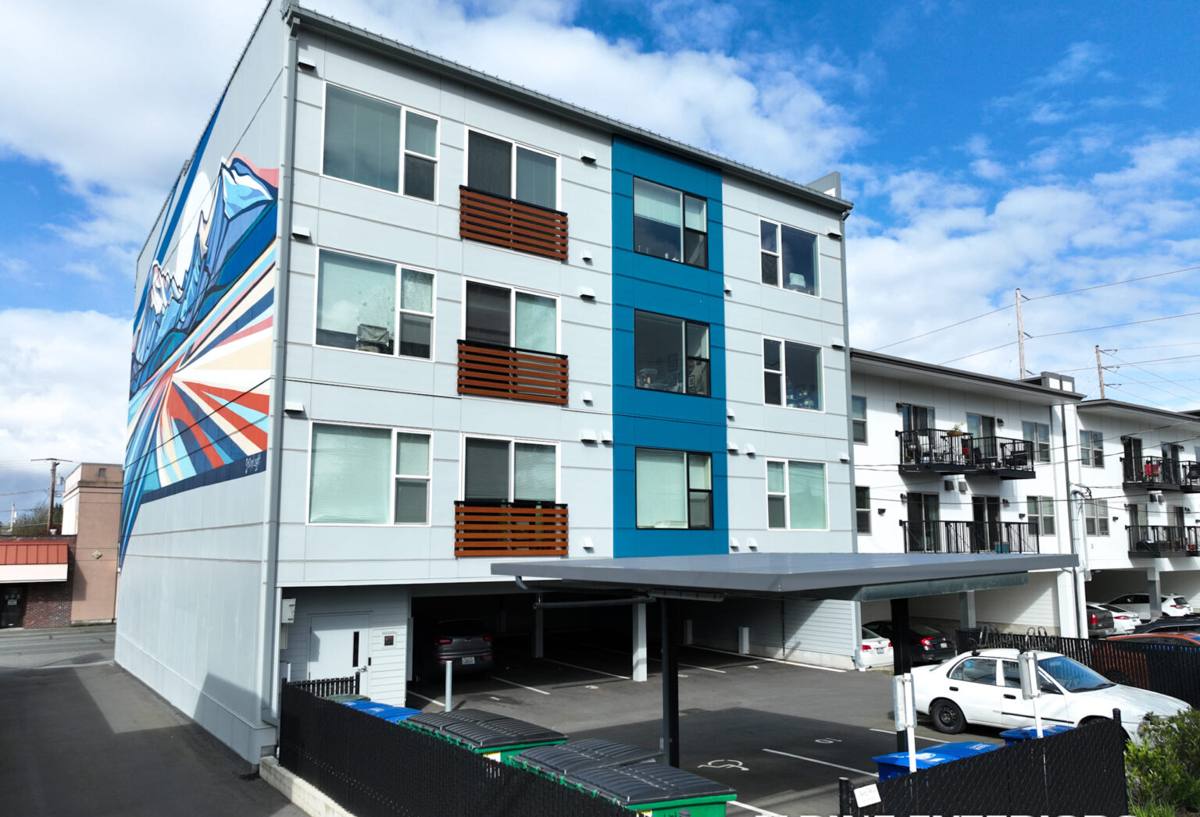
Repair, Partial Re-Side, or Full Replacement?
Not every siding problem calls for the same fix, and an honest contractor should be telling you which category your damage actually falls into rather than defaulting to whichever job is bigger or easier to sell.
- Spot repair — isolated storm damage, one cracked or missing panel, a section pulled loose by wind, with the surrounding siding and the wall behind it still sound
- Partial re-side — one elevation or section that's taken the brunt of sun or wind exposure and is failing noticeably faster than the rest of the house
- Full replacement — widespread failure, moisture that's already reached the sheathing in multiple areas, or a material that's simply reached the end of its practical service life
The only way to know which category applies is to actually get up close — press-test suspect areas, look behind trim where it's practical to do so, and trace how far the damage extends rather than judging from what's visible at a glance from the driveway.
Quick Self-Check Before You Call Someone
- Press gently on the siding near the bottom courses and around window and door trim — spongy or soft spots usually mean moisture has already saturated the material
- Look for cracking that runs along a board's length versus cracking concentrated at window and door corners, since the two point to different causes
- Check for gaps, loose panels, or visible fastener pops, especially on walls that face the prevailing wind
- Note whether damage is isolated to one area or shows up in multiple spots around the house
- Check inside along exterior walls for musty smells, staining, or soft drywall, which can indicate moisture has already moved past the siding
What a Correct Siding Repair Actually Involves
Diagnosis Before Anything Comes Off
A repair that starts with pulling damaged material before checking what's behind it is a repair done backwards. We check the sheathing and framing behind the damaged area for moisture and soundness first, because that's what actually determines the scope of the job — a plan built on a five-minute look from the ground tends to miss what matters.
Matching the Existing Siding
On an older home, matching the profile, reveal, and finish of existing siding for a patch repair isn't always straightforward, especially if the original product has been discontinued or has weathered to a noticeably different shade than a brand-new piece would be. We're upfront when a perfect match isn't realistic and lay out the real options — a close match on a limited section, or a case for extending the repair to a full elevation so the mismatch isn't sitting there on the front of the house.
Fixing the Cause, Not Just the Symptom
Replacing a cracked panel without correcting the flashing or fastener issue that let water behind it in the first place just resets the clock on the same failure. Every repair we do addresses whatever actually let the damage happen — a flashing detail, a caulk joint, an exposed seam — not just the visible material sitting on top of it.
Flashing and Sealant Details
Most repairs that actually last happen at the transitions — window heads, corner trim, and butt joints — where flashing and sealant do the real work of keeping wind-driven rain out of the wall. We rebuild those details correctly rather than relying on a fresh bead of caulk to cover a gap that shouldn't be there in the first place.
How Repair Differs by Siding Material
| Material | Repairability | Color and Finish Matching |
|---|---|---|
| James Hardie fiber cement | Individual boards can be cut out and replaced cleanly; the material stays dimensionally stable right up to the repair line | ColorPlus finish can be closely matched with newer stock; unfinished HardiePlank can be field-painted to match older sections |
| Vinyl siding | Panels interlock, so a damaged one usually has to be unzipped from the course above rather than cut out in place | Older vinyl fades with UV exposure over time, so a brand-new panel can look visibly newer than everything around it |
| Wood or engineered wood | Repairable, but cut edges and the surrounding area need a close moisture check, since damage often extends further than the visible crack | Requires field painting to match, and touch-up coats can weather at a different rate than the original finish |
| Fiber cement from other manufacturers | Generally repairable using similar techniques, though profile and reveal dimensions vary by brand and aren't always interchangeable | Matching finish depends on whether the original product used a factory-cured coating or a field-applied one |
We repair whatever's already on a home, regardless of the original material — that's a service question, not a brand decision. But when damage is extensive enough to justify a partial or full re-side, that work is done exclusively in James Hardie fiber cement, for the same reasons we install it on new construction: dimensional stability in a humid, storm-prone climate, a factory finish built to hold up to sustained UV, and a product line engineered for high-moisture exposure rather than adapted from a drier climate's version.
Our Repair Process, Start to Finish
- On-site inspection — we look at the damaged area and check behind it for moisture and soundness, not just what's visible from the ground
- Honest scope assessment — spot repair, partial re-side, or full replacement, with the reasoning explained plainly, not upsold
- Material sourcing — matching existing siding where that's realistic, or walking through the options when an exact match isn't available
- Removal and prep — damaged material comes out carefully, with any hidden sheathing or framing issues addressed before new material goes in
- Repair and refastening — new material installed and fastened to hold up to hurricane-force wind, not just look right on install day
- Flashing, sealant, and finish work — the details that actually keep water out, finished to blend with the surrounding siding as closely as the material allows
What Affects the Cost of a Siding Repair
| Factor | What Changes the Price |
|---|---|
| Extent of damage | A single panel costs far less than a section spanning multiple courses or an entire wall |
| Condition behind the siding | Sound sheathing keeps a repair simple; wet or damaged sheathing adds structural repair before new siding can go back on |
| Material match availability | Discontinued profiles or heavily weathered existing siding can require sourcing workarounds that add time and cost |
| Access and height | Second-story sections, steep rooflines, or tight side yards add labor and equipment time to an otherwise simple repair |
| Underlying cause | A repair that also requires correcting flashing or a water-resistive barrier issue costs more than a straightforward material swap |
Why a Crew That Works Palm Harbor Regularly Matters
Manufacturer repair guidance and general contracting know-how get you most of the way there, but Palm Harbor's particular mix of housing stock, wind exposure, and coastal proximity rewards a crew that's actually diagnosed a lot of siding damage in this specific part of Pinellas County. That experience shows up in the calls that matter — recognizing that a small crack near a window head is a flashing failure and not just cosmetic wear, knowing which fastener pattern actually holds through a real hurricane season versus what code minimums require on paper, and being straightforward when a homeowner asks for a patch but the wall condition behind it means a patch won't hold.
We see this climate's damage patterns repeatedly, which means we're not guessing at whether a given crack, soft spot, or loose panel on a Palm Harbor home is isolated or a symptom of something bigger already underway.
Get an Honest Read on Your Siding
If you're dealing with storm damage, a section of siding that's failing faster than the rest of the house, or you're simply not sure whether what you're looking at is cosmetic or something that needs attention now, an in-person look tells you more than any checklist can. We'll walk the exterior, check the areas that tend to fail first on homes in this part of Pinellas County, and give you a straightforward read on what's a simple repair, what's worth watching, and what actually needs to be replaced. Reach out below for a free, no-pressure estimate.