 Clearwater Roofing
 Palm Harbor sits in the part of Pinellas County where Gulf weather isn't an occasional inconvenience — it's a constant design condition. Homes here deal with hurricane-force wind events, sun exposure intense enough to break down lesser materials year-round, wind-driven rain that gets pushed sideways into every seam and lap, and salt-laden air drifting in off the water. Siding is the layer standing between all of that and the framing, insulation, and interior of the house, and when it's the wrong material or it was installed without attention to those specific conditions, it fails faster here than it would almost anywhere inland. This page covers what siding replacement actually requires for a Palm Harbor home, what a correct job looks like from tear-off to finish, and why we install it exclusively in James Hardie fiber cement.
Why Siding Replacement Is Different in Palm Harbor
Palm Harbor's housing stock spans several decades — older ranch and split-level homes from the area's earlier building booms sit alongside newer construction and renovated properties, and a lot of that older stock is now reaching or past the point where its original siding was ever designed to last. Add in the area's proximity to Tampa Bay and the Gulf, and the exposure a lot of these homes see is higher than the average inland Florida property gets. That combination — aging siding plus real coastal-adjacent weather load — is exactly the situation where "just re-side it with whatever's cheapest" tends to turn into a repeat job within a decade.
Replacement done right isn't only about picking a better-looking product. It's about matching the material and the installation method to what Pinellas County weather actually does to a wall assembly over time, and building in the wind rating, moisture management, and fastening the home's specific exposure calls for.
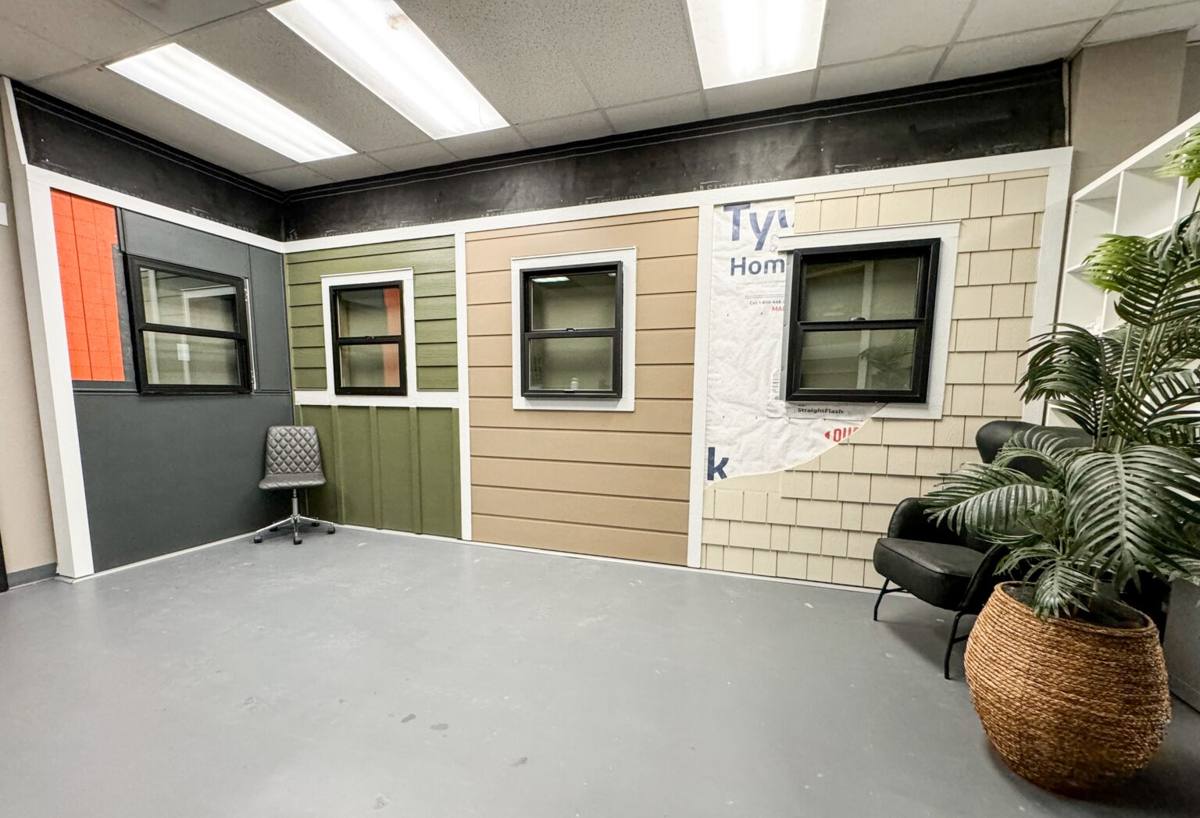
What the Climate Actually Does to Siding Here
Four forces do most of the damage to siding in this part of Florida, and they don't take turns — they overlap all year.
- Hurricane-force wind — direct pressure and uplift on wall panels during named storms, and repeated lower-level wind stress the rest of the year that works fasteners and seams loose over time
- Intense, year-round UV — Florida's sun load breaks down unstable coatings, cheap vinyl formulations, and unprotected wood fiber faster than almost any other U.S. climate, leading to fading, chalking, and brittleness
- Wind-driven rain — storms here don't just drop rain straight down; wind pushes it sideways and upward into laps, seams, and fastener penetrations that a calmer climate would never stress the same way
- Salt air — Palm Harbor's position near Tampa Bay and the Gulf means airborne salt is a constant, low-grade corrosive on fasteners, trim hardware, and any finish not formulated to resist it
None of these forces are unique to Palm Harbor — they're a Pinellas County reality. But a home sitting closer to open water or exposed to a prevailing wind pattern off the bay tends to see the effects show up sooner than one a few miles further inland, which is part of why we evaluate exposure on a home-by-home basis rather than applying one standard spec to every address.
Where Siding Failure Actually Starts
It's rarely the flat field of a siding panel that fails first. Failure almost always starts at the edges and penetrations — a butt joint that wasn't gapped correctly and can't handle expansion, a window or door trim detail where flashing was skipped or shortcut, a bottom course sitting too close to grade or a roof line where splashback keeps it wet longer than it should be. On a home with wind-driven rain in the mix, those small original installation shortcuts turn into moisture intrusion years faster than they would in a drier, calmer climate.
Signs a Palm Harbor Home Needs Siding Replacement
Not every siding issue calls for full replacement — some are legitimate repairs. But certain signs point to a material or installation that has reached the end of its usable life rather than a spot fix:
- Soft, spongy, or crumbling siding when pressed, especially near the bottom courses or around windows and doors
- Visible cupping, warping, or buckling panels, particularly on walls that get direct afternoon sun or prevailing wind
- Paint that won't hold anymore even after repainting, or persistent chalking and fading between paint cycles
- Cracking or splitting at butt joints and corners, which is often a sign the material never had proper room to expand and contract
- Visible gaps, loose panels, or fasteners backing out after wind events
- Interior signs — peeling paint, soft drywall, or musty smells on exterior-facing walls — that point to moisture getting behind the siding rather than shedding off of it
- Repeated repair bills on the same sections of wall, which usually means the underlying material or installation is the actual problem
What a Correct Siding Replacement Job Involves
Tear-Off and Substrate Inspection
Replacement starts with removing the old siding down to the sheathing, not covering over it. That's the point where we find out what's actually happening behind the old material — rot, water staining, compromised sheathing, or prior flashing failures that never showed from the outside. Any of that gets addressed before new siding goes up, because installing new material over a compromised substrate just hides the problem for a while longer.
Weather-Resistant Barrier
A properly lapped and sealed weather-resistant barrier goes over the sheathing before any siding is hung. This is the layer that actually keeps bulk water out if wind-driven rain gets past the siding itself, and it's one of the most commonly shortcut steps on a rushed re-side — house wrap stapled up loosely without correct lapping and taping doesn't do its job.
Fastening and Wind Rating
Every fastener — type, length, spacing, and penetration depth — needs to match the manufacturer's specification for the wind exposure of that specific wall. A home closer to open water or on an exposed elevation needs a tighter fastening pattern than a sheltered wall a few lots back, and that's an engineering decision, not a guess made on install day.
Flashing at Every Transition
Window and door heads, roof-to-wall intersections, and any point where the siding meets a different material all need flashing detailed to shed water outward, not caulk relied on as the primary defense. Caulk has its place, but it's a maintenance item with a limited lifespan — flashing is the permanent solution, and it has to be sequenced correctly during installation, not added afterward.
Finish and Trim
The finish coat has to hold up to constant UV and periodic salt exposure without needing a repaint cycle every few years. Trim details — corners, fascia, window and door surrounds — get finished to match, since those transition points are exactly where water problems tend to start if they're rushed.
Checklist Before You Sign a Siding Replacement Contract
- Confirm tear-off to the sheathing is included, not an install over existing siding
- Ask what happens if rot or sheathing damage is found once the old siding comes off
- Get the weather-resistant barrier and flashing plan explained in plain language, not just "we'll wrap it"
- Confirm the fastening pattern matches your home's actual wind exposure, not a generic minimum
- Ask whether the crew is a certified installer for the material being used, and ask to see the warranty terms in writing
- Get a realistic project timeline and a clear scope of what's included versus what would be a change order
Why We Only Install James Hardie Fiber Cement
We install James Hardie exclusively for siding replacement — not LP SmartSide, not vinyl, not Cemplank or Allura, not primed spruce or cedar. That's not a brand preference; it's a standard we hold because of what actually happens to alternative materials under sustained Gulf Coast conditions.
| Material | Moisture Behavior | UV / Finish Durability | Wind & Storm Performance |
|---|---|---|---|
| James Hardie fiber cement | Dimensionally stable; doesn't swell, cup, or rot from humidity and rain exposure | Factory-baked ColorPlus finish resists fading and chipping far longer than field-applied paint | Engineered and tested specifically for high-wind installation, with HZ5 formulation for humid climates |
| Vinyl siding | Doesn't absorb water, but panels can warp or melt under extreme heat and flex at fastener points over time | Color is through-body but fades and chalks under sustained intense UV | Wind rating depends heavily on panel gauge and fastening pattern; lighter products underperform in named storms |
| Engineered wood (LP SmartSide and similar) | More moisture-sensitive at cut edges and seams than fiber cement; edge sealing is critical and easy to shortcut | Relies on factory or field coatings with a shorter service life in high-humidity climates | Varies by product line; installation sensitivity is higher than fiber cement |
| Primed spruce or cedar | Absorbs and releases moisture readily; prone to swelling, cupping, and rot without an aggressive maintenance schedule | Fully dependent on a repainting cycle to stay protected | Not engineered specifically for hurricane-wind installation |
James Hardie's fiber cement is a mix of Portland cement, sand, and cellulose fiber, cured into a dense board that doesn't expand and contract with humidity the way wood-based products do. In our region, that siding is manufactured to the HZ5 specification — a formulation built for high-humidity, high-moisture-exposure climates, which is a real engineering difference, not a marketing label. Paired with the factory-applied ColorPlus finish, it holds its color and integrity through Florida's UV load and salt exposure with a lot less ongoing maintenance than the alternatives. It also carries a strong, transferable warranty, which matters on a home improvement this significant. That combination — non-combustible material, climate-engineered formulation, factory finish, and manufacturer backing — is why it's the only siding we put on homes, in Palm Harbor or anywhere else we work.
Our Siding Replacement Process
- On-site assessment — we walk the home, evaluate current siding condition and wind exposure by elevation, and check for visible signs of moisture intrusion or substrate damage
- Honest recommendation and quote — scope, product line, and color options explained clearly, with the reasoning behind the recommendation, not just a number
- Tear-off — old siding removed down to the sheathing so the substrate can actually be inspected
- Substrate repair — any rot, water damage, or compromised sheathing addressed before new material goes up
- Weather barrier and flashing — properly lapped house wrap and flashing installed at every transition point before siding goes on
- Installation — James Hardie siding installed to manufacturer fastening, gapping, and clearance specifications for the home's specific wind exposure
- Trim and finish — corners, fascia, and window and door surrounds finished to match, with a final walkthrough before we call the job done
Cost Factors for Siding Replacement in Palm Harbor
| Factor | What Changes the Price |
|---|---|
| Home size and wall complexity | More square footage, more corners, and more dormers or gables mean more material, cutting, and labor |
| Substrate condition | Rot or water damage found during tear-off adds repair scope that can't always be predicted from the outside |
| Wind exposure of the property | Homes closer to open water or on exposed elevations often call for a tighter fastening pattern and higher-rated components |
| Siding profile and trim details | Lap siding is the most economical Hardie profile; board and batten, shakes, and heavy trim packages add labor |
| Existing paint or coating removal | Older painted wood siding sometimes requires extra prep or disposal handling depending on the coating |
| Access and site conditions | Landscaping, fencing, pool cages, or tight lot lines can add time to staging and material handling |
We walk every property before quoting so the number reflects the actual home, not a generic per-square-foot estimate that gets revised once work starts.
Why Hiring a Crew That Already Works Palm Harbor Matters
Manufacturer installation specs are written for general conditions, and a lot of Palm Harbor properties don't sit in "general conditions" — they sit close enough to Tampa Bay and the Gulf that wind exposure, salt air, and storm-driven rain all run higher than a statewide average. A crew that doesn't work this area regularly can still follow the printed instructions and still miss the calls that actually matter here: how much extra attention a west- or water-facing wall needs, which fastening pattern actually holds up to real hurricane-force wind versus the code minimum, or where a flashing detail needs to be built up because of how rain behaves on a specific roof-to-wall intersection in this climate.
We work Pinellas County regularly, and that shows up in the decisions made on the job rather than off a spec sheet — the kind of decisions that determine whether a Palm Harbor home's new siding is still performing well after several hurricane seasons, or starting to show problems within a few years.
Get a Free Estimate
If your Palm Harbor home's siding is showing its age, or you're just not confident it was installed correctly the first time, it's worth having someone walk the property and give you a straight answer. We offer free, no-pressure estimates for siding replacement in Palm Harbor and the surrounding area — use the form below to get started.