 Clearwater Roofing
 Why Largo Homes Take a Harder Hit Than Most
Largo sits in the middle of Pinellas County, close enough to both Tampa Bay and the Gulf that homes here deal with the worst of both worlds. Summer thunderstorms roll off the water fast and hard, driving rain sideways into wall assemblies that were never designed to handle it. Add hurricane-force wind gusts during storm season, some of the most intense year-round UV exposure in the continental United States, and a steady drift of salt air off the coast, and you have a climate that is genuinely tough on exterior cladding. Siding that would last decades in a drier, cooler part of the country can start failing here in a fraction of the time if it was installed wrong, or if it was never suited to this environment in the first place.
That's the backdrop for every siding repair call we take in Largo. We're not just patching a hole or replacing a cracked board — we're evaluating how the whole wall system is holding up against wind-driven moisture, sun degradation, and salt exposure, and making sure the repair actually holds up the next time a summer storm rolls through.
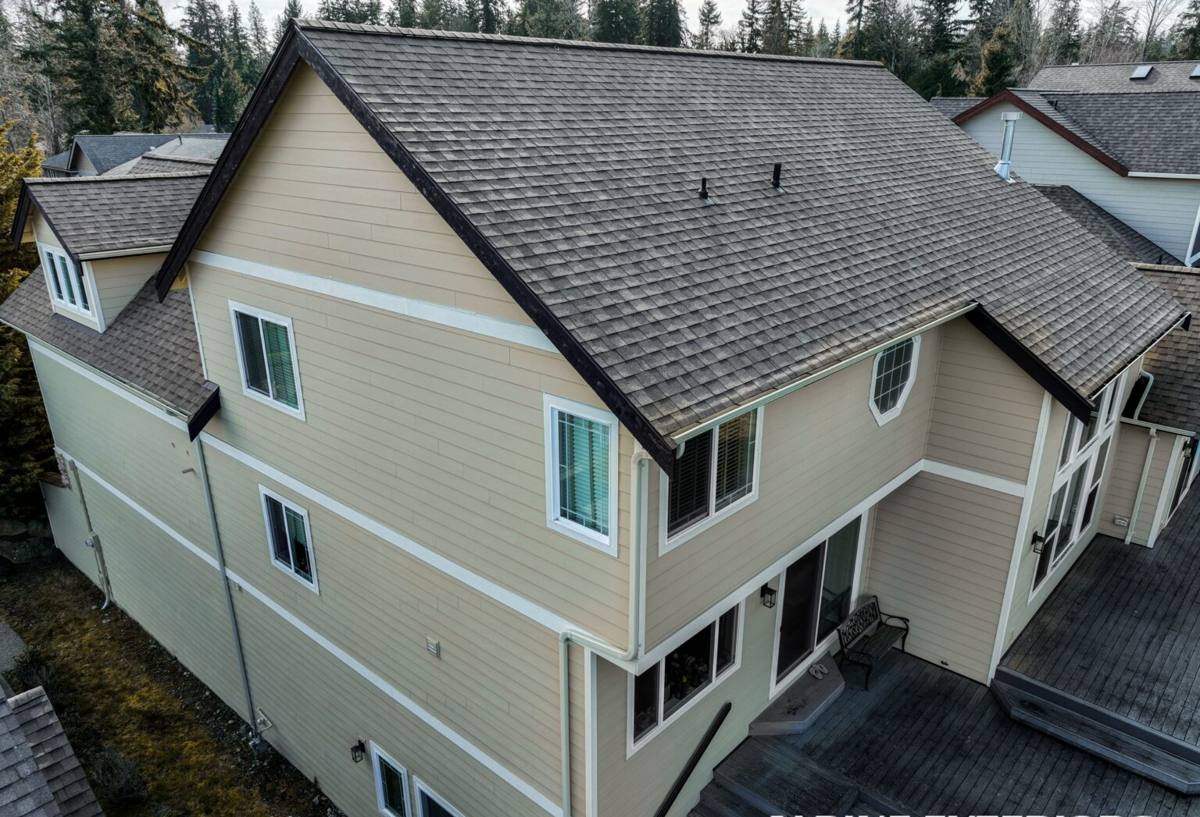
Common Siding Damage We See in Largo
Most of the repair calls we get in this part of Pinellas County fall into a handful of categories, and almost all of them trace back to the same root causes: water finding a way behind the cladding, UV breaking down materials that weren't built for constant sun, or wind stress working joints and fasteners loose over time.
Wind and storm damage
Even when a storm doesn't cause obvious destruction, sustained wind and gusts can crack panels, pop fasteners, lift bottom edges, and stress caulked joints at corners and trim. The damage isn't always visible from the ground — it often shows up later as a soft spot, a stain, or a section that starts to separate.
Moisture intrusion
Florida's wind-driven rain doesn't just fall straight down — it gets pushed sideways and upward into laps, seams, and penetrations (light fixtures, hose bibs, vents). Once water gets behind siding, it can sit against sheathing and framing for days in our humidity, leading to rot, mold, and soft or delaminating panels long before the exterior shows an obvious problem.
Sun and heat breakdown
South- and west-facing walls in Largo take a beating from direct sun for most of the year. On materials without a factory-baked, UV-stable finish, this shows up as fading, chalking, and eventually cracking or warping as the material expands and contracts through daily heat cycles.
Salt air corrosion
Homes closer to the coast — and Largo has plenty of them — deal with airborne salt that accelerates corrosion on fasteners, trim, and any exposed metal components, and can degrade certain siding finishes faster than inland homes ever experience.
What a Correct Siding Repair Actually Involves
A rushed siding repair is one of the most common ways a small problem turns into an expensive one. Slapping a patch over visible damage without understanding why it happened just sets up a repeat call in a year or two. A correct repair starts with diagnosis, not demolition.
- Identify the actual cause of the damage — wind, moisture, sun, impact, or a combination — not just the symptom
- Check what's happening behind the siding: sheathing, house wrap, and framing condition around the damaged area
- Confirm flashing and water-management details at windows, doors, and penetrations are intact before closing the wall back up
- Match the replacement material's profile, reveal, and color as closely as possible so the repair doesn't stand out
- Re-fasten and re-seal to the manufacturer's actual installation specifications, not "close enough"
- Verify the repair won't void or complicate any remaining manufacturer warranty on the surrounding siding
Skipping any one of these steps is how you end up with a repair that looks fine for a season and then fails again — often in the same spot, sometimes worse, because the underlying cause was never actually fixed.
Repair, Panel Replacement, or Full Re-Side?
Not every siding problem calls for the same level of work. Part of our job is being honest with you about which category your home actually falls into, rather than defaulting to the most expensive option.
| Approach | Best For | What's Involved | What It Won't Fix |
|---|---|---|---|
| Spot repair | Isolated impact damage, a single cracked or loose panel, minor caulk failure | Remove and replace the affected piece, re-flash if needed, match color and profile | Widespread moisture damage or systemic installation issues elsewhere on the wall |
| Section / panel replacement | Damage concentrated in one wall or area — often storm damage or a chronic leak point | Remove a run of siding, inspect and repair sheathing/framing, reinstall with correct water management | Problems on other elevations that haven't shown symptoms yet |
| Full re-side | Siding nearing the end of its service life, widespread moisture damage, or a home currently clad in a product we don't stand behind long-term | Complete removal, sheathing and house wrap inspection/repair, new James Hardie installation to spec | N/A — addresses the whole envelope at once |
We'll tell you plainly which of these your home needs after an inspection. A lot of Largo homes only need a targeted repair. Others — especially older homes where damage has been quietly spreading behind the cladding for years — are better served by addressing a full wall or elevation rather than chasing the same failure point repeatedly.
Our Siding Repair Process in Largo
Because we work in this area regularly, our process is built around what actually causes siding failure here, not a generic checklist.
1. Inspection and diagnosis
We look at the damaged area and the surrounding siding, checking for soft spots, staining, fastener corrosion, and gaps in flashing or caulk that could be feeding the problem. We also check adjacent walls, since Largo's storm patterns tend to stress the same elevations across a neighborhood.
2. Scope and honest recommendation
You get a clear explanation of what's actually wrong, what caused it, and which repair approach fits — spot repair, section replacement, or a conversation about full re-siding if the damage points that direction.
3. Careful removal
Damaged material comes out without unnecessarily disturbing sound siding around it. If we find rot or moisture damage in the sheathing underneath, we address that before anything new goes back up — closing over a wet or compromised substrate is how repairs fail twice.
4. Correct water management
Flashing, house wrap laps, and sealant details get rebuilt to shed water the way they're supposed to, not just patched over. This is the step that determines whether a repair lasts one storm season or many.
5. Matched, properly fastened replacement
New material goes in fastened and fastened to spec, with color and profile matched as closely as possible so the repair blends rather than stands out as a patch job.
6. Final check
We walk the repair with you, confirm everything is sealed and secure, and make sure you understand what was done and why.
Why We Only Repair and Install James Hardie Fiber Cement
We don't install or repair-in-kind with LP SmartSide, vinyl, Cemplank, Allura, primed spruce, or cedar, and it's worth being upfront about why. Each of those products has real strengths, but they also carry trade-offs that matter a lot in a climate like ours — moisture sensitivity, UV-driven fading or warping, more demanding maintenance schedules, or installation tolerances that are easy to get wrong and hard to catch until years later.
James Hardie fiber cement is what we've standardized on because it's engineered specifically for climates like Pinellas County's. The HardieZone HZ5 product line is formulated for hot, humid, storm-prone regions, the ColorPlus factory finish is baked on and far more resistant to UV fading and chalking than field-applied paint, and the material itself is non-combustible and dimensionally stable in a way that holds up better against Florida's heat-and-moisture cycling. When we repair a Hardie-clad home, we can match the existing product line and finish precisely, and the repair carries forward the same warranty backing.
If your home is currently sided in one of the products we don't install, we'll still give you an honest assessment and repair what can reasonably be repaired. But if the damage is extensive enough that you're facing a larger investment, we'll walk you through why Hardie is what we'd put on the home instead, and let you weigh that against your own priorities — not pressure you into it.
Signs Your Largo Home Needs Siding Repair Now
Some siding damage is obvious. A lot of it isn't, especially in a climate where moisture can be doing damage behind the wall for a long time before it shows on the surface. Watch for:
- Visible cracks, warping, or buckling in any siding panel
- Soft or spongy spots when you press gently on the siding
- Peeling paint or bubbling finish, especially on south- or west-facing walls
- Staining or dark streaks that appear near seams, corners, or penetrations
- Gaps opening up at panel joints, corners, or trim boards
- A musty smell along an exterior wall inside the house
- Visible fastener corrosion or fasteners backing out of the siding
- Any siding damage after a named storm, even if it looks minor
If you're seeing more than one of these at once, it's worth having someone look at the wall assembly, not just the surface — that's usually the difference between a straightforward repair and a much bigger project a year later.
Why a Locally Experienced Crew Matters
Siding repair isn't just a materials question — it's a familiarity question. A crew that regularly works in Largo and the surrounding Pinellas County communities knows which wall orientations tend to take the worst wind-driven rain, which older subdivisions commonly have specific cladding or flashing issues, and what Pinellas County's permitting and inspection expectations actually look like for exterior repair work. That familiarity shortens the guesswork and reduces the chance of a repair getting flagged or having to be redone.
It also means faster response after storms, when demand for repair work spikes across the whole county at once. Being established here — not driving in from another market — means we can prioritize local calls and keep material and color matches on hand for the products we actually work with.
Timing Repairs Around Hurricane Season
In coastal Pinellas County, timing matters almost as much as workmanship. Getting a known problem — a loose panel, an open seam, a soft spot — addressed before storm season ramps up is far cheaper than dealing with what wind-driven rain can do to an already-compromised wall. If you already know about damage, don't wait for it to get worse in the next round of summer storms; if a storm has already passed and you're not sure whether your siding took damage, an inspection now is worth more than waiting until a leak shows up inside the house.
If you're dealing with damaged, aging, or storm-stressed siding on your Largo home, we're happy to take a look and give you a clear, honest read on what it needs — whether that's a simple repair or a bigger conversation. Reach out for a free, no-pressure estimate using the form below.