 Clearwater Roofing
 Siding Replacement for Largo Homes
Largo sits inland from Clearwater Harbor but is still very much a Pinellas County coastal community — close enough to the Gulf and Tampa Bay that salt-laden air, wind-driven rain, and long stretches of intense sun all reach its neighborhoods. Homes here run the gamut from 1960s and '70s block ranches to newer construction, and a lot of that older siding stock is well past the point where patching makes sense. When we talk about siding replacement in Largo, we're talking about a full system change: tearing off failing material, correcting whatever was wrong underneath it, and installing a product engineered to handle Florida's climate for decades, not years.
This page focuses specifically on siding replacement as a service for Largo properties — what local homes actually need, how a correct job is done, and why the crew doing it matters as much as the material itself.
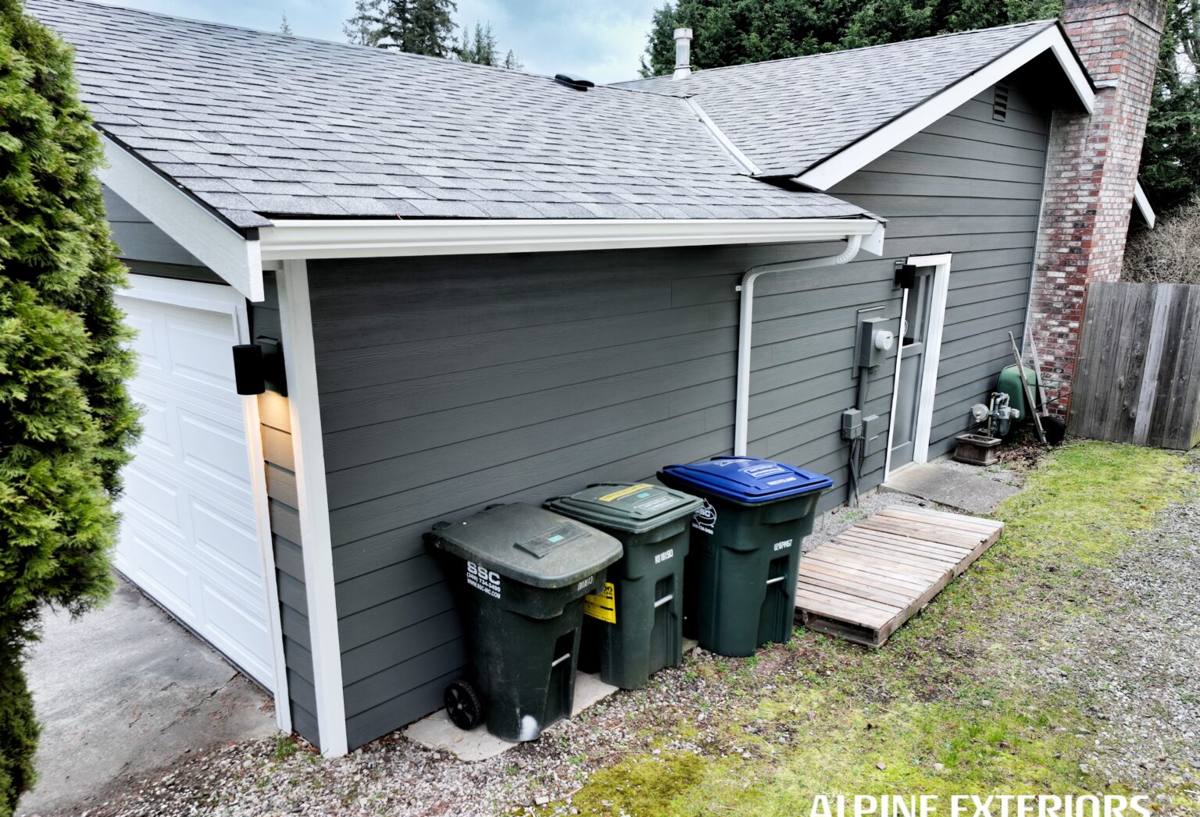
What Largo's Climate Does to Siding
Pinellas County doesn't give siding an easy life. A handful of specific stresses do most of the damage over time:
- UV exposure: Florida gets some of the most direct, sustained sun exposure in the continental U.S. Cheap coatings chalk, fade, and break down years before their rated lifespan.
- Wind-driven rain: Tropical storms and summer squalls don't just drop rain straight down — wind pushes water sideways and up under laps, seams, and trim if the assembly wasn't installed with proper clearances and flashing.
- Salt air: Even set back from the water, Largo homes pick up airborne salt that accelerates corrosion of fasteners and metal trim, and speeds up deterioration of moisture-sensitive siding materials.
- Humidity and moisture cycling: Florida's constant humidity means anything wood-based (or wood-adjacent) that gets wet doesn't fully dry out between rain events, which is exactly the condition that causes rot and swelling.
- Hurricane-force wind loads: Named storms and even strong seasonal thunderstorms put real lateral load and uplift pressure on exterior wall systems, testing fastening patterns and material integrity directly.
None of these stresses act alone — they compound. A siding product that handles UV fine but swells when wet, or resists moisture but chalks out in five years of sun, is only solving part of the problem. That's the standard we hold every material to before it goes on a Largo home.
Signs a Largo Home Needs Siding Replaced, Not Repaired
When Repair Still Makes Sense
Not every siding problem calls for a full replacement. Isolated impact damage, a single cracked or missing panel, or minor caulking failures around trim can often be repaired or spot-replaced if the rest of the siding is sound and the substrate underneath is dry.
When It's Time for Full Replacement
Full replacement is the right call when the damage is systemic rather than isolated. Common signs we see on Largo homes include:
- Soft, spongy, or crumbling siding when pressed — usually a sign of trapped moisture and substrate rot
- Widespread cracking, warping, or buckling across multiple sections, not just one panel
- Paint that won't hold no matter how often it's redone, often a symptom of a failing substrate underneath
- Visible gaps, separated seams, or siding pulling away from the wall
- Interior signs — musty smells, staining, or soft drywall on exterior-facing walls — that point to moisture getting through the siding envelope
- Siding that's simply reached the end of its practical service life, especially older wood, hardboard, or degraded vinyl
When we inspect a Largo home, we're not just looking at the siding surface — we're checking what's happening behind it, because siding that looks rough on the outside sometimes hides a bigger moisture problem, and siding that looks fine can still be masking rot at seams and penetrations.
Why We Only Install James Hardie Fiber Cement
We install James Hardie fiber cement siding exclusively. We don't install vinyl, LP SmartSide, Cemplank, Allura, or primed wood products like spruce or cedar lap siding. That's not a marketing position — it's a decision built around what actually holds up under Largo's specific mix of sun, wind, rain, and salt.
Why We Don't Install the Alternatives
Vinyl siding is affordable and easy to install, but it's a thin plastic product that can warp or distort in high heat, becomes brittle with age and UV exposure, and offers limited impact resistance against wind-blown debris in a storm. It also can't be painted a darker color in most cases without risking heat-related warping, which limits long-term design flexibility.
Wood-based products — engineered wood like LP SmartSide, or traditional primed spruce and cedar — perform well in drier climates, but wood-based cores are inherently more sensitive to sustained moisture exposure than fiber cement. In a humid, storm-prone environment like Pinellas County, that sensitivity shows up as edge swelling, delamination, and rot at seams and cut ends if installation isn't flawless and maintenance isn't kept up every year.
Other fiber cement brands, like Cemplank or Allura, are legitimate fiber cement products on paper. Our decision to standardize on James Hardie comes down to their factory-applied ColorPlus finish, their HZ5 product engineering specifically formulated for Florida's humidity and moisture exposure, and a warranty and installer-network structure we've found to be more consistent and better supported in this market.
What James Hardie Gets Right for Largo
James Hardie fiber cement is non-combustible, dimensionally stable in heat and humidity, and holds paint and factory-applied color far longer than wood or vinyl because the core material doesn't expand and contract the way organic materials do. The ColorPlus finish is baked on in a controlled factory environment, which gives more consistent, fade-resistant color than field-applied paint. Hardie's HZ5 line is specifically engineered for high-humidity, moisture-prone climates like ours — which matters more in Largo than almost anywhere product engineering is tested.
What a Correct Siding Replacement Involves
The siding itself is only part of the job. Most siding failures we see in Pinellas County trace back to what was done — or skipped — underneath it, not the material on the surface. A correct replacement includes:
1. Full Tear-Off and Substrate Inspection
We remove the old siding completely rather than installing over it, because covering up a problem doesn't fix it. This is the point where we find out if there's hidden rot, insect damage, or moisture intrusion in the sheathing that needs to be addressed before anything new goes on.
2. Moisture Barrier and Weather Resistive Barrier
A properly installed weather-resistive barrier is what actually keeps wind-driven rain from reaching the wall assembly. Gaps, tears, or improperly lapped seams here undermine even the best siding material.
3. Flashing at Every Penetration
Windows, doors, vents, hose bibs, light fixtures — every penetration through the siding plane is a place water can find its way in if it isn't properly flashed. This is one of the most commonly rushed steps in low-quality installs, and it's one of the most common causes of hidden rot later.
4. Correct Fastening for Wind Zones
Pinellas County's wind exposure requires fastener spacing and type that meets local wind-load requirements, not generic national minimums. Under-fastened siding is one of the more common causes of storm damage we see on older installs.
5. Manufacturer-Spec Installation
James Hardie publishes detailed installation specifications covering clearances, fastening, joint treatment, and caulking. Following them to the letter is what keeps the manufacturer's warranty valid and what actually determines how the siding performs in year fifteen, not just year one.
Cost Factors for Siding Replacement in Largo
Every home is different, so we won't quote a number without seeing the property, but the factors that most affect cost are consistent across Largo jobs:
| Factor | Why It Matters |
|---|---|
| Home size and wall complexity | More square footage and more corners, gables, and trim details mean more material and labor |
| Substrate condition | Hidden rot or damaged sheathing found during tear-off adds repair work before new siding can go on |
| Siding profile and finish | Lap width, texture, and color selection within the Hardie product line affect material cost |
| Trim and accessory scope | Fascia, soffit, and trim replacement alongside siding adds to the overall project |
| Access and site conditions | Landscaping, fencing, and second-story sections can affect labor time |
The honest range for a full siding replacement varies widely based on these factors, which is exactly why we do an in-person inspection before giving a number — a phone estimate on siding is just a guess.
Our Process for Largo Projects
- Inspection and consultation: We walk the property, assess the existing siding and substrate, and talk through what we're seeing.
- Written estimate: A clear scope of work and cost, with no pressure to decide on the spot.
- Product and color selection: Choosing the right Hardie profile and ColorPlus finish for the home.
- Tear-off and substrate repair: Removing old material and fixing anything found underneath before moving forward.
- Barrier, flashing, and installation: Installed to James Hardie's published specifications and local wind-zone requirements.
- Final walkthrough: Reviewing the finished work together before we call the job done.
Why a Crew That Already Works Largo Matters
Siding installation quality depends heavily on details that are easy to get wrong if a crew isn't used to the local building environment — proper flashing sequencing around window and door penetrations, fastening patterns appropriate for the wind exposure, and clearances that account for how much rain this region actually sees. A crew that regularly works Largo and the surrounding Clearwater area already knows what Pinellas County code requires, what inspectors here are looking for, and what actually fails first on a poorly installed job in this climate. That local repetition is what turns a manufacturer's spec sheet into a siding job that's still performing correctly a decade from now.
Get a Free Estimate
If your Largo home's siding is showing its age — or you just want an honest opinion on whether repair or full replacement makes more sense — we're happy to take a look. Reach out for a free, no-pressure estimate using the form below.