 Clearwater Roofing
 Composite Decking Built for Skycrest's Climate
Skycrest is one of Clearwater's older, established neighborhoods, with a mix of mid-century homes and newer renovations sitting close enough to the Gulf and Tampa Bay that salt air, humidity, and intense sun are part of daily life. A deck here isn't just an outdoor living space — it's a structure that has to survive a Pinellas County climate that is hard on wood, hard on fasteners, and hard on anything with a painted or stained finish. Composite decking has become the practical answer for a lot of Skycrest homeowners who are tired of refinishing a wood deck every year or two, but "composite decking" covers a wide range of products and installation quality, and not every install is built to actually hold up here.
This page is about composite decking specifically for Skycrest homes — what the local climate demands from the material and the installation, what a correct job looks like, and why it matters to hire a crew that already understands how decks fail in this part of Florida.
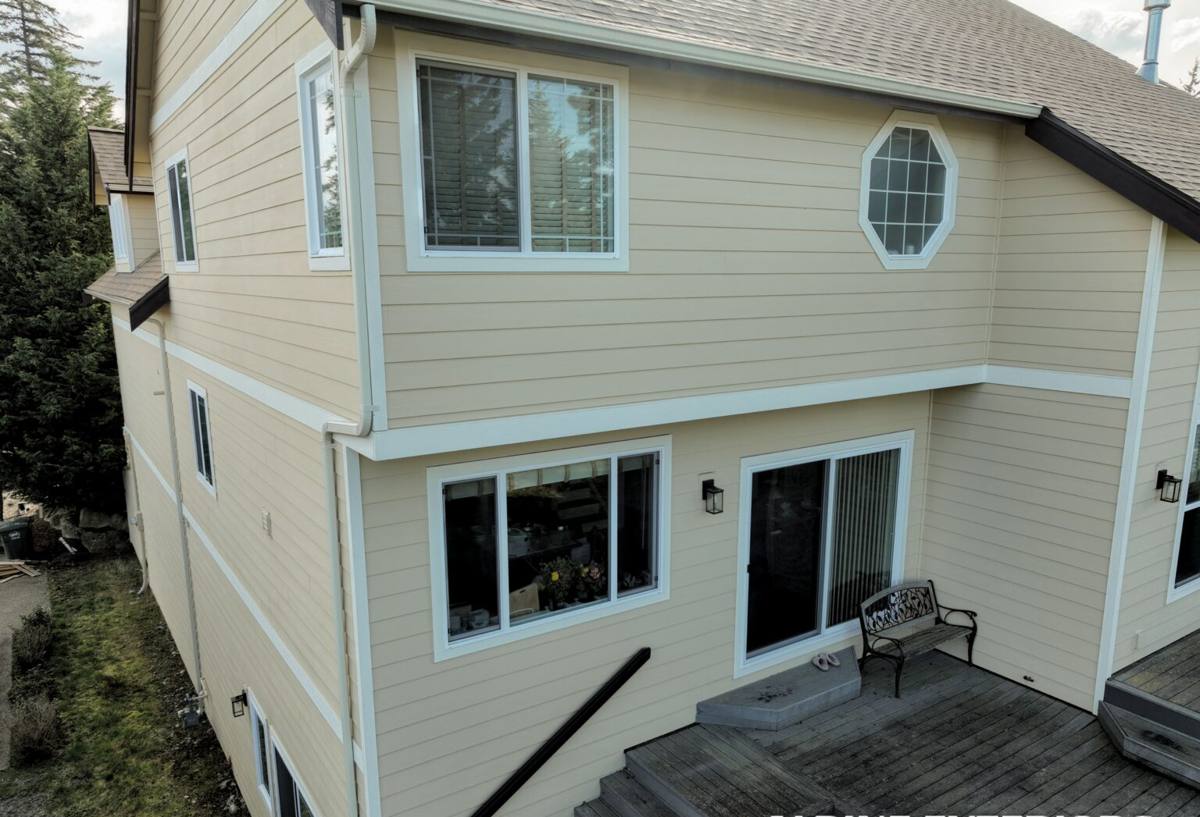
What Clearwater's Climate Does to a Deck
Clearwater sits on the water, which means every exterior structure deals with a combination of stresses that inland homes don't face nearly as often:
- Hurricane-force wind events that put real uplift and lateral load on railings, stairs, and the ledger connection to the house.
- Intense, near year-round UV exposure that fades color, breaks down cheap plastics, and dries out untreated wood fiber over time.
- Wind-driven rain that gets pushed sideways and up under railings and boards, not just straight down, so drainage and gapping matter more than people expect.
- Salt air that accelerates corrosion on fasteners, brackets, and any exposed metal hardware, even at a few miles from the water.
None of these stresses are unique to Skycrest, but combined they mean a deck built to a "national average" standard often underperforms here. The board itself is only part of the equation — the fasteners, the framing, and the drainage details underneath the boards are just as important, and that's where a lot of lower-quality installations quietly fail years before the surface shows it.
Why Composite Makes Sense Here
Wood decking isn't a bad product, but it's a high-maintenance one in this climate. It needs regular sealing or staining, and skipping even one season in Florida's UV and humidity lets checking, splintering, and gray-out set in fast. For homeowners who want a deck that looks good year after year without a recurring maintenance schedule, composite decking makes sense for a few concrete reasons:
Moisture behavior
Quality composite boards don't absorb water the way wood does, so they resist the swelling, warping, and rot that humid Gulf Coast air causes in solid wood over time. That said, "resists moisture" is not the same as "moisture-proof" — the substructure underneath still needs to be built to shed water, which we cover below.
UV and fade resistance
Capped composite boards use a protective outer layer specifically to hold color under constant sun exposure. Uncapped or lower-grade composite can still fade and chalk in a Florida climate, which is one of the reasons product selection matters as much as installation.
Lower long-term upkeep
No annual sanding, staining, or sealing. Occasional washing to keep salt residue and organic buildup off the surface is typically all that's needed, which matters for homeowners who'd rather spend weekends on the deck than maintaining it.
What a Correct Composite Deck Installation Actually Involves
The board material gets most of the attention, but the framing and fastening underneath is what determines whether a deck survives a decade of Clearwater storms or starts having problems in year three. A correct installation includes:
Framing and substructure
Joists and beams should be pressure-treated or otherwise rated for ground contact and moisture exposure, spaced to the manufacturer's specification for the specific composite board being used — composite has different span requirements than wood, and using wood-spec spacing under composite boards is a common shortcut that leads to bounce and premature sagging.
Fasteners and hardware
In a salt-air environment, fastener choice is not a place to cut corners. Stainless steel or coated/corrosion-resistant hardware rated for coastal exposure should be used throughout — hidden fastener clips, structural screws, and any brackets connecting to the house. Standard galvanized hardware can start corroding within a few years this close to the water.
Ledger attachment
The ledger board connection to the house is the single most safety-critical part of most decks. It needs proper flashing to keep water from getting behind the siding or into the rim joist, and lag bolts or through-bolts sized for the load — not just nailed on.
Drainage and airflow underneath
Wind-driven rain and humidity mean the space under the deck needs to drain and breathe. Blocking airflow under a low deck or failing to slope the ground beneath it traps moisture against the framing, which shortens the life of even pressure-treated wood substructure.
Board spacing and expansion gaps
Composite boards expand and contract with heat, and Clearwater decks see real temperature swings between a summer afternoon and a cooler evening. Gapping has to account for this or boards can buckle or pinch over time.
Comparing Decking Options for a Skycrest Home
Homeowners weighing options usually compare composite against wood and PVC. Here's an honest breakdown of the trade-offs specific to this climate:
| Factor | Wood | Composite | PVC / Cellular |
|---|---|---|---|
| Upfront cost | Lowest | Mid-range | Highest |
| Maintenance | Annual sealing/staining | Periodic washing | Minimal |
| UV fade resistance | Fades and grays without upkeep | Good with capped boards | Very good |
| Moisture/humidity tolerance | Prone to swelling, rot if untreated | Good | Excellent |
| Feel underfoot in summer heat | Moderate | Can run warm in direct sun | Similar to composite |
| Typical lifespan (properly installed) | 10-15 years with upkeep | 25-30+ years | 25-30+ years |
Composite tends to be the practical middle ground for most Skycrest homeowners — meaningfully lower maintenance than wood without the premium cost of full PVC systems. The right choice ultimately depends on budget, how the deck will be used, and how much sun exposure the specific location on the property gets.
Our Process, Start to Finish
A deck that's going to hold up to Clearwater's wind and salt air starts with an honest look at the existing structure, not just a quote for new boards. Our process:
- On-site evaluation. We look at the existing deck or build site, note ledger condition, framing, drainage, and any existing damage before quoting anything.
- Material walkthrough. We go over composite board options and grades honestly, including which products hold color and resist moisture best in coastal exposure, and what each tier actually costs over its lifespan.
- Permitting. Deck work in Pinellas County typically requires permitting, especially for anything attached to the structure of the house or built above a certain height. We handle this as part of the job, not as an afterthought.
- Substructure build or reinforcement. Framing, ledger attachment, flashing, and hardware are addressed to coastal standards before a single composite board goes down.
- Board installation. Proper spacing, fastening, and expansion gaps sized for the specific product and our climate.
- Final walkthrough. We go over care recommendations and answer questions before calling the job done.
Maintenance That Actually Matters in This Climate
Composite decking is lower-maintenance than wood, not maintenance-free, especially this close to the water. A simple, realistic care routine for a Skycrest deck:
- Rinse or wash the surface periodically to clear salt residue, pollen, and organic buildup before it stains the board's cap layer.
- Keep gutters and downspouts near the deck clear so runoff isn't dumping extra water onto the structure during heavy rain.
- Check railing posts and stair connections annually for any looseness, since wind load and thermal cycling can work fasteners over time.
- Keep the area underneath the deck clear of debris so airflow and drainage aren't blocked.
- Address any small drainage or ponding issues near the ledger or posts early, before they become a moisture problem for the framing.
Permitting and Code Considerations in Pinellas County
Deck construction in Clearwater and unincorporated Pinellas County generally falls under local building codes covering structural attachment, railing height, guard spacing, and stair requirements, along with wind load standards that reflect the area's hurricane exposure. Permit requirements can vary depending on deck height, size, and whether it's attached to the home. Skipping permitting on an attached deck isn't just a paperwork risk — it usually means the ledger connection and framing were never inspected against these wind and load standards, which matters when hurricane season arrives.
Why Hiring a Crew That Already Works in Skycrest Matters
Skycrest homes vary in age and construction, and a crew that regularly works in this neighborhood has already seen how local houses are framed, what condition older ledger connections tend to be in, and how close a given lot sits to salt exposure and drainage issues. That familiarity shows up in small decisions — the hardware spec, the flashing detail at the house connection, how the substructure is ventilated — that a generic quote from an unfamiliar crew often overlooks. A local crew is also easier to reach for questions after the job, or for periodic checks if a homeowner wants peace of mind before storm season.
Before hiring anyone for composite decking work in Skycrest, it's worth asking a few direct questions:
- What hardware and fastener grade do you use for coastal exposure, and is it specified in the quote?
- Will you pull the required permit, and who handles the inspection?
- What's the framing and joist spacing spec for the specific composite board you're installing?
- How is the ledger flashed and attached to the house?
- What does your warranty cover — labor, hardware, and framing, or just the boards?
A contractor who answers these clearly, without hedging, is generally one who's built decks in this climate before and knows what actually fails.
Get an Honest Estimate
If you're considering composite decking for a home in Skycrest, we're happy to take a look at your property, talk through material options honestly, and give you a straightforward estimate — no pressure, no upsell. Use the form below to request a free estimate and we'll get back to you to schedule a time to come by.