 Clearwater Roofing
 Building a Deck That Actually Holds Up in Skycrest
Skycrest is one of Clearwater's older, established residential pockets, with a mix of mid-century block homes and newer renovations sitting on modest lots close to the coast. A lot of the outdoor living space in this part of town was never really designed for it — small concrete patios, aging wood platforms tacked onto the back of the house, or nothing at all. When homeowners here ask us for a custom deck, they're usually trying to solve two problems at once: get more usable outdoor space, and get something that won't need to be rebuilt in five years.
That second part matters more in Clearwater than it does almost anywhere else in the country. This is Pinellas County — a narrow peninsula surrounded by the Gulf and the bay, which means every backyard structure here deals with a combination of stresses that inland decks never see. A deck built the way it might be built in Georgia or Ohio simply won't last here. This page is about what a deck actually needs to survive and look good in Skycrest specifically, and how we build to that standard.
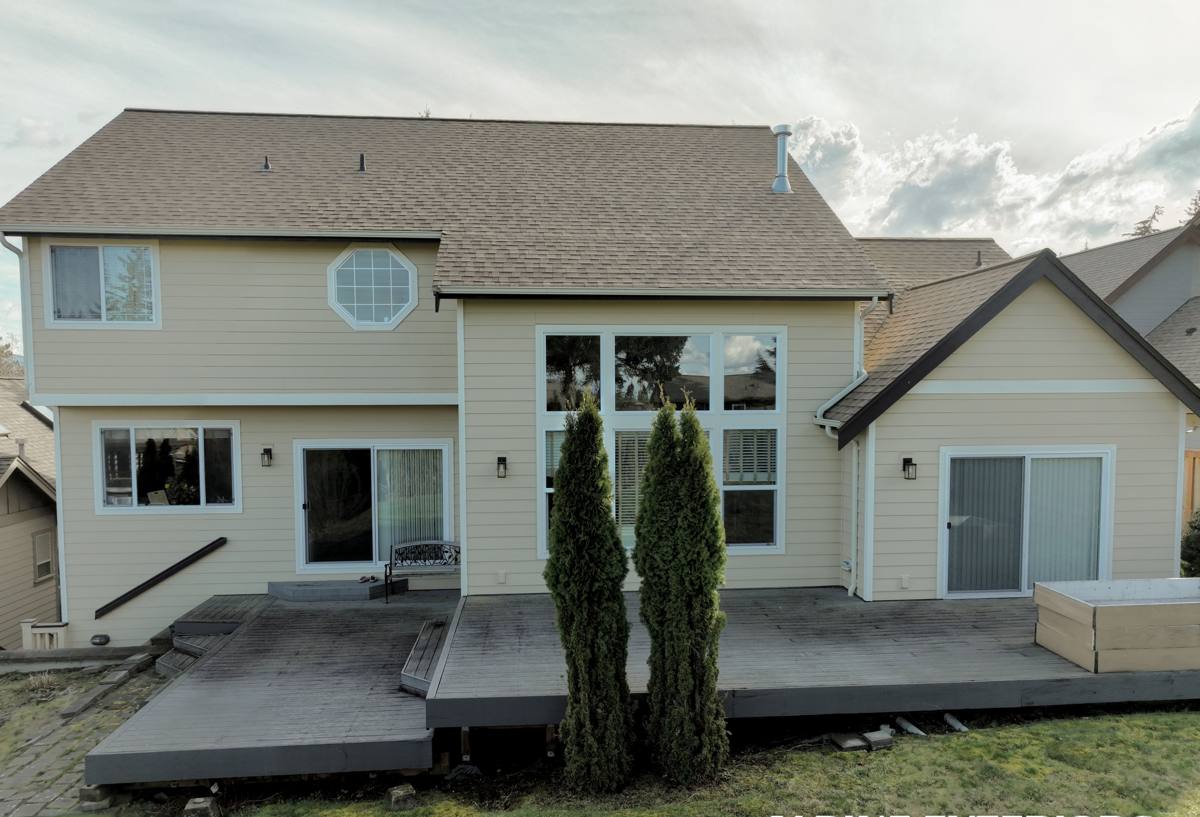
What Clearwater's Climate Actually Does to a Deck
We don't say this to scare anyone — it's just the reality of building outdoors this close to the water, and it's the reason "just build it" isn't good enough here.
Hurricane-Force Wind
Decks are wind-catching structures. A poorly fastened deck, or one with undersized footings, can rack, loosen, or in a bad storm tear away from the house entirely. Railings and stair systems take direct wind load too, and if they're not attached correctly they become the first thing to fail.
Year-Round UV
Florida sun is intense and constant — there's no real off-season for UV exposure like there is further north. Wood fibers break down, finishes chalk and fade, and composite decking that isn't UV-stabilized can discolor unevenly, especially on south- and west-facing decks that get sun most of the day.
Wind-Driven Rain
Storms here don't just drop rain straight down — wind pushes it sideways, up under railings, into fastener holes, and behind ledger boards. Any gap in flashing or sealing becomes a path for water to sit against wood framing, which is where rot starts.
Salt Air
Even a few miles inland from the Gulf, salt in the air accelerates corrosion on anything metal — screws, joist hangers, bolts, railing hardware. Standard hardware-store fasteners can start rusting and staining decking within a couple of seasons in a coastal environment like this one.
None of these on their own would ruin a deck. Together, over years, they're exactly why decks around Clearwater fail early when they're built to a generic spec instead of a coastal one.
Choosing the Right Decking Material for Skycrest
There's no single "best" decking material — it depends on budget, how much upkeep the homeowner wants to do, and how much direct sun and wind exposure the specific yard gets. Here's how the common options actually compare in this climate:
| Material | Coastal Durability | Maintenance | Typical Lifespan Here |
|---|---|---|---|
| Pressure-treated pine | Fair — needs consistent sealing | Annual cleaning and re-sealing | 10-15 years with upkeep |
| Composite decking | Good — resists rot and insects | Occasional washing, no sealing | 20-30 years |
| Tropical hardwoods (e.g. ipe) | Very good — naturally dense | Periodic oiling to hold color | 25+ years |
| PVC/capped polymer | Very good — fully sealed surface | Low — occasional washing | 25-30 years |
We'll walk through real trade-offs with each homeowner rather than pushing one product. Pressure-treated wood is the lowest upfront cost but asks the most of the homeowner in upkeep — if that sealing schedule slips, salt air and UV will show it fast. Composite and PVC cost more up front but are a better fit for anyone who wants to spend weekends on the deck instead of maintaining it. Hardwoods look excellent and hold up well structurally, but they're heavier, pricier, and need periodic oiling to keep their color rather than silvering out.
What's Under the Decking Matters More Than the Decking
Homeowners naturally focus on the surface material, but the structure underneath is what actually determines whether a deck survives a hurricane season. This is where we see the most corners cut on older or budget deck builds around Pinellas County.
Footings
Post footings need to be sized and set to actual soil conditions and local wind load requirements, not a generic minimum. We dig to depth, not to "however deep looked fine."
Ledger Attachment
If the deck attaches to the house, that ledger board connection is one of the most critical — and most commonly botched — parts of the whole structure. It needs proper flashing to keep wind-driven rain from tracking behind it and into the house framing, plus correctly spaced structural fasteners, not just nails.
Fasteners and Hardware
In a salt-air environment, we use stainless steel or coated corrosion-resistant fasteners and joist hangers throughout. Cheaper galvanized hardware can start rusting within a couple of years this close to the coast, and once a fastener corrodes, it loses holding strength exactly where you need it most — in a storm.
Railing and Stair Attachment
Railings need to be through-bolted into structural framing, not just screwed to decking boards. Under wind load, a railing that isn't properly anchored is a genuine safety hazard, not just a cosmetic weak point.
Permits, Wind Load, and Code in Pinellas County
Custom decks in Clearwater and unincorporated Pinellas County generally require a permit, and inspections check footing depth, framing connections, and railing height and spacing before anything gets closed up. This isn't paperwork for its own sake — it's the mechanism that catches the exact structural shortcuts that cause decks to fail in a storm.
We pull the required permits, build to the wind load requirements that apply to this area, and schedule the inspections as part of the job — the homeowner doesn't have to chase any of it down. A deck that skips permitting might save a little time up front, but it can create real problems at resale, with insurance claims after storm damage, or if code enforcement flags it later.
How We Build a Custom Deck, Start to Finish
- On-site design consultation — we look at the actual yard: sun exposure, drainage, how the space connects to the house, and what the homeowner wants to use it for.
- Material and layout selection — walking through the trade-offs above so the homeowner picks a material that fits their budget and maintenance appetite, not just what looks best in a photo.
- Permitting — drawings and permit submission handled before any digging starts.
- Footings and framing — footings set to depth, ledger properly flashed and fastened, framing built with corrosion-resistant hardware throughout.
- Decking installation — boards laid with correct spacing for drainage and material expansion, which matters a lot in Florida's heat swings.
- Railings and stairs — through-bolted to framing, built to code height and baluster spacing.
- Final inspection and walkthrough — we schedule the county inspection and walk the finished deck with the homeowner before calling the job done.
Keeping a Skycrest Deck in Good Shape
A well-built deck still needs some basic upkeep in this climate — the good news is it's not much if the deck was built right in the first place.
- Rinse off salt residue and debris every few weeks, especially after storms
- Check railing bolts and stair connections once a year for looseness or corrosion
- Keep an eye on the ledger board area for any signs of moisture staining
- For wood decking, re-seal on the schedule the product calls for — don't let it lapse
- Trim back vegetation that keeps decking boards shaded and damp
- After any major storm, do a quick visual check of footings and framing connections
Why Local Experience with Skycrest Homes Matters
A lot of deck-building advice online is written for a generic climate. Building here means designing for actual Gulf-coast conditions from day one — the fastener grade, the flashing detail, the footing depth, the material choice — instead of treating hurricane wind and salt air as an afterthought. A crew that regularly works in Clearwater and Pinellas County knows the local permitting process, knows what inspectors here are checking for, and knows which building details actually matter for homes this close to the coast versus which ones are just upsells.
That local familiarity also means fewer surprises during the project — no guessing about permit timelines, no generic material recommendations that don't hold up in salt air, and no structural shortcuts that only show themselves after the first big storm.
Get a Free, No-Pressure Estimate
If you're thinking about adding a custom deck to your Skycrest home, we're happy to come take a look, talk through material options, and give you a straightforward estimate — no pressure, no hard sell. Use the form below to get started.