 Clearwater Roofing
 Why Sunset Point Siding Wears Out Faster Than You'd Expect
Homes in the Sunset Point area sit close enough to Clearwater Harbor and Old Tampa Bay that the exterior of a house is doing real work every single day, not just during storm season. Salt-laden air moves through the neighborhood on the prevailing breeze and slowly attacks anything metal or porous — fasteners, trim edges, seams. Add in Florida's nearly year-round UV load, and any siding material that isn't engineered to hold color and shape will start chalking, fading, or warping well before its "expected" lifespan is up.
Then there's wind. Pinellas County sits in a wind-borne debris region under the Florida Building Code, which means siding here has to be installed to a higher standard than in a low-wind inland market — correct fastening patterns, correct clearances, correct flashing details. When a named storm brings sustained wind and horizontal, wind-driven rain, siding that was installed loosely, or with the wrong fastener spacing, is exactly what fails first. None of this is unique to any one street in Sunset Point — it's the reality for every home in this part of Clearwater — but it's the reason a siding replacement here needs to be treated differently than the same job in a sheltered inland town.
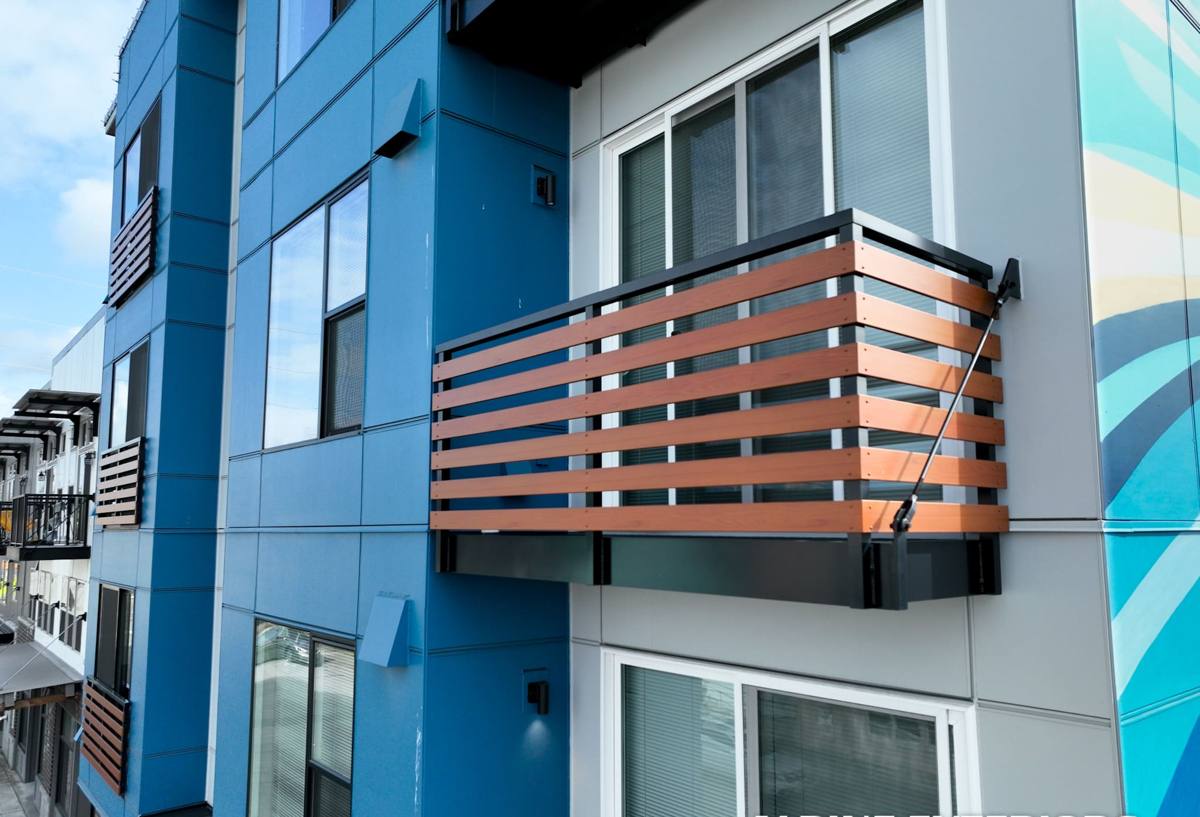
Signs a Sunset Point Home Needs Replacement, Not Just Repair
Siding damage in this climate is often more advanced than it looks from the driveway. A few boards that look "a little rough" up close can mean the water-resistive barrier behind them has already been compromised. Before you commit to a patch job, walk the exterior and look for:
- Visible warping, buckling, or waviness across a wall plane, especially on south- and west-facing sides
- Paint or finish that won't hold anymore, even after a fresh coat — a sign the substrate underneath is failing
- Soft spots, especially low on the wall or around window and door trim, where a screwdriver sinks in easily
- Staining or dark streaking at horizontal seams, which usually points to water getting behind the panels
- Cracking or splitting at butt joints and corners
- Rising cooling bills with no other explanation, which can mean the wall assembly behind the siding is no longer doing its job
- Visible gaps opening up at trim boards, corner posts, or window casings
One or two of these on their own might mean a repair. Several at once, especially combined with any interior signs like peeling paint on inside walls near exterior corners, usually means the assembly behind the siding has been compromised long enough that a full replacement is the honest recommendation — not a stopgap.
What a Correct Siding Replacement Actually Involves
Siding replacement done right is not simply "old boards off, new boards on." The siding itself is the last layer of a system, and every layer underneath it matters as much as the finish product:
Tear-off and inspection
Once the old siding is off, the sheathing underneath gets inspected board by board. In a coastal, high-humidity market like Clearwater, it's common to find soft or delaminated sheathing in spots even when the siding itself looked fine — this is exactly why tear-off, not overlay, is the correct approach for a real replacement.
Weather-resistive barrier and flashing
A new, continuous weather-resistive barrier goes over the repaired sheathing, with flashing integrated correctly at every window, door, and penetration — hose bibs, vents, light fixtures. This is the layer that actually keeps wind-driven rain out of the wall cavity; the siding on top is secondary protection, not the primary defense.
Fastening to spec
Fastener type, length, and spacing are not cosmetic choices — they're what determines whether the siding stays attached in sustained wind. This is installed to the manufacturer's published fastening schedule for the applicable wind zone, not "however the crew usually does it."
Trim, corners, and joints
Correct J-channel, corner treatments, and joint gaps (with the right amount of caulk in the right places — not caulk used to compensate for a bad fit) are what keep water moving down and out instead of finding its way behind the wall.
Why This Work Gets Done in James Hardie Fiber Cement
We install James Hardie fiber cement siding exclusively — not vinyl, not LP SmartSide, not primed wood or cedar. That's a deliberate standard, not a limitation of what we offer. In a market with this much sun, salt, and wind exposure, the material matters as much as the installation:
- Non-combustible. Fiber cement doesn't contribute fuel to a fire the way some engineered wood products can.
- Dimensionally stable. It doesn't expand, contract, and buckle with Florida's daily heat swings the way vinyl can, and it doesn't cup or swell with humidity the way untreated wood does.
- Factory-applied ColorPlus finish. The color is baked on in a controlled factory process, which holds up to UV exposure far better than field-applied paint that has to be recoated every few years.
- Climate-engineered product lines. Hardie's HZ product formulations are specifically engineered for humid, high-moisture climates like ours, rather than a one-size-fits-all national product.
- A real, transferable warranty backed by the manufacturer, not just the installer.
None of this means other siding products are without merit — vinyl is inexpensive and low-maintenance in mild climates, and wood has a look some homeowners love. But for a coastal Pinellas County home taking on this much sun, salt, and wind, we've made the call that fiber cement is what we're willing to put our name behind.
Our Sunset Point Siding Replacement Process
- On-site inspection. We walk the full exterior, check for hidden moisture and sheathing damage, and take real measurements — not a drive-by estimate.
- Written scope and product selection. You get a clear, itemized scope of work along with your Hardie product line, profile, and color selection, in writing before anything is scheduled.
- Permitting. Siding replacement in Clearwater requires a permit, and the installation has to meet the wind load requirements that apply to this part of Pinellas County. We handle that paperwork rather than leaving it to you.
- Tear-off and substrate repair. Old siding comes off, sheathing is inspected, and any damaged sections are replaced before anything new goes up.
- Installation to spec. Weather-resistive barrier, flashing, and fastening are done to the manufacturer's requirements for this wind zone — not shortcuts to save a day of labor.
- Final walkthrough. We inspect the finished job with you before we consider it done, not just before we invoice it.
Cost Factors for Siding Replacement in the Sunset Point Area
Every home is different, so we don't publish blanket per-square-foot pricing — but these are the real variables that move the number up or down on a typical project in this neighborhood:
| Factor | How It Affects Scope or Cost |
|---|---|
| Home size and story count | More wall area and second-story access both add material and labor time |
| Hidden sheathing damage | Discovered only after tear-off; coastal homes often need some sheathing replacement even when siding looked intact |
| Trim and architectural detail | Multiple gables, dormers, or decorative trim take more time than a simple rectangular wall plane |
| Number of window and door openings | Each opening needs its own flashing detail, adding labor per unit |
| Removal and disposal | Tear-off and haul-away of old siding is its own line item, especially for heavier legacy materials |
| Profile selection | Lap siding, shingle-style panels, and vertical panel systems carry different material and labor costs |
| Color selection | Standard ColorPlus finishes versus premium or custom-matched colors affect material pricing |
The only way to get an accurate number is a real on-site look, which is what we recommend before comparing any two quotes line for line.
Why a Crew That Already Works Sunset Point Matters
Siding is one of those trades where local experience shows up in details that are easy to miss until they fail. A crew that regularly works this part of Clearwater already knows the exposure category this neighborhood typically falls under, understands the Pinellas County permitting process, and has a working relationship with the inspectors who sign off on the job. They also know which failure points show up first on homes in this specific coastal environment — corner details, low-wall moisture intrusion, fastener corrosion — because they've opened up enough of these walls to have seen it firsthand. That's a different level of judgment than a crew working from a national playbook that wasn't written for salt air and wind-borne debris zones.
Maintaining Your New Siding in This Climate
James Hardie siding is low-maintenance, not no-maintenance, especially this close to the water. A few habits go a long way:
- Rinse the exterior periodically to remove salt residue and airborne grime before it builds up
- Keep an eye on caulking at trim, corners, and penetrations, and have any cracked sections resealed promptly
- Adjust sprinklers so they aren't hitting the siding directly — constant wetting from irrigation shortens the life of any exterior finish
- Keep gutters clear so wind-driven rain has somewhere to go besides running down the wall
- Have any impact damage from debris (a big storm, a dropped ladder) inspected rather than ignored, since a small breach in the surface can become a bigger moisture problem behind it
If you're seeing warping, soft spots, or failing paint on your Sunset Point home, or you just want an honest opinion on whether repair or full replacement makes sense, we're happy to take a look. Reach out for a free, no-pressure estimate using the form below.