 Clearwater Roofing
 Decks Built for How Coachman Ridge Actually Lives Outdoors
Coachman Ridge is a residential neighborhood, and like most of Clearwater, the outdoor living season here runs nearly year-round. That's exactly why a deck built with generic, big-box specs doesn't hold up the way homeowners expect. A deck in this part of Pinellas County has to deal with intense UV exposure almost every day of the year, sudden downpours with wind-driven rain, the structural demands of hurricane-force wind events, and a steady dose of salt air moving inland off the Gulf. None of these factors are exotic or rare — they're just constant, and a deck that isn't designed around them will show it within a few seasons through cupping boards, corroded fasteners, loose railings, or a frame that's quietly losing integrity underneath a deck surface that still looks fine.
We build custom decks for homes in this area with those conditions treated as the baseline, not an afterthought. That means different framing decisions, different fastener choices, different footing depths, and a different maintenance conversation than you'd get from a crew that mostly builds in a mild, dry climate and treats Florida jobs the same way.
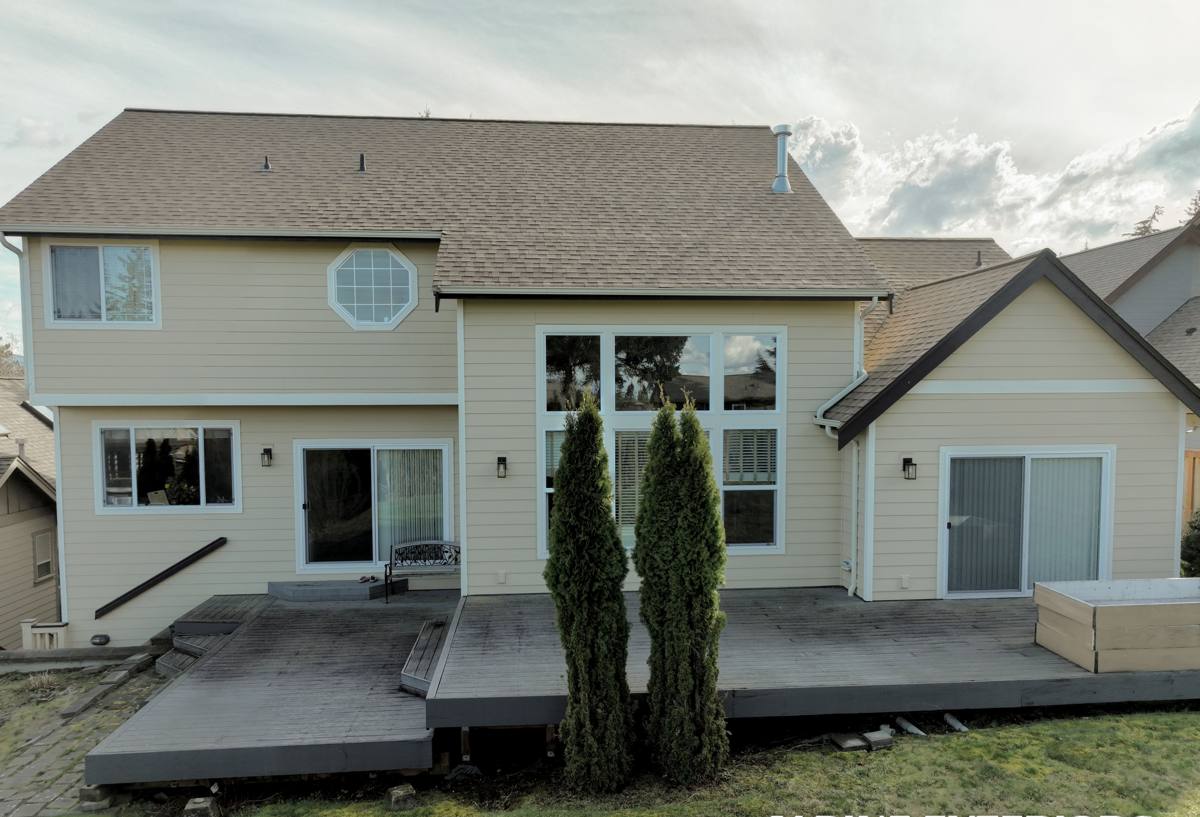
What "Correct" Actually Means for a Coachman Ridge Deck
Framing and Structure
The frame is the part nobody sees once the project is done, and it's also the part that determines whether the deck is still solid in ten years or needs to be torn out in five. In this climate, that means pressure-treated framing rated for ground contact where posts meet footings, proper joist spacing that accounts for the decking material you choose (composite and PVC generally need tighter spacing than solid wood), and footings set below the frost-irrelevant but flood- and soil-relevant depth required by local code. Ledger board attachment to the house also matters more here than people expect — it's the connection point most likely to fail in high wind if it's flashed or fastened incorrectly, and it's the detail an inspector will look at closely.
Fasteners and Hardware
Salt-laden air doesn't stay at the beach — it travels inland on the wind, and Clearwater sits close enough to the Gulf that every part of the city gets some exposure. Standard galvanized fasteners corrode faster here than their ratings suggest under lab conditions. We use stainless steel or coated fasteners rated for coastal exposure, along with hurricane ties and structural connectors at every post-to-beam and beam-to-ledger joint. This is a small line-item cost difference on a quote but it's the single biggest factor in whether hardware is still tight and rust-free a decade out.
Decking Surface Choices
The decking material itself takes the brunt of UV exposure and afternoon thunderstorms. Every material has real trade-offs here — there's no single "best" choice, just the right one for the homeowner's budget, maintenance appetite, and how the deck will be used.
| Material | UV / Fade Behavior | Moisture Handling | Maintenance |
|---|---|---|---|
| Pressure-treated wood | Fades and grays without regular sealing | Can cup or split if not sealed; dries out fast in FL sun | Annual cleaning and resealing recommended |
| Tropical hardwood | Very stable, ages to a silver-gray patina | Naturally dense and moisture-resistant | Occasional oiling if a rich color is wanted; low if left natural |
| Composite decking | Fade-resistant, but quality varies by brand | Doesn't rot; some early-generation products absorbed moisture at cut edges | Periodic washing; no sealing needed |
| PVC / capped polymer | Best fade resistance of the group | Fully moisture-proof, doesn't take on water | Lowest maintenance; occasional washing |
We don't push homeowners toward the most expensive option by default. A shaded backyard deck used occasionally is a very different case than a full-sun deck attached to a pool area that gets heavy daily use — the right recommendation depends on that, and on how much upkeep the homeowner actually wants to do.
Wind, Rain, and Code Requirements in This Area
Clearwater and the rest of Pinellas County fall within Florida's high-velocity hurricane wind zones for building code purposes, which means deck framing, railing attachment, and post connections all need to meet wind-load requirements, not just basic residential framing standards. A permit and inspection are typically required for a new custom deck here, and the plans need to reflect actual structural engineering for wind uplift and lateral load — not a generic deck kit design pulled from a national template. Railings need secure attachment that resists lateral force, not just decorative screws into the surface boards. This is also where corner-cutting shows up most often on decks built by out-of-area or unlicensed crews: the deck looks finished and passes a casual glance, but the connections underneath weren't built to hold up in an actual wind event.
Wind-driven rain is a related issue that's easy to overlook. Rain in this region rarely falls straight down during a storm — it comes in sideways, which means water gets under railings, into ledger connections, and against the house siding at the attachment point far more than in a calmer climate. Proper flashing at the ledger board and correct water-shedding detail at the deck-to-house junction prevent moisture intrusion into the house structure itself, which is a much more expensive problem than anything happening to the deck surface.
Our Process for a Coachman Ridge Deck Project
- On-site assessment: we look at sun exposure, drainage, existing structure (if replacing a deck), and how the space will actually be used.
- Design and material selection: honest conversation about wood, composite, or PVC trade-offs based on budget and maintenance preference, not a one-size push toward the highest-margin product.
- Permitting: we handle the permit application and engineering documentation required for wind-load compliance in Pinellas County.
- Framing and structural build: ground-contact-rated posts, coastal-grade fasteners, hurricane ties, and correctly flashed ledger attachment.
- Decking, railing, and finish work: installed to the spacing and fastening specs the chosen material actually requires.
- Final inspection: we coordinate the required inspection sign-off before calling the project complete.
Maintenance That Actually Matters Here
Every deck material needs some upkeep in this climate — the question is how much and how often. Skipping it doesn't save money; it just moves the cost to a bigger repair later.
- Rinse the deck surface periodically to clear salt residue, pollen, and organic debris before it stains or holds moisture against the boards.
- Check railing posts and stair connections once or twice a year for looseness — this is often the first sign of a fastener or connector starting to corrode.
- For wood decks, plan on resealing on a regular cycle; UV exposure here breaks down sealers faster than in milder climates.
- Clear leaves and debris from between boards and around footings so water isn't sitting against the frame after storms.
- After a major storm, do a quick visual check of railings and stair stringers before heavy use resumes.
Why It Matters That We Already Work in This Neighborhood
A crew that regularly works Coachman Ridge and the surrounding Clearwater area already knows the local permitting process, the inspectors' expectations, and the way this specific stretch of Pinellas County's climate behaves through a full year — not just what a spec sheet says. That familiarity shows up in small but important ways: knowing which framing details inspectors here check closely, knowing realistic timelines around the local permit office, and being available quickly if a connection needs a follow-up look after a storm rather than being a one-time crew that's hard to reach again.
It also means we're not guessing at material behavior — we've seen how different decking products actually hold up locally over several seasons, not just how they're marketed. That's the difference between a deck spec'd for "outdoor use" in general and one spec'd for this specific coastal, high-UV, hurricane-zone environment.
Common Red Flags When Hiring for This Kind of Project
- A quote with no mention of permitting or structural wind-load requirements — a sign the crew may be planning to skip the permit entirely, which puts the homeowner at risk if it's ever discovered or if there's storm damage later.
- Standard galvanized fasteners used without discussion of coastal-grade hardware.
- No clear answer on footing depth or ledger attachment method when asked directly.
- Pressure to pick a decking material before discussing how the deck will actually be used and maintained.
- No local references or completed projects in the immediate area.
A homeowner doesn't need to become a construction expert to vet a contractor — asking direct questions about permits, fasteners, and footing depth, and expecting clear answers, filters out most of the risk on its own.
Get a Straightforward Estimate
If you're weighing a new custom deck or replacing one that hasn't held up to Clearwater's weather, we're happy to walk the site, talk through material options honestly, and give you a clear picture of what a correctly built deck for Coachman Ridge actually involves. Use the form below to request a free, no-pressure estimate.