 Clearwater Roofing
 Composite Decking Built for Seminole's Climate
Seminole sits close enough to the Gulf that salt air, humidity, and intense sun are part of daily life, not occasional weather events. A deck built here has to hold up to conditions that most decking products elsewhere in the country never see: months of unbroken UV exposure, sudden downpours that drive rain sideways under railings and fascia, and salt-laden air that finds its way into every fastener and connection point. Composite decking, installed correctly, handles this environment far better than wood — but "composite" is not one product, and "installed correctly" is doing a lot of work in that sentence. This page is about what actually matters for a composite deck in Seminole, not a generic rundown of decking in general.
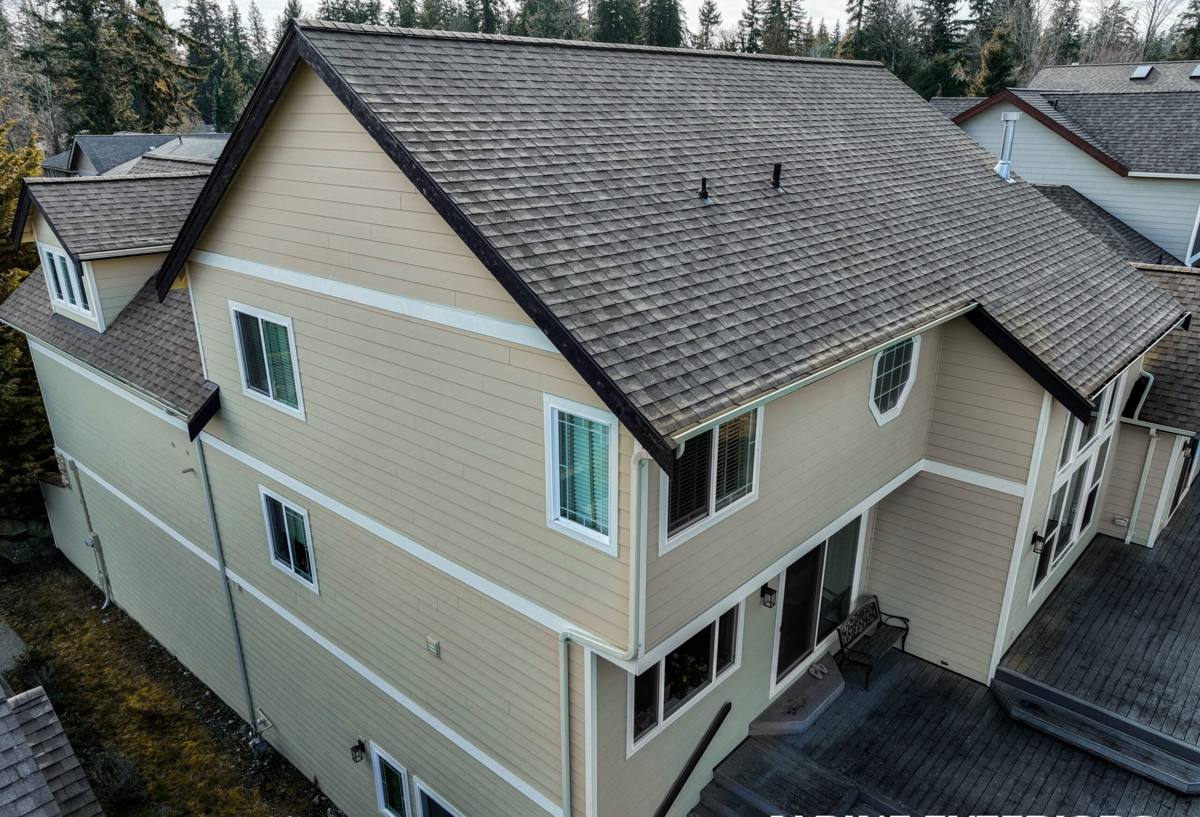
What Pinellas County Weather Does to a Deck Over Time
UV and Heat
Florida sun is intense and constant. Surface temperatures on a dark deck board in July can run well above the surrounding air temperature, and that heat cycling — hot days, cooler nights, daily expansion and contraction — is what causes boards to warp, fasteners to back out, and lower-grade composite to fade or chalk at the surface. A board rated for northern climates isn't necessarily rated for this kind of sustained UV load.
Wind-Driven Rain and Moisture
Afternoon storms here don't fall straight down. Wind-driven rain gets pushed under railings, into board gaps, and against ledger connections at the house. Composite decking resists water absorption far better than wood, but the substructure underneath — joists, beams, and any wood blocking — still needs proper flashing and drainage, or moisture gets trapped where you can't see it.
Salt Air
Even a few miles inland from the Gulf, airborne salt accelerates corrosion on anything metal: fasteners, joist hangers, railing hardware, post bases. A deck that looks fine on day one can develop rust streaks and weakened connections within a couple of years if the hardware wasn't rated for coastal exposure.
Composite Decking Materials: What We Install and Why
"Composite" covers a range of products, and the differences matter more in Seminole's climate than they would in a drier, milder region. We install capped composite and cellular PVC almost exclusively for exactly that reason — the trade-offs below aren't marketing, they're what we've found holds up.
| Material | Moisture Behavior | UV/Fade Resistance | Maintenance |
|---|---|---|---|
| Capped composite | Cap layer sheds water; core resists rot | Strong — cap layer is the primary UV barrier | Occasional wash; no sealing or staining |
| Cellular PVC | Fully synthetic, does not absorb water | Strong, holds color well | Low; wash only |
| Uncapped wood-plastic composite | Can absorb moisture at cut ends and surface over time | Fades and can mold in humid climates | Needs periodic cleaning to prevent mildew |
| Pressure-treated wood | Absorbs water readily; prone to cupping and splitting | Fades gray without regular sealing | Requires sealing/staining every 1-2 years |
We generally steer homeowners away from uncapped wood-plastic composite and untreated wood surfaces for Seminole projects. It's not that these products can't be installed — it's that the ongoing maintenance burden in this humidity and sun is more than most homeowners want to sign up for, and the warranty coverage on uncapped products is usually narrower when it comes to mold and moisture claims.
What a Correct Composite Deck Installation Involves
The composite boards get most of the attention, but the substructure underneath is what actually determines whether the deck lasts. A correct installation includes:
- Joist spacing tightened to the composite manufacturer's spec (often 12" on-center for angled or picture-frame board patterns, not the 16" spacing standard for wood decking)
- Stainless steel or coated coastal-grade fasteners and joist hangers — standard galvanized hardware corrodes faster near the Gulf
- Proper ledger board flashing where the deck attaches to the house, to stop wind-driven rain from getting behind siding or into the rim joist
- Hidden fastener systems or manufacturer-approved face screws installed per spec, not just "close enough" spacing
- Ventilation gaps and drainage planning underneath the deck so trapped moisture has somewhere to go
- Board gapping adjusted for Florida's heat — composite expands more than people expect in this climate, and gaps set too tight will buckle
Skipping any of these doesn't usually show up as a problem in year one. It shows up in year three or four, as a soft spot, a rust stain, or boards that have started to cup — right about when a homeowner assumes composite "shouldn't do that."
Wind, Code, and Structural Considerations Near the Coast
Pinellas County sees hurricane-force wind events, and deck structures need to be built with that in mind — not just the decking surface, but the railings, post connections, and how the whole structure ties back to the house. Railing systems need to meet load requirements for both lateral force and wind, post bases need proper anchoring, and any structural connections should use fasteners and hardware rated for the exposure. Permitting requirements apply to most new deck construction and many replacement projects in this area, and inspectors are checking these connection details specifically because they're the parts that fail first in a storm. A deck that looks finished but wasn't built to withstand wind load is a liability, not a shortcut.
Our Process for Seminole Decking Projects
We keep the process straightforward:
- On-site assessment — we look at the existing structure (if there is one), grade and drainage around the footprint, and how the deck will tie into the house.
- Material and layout discussion — we walk through composite options, board patterns, and railing choices based on your budget and how the space will be used.
- Permitting — we handle the permit application and coordinate the required inspections so you don't have to chase paperwork.
- Build — substructure first, inspected, then decking, railings, and any stairs or lighting.
- Final walkthrough — we go over the finished deck with you, including basic care, before we consider the job done.
Maintenance: Keeping a Composite Deck Looking Right Near the Gulf
Composite decking's biggest selling point is low maintenance, but "low" isn't "none," especially with salt air in the mix. A periodic rinse with a garden hose and mild soap keeps salt residue and pollen film from building up on the surface. Areas under furniture or planters should get checked occasionally for trapped moisture or debris, since anything that sits wet against the board surface can encourage mildew even on capped products. Metal hardware — railing brackets, post caps, stair hardware — is worth a visual check once or twice a year for early rust, since that's usually the first sign of a fastener that wasn't rated for this environment.
Cost Factors for a Seminole Composite Deck
Every project is different, but the same handful of factors drive most of the price difference between a basic deck and a higher-end one:
| Factor | Impact on Cost |
|---|---|
| Deck size and shape | Larger footprints and angled/picture-frame patterns increase material and labor |
| Composite grade | Entry-level capped composite vs. premium PVC or high-end composite lines |
| Substructure condition | New build vs. reinforcing or replacing an existing frame |
| Height and stairs | Elevated decks need additional framing, railings, and stair construction |
| Railing style | Basic composite railing vs. cable, glass, or aluminum systems |
| Site access and drainage | Grading, drainage work, or difficult access can add labor time |
We give straightforward, itemized estimates so you can see where the money is going rather than a single lump-sum number.
Why Hire a Crew That Already Works in Seminole
A lot of what makes a Seminole deck project go smoothly has nothing to do with the decking material itself. It's knowing which hardware actually holds up in this specific coastal exposure versus what a manufacturer's general spec sheet recommends. It's understanding local permitting requirements and inspection expectations well enough to avoid delays. It's recognizing drainage and grading issues that are common on Pinellas County lots before they turn into a standing-water problem under the deck. A crew that works this area regularly has already made the mistakes elsewhere and adjusted for them — you shouldn't have to pay for that learning curve on your own project.
Questions to Ask Before You Hire a Deck Contractor
- Are you licensed and insured to build in Pinellas County, and will you pull the permit?
- What fastener and hardware grade do you use, and is it rated for coastal salt exposure?
- What joist spacing do you build to for composite decking specifically?
- How do you handle ledger board flashing where the deck meets the house?
- What's included in the written estimate — is it itemized or a single lump sum?
- What warranty coverage applies to both the composite material and your labor?
If a contractor can't answer these clearly, that's worth noting before you sign anything.
If you're considering a new deck or replacing an aging one in Seminole, we're happy to take a look and give you a straightforward, no-pressure estimate. There's a form below — reach out and we'll set up a time to come by.