 Clearwater Roofing
 Siding That Has to Work in Countryside's Climate, Not Just Look Good on Day One
Countryside is one of Clearwater's established residential communities, and like the rest of Pinellas County, it sits in a climate that is genuinely hard on exterior building materials. Hurricane-force wind events, intense year-round UV exposure, wind-driven rain that finds every gap in a wall assembly, and salt-laden coastal air all combine to shorten the life of siding that isn't built for this specific environment. A siding product that performs fine in a milder, drier climate can fail here in a fraction of the time. That's the frame we start from on every Countryside siding project: what does this specific house, on this specific street, in this specific climate, actually need to hold up for the next few decades?
We install James Hardie fiber cement siding exclusively, and this page is focused on what that means for a Countryside home specifically: what the local climate demands, what a correct installation actually involves, how our process works from first visit to final inspection, and why working with a crew that already has experience in this neighborhood matters more than homeowners sometimes expect.
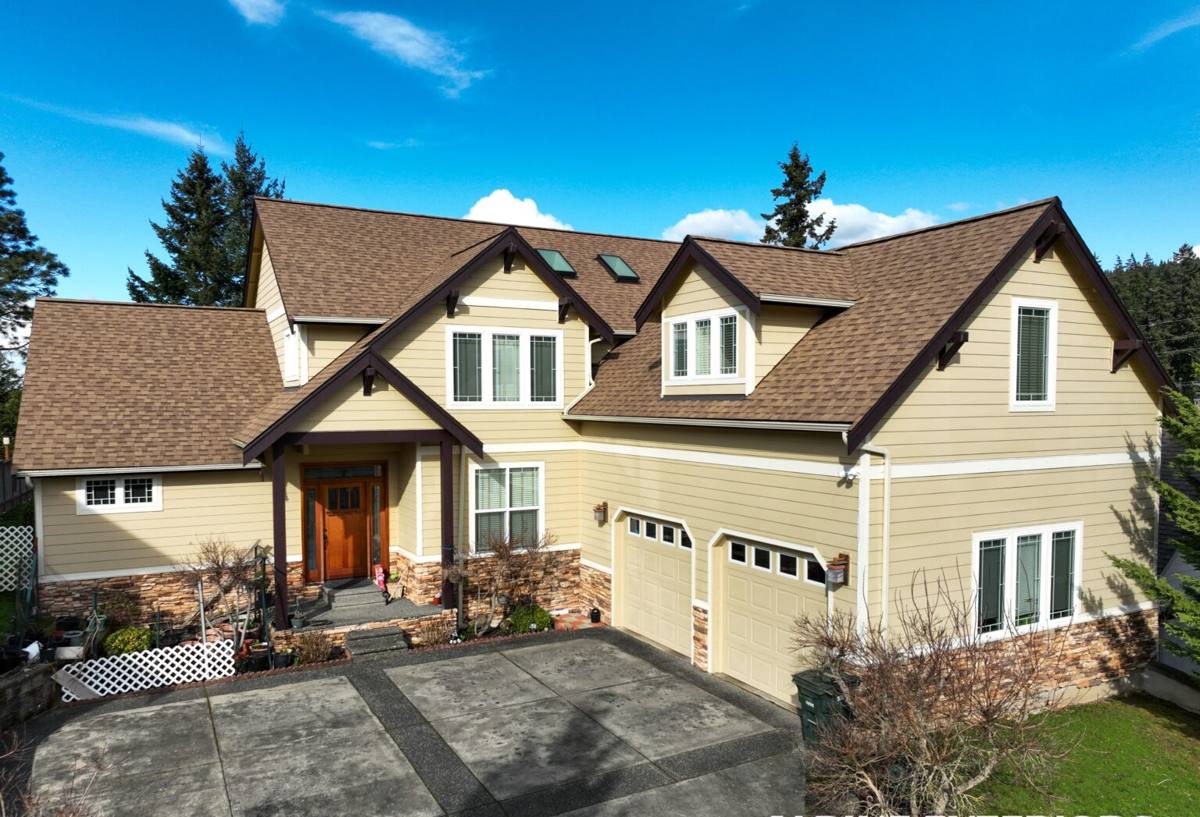
What Pinellas County's Climate Does to Siding Over Time
Sun and UV Load
Florida's UV index runs high nearly year-round, and Countryside homes take that exposure on every south- and west-facing wall for decades. Paint films chalk, fade, and eventually crack under that kind of sustained UV load. Field-applied paint on wood-based or engineered-wood siding is especially vulnerable, because once the finish starts to break down, the substrate underneath is exposed to moisture with no protective layer left. Fiber cement with a factory-applied finish handles this differently, which is a distinction worth understanding before you choose a product.
Wind-Driven Rain and Humidity
Pinellas County doesn't just get rain, it gets rain pushed sideways by wind, which means water finds its way into laps, joints, and fastener penetrations that would stay dry in a calmer climate. Combine that with the region's high year-round humidity and you get a wall assembly that's under near-constant moisture pressure. Any siding material that absorbs water, swells, or traps moisture behind its surface is working against the climate from day one.
Hurricane Wind Loads
Countryside sits within Florida's High-Velocity Hurricane zone influence, and even outside of a named storm, seasonal wind events put real lateral load and uplift pressure on exterior walls. Siding has to stay mechanically fastened and intact under that load, not just look good in calm weather. This is a fastening and installation-method issue as much as it is a product issue.
Salt Air
Clearwater's proximity to the Gulf means salt content in the air is a real factor even for homes that aren't directly on the water. Salt accelerates corrosion of exposed metal fasteners and trim, and it interacts with lower-quality finishes in ways that speed up fading and surface breakdown. A siding system needs corrosion-resistant fastening and a finish built to resist that chemical exposure, not just weather exposure.
Climate Stressors at a Glance
| Climate Factor | What It Stresses | What the Siding System Needs |
|---|---|---|
| Intense year-round UV | Paint film, color retention | Factory-cured, UV-stable finish |
| Wind-driven rain | Laps, joints, fastener penetrations | Correct overlap, sealing, flashing detail |
| Hurricane-force wind | Fastening, panel attachment | Manufacturer-spec fastening pattern and schedule |
| Salt air | Exposed metal, lower-grade coatings | Corrosion-resistant fasteners, engineered finish |
| High ambient humidity | Moisture-absorbing substrates | An inorganic, non-absorbent core material |
Why We Standardize on James Hardie for Homes Like These
We don't install vinyl siding, LP SmartSide, primed spruce, cedar, or fiber cement alternatives like Allura or Cemplank. That's a deliberate standard, not a limitation we apologize for. James Hardie's fiber cement is a cement, sand, and cellulose fiber composite with an inorganic core, meaning it doesn't absorb and swell with moisture the way wood-based products can, and it won't feed fungus or insects the way organic materials can. It's also non-combustible, which is a meaningful safety consideration on its own merits. For a Countryside home taking on UV, wind-driven rain, hurricane wind loads, and salt air simultaneously, that combination of properties is what actually holds up long-term, not just what looks good in a showroom sample.
We're not going to tell you every other siding product is worthless, because that isn't honest or accurate. Vinyl and engineered wood have real uses and real customers who are satisfied with them. What we will say plainly is that after years of installing and standing behind exterior work in this climate, fiber cement from James Hardie is the material we're willing to put our name on for a Countryside re-side, and the reasons come down to how each material actually behaves under this specific combination of stressors, not marketing claims.
The James Hardie Product Lines That Fit This Climate
James Hardie engineers its siding by climate zone under its HardieZone system, and Pinellas County falls into the HZ5 zone, meaning the boards specified for this area are formulated for higher moisture exposure and humidity cycling. That's not a marketing detail, it's a manufacturing specification that affects how the product performs on an actual Countryside wall.
ColorPlus Technology
Most Hardie products we install use the ColorPlus factory finish, a baked-on, multi-coat finish applied under controlled conditions rather than brushed on in the field after installation. That finish resists the fading and chalking that intense Florida UV causes to field-applied paint, and it comes backed by its own finish warranty separate from the substrate warranty. For a Countryside home, that means fewer repaint cycles and more consistent color retention over the years the siding is on the wall.
Product Options
- HardiePlank lap siding: the most common profile for a traditional horizontal-siding look, available in multiple textures and exposure widths.
- HardiePanel vertical siding: used for board-and-batten style sections or accent areas.
- HardieTrim: matching trim boards for corners, fascia, and window and door surrounds, finished to the same standard as the field siding.
- HardieSoffit: pre-finished soffit panels for a consistent, moisture-resistant system at the roofline, where wind-driven rain intrusion is a common problem point.
What a Correct Installation Actually Involves
Fiber cement is only as good as its installation. A quality board installed to a shortcut process will underperform a mid-grade product installed correctly, especially in a climate that punishes sloppy detailing as fast as this one does. A correct Countryside installation follows the manufacturer's fastening, clearance, and flashing requirements at every step, not just the ones that are easy to see once the job is finished.
Preparation and Substrate
Before any siding goes up, the existing wall condition gets assessed for rot, moisture intrusion, or structural issues that need to be addressed first. Installing new siding over a compromised substrate just hides a problem instead of fixing it.
Weather-Resistive Barrier
A correctly installed weather-resistive barrier goes on before the siding, giving the wall assembly a secondary drainage plane in case any water gets past the siding's face during a wind-driven rain event. This is one of the most commonly rushed steps on lower-bid jobs, and it's one of the most important for this climate specifically.
Flashing at Penetrations
Every window, door, and wall penetration needs proper flashing detail so water is directed out and away from the wall cavity rather than trapped behind the siding. In a climate with sideways-blown rain, flashing quality is often the difference between a wall that stays dry for thirty years and one that develops hidden moisture damage in five.
Fastening Schedule
James Hardie specifies fastener type, spacing, and placement for a reason, and those specifications get stricter in higher wind zones like ours. Correct fastening is what keeps siding attached and intact through seasonal wind events and hurricane conditions, not just under calm-weather testing.
Clearances and Sealing
Manufacturer-specified clearances at the ground, roofline, and adjoining surfaces prevent standing water and wicking moisture from compromising the board edges over time, and correct caulking at trim and penetration points keeps wind-driven rain from finding a path in.
Our Process for a Countryside Siding Project
- On-site assessment: we walk the exterior, evaluate the existing siding or substrate condition, and identify any problem areas, moisture damage, or wind exposure specific to that lot and orientation.
- Product and scope planning: we determine the right HardiePlank, HardiePanel, and trim combination for the home's style, along with a ColorPlus color selection.
- Permitting: siding replacement in Clearwater and Pinellas County generally requires a building permit, and we handle that process as part of the job rather than leaving it to the homeowner.
- Removal and prep: old siding comes off, the substrate gets inspected and repaired where needed, and the weather-resistive barrier goes on correctly before a single board is hung.
- Installation to spec: boards, panels, trim, and soffit go up following James Hardie's fastening, clearance, and flashing requirements for our wind and moisture zone.
- Final inspection and walkthrough: we confirm the work against code and manufacturer spec, and walk the finished exterior with the homeowner.
Signs a Countryside Home May Need Siding Attention
- Visible cracking, warping, or buckling in existing siding boards or panels.
- Soft spots, or a spongy feel, when pressing on siding near the base of the wall or below windows.
- Paint that's chalking, peeling, or fading unevenly across sun-exposed walls.
- Gaps opening up at trim, corners, or window and door surrounds.
- Visible rust streaking from fasteners or metal trim.
- Musty odors or discoloration on interior walls that back up to exterior siding.
- Siding that's noticeably older than its expected service life or was installed without a documented warranty.
Cost Factors for a Countryside Fiber Cement Project
Every home is different, and we don't publish blanket per-square-foot pricing because it isn't honest until we've actually seen the house. What we can tell you is what tends to move the number up or down.
| Factor | Why It Affects Cost |
|---|---|
| Home size and wall complexity | More corners, dormers, and roof intersections mean more cutting, flashing, and labor time |
| Substrate condition | Rot or moisture damage found during removal has to be repaired before new siding goes on |
| Product selection | HardiePlank, HardiePanel, textures, and trim packages carry different material costs |
| Color and finish | Standard ColorPlus colors versus custom or premium finish options |
| Removal scope | Full tear-off versus siding over an already-sound, code-compliant substrate |
| Accessibility | Second-story sections, tight lot lines, and landscaping can add labor time |
Why a Crew That Already Works in Countryside Matters
A contractor who already works this part of Pinellas County knows the wind and moisture demands this climate puts on a wall assembly, and has already worked through the local permitting process with Clearwater's building department. That's not a small thing. It means fewer surprises mid-project, a permitting process that doesn't stall the job, and a crew that installs to the fastening and clearance standards this wind zone actually requires rather than a generic national default. A siding job here has to be built for this specific set of conditions, and experience installing in this exact area is part of how that gets done right.
If you're weighing a siding project for a Countryside home, we're glad to walk the exterior with you, look at what's there now, and talk through what James Hardie fiber cement would look like for your specific house. There's no pressure and no cost to have that conversation, and the form below is the easiest way to get started.