 Clearwater Roofing
 Siding Repair Built for Countryside's Climate Reality
Countryside sits inland from the Gulf but still takes a beating from everything that makes Pinellas County weather so hard on a home's exterior. Hurricane-force winds during tropical systems flex and pry at siding panels and trim. Florida's UV load runs strong essentially year-round, breaking down pigments and softening lesser materials from the outside in. Wind-driven rain forces water sideways into seams and laps that were never designed to handle it, and salt air carried in off Tampa Bay and the Gulf accelerates corrosion on fasteners and fittings even several miles from open water. None of this is unique to one street or subdivision, but it is a constant for every home in this part of Clearwater, and it's the reason siding repair here has to be treated as more than a cosmetic patch job.
When siding fails on a Countryside home, it's rarely just one thing. A cracked panel is usually a symptom of a fastening or moisture problem underneath it, and a quick caulk-and-paint fix often just buries the issue until it resurfaces — usually as rot, mold, or a bigger repair bill a year or two later.
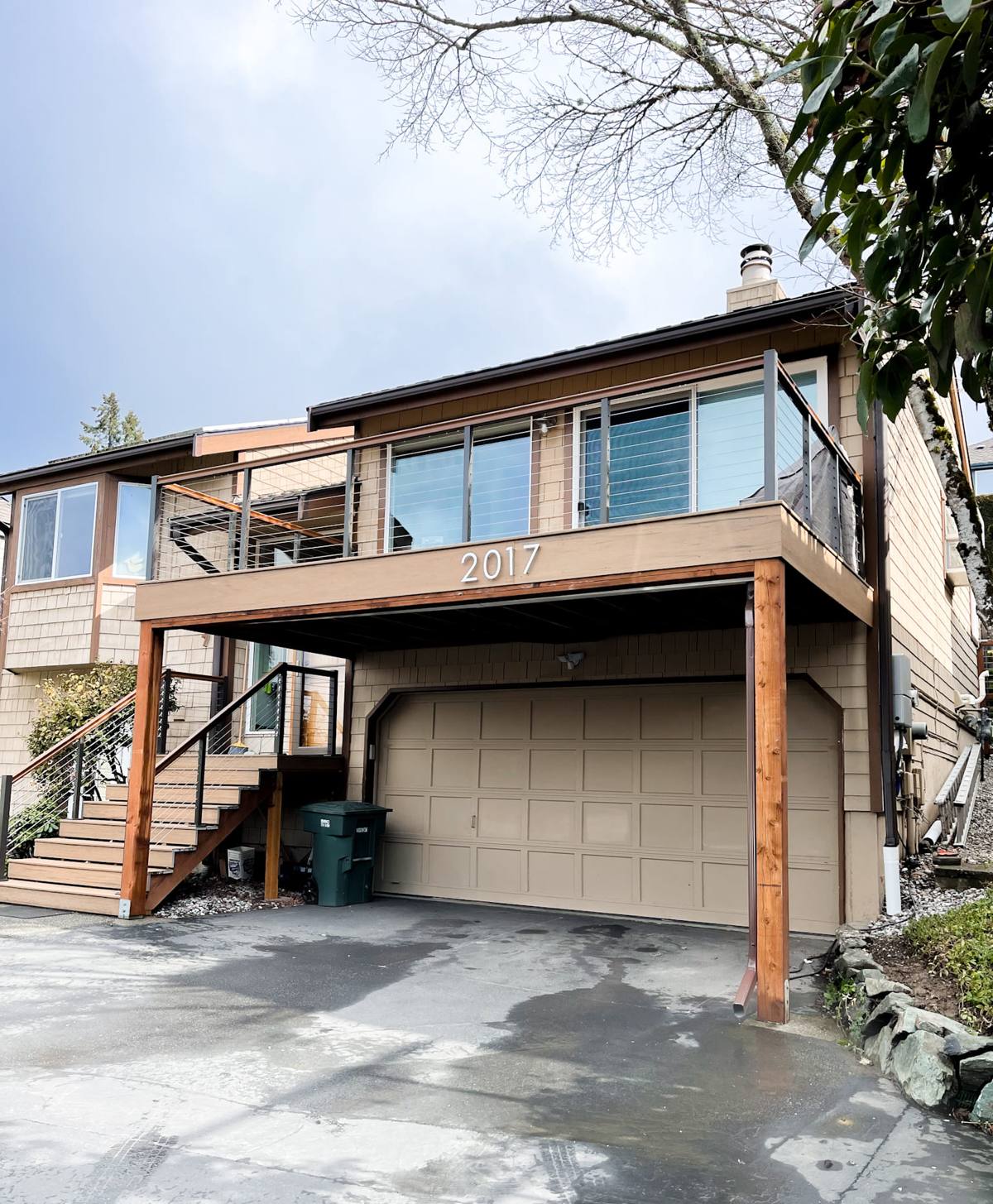
What Damage Actually Looks Like on Countryside Homes
We see a fairly consistent pattern of siding problems across this part of Clearwater, driven directly by the local climate:
- Cracked or split panels from repeated wet-dry cycling and wind flex, especially around corners and window returns
- Buckling or warping where moisture has gotten behind the siding and the substrate has swelled
- Fading and chalking on south- and west-facing walls that take the most direct UV exposure
- Fastener corrosion or "nail popping" where salt-influenced air has attacked exposed metal over time
- Soft or delaminating spots at the bottom courses, where sprinkler overspray and ground moisture do slow, quiet damage
- Wind-lifted or missing sections after named storms, particularly on gable ends and upper stories that catch the most wind load
Some of these are obvious from the ground. Others — especially moisture trapped behind an intact-looking panel — aren't visible until we're up close with a probe and a trained eye for what "normal" wear looks like versus what's actually a failure in progress.
Why We Repair Exclusively With James Hardie Fiber Cement
We install and repair with James Hardie fiber cement siding only. We don't install LP SmartSide, vinyl, Cemplank, Allura, primed spruce, or cedar, and we think Countryside homeowners deserve an honest explanation of why, especially when a repair decision turns into a "do we patch this section or reside the wall" conversation.
Vinyl siding is affordable and low-maintenance in mild climates, but it softens and can deform in sustained high heat, and it has real limits in wind resistance compared to fiber cement — a genuine concern given how directly Pinellas County sits in hurricane paths. Wood-based products like primed spruce or cedar can look great when new, but they're organic materials in a state with heavy humidity and frequent wind-driven rain, which means an ongoing maintenance commitment to keep moisture from winning that fight. Engineered wood siding like LP SmartSide has improved a great deal over the years, but it's still a wood-strand product with a resin coating, and its long-term performance depends heavily on caulking, painting, and edge-sealing being kept up perfectly, indefinitely, in a climate that doesn't forgive lapses.
James Hardie fiber cement is non-combustible, dimensionally stable, and engineered specifically for climates like ours through its HZ5 product line, built for high-humidity, high-moisture regions. The factory-applied ColorPlus finish resists the fading and chalking we see so often on UV-beaten walls in this area, and it comes with a genuinely strong, transferable warranty. When we repair a section of Hardie siding, we're working with a product designed to take what Gulf Coast weather throws at it — not fighting an uphill battle against a material that was never built for it.
What a Correct Siding Repair Actually Involves
A proper repair isn't just swapping a damaged plank for a new one. It starts with figuring out why the damage happened in the first place, because replacing a cracked panel without addressing the cause just guarantees a repeat visit.
Our diagnostic step
Before any repair work starts, we check the house wrap and flashing behind the affected area, inspect fastener condition, and look for signs that water has been getting in somewhere other than the obvious spot. Countryside homes span a range of ages and construction styles, and older weather barrier systems sometimes need attention alongside the visible siding damage.
Matching and integration
Because we work exclusively in James Hardie products, matching an existing repair to older Hardie siding — or transitioning a repair into an upgrade for a home currently sided in something else — is something we can do with product knowledge, not guesswork. Color, plank profile, and reveal all need to line up so a repair doesn't stand out from the rest of the wall.
Correct fastening and sealing
Hardie's own installation specifications call for specific fastener types, spacing, and clearances, and for good reason — get those wrong and you reintroduce the exact wind and moisture vulnerabilities the material is designed to resist. We follow those specs, not shortcuts.
Repair vs. Replacement: How We Help You Decide
Not every damaged section needs a full re-side, but not every problem should be patched either. We walk Countryside homeowners through the actual condition of their siding so the decision is based on facts, not guesswork.
| Factor | Favors Repair | Favors Full Replacement |
|---|---|---|
| Extent of damage | Isolated to a few panels or one wall section | Spread across multiple elevations |
| Underlying moisture | Substrate and wrap are dry and sound | Rot or sustained moisture intrusion found behind siding |
| Age of existing siding | Relatively recent installation, matching material available | Original siding nearing or past its practical service life |
| Storm damage pattern | Isolated wind-lift or impact damage | Widespread fastener failure or panel displacement |
| Product currently installed | Existing James Hardie siding in good general condition | Non-Hardie product with recurring maintenance or performance issues |
We'll always tell you plainly which category your home falls into rather than defaulting to the bigger job.
Our Process for a Countryside Siding Repair
The steps stay consistent whether we're fixing storm damage or addressing long-term wear:
- On-site inspection of the damaged area and the surrounding siding, wrap, and trim
- A clear explanation of what's causing the damage, not just what it looks like
- A written scope and estimate covering material, labor, and any underlying repairs needed
- Removal of damaged sections without disturbing sound siding unnecessarily
- Correction of any underlying moisture or fastening issue found during removal
- Installation of matched James Hardie material to manufacturer specification
- A final walk-through so you can see the completed work before we consider the job done
Why a Crew That Already Works in Countryside Matters
Siding repair quality depends heavily on understanding the conditions a specific home has actually been exposed to. A crew that regularly works Clearwater and greater Pinellas County neighborhoods like Countryside already knows what wind exposure a given orientation typically sees, how sprinkler and irrigation patterns tend to cause bottom-course damage in this climate, and what a normal amount of UV fading looks like versus a sign of a defective panel run. That local pattern recognition speeds up diagnosis and helps avoid repairs that address symptoms instead of causes. It also means faster response after named storms, when demand for siding repair spikes across the whole region and homeowners who already have a known local contractor tend to get seen sooner than those starting from scratch.
Keeping Repaired Siding Performing Long-Term
Once a repair is complete, a small amount of routine attention goes a long way in this climate:
- Rinse siding periodically to clear salt residue and airborne grit, especially on walls facing prevailing wind
- Keep sprinkler heads adjusted so they don't spray directly on lower siding courses
- Trim back landscaping that traps moisture against the wall or scrapes panels in wind
- Walk the exterior after any significant storm and note anything that looks different from before
- Have caulking at trim and penetration points checked periodically rather than waiting for a visible gap
- Address any new crack or soft spot promptly — small repairs stay small when they're caught early
Get an Honest Look at Your Siding
If your Countryside home has siding damage — whether it's storm-related, UV wear, or something you've been putting off — we're happy to take a look and give you a straight answer about what it needs. Reach out for a free, no-pressure estimate using the form below.