 Clearwater Roofing
 Custom Decks Built for Harbor Oaks, Not Just Any Backyard
Harbor Oaks sits close enough to Clearwater Harbor and the Gulf that every outdoor structure on a property has to answer to the same set of conditions: salt-laden air, intense year-round sun, sudden downpours, and the real possibility of hurricane-force wind during storm season. A deck built with generic, one-size-fits-all methods might look fine for a year or two, but in this environment the difference between a deck that lasts fifteen-plus years and one that starts failing at year four almost always comes down to material choice, fastener selection, and how the structure was framed and attached to the house. We build custom decks for homeowners throughout the Clearwater area, including Harbor Oaks, with those local realities built into every decision from the first sketch to the final inspection.
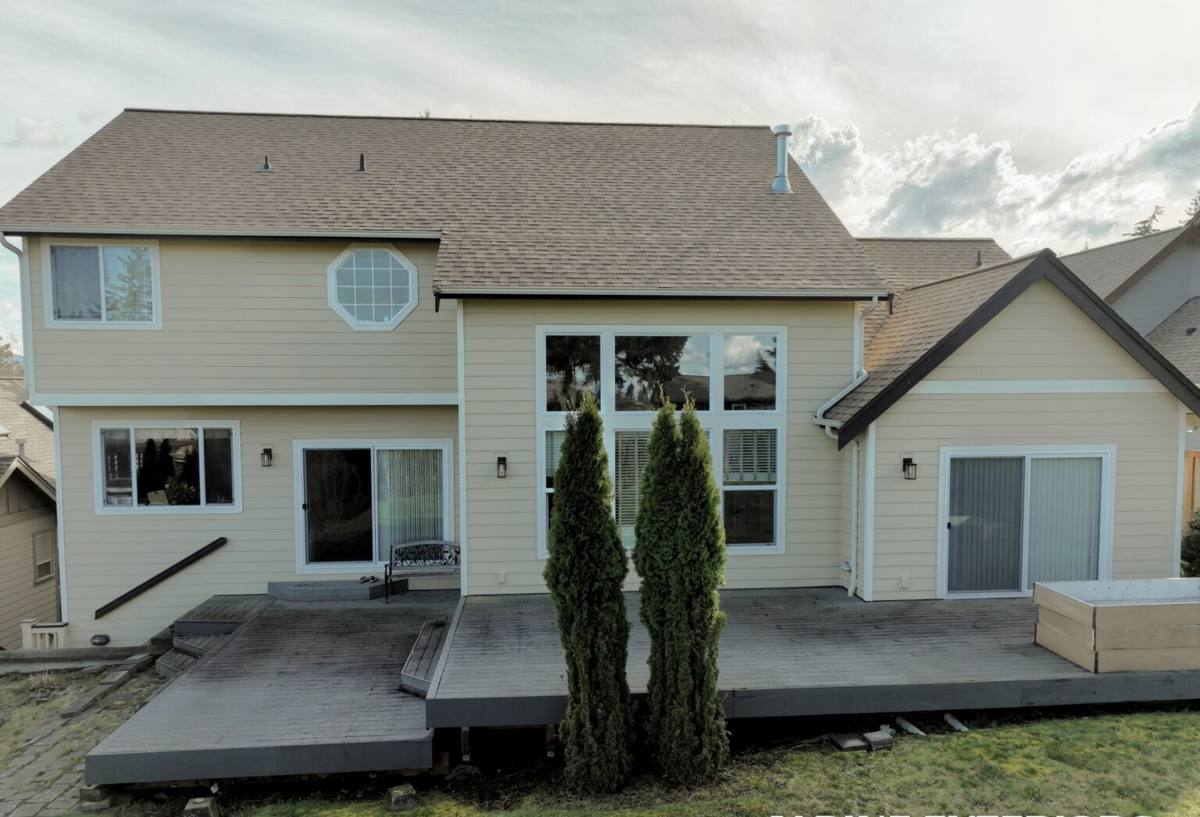
What Harbor Oaks Properties Actually Need From a Deck
Every neighborhood has its own mix of lot conditions, tree cover, and exposure, but homes in and around Harbor Oaks generally share a few things that shape how we design and build a deck:
- Salt air exposure — even a few miles inland from the Gulf or the harbor, airborne salt accelerates corrosion on any exposed metal fastener, bracket, or hinge.
- Intense, near-constant UV — Pinellas County sun breaks down unprotected wood fibers and degrades cheaper composite decking faster than it would in a northern climate.
- Wind-driven rain — Clearwater's storms don't just fall straight down; they come in sideways, which means ledger flashing, board spacing, and drainage all matter more here than in a drier climate.
- Hurricane-force wind loads — any deck attached to the home has to be engineered to resist uplift and lateral loads, not just support foot traffic.
- Humidity and ground moisture — Florida's water table sits close to the surface in many yards, which affects footing depth and post material.
A deck built without accounting for these factors isn't necessarily a bad deck on day one — it's a deck with a shortened lifespan and a maintenance bill that shows up sooner than it should.
Choosing the Right Decking Material
There's no single "best" decking material for every homeowner — it depends on budget, how much upkeep you want to take on, and how the deck will be used. Here's how the common options compare in a Clearwater coastal environment specifically:
| Material | How It Holds Up Here | Maintenance | Typical Lifespan |
|---|---|---|---|
| Pressure-treated pine | Affordable, structurally solid when properly fastened, but needs regular sealing to resist UV graying and moisture cupping | Annual cleaning and re-sealing recommended | 10–15 years with upkeep |
| Composite decking | Resists rot and doesn't need sealing; quality varies a lot between product lines, and lower-grade composites can fade or flake in intense sun | Periodic washing, no sealing | 15–25 years depending on product grade |
| PVC/capped polymer | Fully sealed surface resists moisture and salt air best of the manufactured options; higher upfront cost | Low — occasional washing | 25+ years |
| Tropical hardwoods (e.g., ipe) | Naturally dense and rot-resistant, handles humidity well, but requires oiling to maintain color and can be harder to source and install | Annual oiling for appearance | 20–30+ years structurally |
We walk homeowners through these trade-offs honestly rather than pushing whatever has the best margin. If you want the lowest-maintenance option and the budget allows for it, PVC or a top-tier composite is usually the right call this close to the water. If upfront cost matters more and you don't mind a yearly maintenance routine, pressure-treated wood is still a legitimate choice when it's built correctly.
Why We're Selective About Which Composite Lines We Install
Not all composite decking is built the same way. Some early-generation and budget composite products absorb more moisture at the core than others, which becomes a problem under South Florida's humidity and heavy rain cycles. Our standard is to install composite and PVC products with proven moisture performance and manufacturer warranties that actually hold up to coastal use — that's a professional judgment call on our part, not a claim about any specific brand being unsafe, and we're happy to explain our reasoning for whatever product line we recommend on your project.
Framing, Footings, and Structural Requirements
The decking boards are the part everyone sees, but the framing underneath is what determines whether the deck survives its first serious storm. Florida Building Code and Pinellas County's local amendments set minimum standards for wind resistance, and Clearwater's coastal location means those standards aren't just paperwork — they reflect real design wind speeds the structure needs to handle.
- Ledger attachment — where the deck ties into the house needs proper flashing and bolting, not just lag screws into siding. A poorly flashed ledger is one of the most common sources of hidden water damage behind a deck.
- Footings — depth and sizing depend on soil conditions and load requirements; we don't shortcut footing depth to save time, since it's the single hardest thing to fix after the fact.
- Post-to-beam and beam-to-joist connections — these need code-rated structural hardware, not just nails, to resist the uplift forces high wind puts on an elevated structure.
- Joist spacing and span — tighter spacing than the bare code minimum adds stiffness and reduces bounce, which also extends decking board life.
- Guardrails and stairs — height, baluster spacing, and load capacity are code-regulated and get checked at inspection.
None of this is visible once the deck is finished, which is exactly why it matters who builds it. A deck can look identical on the surface while being framed to two very different standards underneath.
Fasteners and Hardware: The Detail Salt Air Punishes First
In a coastal air environment like Harbor Oaks, the fasteners and metal connectors are usually the first thing to show wear — often long before the decking material itself does. Standard galvanized fasteners can start corroding within a few years this close to salt air, which leads to rust streaking, weakened connections, and eventually loose boards or failing hardware. We use stainless steel or coated fasteners rated for coastal/marine exposure, along with corrosion-resistant structural connectors at every load-bearing point. It costs more upfront than using whatever hardware is cheapest at the supply house, but it's the difference between a deck that stays tight for two decades and one that starts rattling and rusting within five years.
How Our Deck-Building Process Works
1. On-Site Consultation and Design
We start with a walk of the property to look at grade, drainage, sun exposure, and how the deck will connect to the house. We talk through material options, layout, and budget honestly, including what each choice means for long-term maintenance.
2. Engineering and Permitting
Any deck attached to the home or built above a certain height needs a permit through the City of Clearwater or Pinellas County, along with plans that meet current wind-load requirements. We handle the permitting process and make sure the design is engineered to pass inspection the first time.
3. Demolition and Site Prep (If Replacing an Existing Deck)
Old decking, damaged framing, and any compromised ledger connections get removed and evaluated before we build back. This is also when we catch hidden issues like rot or termite damage in framing that wasn't visible from the surface.
4. Framing and Structural Build
Footings, posts, beams, and joists go in to code-minimum or better, with corrosion-resistant hardware at every connection point.
5. Decking, Railing, and Finishing
Boards are installed with proper spacing for drainage and material expansion, railings go in to code height and spacing requirements, and any stairs are finished to match.
6. Final Walkthrough and Inspection
The work gets signed off by the local building inspector, and we walk the finished deck with you so you know exactly what maintenance, if any, it needs going forward.
Maintaining a Deck in a Coastal Climate
Even a well-built deck needs some ongoing attention in this climate. Here's a practical maintenance checklist we give homeowners:
- Rinse off salt residue and debris every few weeks, especially after storms or high-wind days
- Check fasteners and hardware annually for rust streaking or loosening
- Inspect the ledger board area yearly for any signs of water intrusion behind the flashing
- Re-seal or re-oil wood decking on a schedule appropriate to the product (typically annually)
- Keep gutters and downspouts near the deck clear so runoff doesn't pool against posts or footings
- Trim back vegetation that traps moisture against the structure
- Watch for soft spots or discoloration in decking boards, which can indicate trapped moisture
Permitting and Code Considerations in Clearwater
Because Clearwater sits in a coastal high-wind zone, deck permits here go through more scrutiny than they might inland. Plans typically need to show footing depth, structural connections, and ledger attachment details, and inspectors check those items specifically because they're the most common failure points in a storm. Skipping the permit process isn't just a legal risk — it also means no one with code expertise is verifying that the structure can actually handle a design wind event. We pull permits on every attached deck we build and coordinate directly with the inspector, so it's one less thing you have to manage.
Why Local Experience in Harbor Oaks Matters
A contractor who mostly builds decks inland, or who's used to a different climate, doesn't always think about salt-air corrosion on hardware or wind-driven rain behind a ledger board until it becomes a callback. Working regularly in the Clearwater area, including neighborhoods like Harbor Oaks, means we're not guessing at what this environment does to a structure over time — we've seen which materials and details hold up and which ones create problems a few years down the road. That local pattern recognition is part of what you're paying for when you hire a crew that already works this specific area, not just a general contractor working outside their usual conditions.
Get a Free Estimate for Your Harbor Oaks Deck Project
Whether you're planning a new custom deck, replacing an aging one, or want a second opinion on a structure that's showing its age, we're happy to take a look and give you an honest assessment. Reach out for a free, no-pressure estimate using the form below, and we'll walk you through material options, timeline, and what the project will actually involve for your property.