 Clearwater Roofing
 Deck Repair in Belleair Bluffs: What the Climate Does to a Deck
Belleair Bluffs is a small, tightly packed community perched above Clearwater Harbor, and that elevated position along the Intracoastal comes with a tradeoff: homes here take on salt-laden air and open exposure that inland Pinellas County properties simply don't deal with. A deck built to a generic national standard doesn't hold up the same way here. It holds up the way Gulf Coast weather demands, or it fails early.
Four things do most of the damage. Hurricane-force and tropical-storm-force winds twist and rack a deck's frame, loosening connections that look fine from the top but are already moving underneath. Intense, near year-round UV bakes wood fiber and breaks down the surface resins in composite decking, leading to graying, splintering, or chalky fading. Wind-driven rain gets pushed sideways into joints, ledger connections, and end grain that were never designed to shed water from that angle. And salt air, carried in off the harbor and the Gulf, accelerates corrosion in fasteners, brackets, and any hardware that isn't rated for a coastal environment.
None of that means a deck in Belleair Bluffs is doomed to fail — it means repairs and materials have to be chosen with those four factors in mind, not just patched to look right for a season.
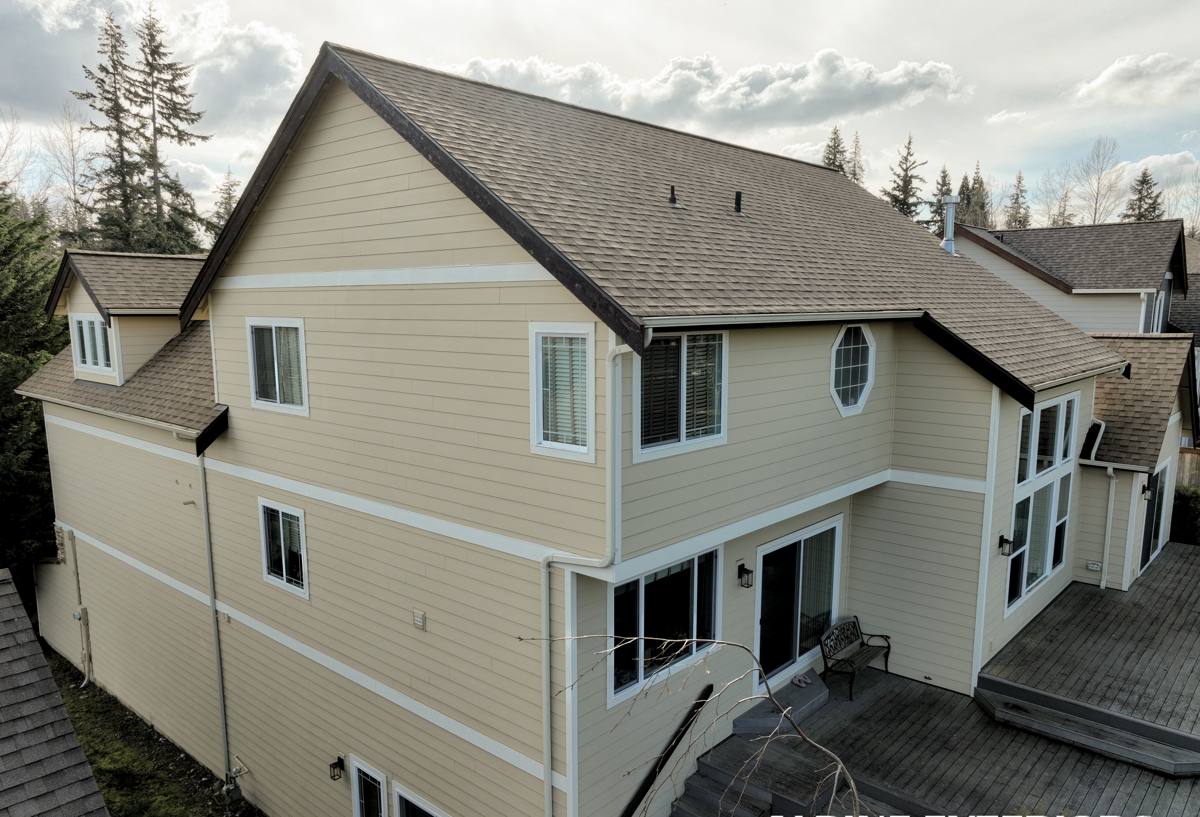
Signs Your Deck Needs Repair
Structural Warning Signs
- Boards that flex, bounce, or feel soft underfoot, especially near the house or stair landing
- Railings that wiggle or have any play when pushed
- Visible gaps or rust streaks at the ledger board where the deck meets the house
- Fasteners backing out, snapped off, or showing heavy corrosion
- Stair stringers that feel spongy or show cracking at the cuts
Cosmetic vs. Structural Issues
Not every deck problem is urgent, but every deck problem is worth a real look. Surface graying on wood, minor fading on composite, or a few popped screw heads are cosmetic and usually cheap to fix. Soft framing, a compromised ledger connection, or corroded structural hardware are safety issues, and they get worse quickly once wind and rain start working on an already-weak point. The honest answer is usually somewhere in between — a deck with cosmetic wear in some spots and one or two structural issues that need attention before the next storm season.
Wood, Composite, or PVC: How the Repair Differs by Material
What a deck is built from changes what "correct repair" looks like. We work on all three, and each has its own failure pattern in this climate.
| Material | Common Failure Here | Repair Approach |
|---|---|---|
| Pressure-treated wood | Rot at ledger, fastener holes, and end grain from wind-driven rain | Sister or replace framing, reseal cut ends, upgrade to coated coastal-rated fasteners |
| Composite decking | Surface fading, edge swelling, or fastener pull-through from UV and heat cycling | Board-level replacement, correct hidden-fastener spacing, ventilation check underneath |
| PVC/vinyl decking | Expansion gaps closing up or opening too far with heat swings | Re-space boards to manufacturer gap specs, replace damaged trim and fascia |
We don't push homeowners toward one material across the board. Each has a real tradeoff: wood is the cheapest to repair piece by piece but needs the most upkeep in salt air; composite resists rot but transmits more heat and can be less forgiving if the substructure underneath was built wrong; PVC handles moisture well but moves more with temperature, so fastening and gapping have to be done precisely or you get squeaks and buckling later. When we quote a repair, we tell you honestly which parts are worth fixing in place and which parts, given the material and its age, are better replaced outright.
What a Correct Deck Repair Actually Involves
Framing and Structural Members
Most deck failures start below the boards you can see. Joists, beams, and the ledger board carry the actual load, and in this climate they're the parts most exposed to trapped moisture and wind-driven rain that gets under the decking. A correct repair means pulling boards where needed to actually inspect the framing underneath, not just replacing what's visibly rotten from above and hoping the rest is sound.
Fasteners and Hardware
This is where a lot of shortcut repairs fail fast near the coast. Standard galvanized screws and joist hangers corrode faster in salt air than most homeowners expect, sometimes within a few years. We use stainless or coated fasteners rated for coastal exposure, and we replace hardware at connection points rather than driving new screws next to old, weakened ones.
Boards and Surface
Surface repair is the visible part, but it only holds if the structure underneath is sound and the boards are fastened correctly for the material. That includes proper spacing for drainage and, for composite and PVC, the expansion gaps the manufacturer specifies — skip that step and you'll see buckling or squeaking within a season or two of Florida heat swings.
Our Deck Repair Process
- On-site inspection. We walk the whole deck, check framing from underneath where accessible, and test railings and stairs — not just a visual pass on the surface.
- Honest scope. We tell you what's cosmetic, what's structural, and what's worth repairing versus replacing, with reasoning you can follow.
- Written estimate. Clear pricing before any work starts, broken down by what's being repaired.
- Repair work. Framing and hardware first, then surface boards and railings, using fasteners and materials suited to coastal exposure.
- Final walkthrough. We check the deck with you — boards secure, railings solid, stairs sound — before we consider the job done.
Repair or Replace? Cost Factors to Weigh
There's no single answer here — it depends on the age of the deck, how much of the framing is affected, and what material you're working with. These are the factors that actually move the decision one way or the other.
| Factor | Leans Toward Repair | Leans Toward Replacement |
|---|---|---|
| Framing condition | Isolated soft spots or a single damaged joist | Widespread rot or corrosion across the frame |
| Deck age | Under 10–15 years with regular maintenance | Original decking near or past typical service life |
| Ledger connection | Solid, no water intrusion at the house | Signs of moisture damage where deck meets structure |
| Extent of damage | Concentrated in one section (stairs, one board run) | Spread across boards, railings, and framing together |
As a rough guide, if the framing is sound and the damage is limited to boards, railings, or hardware, repair is usually the right call and the more cost-effective one. If the ledger connection or a large share of the joists are compromised, patching around that just delays a bigger problem — and often costs more in the long run than doing it right once.
Why Hiring a Crew That Already Works Belleair Bluffs Matters
Belleair Bluffs is a small community, and the housing stock reflects that — a mix of older homes that have been through decades of Gulf Coast weather and newer builds with different construction standards. A crew that regularly works this specific area, and Clearwater and Pinellas County more broadly, has already seen how decks built in different decades hold up against salt air, hurricane wind loads, and intense UV, and knows what tends to fail first in each type of construction.
That local familiarity also matters for the practical side of the job: understanding permitting requirements for structural deck work in this part of Pinellas County, knowing which fastener and hardware specs actually hold up here versus what's sold generically at a big-box store, and being available for follow-up if a named storm rolls through mid-project. A crew that shows up once from out of the area doesn't carry that context — and on a coastal deck, that context is the difference between a repair that lasts and one you're paying for again in two years.
Keeping Your Deck Sound Between Repairs
A repaired deck stays repaired longer with a little regular attention, especially given how hard the local climate is on exterior wood and hardware. This isn't a maintenance contract — just what actually matters.
- Rinse off salt spray and debris periodically, especially after storms
- Reseal or restain wood decking on the schedule the product calls for — UV here breaks down finishes faster than in milder climates
- Keep gutters and downspouts clear so runoff isn't dumping extra water onto the deck or ledger area
- Check railings and stair connections for looseness a couple of times a year
- Look underneath the deck occasionally for standing water, debris buildup, or early rust on hardware
Catching a loose fastener or a small soft spot early is a small repair. Ignoring it through a couple of storm seasons usually turns it into a bigger one.
If you're in Belleair Bluffs and something on your deck feels off — soft boards, a wobbly railing, rust at the hardware — we're glad to take a look. Fill out the form below for a free, no-pressure estimate from a crew that works this area regularly.