 Clearwater Roofing
 Decks in Coachman Ridge Take a Different Kind of Beating
Coachman Ridge is an established residential neighborhood in Clearwater, tucked into Pinellas County's dense grid of mid-century and later-built homes. Most of the decks we see here were built for a different climate reality than the one we actually live in. Florida's Gulf Coast doesn't just get hot — it gets hot, humid, sun-blasted, and periodically hammered by wind-driven rain and tropical systems, all in the same calendar year. That combination is brutal on outdoor structures in ways that homeowners who move here from drier states often don't expect.
Wood expands and contracts with humidity swings. UV breaks down surface fibers and finishes faster than almost anywhere else in the continental U.S. Fasteners corrode from trapped moisture even when the wood itself looks fine. And during hurricane season, sustained winds and gusts put lateral and uplift stress on ledger connections and railings that a lot of older decks were never engineered to handle. None of this is unique to Coachman Ridge specifically, but it's the reality for every deck in this part of Clearwater, and it's why a deck that looks structurally sound from the yard can be quietly failing where you can't see it.
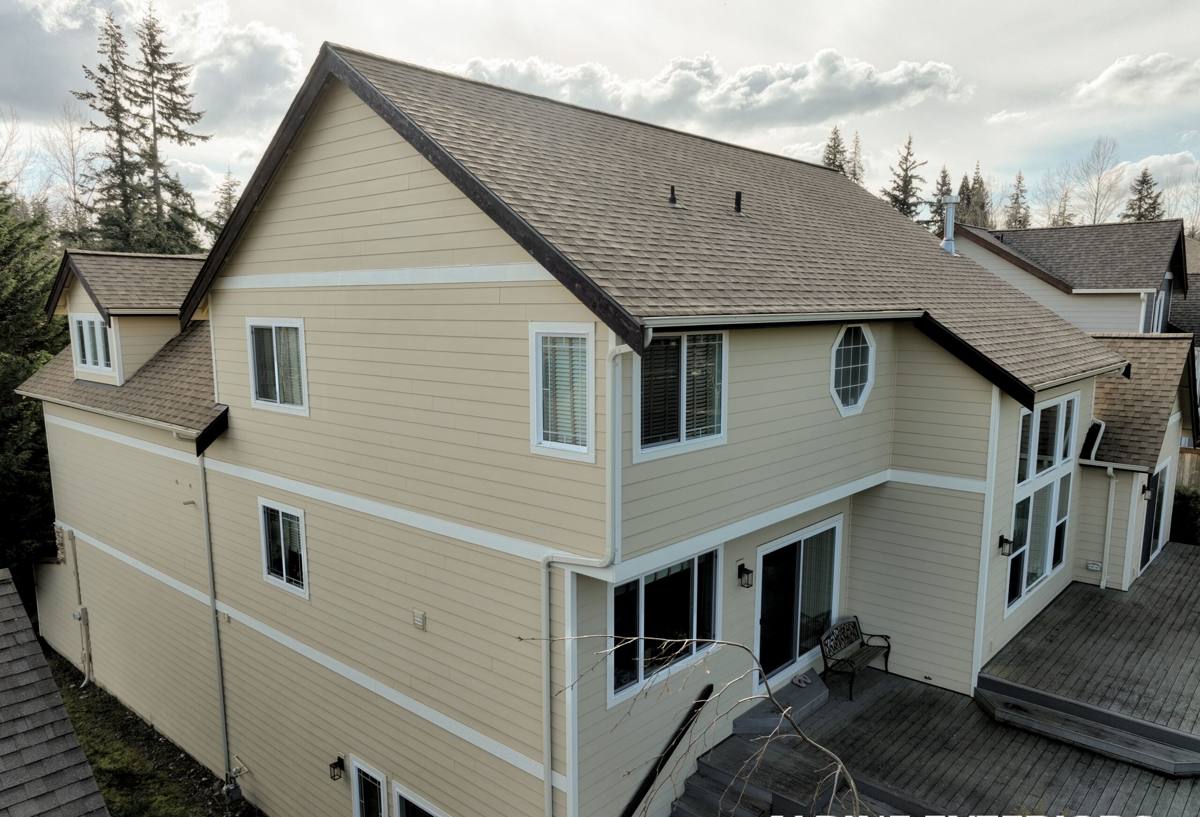
How to Tell a Deck Needs Replacing, Not Patching
Repair makes sense when the problem is isolated — a single cracked board, a loose baluster, a stain job gone bad. Replacement becomes the honest recommendation when the damage is systemic: when the framing, ledger, or footings are compromised, or when enough of the deck surface has failed that patchwork repairs would just be chasing the next failure a few months later.
- Soft, spongy, or bouncy spots when you walk across the deck, especially near the house
- Visible gaps, rot, or discoloration where the deck attaches to the ledger board
- Fasteners that are rusted, popped up, or leaving dark streaks in the wood
- Cracking or splitting concentrated on the boards that get the most direct afternoon sun
- Railings or posts that flex more than they did a year or two ago
- A musty smell or visible mold/mildew underneath the deck, especially in shaded or low-airflow areas
- Multiple repairs in the last few years that haven't actually solved the underlying problem
If you're seeing two or more of these at once, that's usually a sign the structure — not just the surface — has been compromised. At that point, patch repairs stop being cost-effective and start being a way to delay a decision you're going to make anyway.
What a Correct Deck Replacement Actually Involves
A deck replacement done right is not just tearing off old boards and screwing down new ones. The parts of a deck that fail first in this climate are almost always the parts you don't see once it's finished, which is exactly why they get skipped by contractors who are racing to the next job.
Ledger and Attachment
The ledger board — where the deck ties into the house — is the single most important connection on the entire structure and the most common point of failure in humid climates. It needs proper flashing to keep water from getting trapped between the deck and the house framing, and it needs fasteners and hardware rated for the connection load, not whatever happened to be on the truck.
Framing and Footings
Joists, beams, and posts need to be sized correctly for the span and spacing, and footings need to be set to the depth and bearing that Pinellas County's soil and code require. This is also where pressure-treated lumber grade matters — not all PT lumber is treated to the same retention level, and lower-grade stock breaks down faster in wet, sandy Florida soil.
Hardware and Fasteners
Standard steel fasteners corrode quickly in this environment, especially anywhere salt-laden air or moisture collects. Hot-dip galvanized or stainless connectors, hangers, and screws cost more up front and save the homeowner from hidden structural failure years down the line.
Decking Surface and Drainage
The visible boards matter for how the deck looks and feels underfoot, but proper spacing, ventilation underneath, and drainage away from the house matter just as much for how long it lasts. A deck that traps moisture against the ground or the house siding will develop problems no matter what decking material sits on top.
Choosing Decking Material for a Clearwater Climate
There's no single "best" decking material — every option is a trade-off between upfront cost, maintenance commitment, and how it holds up to Florida's UV and humidity over time. Our job is to lay out those trade-offs honestly rather than push whatever has the best margin.
| Material | Upfront Cost | Maintenance | How It Handles Local Climate |
|---|---|---|---|
| Pressure-treated pine | Lowest | Annual sealing/staining recommended | Prone to cracking and graying under intense UV without upkeep; budget-friendly if maintained |
| Composite decking | Mid to higher | Low — periodic cleaning | Resists rot and UV fading well; surface can hold heat in direct summer sun |
| Cellular PVC decking | Higher | Very low | Fully moisture-resistant, holds color well; premium price point |
| Tropical hardwoods | Mid to high | Regular oiling to prevent graying | Naturally dense and rot-resistant, but needs consistent upkeep in high humidity |
Where uncertain, we lean toward whichever option matches how the homeowner actually wants to spend their time — some people enjoy the annual ritual of sealing a wood deck, and some would rather never think about it again. Both are legitimate choices as long as the structure underneath is built right.
Our Deck Replacement Process
- On-site assessment — we inspect the existing deck, ledger connection, framing, and footings to determine what's actually failing versus what's just cosmetic
- Honest scope and estimate — a clear breakdown of what needs to be replaced, what materials fit your budget and maintenance preference, and what the timeline looks like
- Permitting — we handle the permit application through the appropriate local building department before any demolition starts
- Demolition and disposal — full removal of the old structure down to sound framing or ground, hauled away, not left in a pile
- Rebuild from the ground up — footings, framing, ledger flashing, and fastener hardware installed to code and to hold up to regional wind and moisture exposure
- Decking, railing, and finish work — installed per manufacturer spec for whichever material you've chosen
- Final walkthrough and inspection — we review the finished deck with you and make sure any required final inspection is scheduled and passed
Permitting in Clearwater and Pinellas County
Most deck replacements in Clearwater require a building permit, particularly when structural elements like framing, footings, or the ledger connection are being rebuilt rather than just cosmetically refreshed. Permits exist for a good reason here — they're the mechanism that makes sure a deck is actually engineered to handle Florida's wind loads, not just built to look right. Skipping permitting to save time is one of the most common ways homeowners end up with insurance and resale headaches later. We pull the permits as part of the job so you don't have to navigate that process yourself.
Why Hiring a Crew That Already Works in Coachman Ridge Matters
A contractor who regularly works in this specific part of Clearwater already understands the housing stock, the typical lot conditions, and the local permitting process — which means fewer surprises and fewer delays. They also understand what "normal wear" looks like on a deck of a given age in this neighborhood versus what's actually a red flag, because they've seen it firsthand rather than guessing from a general climate zone. That familiarity translates into a more accurate estimate the first time, not a change order halfway through the job.
Keeping a New Deck in Good Shape
Whatever material you choose, a little routine attention goes a long way toward protecting the investment in a climate this demanding.
- Sweep off leaves, pollen, and debris regularly so moisture doesn't sit trapped against the surface
- Check railings and stair connections for looseness once or twice a year, especially after storm season
- Rinse salt residue and grime off the surface periodically, particularly on decks with more open exposure
- Reseal or restain wood decking on the schedule recommended for the specific product, not just when it starts to look faded
- Keep gutters and downspouts near the deck clear so runoff isn't draining directly onto or under the structure
- Have the structure looked at after any major storm, even if nothing looks obviously wrong from the surface
If your deck in Coachman Ridge is showing its age or you're just ready to plan ahead of the next storm season, we're happy to take a look and give you a straightforward, no-pressure estimate — no obligation, just an honest read on what your deck actually needs. The form below is the easiest way to get started.