 Clearwater Roofing
 Siding Replacement for Del Oro Homes
Del Oro sits inside Clearwater, which means every home here deals with the same punishing combination of conditions that define Pinellas County's exterior climate: long stretches of intense UV, sudden wind-driven downpours, salt-laden air moving in off the Gulf, and the standing threat of hurricane-force wind events during the season. Siding in this area isn't cosmetic — it's the first line of defense between that climate and the wood framing, insulation, and interior finishes behind it. When siding in Del Oro starts failing, it tends to fail quietly at first: a soft spot near a corner trim board, a slight buckle along a wall that gets full afternoon sun, faint staining under a window where water has been finding a path behind the cladding for longer than anyone noticed.
This page is specifically about replacing siding on Del Oro homes — not a general overview of siding as a category. If you're trying to figure out whether your home needs a full replacement, what that job actually involves in this specific climate, and why it matters that the crew doing the work already knows this neighborhood, this is the page for that.
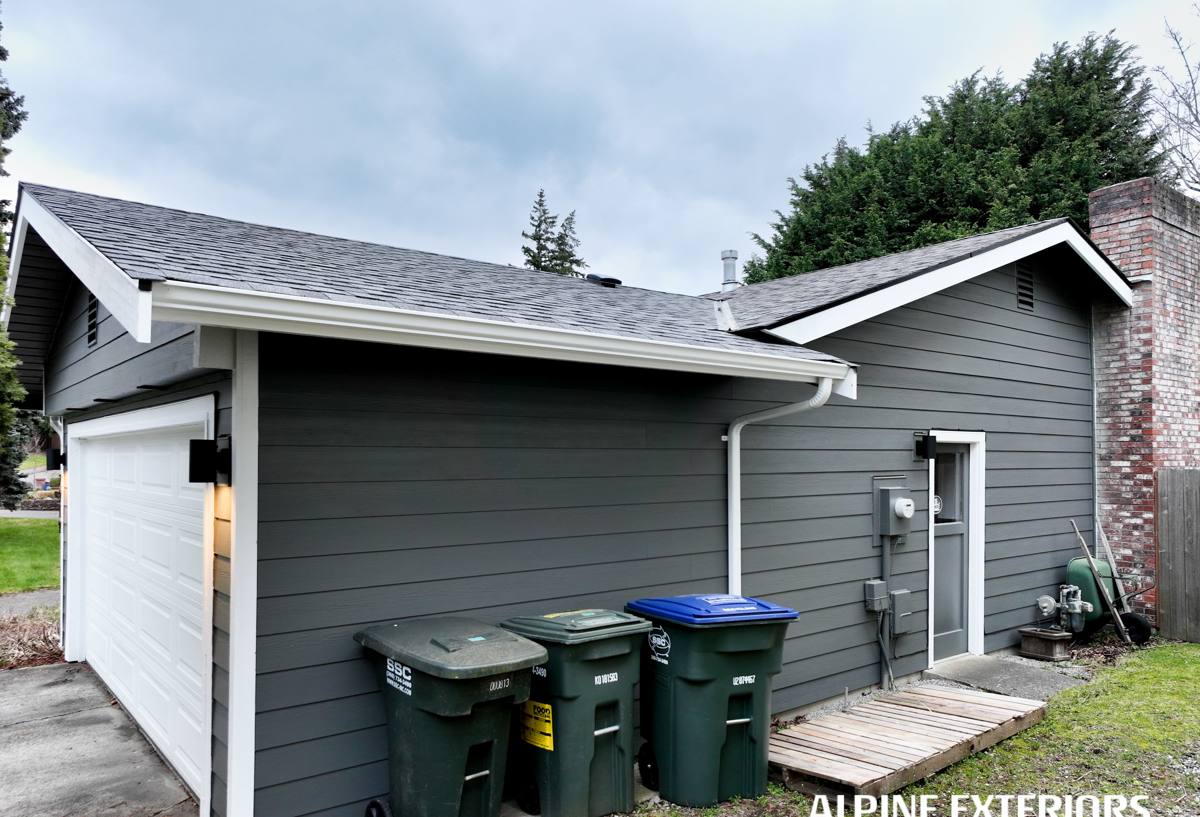
What Clearwater's Climate Actually Does to Siding
It helps to understand the specific mechanisms at work, because they explain almost every siding failure we see in this part of the county.
UV and Heat Cycling
Florida sun is not gentle sun. Painted and coated siding surfaces take a steady dose of UV exposure nearly year-round, which breaks down pigments and surface coatings faster than in most of the country. Materials that aren't engineered for this kind of exposure chalk, fade unevenly, and lose their protective top layer well ahead of schedule — and once that layer is compromised, whatever's underneath is exposed to moisture with no defense.
Wind-Driven Rain
Clearwater's storms rarely come straight down. Wind pushes rain sideways and upward into laps, seams, and trim joints that were never designed to handle water moving in that direction. Siding systems that rely on tight-but-not-sealed overlaps, or that swell and shrink with moisture, are especially vulnerable — repeated wetting and drying at the seams is one of the most common root causes of hidden rot we find behind old siding in this area.
Salt Air
Del Oro isn't beachfront, but it's close enough to the Gulf and Tampa Bay that airborne salt is a real factor, especially on the sides of a home that face open exposure. Salt accelerates corrosion on fasteners and metal trim, and it interacts with certain coatings and adhesives over time, shortening their working life.
Named Storm Wind Loads
Hurricane-force wind events put direct lateral and uplift pressure on exterior wall assemblies. Siding that isn't fastened to spec, or that's made from a material with lower impact and wind resistance, is one of the more common sources of storm damage we get called out for after a system — not because the storm was unusual, but because the installation or the product wasn't built for it.
Signs a Del Oro Home Needs Siding Replacement, Not a Patch
Not every siding problem calls for a full tear-off. But there's a point where patching stops being cost-effective and starts being a way of delaying an inevitable, larger repair. Signs it's time for a real conversation about replacement:
- Soft, spongy, or crumbling siding when pressed, especially near the bottom edges, corners, or below windows
- Visible buckling, warping, or separation between panels or boards
- Paint that's failing repeatedly in the same spots within a couple of years of repainting
- Persistent staining, streaking, or dark patches that don't clean off
- A musty smell along an exterior wall inside the home, which often points to moisture intrusion behind the siding
- Visible gaps at seams, trim, or fastener locations that weren't there originally
- Siding that's more than 20-25 years old and has never been fully replaced, regardless of visible condition
If you're seeing more than one or two of these, it's worth having someone look at the wall assembly itself, not just the surface — because by the time siding shows visible damage, there's a good chance moisture has already been working on the sheathing or framing underneath for a while.
What a Correct Siding Replacement Actually Involves
A siding replacement done right in a climate like this is not just "take the old stuff off, put new stuff on." The sequence matters, and skipping steps is exactly how homeowners end up with premature failures a second time.
1. Full Removal and Substrate Inspection
Every piece of old siding comes off so the sheathing, framing, and existing water-resistive barrier can actually be inspected — not guessed at. This is the point where hidden rot, insect damage, or compromised sheathing gets found and addressed, rather than sealed back up behind new siding.
2. Repair Compromised Sheathing and Framing
Any soft or damaged sheathing gets cut out and replaced. Framing members that have taken on water damage get repaired or replaced. This step is invisible once the job is done, which is exactly why it's the step some lower-cost jobs try to shortcut.
3. Water-Resistive Barrier
A correctly installed, continuous weather barrier goes over the sheathing, lapped properly from bottom to top so water is always directed outward and down, never into a seam. In a wind-driven-rain climate, this layer is doing as much work as the siding itself.
4. Flashing at Every Penetration
Windows, doors, hose bibs, light fixtures, vents — every point where something interrupts the wall plane needs proper flashing integrated with the water barrier. This is one of the highest-value, most frequently rushed parts of a siding job, and it's usually the source when a newer home develops a leak in one specific spot.
5. Siding Installation to Manufacturer and Wind-Load Spec
Panels or planks go on with the fastener pattern, spacing, and clearances the manufacturer specifies for this wind zone — not a generalized approach used everywhere in the country. Gaps at butt joints, proper caulking or sealant where specified, and correct nailing depth all affect how the assembly performs in both routine wind-driven rain and a named storm.
6. Trim, Caulk, and Paint/Finish
Corner boards, trim, and any field-applied finish work get completed last, with attention to sealing the transitions between siding and trim — another common weak point if rushed.
Why We Install Only James Hardie Fiber Cement
We don't install vinyl, LP SmartSide, primed wood, cedar, or other fiber cement brands. That's a deliberate standard, not a sales preference, and it's worth explaining honestly rather than just asserting.
Vinyl is inexpensive and low-maintenance in mild climates, but it softens and can distort in sustained high heat, and it has a lower wind and impact resistance ceiling than fiber cement — a real consideration given this area's storm exposure. Engineered wood products like LP SmartSide perform well in many climates but are wood-based at their core, meaning long-term moisture exposure is a real variable to manage, and manufacturer warranties often carry specific maintenance requirements to stay valid. Primed wood and cedar require the most ongoing maintenance of any option and are the most vulnerable to the UV and moisture cycle described above unless refinished on a strict schedule most homeowners don't keep up with. Other fiber cement brands aren't necessarily bad products, but we've standardized on one system, one factory finish process, and one warranty structure so we can install to spec every time and stand behind it without guessing at a different manufacturer's requirements on every job.
James Hardie's fiber cement is non-combustible, engineered specifically with HZ10 product lines rated for Gulf Coast and high-humidity climates, and finished with the ColorPlus factory baked-on finish system rather than field-applied paint — which matters directly here, since factory-cured finish holds up to UV and salt air significantly better than a coat applied on-site. It carries a strong transferable limited warranty on both the material and, when we install it, the finish. It's not the cheapest option on the shelf, and we say that plainly. It's the option we're willing to install to spec and warranty on a home in this climate.
Siding Options: An Honest Comparison
| Material | Wind/Impact Resistance | Moisture Behavior | Maintenance | Typical Lifespan Here |
|---|---|---|---|---|
| James Hardie Fiber Cement | High, engineered for HZ wind zones | Non-combustible, dimensionally stable, factory-sealed finish | Low — occasional wash | 30+ years with correct install |
| Vinyl | Moderate, can crack or distort in heat/impact | Doesn't rot, but seams can allow water intrusion | Low | 15-25 years |
| LP SmartSide (Engineered Wood) | Good when installed and maintained to spec | Wood-based; moisture management is critical | Moderate — finish upkeep required | 20-30 years with strict maintenance |
| Primed Wood/Cedar | Lower, more vulnerable to storm debris | Most moisture-sensitive of the group | High — regular refinishing needed | 10-20 years without diligent upkeep |
These figures are general industry ranges, not guarantees — actual performance always depends on installation quality and ongoing care, regardless of material.
Why a Crew That Already Works Del Oro Matters
Siding installation looks similar on paper everywhere in the country, but the details that make it hold up change by climate and even by neighborhood exposure. A crew that regularly works Del Oro and the surrounding Clearwater area already understands the practical realities specific to this area: which wall orientations take the worst sun and salt exposure, how local wind patterns tend to drive rain during a typical Gulf storm, and what HOA or neighborhood aesthetic expectations tend to look like, where applicable. That local pattern recognition shows up in small decisions during a job — how flashing gets detailed on a west-facing wall, where extra sealant attention goes on a home closer to open exposure — that a crew working from a generic national playbook won't necessarily catch.
It also matters for accountability. A local crew is still around next season, next storm, next year, if a warranty question comes up. That's a meaningful difference from a traveling storm-chasing outfit that shows up after a hurricane and is gone by the time any installation issue would show itself.
Our Process for a Del Oro Siding Replacement
- Free on-site assessment. We walk the exterior, check for soft spots, moisture signs, and existing damage, and give you an honest read on whether you're looking at a repair or a full replacement.
- Written scope and estimate. You get a clear breakdown of what's included — removal, sheathing repair allowance, weather barrier, flashing, material, and finish — so there's no ambiguity about what you're paying for.
- Scheduling around weather. Siding work is scheduled with Florida's rain patterns in mind, and open wall sections are never left exposed longer than necessary.
- Tear-off and inspection. Old siding comes off, and if we find sheathing or framing issues, we show you before covering anything back up.
- Installation to spec. Weather barrier, flashing, and James Hardie siding installed following manufacturer requirements for this wind zone.
- Final walkthrough. We go over the finished job with you before calling it done.
Questions Worth Asking Any Siding Contractor
- Will you inspect and repair sheathing before installing new siding, or just cover over what's there?
- What water-resistive barrier and flashing details will you use, specifically?
- Is your fastener pattern based on this wind zone's requirements?
- What warranty covers the material, and what warranty covers your labor?
- Can you show me the manufacturer installation instructions you're following?
If a contractor can't answer these clearly, that's worth paying attention to before you sign anything.
What Replacement Timing Looks Like
Most single-family siding replacements in this area run from several days to a couple of weeks depending on home size, the condition of what's underneath once it's opened up, and weather delays — which are a real factor during Florida's wetter months. Homes with more extensive hidden damage take longer because sheathing and framing repair adds time before new siding can even start going on. We'd rather give you a realistic range up front and revise it honestly if we find something once the walls are open than promise a fast timeline and rush the parts that matter.
If your Del Oro home's siding is showing its age, or you just want a straight answer about whether you're looking at a repair or a full replacement, we're glad to come take a look. The estimate is free, there's no pressure to commit on the spot, and you'll get a clear, honest scope either way — just fill out the form below to get started.