 Clearwater Roofing
 Harbor Oaks sits close enough to Clearwater Harbor that the water is never really out of the picture — and that's exactly why siding wears differently here than it does a few miles inland. Between the salt-laden air coming off the water, the intense Gulf Coast sun, and the wind-driven rain that rides in on every summer storm and tropical system, exterior siding in this neighborhood works harder than most manufacturers' warranties assume it will. Add in the age and architectural character of many Harbor Oaks homes — a neighborhood with a real mix of older construction and updated properties — and siding replacement here isn't a one-size-fits-all job.
This page focuses specifically on siding replacement for homes in Harbor Oaks: what the local climate actually does to siding over time, what a correct replacement involves, and how our process works from first look to final inspection.
Why Harbor Oaks Homes Are Hard on Siding
Every coastal Pinellas County neighborhood deals with sun, humidity, and storms. Harbor Oaks gets a concentrated version of all three because of its proximity to open water:
Salt air and moisture
Homes near Clearwater Harbor are exposed to a steady drift of salt-laden humidity, even on calm days. Salt is corrosive to fasteners and hardware, and it accelerates the breakdown of coatings and finishes that weren't engineered for a marine-adjacent environment. Siding that looks fine on a spec sheet for a landlocked market can chalk, fade, or fail years early this close to the water.
Wind-driven rain
Clearwater's storms rarely fall straight down. Wind pushes rain sideways and up under laps, trim, and penetrations, which means the water-management details behind the siding — flashing, house wrap, proper overlaps — matter as much as the siding material itself. A product or installation that's merely "adequate" in a dry climate can let moisture into the wall assembly here.
Year-round UV exposure
Florida sun is intense and constant, not seasonal. UV breaks down pigments and surface coatings over time, which is why so many older homes in established neighborhoods show chalking, fading, or color that's noticeably uneven from one elevation to the next — south and west walls almost always show it first and worst.
Hurricane-force wind events
Pinellas County sits squarely in a hurricane-prone corridor. Siding doesn't just need to look good between storms — it needs a fastening pattern and installation method that holds up when wind loads spike, and it needs to shed wind-driven rain rather than trap it.
What a Correct Siding Replacement Actually Involves
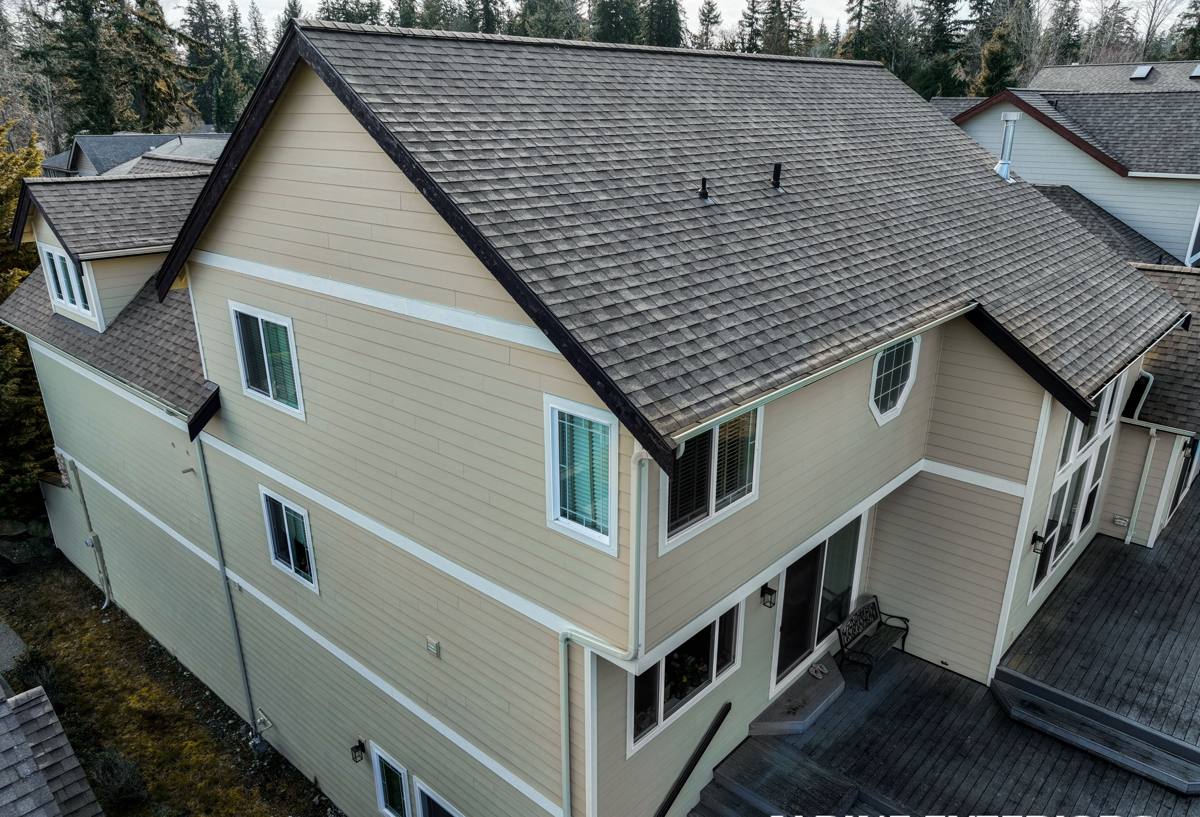
Siding replacement is not just removing old material and nailing up new panels. Especially on an established Harbor Oaks home, the substrate underneath often tells you more than the visible siding does.
- Full tear-off and substrate inspection — checking sheathing for rot, delamination, or moisture damage that's been hidden behind the old siding for years
- Repair of any compromised sheathing or framing before anything new goes up — covering damage instead of fixing it just traps the problem
- Correct water-resistive barrier (house wrap) installation, lapped and taped to shed wind-driven rain down and away from the wall
- Proper flashing at every penetration — windows, doors, hose bibs, vents, and anywhere else something breaks the plane of the wall
- Manufacturer-specified fastening for the local wind zone, not a generic nailing pattern
- Correct clearances at grade, roofline, and around trim so siding isn't sitting in standing water or trapped moisture
- Factory-finished material so color and coating performance don't depend on field-applied paint holding up to salt air and UV
Skip any one of these steps and the new siding can look right for a year or two while the underlying problem — moisture, rot, poor drainage — keeps working against the house.
Why We Install Only James Hardie Fiber Cement
We don't offer a menu of siding brands and let the homeowner sort out the trade-offs. We install James Hardie fiber cement exclusively, because in a climate like Clearwater's, the material choice has an outsized effect on how the job performs ten and twenty years down the road.
Fiber cement is non-combustible, which matters in any climate but is simply a better long-term material regardless. More relevant to Harbor Oaks specifically:
- Hardie's ColorPlus factory-applied finish is baked on under controlled conditions, which holds color and resists fading and chalking far better than field-applied paint exposed to constant Gulf Coast UV
- Hardie's HZ5 product line is engineered for high-humidity, moisture-prone climates like Florida's — it's built to handle the moisture cycling that salt air and afternoon storms create
- Properly installed fiber cement doesn't swell, rot, or delaminate the way wood-based or some engineered wood products can when moisture gets past the surface
- It carries a strong, transferable warranty backed by a manufacturer with a long track record — worth something when you're planning to be in the home for years or plan to sell eventually
We won't install LP SmartSide, vinyl, Cemplank, Allura, or primed wood products like spruce or cedar. Some of those are reasonable products in the right climate and application — but we've made a professional judgment that in a coastal, storm-exposed, high-UV market like Clearwater, they carry maintenance burdens, moisture risks, or finish-durability trade-offs that don't hold up to what Harbor Oaks weather does to a house over a full ownership cycle. We'd rather stand behind one product system installed correctly than offer options we don't fully trust in this environment.
Comparing Siding Approaches for a Coastal Neighborhood
| Factor | Vinyl | Wood / Engineered Wood | James Hardie Fiber Cement |
|---|---|---|---|
| Salt air / coastal durability | Can become brittle and discolored over time | Vulnerable to moisture intrusion and rot | Engineered for high-moisture climates (HZ5) |
| UV / color retention | Fades, difficult to repaint | Requires repainting on a maintenance cycle | ColorPlus factory finish resists fading |
| Wind performance | Can crack or blow off in high winds if under-fastened | Performance depends heavily on installation quality | Rated for high-wind fastening patterns |
| Fire resistance | Combustible | Combustible | Non-combustible |
| Long-term maintenance | Low, but limited repair options | Ongoing painting/sealing required | Repaint interval measured in many years, not seasons |
No table like this covers every product variant on the market — but it reflects the pattern we've seen consistently enough to standardize on one system for every home we side.
Signs a Harbor Oaks Home Needs Siding Replacement
Not every issue means full replacement, but these are the signs worth taking seriously in this neighborhood specifically:
- Visible chalking or uneven fading, especially on south- and west-facing walls
- Soft spots, bubbling, or a spongy feel when pressed near the base of walls or under windows
- Persistent staining or streaking that keeps returning after cleaning
- Gaps opening at seams, corners, or trim lines
- Visible warping, buckling, or panels that no longer sit flat
- Interior signs — musty smell, peeling interior paint, or staining on walls that back up to exterior siding
Because Harbor Oaks has a real mix of home ages, we treat every estimate as a genuine inspection, not a sales visit — what an older home needs and what a more recently updated home needs can be very different.
Our Process for Harbor Oaks Projects
1. On-site inspection
We walk the exterior, check for soft spots and moisture damage, and look at how the current siding has held up given the home's specific exposure to wind, sun, and water.
2. Honest scope and estimate
We tell you what we found, what needs to happen, and what it costs — in plain terms, with no pressure to sign on the spot.
3. Tear-off and substrate repair
Old siding comes off, sheathing gets inspected, and any rot or damage gets repaired before anything new goes up.
4. Water management and installation
House wrap, flashing, and James Hardie fiber cement go up to manufacturer spec, with fastening appropriate to our wind zone.
5. Final walkthrough
We go over the finished work with you before we consider the job done.
Why Local Experience in Harbor Oaks Matters
A crew that already understands how Clearwater's coastal exposure behaves on a house — where wind-driven rain tends to find weak points, how salt air ages fasteners and finishes, how intense the western sun gets on certain elevations — makes better decisions on site than a crew working from a generic playbook. That local pattern-recognition is part of what you're paying for when you hire a contractor who works this specific area regularly, not just Pinellas County in general.
If your Harbor Oaks home is showing wear from sun, salt air, or storm exposure, we're happy to take a look and give you a straight answer about what it needs. Request a free, no-pressure estimate using the form below.