 Clearwater Roofing
 Why Siding Fails Faster on a Barrier Island
Indian Rocks Beach sits on a narrow strip of land between the Gulf of Mexico and the Intracoastal Waterway, and that location is exactly what makes it beautiful and exactly what makes it hard on a house. Homes here take on a combination of stresses that inland Pinellas County properties simply don't see to the same degree: near-constant salt-laden air, intense year-round UV exposure, wind-driven rain that gets forced sideways into wall assemblies, and the real possibility of hurricane-force winds during storm season. Siding that would give twenty solid years in a more sheltered part of Clearwater can start showing real problems in half that time on a beach lot.
None of this means a house near the water is doomed to constant repairs. It means the siding material, the installation details, and the crew doing the work all matter more here than they would somewhere else. This page is about one job in one place: replacing siding correctly on an Indian Rocks Beach home, with materials and methods built for exactly this kind of exposure.
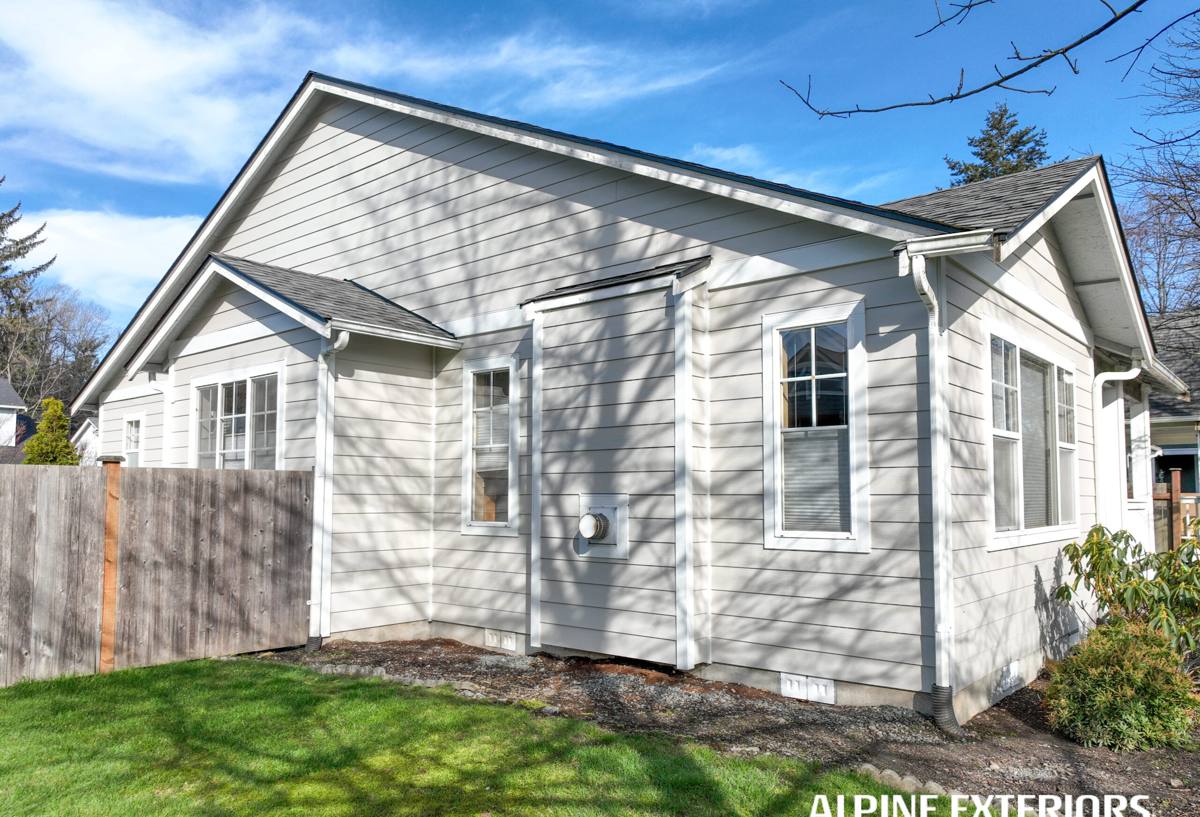
What Salt Air, Sun, and Wind Actually Do to Siding
Salt Air
Airborne salt doesn't just sit on the surface — it works into seams, fastener heads, and any gap in a coating system. On materials that aren't engineered to resist it, that leads to pitting, corrosion at metal fasteners and trim, and a coating that chalks and fades well ahead of schedule.
UV Exposure
Florida sun is relentless for 12 months a year, not just in summer. Paint films and factory finishes that aren't formulated for high-UV climates break down faster here — fading unevenly, chalking, and eventually cracking or peeling, which then opens the door to moisture getting behind the material.
Wind-Driven Rain
During tropical storms and the seasonal squalls that roll off the Gulf, rain doesn't just fall — it's pushed horizontally into the wall. Siding, flashing, and house wrap all have to work together as a system to keep that water out. A gap in any one layer is where a moisture problem starts.
Hurricane Winds
Pinellas County's beach communities are built to Florida Building Code wind provisions for coastal exposure, and for good reason. High wind doesn't just risk blow-off during a named storm — repeated gusting over years works fasteners loose and stresses panel edges and joints, especially on materials that weren't rated for the loads they're seeing.
Why We Only Install James Hardie Fiber Cement Here
We made a decision as a company to install James Hardie fiber cement siding exclusively — not vinyl, not LP SmartSide, not primed wood, not other fiber cement brands. On a barrier island property, that decision isn't a brand preference. It's about what actually holds up.
- Non-combustible material that doesn't warp, melt, or soften in direct summer sun the way vinyl can.
- Engineered for the local climate — Hardie's HZ10 product line is specifically formulated for hot, humid, moisture-heavy climates like Florida and the Gulf Coast, with enhanced resistance to moisture damage.
- ColorPlus factory-applied finish, baked on in a controlled environment rather than field-painted, which holds color and resists fading and chalking far better under sustained UV than most site-applied paint systems.
- Dimensionally stable — fiber cement doesn't swell, rot, or attract wood-destroying insects the way untreated wood products can, which matters in a humid coastal environment.
- Backed by a strong, transferable limited warranty when installed to Hardie's published specifications, which matters for resale on beachfront and near-beach property.
We're upfront that fiber cement isn't the cheapest siding option on the market and it isn't a DIY-friendly product — it's heavier, requires specific fasteners and blades, and needs correct joint and flashing detailing to perform. We think that's a fair trade for a material that's engineered to actually take what this location dishes out, rather than one that's simply the least expensive option to hang.
What a Correct Siding Replacement Involves
Replacing siding on a coastal home is not just pulling off old panels and nailing up new ones. On an Indian Rocks Beach property, the work underneath the visible siding is what determines whether the new siding lasts.
Tear-Off and Substrate Inspection
Once the old siding is off, the sheathing underneath gets a real inspection — not a glance. Salt-air homes are more prone to hidden moisture damage around old penetrations, window openings, and low corners near grade. Any soft or compromised sheathing gets addressed before anything new goes up; covering a problem with new siding doesn't solve it.
Weather-Resistive Barrier
A correctly lapped, sealed weather-resistive barrier is the layer that manages any water that gets past the siding face. In a wind-driven-rain environment, how this layer is installed — lap direction, seam taping, integration with flashing — matters as much as the siding itself.
Flashing at Every Penetration
Windows, doors, hose bibs, light fixtures, vents — every penetration through the wall plane needs proper flashing that directs water back out, not into the wall cavity. This is one of the most common places for shortcuts on lower-quality installs, and it's one of the most common sources of hidden rot down the line.
Fastening to Spec
James Hardie panels have specific fastener type, spacing, and embedment requirements, and those requirements exist for a reason in high-wind zones. Under-fastened or incorrectly fastened siding is a leading cause of panel loss in storms, regardless of how good the material itself is.
Joint and Trim Detailing
Butt joints, corners, and trim transitions all need to be treated correctly — caulked or flashed per manufacturer spec, not just butted together — to keep water from tracking in at the seams.
Our Indian Rocks Beach Siding Replacement Process
- On-site inspection. We look at your current siding, trim, and any visible signs of moisture or wind damage, and talk through what we're seeing.
- Written estimate. A clear scope of work and pricing — no vague allowances, no surprise add-ons sprung on you mid-job.
- Tear-off and substrate check. Old material comes off, sheathing gets inspected, and any needed repairs are identified before new material goes up.
- Weather barrier and flashing installation. The moisture-management layer goes in correctly, at every wall plane and penetration.
- Hardie panel installation. Installed to manufacturer fastening and clearance specifications, appropriate to this wind exposure.
- Trim, caulking, and final detailing. The finish work that determines how clean the job looks and how well it sheds water long-term.
- Final walkthrough. We go over the completed work with you before calling the job done.
Comparing Siding Options for a Coastal Property
| Material | Coastal Wind/Salt Performance | UV/Fade Resistance | Maintenance |
|---|---|---|---|
| James Hardie Fiber Cement (HZ10) | Engineered for high-moisture, humid coastal climates | Factory ColorPlus finish resists fading and chalking | Low — occasional rinse and inspection |
| Vinyl Siding | Can warp or become brittle under sustained heat and wind loads | Color fades over time; field-applied finish not available | Low, but panels are hard to spot-repair once faded |
| LP SmartSide / Wood-Based Products | More vulnerable to moisture intrusion if seams or edges fail | Field-painted finish requires repainting over time | Higher — moisture and edge sealing need monitoring |
| Primed Cedar or Spruce | Natural wood is moisture- and pest-sensitive in humid coastal air | Requires regular repainting/sealing to hold up under Florida sun | Highest — ongoing sealing, painting, and pest monitoring |
What Drives the Cost of Your Project
Every home is different, and we won't quote a number without seeing the property, but these are the factors that typically move the price up or down on a siding replacement here:
- Total square footage of exterior wall area and the home's overall complexity (number of corners, gables, and rooflines)
- Condition of the existing sheathing — whether hidden moisture damage needs to be repaired before new siding goes on
- Whether trim, fascia, or soffit work is bundled into the same project
- Siding profile and color selection (lap width, shingle-style panels, etc.)
- Access to the home — elevated coastal homes and tight lot setbacks can add labor complexity
- Permit and inspection requirements specific to Pinellas County's coastal wind zone
Why a Crew That Already Works Indian Rocks Beach Matters
Working near the Gulf isn't the same as working a few miles inland, and it shows in the details. A crew that regularly works Indian Rocks Beach and the surrounding Clearwater beach communities already understands the wind-load and flashing detailing this exposure calls for, has a working relationship with Pinellas County's permitting process for coastal properties, and knows how to sequence a job around tight lot access, elevated homes, and the practical realities of working this close to the water. That experience shows up in fewer surprises mid-project and a finished job that's actually built for where it sits — not just a standard installation dropped onto a non-standard site.
It also matters for the long haul. A local crew is one you can call back if a question comes up after the job is done, not a name from out of the area that did one project and moved on.
Signs Your Siding May Already Be Failing
A few warning signs are worth a look before they turn into a bigger repair:
- Visible warping, buckling, or gaps between panels
- Soft or spongy spots when you press on the siding, especially near the bottom edge or around windows
- Peeling, bubbling, or chalking paint that keeps returning after repainting
- Staining or discoloration that tracks with rainwater paths
- Corroded or rust-streaked fasteners
- A musty smell or visible mold near interior walls that back up to exterior siding
If you're seeing any of these on an Indian Rocks Beach property, it's worth having someone look at what's happening behind the siding, not just the surface.
If your home's siding is showing its age or you're planning ahead for storm season, we're happy to take a look and give you a straightforward, no-pressure estimate. Use the form below to get started.