 Clearwater Roofing
 Siding in Largo Has to Work Harder Than Siding Almost Anywhere Else
Largo sits in the middle of Pinellas County, close enough to Tampa Bay and the Gulf that salt-laden air reaches every neighborhood, even the ones that feel inland. Add in Florida's year-round UV exposure, summer thunderstorms that show up almost daily, and the real risk of hurricane-force wind gusts during storm season, and you've got a combination that wears out the wrong siding material fast. Paint chalks and fades early. Seams open up and let moisture behind the wall. Panels flex, crack, or blow off in high wind. None of this is hypothetical — it's the normal wear pattern we see on homes across Largo and the rest of the Clearwater area once siding starts to fail.
That's the backdrop for every siding decision a Largo homeowner makes. The material has to hold its color in relentless sun, resist moisture intrusion during wind-driven rain, and stay attached through tropical storm-force wind events — not occasionally, but as a baseline expectation, year after year.
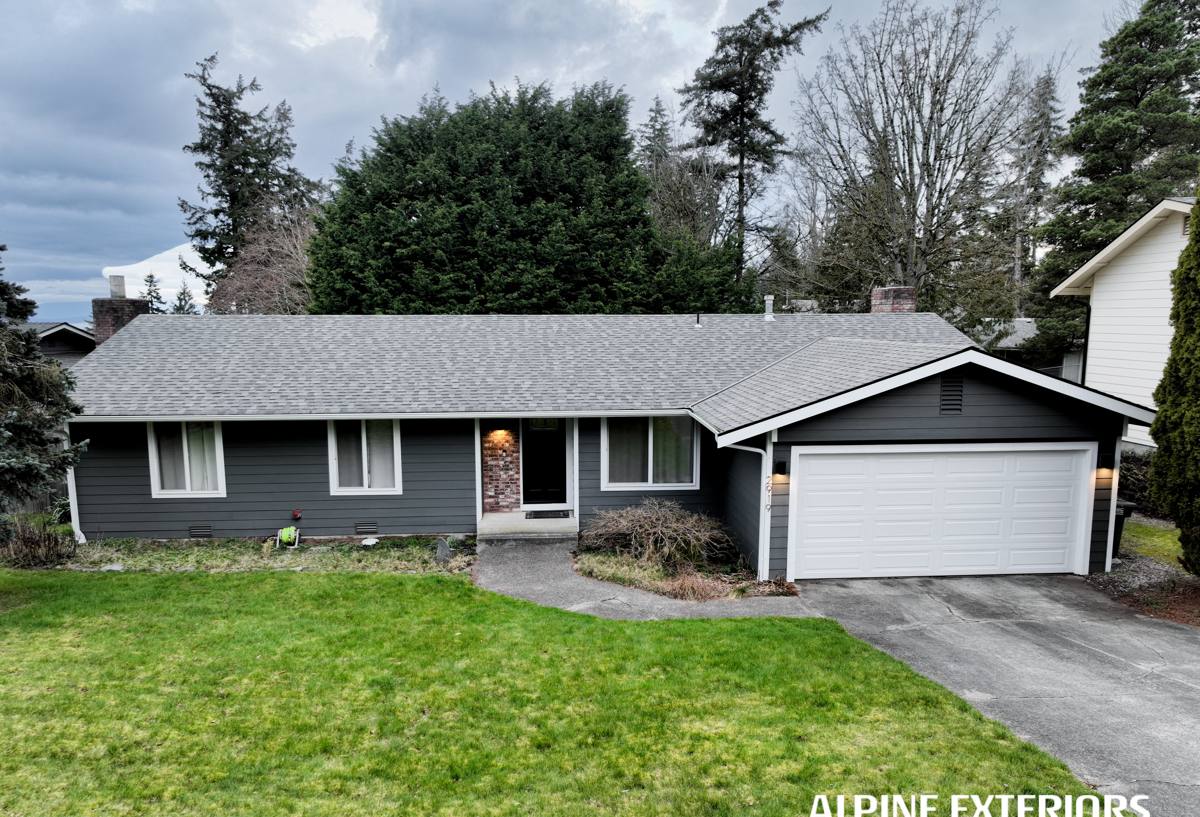
Why We Install Only James Hardie Fiber Cement
We don't install vinyl, LP SmartSide, primed wood, or other fiber cement brands. That's a deliberate standard, not a limitation on what we're capable of installing. Vinyl siding softens, warps, and can pull away from fasteners in sustained high heat and wind — problems that show up faster on Gulf Coast homes than almost anywhere else in the country. Wood-based and engineered wood products depend on an intact factory coating to keep moisture out; once that coating is compromised by UV or a moisture cycle, the substrate underneath is vulnerable in a way fiber cement simply isn't.
James Hardie fiber cement is non-combustible, dimensionally stable in heat and humidity swings, and manufactured in HZ5 formulations specifically engineered for high-humidity, storm-prone climates like ours. The factory-applied ColorPlus finish is baked on and backed by its own finish warranty, which matters in a market where field-applied paint jobs on other materials fail within a few years of coastal sun exposure. We standardized on Hardie because it's the product we're willing to warranty and put our name behind on every home we touch, including the ones we work on right here in Largo.
What a Correct James Hardie Installation Actually Involves
Hardie siding is only as good as the installation behind it. The product itself is engineered to perform, but a rushed or improperly detailed install can undercut all of that. On every Largo project, correct installation means:
- A proper weather-resistive barrier installed and lapped correctly behind the siding, with no gaps at penetrations
- Manufacturer-specified fastener type, spacing, and placement — not generic nails driven wherever is convenient
- Correct clearances at grade, roofline, and any concrete or masonry contact points, so the bottom edge of the siding never sits in standing water or trapped moisture
- Properly caulked and flashed joints, window and door trim, and butt joints, so wind-driven rain has nowhere to get behind the material
- Panel and plank expansion gaps sized to the manufacturer's specification, accounting for Florida's temperature and humidity swings
- Field-cut edges sealed per Hardie's installation guidelines, since an unsealed cut edge is one of the most common points of long-term failure
Every one of those steps is spelled out in James Hardie's own installation instructions. The difference between a siding job that lasts and one that fails early usually comes down to whether the crew actually followed them.
Choosing the Right Hardie Product Line for a Largo Home
James Hardie makes several distinct siding profiles, and the right one depends on the home's architecture, exposure, and what look the homeowner wants. We walk through this with every Largo customer rather than defaulting to one product across every house.
| Hardie Product | Best Fit | Look |
|---|---|---|
| HardiePlank Lap Siding | Most single-family homes; the most common choice in this market | Traditional horizontal lap, smooth or woodgrain texture |
| HardiePanel Vertical Siding | Gable ends, accent walls, modern or Florida vernacular architecture | Clean vertical lines, often paired with battens |
| HardieShingle Siding | Accent areas, dormers, or homes going for a coastal cottage look | Staggered or straight-edge shingle profile |
| HardieTrim Boards | Corner boards, window and door trim, fascia on any of the above | Smooth or textured trim to match the field siding |
Most full siding replacements in Largo use HardiePlank as the primary field material, with HardieTrim boards finishing out the corners and openings. Homes with a gable feature or a covered porch sometimes bring in HardiePanel or HardieShingle as an accent, which we can price separately during the estimate.
HZ5 Climate Engineering
James Hardie engineers its HZ product line by climate zone, and the Gulf Coast falls into the higher-humidity HZ5 category. That's not a marketing distinction — it affects the formulation's moisture resistance and how the product is engineered to perform in exactly the kind of humidity and rain exposure Largo gets. We only order and install the correct HZ formulation for this region; it's not something a homeowner should have to specify or double-check, but it's worth knowing it exists.
Our Process, Start to Finish
1. On-Site Assessment
We walk the exterior with you, check the current siding and the sheathing underneath where it's accessible, and identify any moisture damage, rot, or structural issues that need to be addressed before new siding goes on. Covering up a problem behind new material doesn't fix it — it hides it.
2. Written Estimate
You get a clear, itemized estimate covering material, labor, trim work, and any repair work identified in the assessment. No vague allowances buried in the fine print.
3. Tear-Off and Substrate Check
Old siding comes off, and we inspect the sheathing and framing underneath. Any water-damaged wood gets addressed before a single piece of Hardie goes up — installing new siding over a compromised substrate just guarantees a repeat problem down the line.
4. Weather Barrier and Flashing
A new weather-resistive barrier goes on with correct laps and integrated flashing at every window, door, and penetration. This layer does as much work protecting the home as the siding itself.
5. Installation to Manufacturer Spec
HardiePlank, panel, or shingle goes up following James Hardie's fastening, clearance, and joint-treatment specifications, with trim work finished to match.
6. Final Walkthrough
We walk the finished job with you, check every elevation, and confirm the site is cleaned up before we call it done.
Signs a Largo Home's Current Siding Needs Attention
Siding problems in this climate rarely start with something dramatic — they usually start small and get worse with each storm season. Worth checking for:
- Soft or spongy spots when you press on the siding, especially near the bottom edge or corners
- Visible warping, buckling, or panels that no longer sit flat against the wall
- Paint that's chalking heavily or peeling in sheets rather than just fading
- Cracked or missing caulk at seams, trim, and window and door edges
- Staining or dark streaking that keeps returning shortly after cleaning
- Any siding that came loose or shifted during a recent storm, even if it looks fine now
Any one of these is worth a look before it turns into a bigger repair. Moisture that gets behind siding in Largo's humidity doesn't dry out on its own — it sits there and does damage.
What Affects the Cost of a Largo Siding Project
| Factor | Why It Matters |
|---|---|
| Home size and number of stories | More square footage and elevation height directly affect material and labor |
| Current substrate condition | Rotted sheathing or framing found during tear-off adds repair scope |
| Product line selection | Plank, panel, shingle, and trim combinations price differently |
| Trim and architectural detail | Homes with more corners, gables, and window/door openings take more labor |
| Color and finish | Factory ColorPlus finishes vs. field-applied paint affect both price and long-term maintenance |
We don't quote a job until we've actually seen the home, but these are the factors that move the number up or down. We'll walk through each one with you during the estimate so there are no surprises later.
Why It Matters That This Crew Already Works Largo
A crew that regularly works Largo and the surrounding Clearwater area isn't guessing about how this climate treats siding — they've seen it firsthand, repeatedly, across different home ages and construction types in Pinellas County. That familiarity shows up in practical ways: knowing which older Largo homes are more likely to have moisture issues behind the siding, understanding how local wind exposure varies by neighborhood, and being available for warranty follow-up without having to travel in from another market. Siding is a long-term investment in the home's protection, and it's worth having it installed by people who plan to still be working in this area years from now.
If you're weighing a siding replacement or repair in Largo, we're glad to come take a look and give you an honest, no-pressure estimate — use the form below to get started.