 Clearwater Roofing
 Metal Roofing Built for Countryside, Not Just "Florida"
Countryside sits inland from the coast, but don't let the distance from the water fool you — this part of Clearwater still takes a beating from Gulf-driven weather. Between hurricane-force wind events, punishing year-round UV, wind-driven rain that finds every weak seam, and salt air that travels farther than most homeowners expect, a roof here has to work harder than a roof almost anywhere else in the country. Metal roofing, installed correctly, is one of the best answers to that problem. Installed poorly, it's just an expensive way to have the same leaks and blow-off risks as a bad shingle job.
This page is about what a metal roof needs to actually deliver on its promise for a Countryside home — not a generic rundown of "why metal roofing is great." We'll walk through the climate factors specific to this area, what correct installation looks like, how our process works, and why local experience in this neighborhood matters more than a lot of homeowners realize.
What Pinellas County's Climate Actually Does to a Roof
Hurricane and Tropical-Storm Wind Loads
Clearwater sits inside Florida's wind-borne debris region, and Pinellas County's building code reflects that. Roofs here are engineered and permitted to resist high sustained winds and gusts, not just rain. For a metal roof, that means every panel, clip, and fastener has a job to do in keeping the system attached during a storm. A roof that looks identical to a properly engineered one from the ground can perform completely differently in a 90+ mph gust if the fastening pattern, clip spacing, or panel gauge was cut short.
Year-Round UV Exposure
Florida's sun isn't seasonal the way it is up north — Countryside roofs take direct, intense UV nearly every day of the year. This matters most for the coatings and finishes on metal panels, and for any exposed sealants or accessories. UV breaks down inferior finishes over time, leading to chalking, fading, and eventually coating failure that exposes bare metal to moisture.
Wind-Driven Rain
A metal roof doesn't just need to shed water that falls straight down — it needs to resist water being pushed sideways and upward under wind pressure during a squall or tropical system. That's a underlayment and flashing detail issue as much as it is a panel issue. Most metal roof leaks we're called out to inspect trace back to flashing, penetrations, or underlayment gaps, not the panels themselves.
Salt Air
Countryside is inland relative to the immediate coastline, but Tampa Bay and Gulf salt air still moves through the region, especially on onshore wind days. Salt exposure accelerates corrosion at fasteners, cut edges, and any point where dissimilar metals touch. Over years, this is the difference between a metal roof that still looks sharp at 25 years and one that shows rust streaks at year eight.
Standing Seam vs. Metal Shingle: Which Fits a Countryside Home
Not every metal roofing system is the same, and the right choice depends on your home's roof design, your budget, and how you want it to look. Here's how the two most common options compare for this area:
| Factor | Standing Seam Panels | Metal Shingles / Tile-Profile |
|---|---|---|
| Wind performance | Excellent — concealed fasteners, continuous panel runs | Very good — exposed or interlocking fasteners depending on style |
| Look | Clean, modern vertical lines | Mimics shingle, shake, or tile — blends with traditional Florida styles |
| Fastener exposure | Hidden clip system, fewer penetration points | Varies by product — some exposed screws, some concealed |
| Typical upfront cost | Higher | Moderate |
| Best fit | Homeowners who want max wind/water performance and a modern look | Homeowners who want a traditional look with metal's durability |
Both systems can perform well in Countryside's climate when they're specified with the right gauge, finish, and fastening detail for this wind zone. We'll walk you through the trade-offs for your specific roof rather than pushing one system by default.
What a Correct Metal Roof Installation Actually Involves
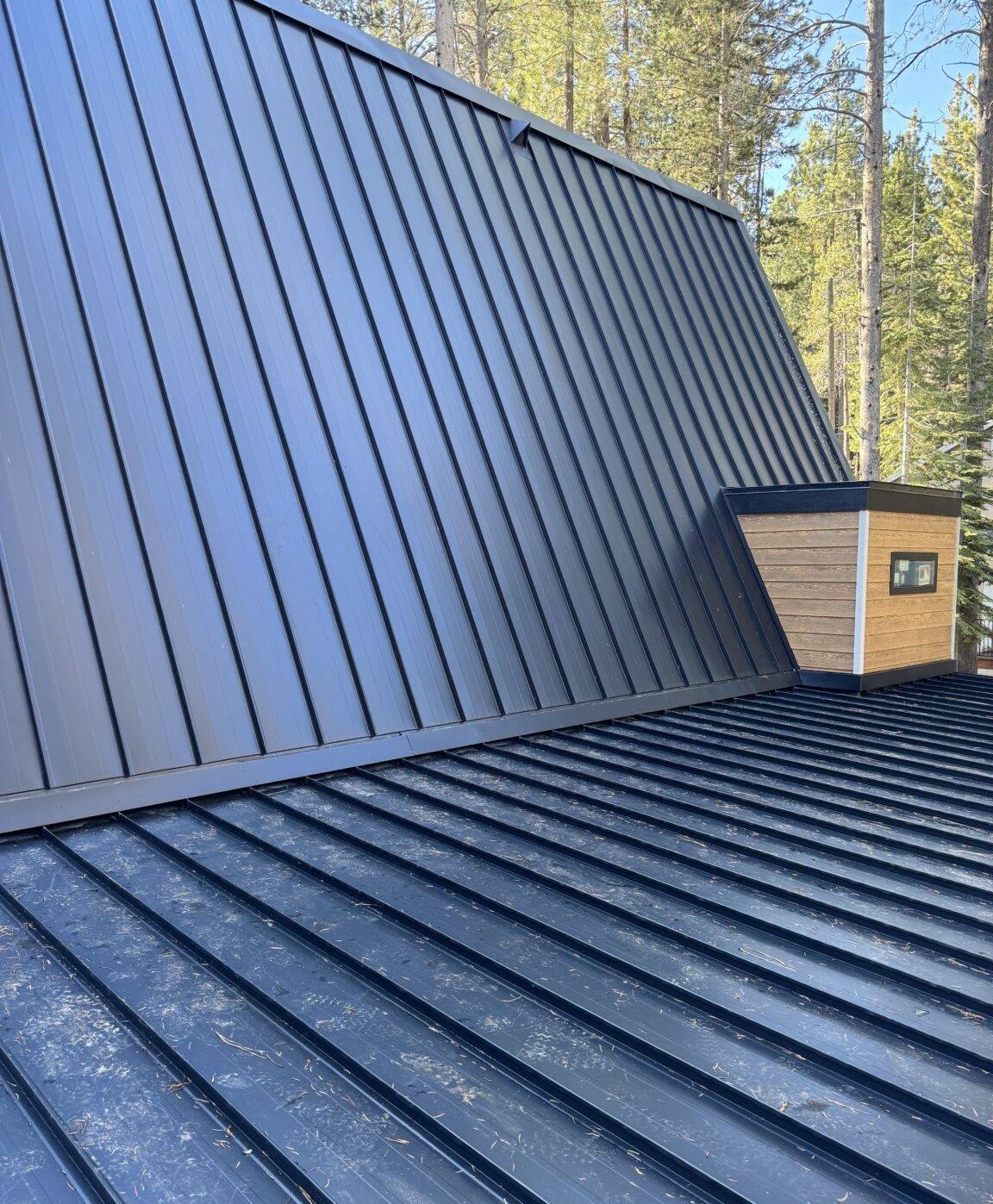
The panels get all the attention, but most of what determines whether a metal roof survives a storm and stays leak-free for decades happens underneath and around them. A correct installation includes:
- Deck inspection and repair — any soft, delaminated, or water-damaged decking gets replaced before anything goes down, not covered up.
- Self-adhered, high-temp underlayment — a synthetic or peel-and-stick underlayment rated for Florida heat and wind-driven rain, not a bargain felt product.
- Proper clip and fastener spacing — matched to the wind pressure zones on your specific roof, including tighter spacing at edges, ridges, and corners where uplift is highest.
- Correct panel gauge — thin, lightweight panels save money upfront but flex more in wind and dent more easily.
- Storm-rated flashing at every penetration — vents, chimneys, skylights, and wall transitions are where most leaks start, so these get extra attention.
- Ventilation that works with the metal system — proper intake and exhaust airflow to keep attic temperatures and moisture in check.
- Corrosion-resistant fasteners and trim — matched metals and coatings to prevent galvanic corrosion in salt-influenced air.
Skip any one of these and the roof might look fine for a year or two — the failures show up later, usually during the exact wind or rain event the roof was supposed to protect you from.
Our Process for Countryside Homeowners
- On-site inspection. We look at your existing roof, deck condition, ventilation, and any trouble spots — not just a drive-by estimate.
- Honest system recommendation. We'll walk you through standing seam versus metal shingle options based on your roof's shape, your budget, and what you want it to look like.
- Written scope and pricing. You get a clear breakdown of materials, gauge, finish, and labor — no vague allowances.
- Permitting. We pull the required Pinellas County/City of Clearwater permits and handle inspections, so the work is documented and code-compliant.
- Tear-off and deck prep. Old roofing comes off, the deck gets inspected, and any damaged sections are replaced before underlayment goes down.
- Installation. Underlayment, flashing, and panels go in following the fastening and clip spacing your roof's wind exposure requires.
- Final walkthrough and cleanup. We review the finished roof with you, confirm everything meets the agreed scope, and clear the site of debris and fasteners.
What Affects the Cost of a Metal Roof in This Area
Metal roofing costs more upfront than asphalt shingles, and the range varies a lot based on the roof itself. Rather than quote a number that won't mean much without seeing your roof, here are the factors that actually move the price:
| Cost Factor | Why It Matters |
|---|---|
| Roof size and complexity | More valleys, hips, and dormers mean more flashing, cutting, and labor time |
| Panel system chosen | Standing seam typically costs more than metal shingle profiles |
| Panel gauge and finish | Heavier gauge and premium coatings cost more but last longer in this climate |
| Deck condition | Rotted or damaged decking found during tear-off adds repair cost |
| Tear-off vs. overlay | Full tear-off costs more but is the only way to properly inspect and prep the deck |
| Ventilation upgrades | Adding or correcting attic ventilation adds cost but protects the whole system |
We provide a detailed, itemized estimate after the on-site inspection so you know exactly what you're paying for and why — not a single lump number with no explanation behind it.
Permits, Code, and Insurance Considerations
Roofing work in Clearwater and unincorporated Pinellas County requires a permit, and inspections happen at defined stages of the job. This isn't paperwork for its own sake — it's what confirms the roof was actually installed to the wind and water resistance standards the Florida Building Code requires for this region. A permitted, inspected metal roof also tends to matter for insurance: many carriers offer credits for wind-mitigation features like a properly installed, secondarily-attached roof system, and a documented, inspected installation is what supports that credit. We handle the permitting and inspection process as a standard part of the job, not an upcharge.
Maintenance: What a Metal Roof Actually Needs Here
One of metal roofing's real advantages is how little maintenance it needs compared to shingles — but "little" isn't "none," especially with salt air in the mix. A simple annual check should cover:
- Visual inspection for loose fasteners, lifted trim, or dented panels after major storms
- Clearing debris from valleys and around penetrations so water doesn't pool
- Checking sealant at flashing points for cracking or shrinkage
- Watching for early rust or corrosion at cut edges and fasteners, especially on homes closer to the water
- Confirming gutters and downspouts are clear so water leaving the roof doesn't back up at the edge
Most of this is a quick look, not a major undertaking — but catching a loose fastener or worn sealant joint before the next tropical system is a lot cheaper than fixing a leak after it happens.
Why a Crew That Already Works Countryside Matters
Metal roofing isn't a product you can install the same way everywhere and expect the same result. A crew that regularly works in Countryside and the surrounding Clearwater area already knows the local permitting process, the wind zone requirements that apply to this part of Pinellas County, and the kinds of roof shapes and deck conditions common to homes built in this area's various construction eras. That familiarity shows up in fewer surprises during tear-off, a smoother permitting and inspection process, and a finished roof that's actually specified correctly for what this climate will throw at it — not a generic install pulled from a national playbook. It also means when you call after a storm with a question, you're talking to a crew that knows your roof and your neighborhood, not starting from scratch.
Get a Straightforward, No-Pressure Estimate
If you're weighing a metal roof for your Countryside home, we're happy to come take a look, answer your questions honestly, and put together a clear written estimate — no pressure, no hard sell. Use the form below to request your free estimate.