 Clearwater Roofing
 Composite Decking Built for Oldsmar's Gulf Coast Conditions
Oldsmar sits on the northwest shore of Old Tampa Bay in Pinellas County, and a lot of homes here back up to canals, retention ponds, or open water. That waterfront exposure is part of what makes the area desirable — and part of what makes an outdoor deck a tougher build than it looks. Between the humidity, the salt-tinged air drifting in off the bay, and the sun beating down on a deck surface for most of the year, a deck in Oldsmar works harder than the same deck would in most of the country. Composite decking, installed correctly, is one of the more reliable answers to that problem, but "correctly" is doing a lot of work in that sentence. This page walks through what a composite deck actually needs to hold up here, how we build them, and what to look for in a crew before you sign a contract.
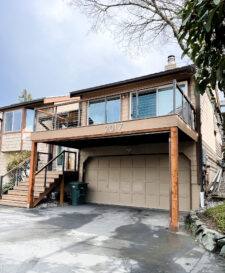
What Clearwater-Area Weather Does to an Outdoor Deck
We work decks all over the Clearwater area, and Oldsmar's conditions aren't unique — but they are demanding, and they don't let up seasonally the way they do farther north.
Intense, Year-Round UV
Florida's sun exposure is higher than most of the country's for most of the year, not just summer. Decking surfaces facing south or west take the worst of it. UV breaks down the color and surface chemistry of lower-grade composite boards over time, which is why capped composite products with UV-stabilized outer layers matter more here than they do in a milder climate.
Wind-Driven Rain and Standing Moisture
Afternoon storms roll through most of the year, and when wind pushes rain sideways, it gets into gaps, fastener holes, and end cuts that a calmer climate would never test. Water that can't drain or dry out is the root cause of most deck failures we see, composite or wood.
Salt Air Off the Bay
Homes near Old Tampa Bay and the canals around Oldsmar deal with a steady, low-grade salt content in the air even without direct waterfront exposure. Salt air accelerates corrosion on any exposed metal — screws, brackets, joist hangers — faster than it does inland. This is one of the most overlooked factors in deck longevity here.
Hurricane-Force Wind Loads
Pinellas County sits in a high-wind design zone, and decks — especially elevated ones or those attached to the house — need framing and connections engineered to handle uplift and lateral load, not just the weight of furniture and foot traffic.
Why We Recommend Composite Over Wood for This Climate
Wood decking can be built well and can look great, but it asks a lot of a homeowner in terms of upkeep in a climate like this — sanding, sealing, and re-staining on a schedule that, if skipped, shows up fast as cupping, splintering, or rot. Composite decking shifts that maintenance burden toward something more manageable, though it isn't "zero maintenance" no matter what marketing material says.
| Factor | Wood Decking | Composite Decking |
|---|---|---|
| UV / fading resistance | Fades and grays without regular sealing | Capped boards hold color much longer |
| Moisture behavior | Absorbs water; prone to warping, cupping, rot | Resists water absorption; core matters (see below) |
| Salt air exposure | Accelerates fastener corrosion and wood decay | Board itself is unaffected; hardware still needs to be corrosion-rated |
| Ongoing maintenance | Sanding, staining, sealing every 1-2 years | Periodic cleaning; no sealing or staining |
| Upfront cost | Lower material cost | Higher material cost, generally offset over time |
| Typical lifespan (installed correctly) | 10-15 years before major rot issues in this climate | 25-30+ years, depending on product tier |
The trade-off is real: composite material costs more up front. But in a coastal Pinellas County climate, the maintenance savings and resistance to moisture damage are usually worth it for homeowners planning to stay in the house more than a few years.
What a Correctly Installed Composite Deck Actually Involves
Composite boards are only as good as what's underneath and holding them together. Most of the composite deck problems we get called to fix in this area trace back to the substructure or the hardware, not the decking itself.
Framing and Substructure
Joists, beams, and posts need to be sized and spaced for both the load and the local wind requirements — not just whatever spacing the composite manufacturer's minimum spec allows. We also treat or protect framing lumber appropriately, since a rotted joist under a perfect-looking composite board is still a structural problem.
Fasteners and Hardware
Given the salt air, we use stainless steel or coated, corrosion-rated fasteners and hardware rather than standard galvanized hardware that will show rust within a few seasons near the water. This is one of the easiest places for a lower-bid contractor to cut corners because it's invisible once the deck is built.
Ventilation and Drainage Underneath
Composite decking needs airflow beneath it to manage moisture, especially on lower or ground-level decks. Poor ventilation traps humidity against the underside of boards and framing, which shortens the life of everything below the surface.
Board Spacing for Thermal Movement
Composite material expands and contracts with heat more than most homeowners expect, and Florida's temperature swings between summer afternoons and cooler winter nights are enough to matter. Gapping and fastening patterns have to account for that movement, or you end up with buckling or popped fasteners within a year or two.
Our Process for Oldsmar Composite Decking Projects
- On-site assessment: we look at the existing structure (if any), grading, drainage, sun exposure, and proximity to water or canals before recommending a product tier.
- Design and product selection: board style, color, and railing options based on your home and budget, with an honest conversation about what different price tiers actually get you.
- Permitting: we handle the permit application through Oldsmar/Pinellas County as required for the scope of work — decks tied to the house or elevated above a certain height typically require one.
- Demolition and framing: removal of any existing failing deck, followed by framing built to current wind-load requirements.
- Composite installation: hidden or exposed fastening depending on the product, with attention to gapping, drainage, and edge details.
- Final walkthrough and inspection: we review the finished deck with you and make sure it passes any required county inspection.
Permits and Local Code Considerations
Deck permitting in Oldsmar falls under Pinellas County and city building code requirements, and the specifics depend on whether the deck is attached to the house, how high it sits off grade, and whether railing is required by code (generally triggered past a certain height). Waterfront or canal-adjacent lots can also carry additional setback rules. We pull permits as part of the job rather than leaving that step to the homeowner, and we build to the wind-load standards that apply in this part of Florida rather than treating them as optional.
Choosing the Right Composite Product
Not all composite decking is built the same way, and the differences matter more in a coastal climate than in a dry inland one.
- Capped composite: a composite core (wood fiber and plastic) wrapped in a protective polymer shell — the shell is what handles UV, stains, and moisture resistance.
- Uncapped composite: exposed composite material on all sides, generally more prone to fading, moisture absorption, and mold growth over time; we don't recommend this tier for waterfront or high-humidity settings.
- PVC / cellular decking: contains no wood fiber at all, which gives it the strongest moisture resistance of the group, at a higher price point.
- Warranty structure: read what's actually covered — fade, stain, and structural warranties are often different lengths and have different exclusions, particularly around coastal or high-moisture environments.
We'll walk you through the tiers that make sense for your specific site — a shaded, inland lot doesn't need the same spec as a west-facing deck a hundred feet from the water.
Maintenance a Composite Deck Still Needs in Florida
Composite decking cuts down maintenance dramatically compared to wood, but "low-maintenance" isn't "no-maintenance," especially in this climate.
- Rinse or sweep off pollen, salt residue, and organic debris regularly — buildup in a humid climate encourages surface mold and mildew.
- Clean with a mild soap and soft-bristle brush a few times a year; avoid pressure washers on close settings, which can damage the capped surface.
- Check fastener heads and railing hardware periodically for early signs of corrosion, especially on waterfront lots.
- Keep gutters and downspouts nearby clear so water isn't dumping directly onto or under the deck.
- Inspect the substructure (where accessible) every year or two for moisture intrusion, even though the composite boards themselves won't rot.
Why Hiring a Crew That Already Works in Oldsmar Matters
A contractor who only occasionally works this part of Pinellas County may not think twice about standard galvanized hardware, standard board spacing, or skipping the ventilation details that matter on a coastal lot. A crew that regularly builds decks around Oldsmar and the greater Clearwater area already knows the wind-load requirements, has a working relationship with local permitting, and has seen firsthand what salt air and Gulf Coast humidity do to a deck that wasn't built with those factors in mind. That local experience shows up less in the sales pitch and more in the parts of the job you won't see once it's finished — the hardware, the framing, the drainage — which is exactly where a deck in this climate either holds up or doesn't.
If you're considering a new composite deck or want a second opinion on an existing one, we're happy to take a look and give you a straightforward, no-pressure estimate. Use the form below to get started.