 Clearwater Roofing
 Oldsmar's Climate Is Hard on Siding — Here's What That Means for Your Home
Oldsmar sits on the north shore of Tampa Bay in Pinellas County, which means homes here deal with a demanding mix of weather almost year-round. Hurricane-force winds and wind-driven rain are a real threat during storm season, intense UV exposure is a daily constant for most of the year, and the proximity to the bay keeps salt-laden air moving through neighborhoods even miles from open water. Siding that isn't engineered for this combination doesn't just look tired faster — it fails faster, and often in ways that aren't obvious until there's water damage behind the wall.
Sun, Storms, and Salt Air Working Together
Each of these stressors is manageable on its own. Together, they compound. UV breaks down pigments and surface coatings, which is why paint on wood or vinyl siding chalks and fades years before a homeowner expects. Wind-driven rain finds every gap in flashing, trim, and butt joints, pushing moisture where it shouldn't be. Salt air accelerates corrosion on fasteners and hardware and leaves a fine residue that holds moisture against the surface of the siding. A material that can shrug off one or two of these factors but not all three will eventually show it — cupping, warping, cracked caulk lines, or soft spots at the bottom courses where water collects.
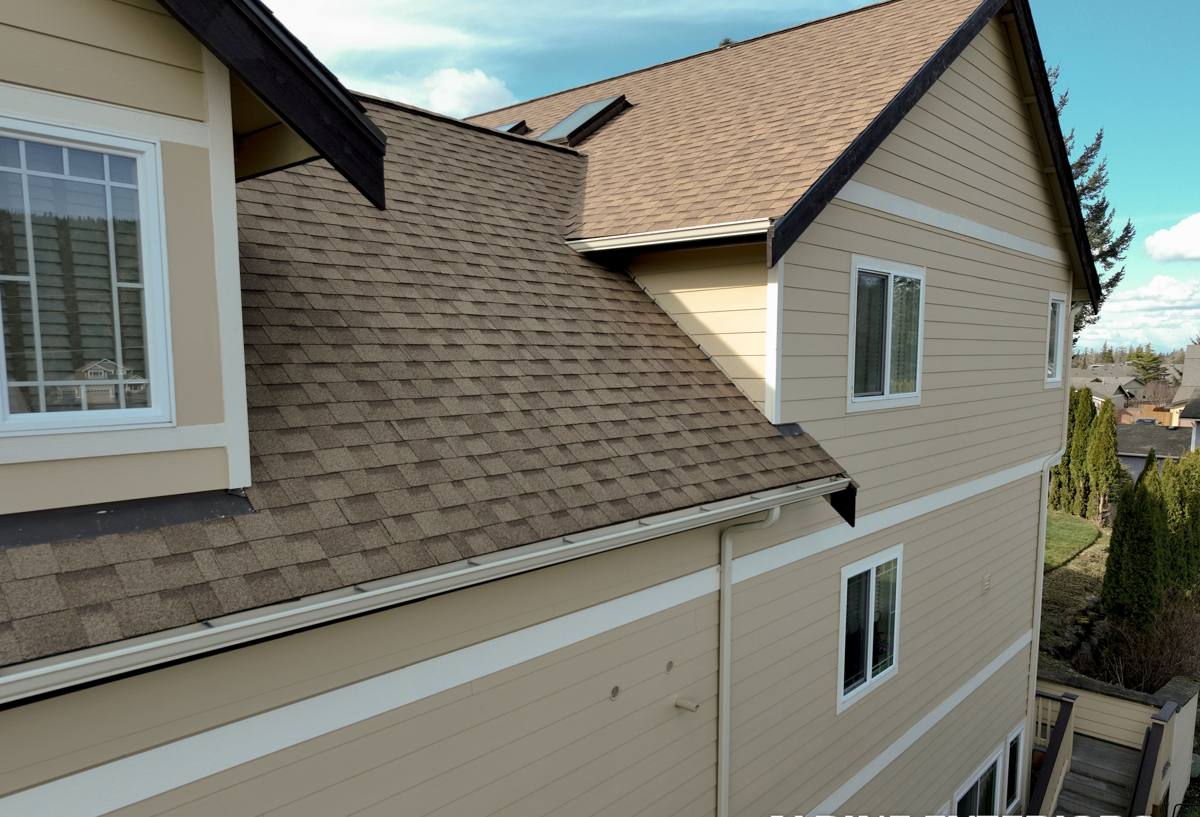
Why Fiber Cement Holds Up Where Other Materials Struggle
Fiber cement siding is a mix of cement, sand, and cellulose fibers, engineered to resist the specific failure modes that wood, vinyl, and engineered wood products struggle with in a coastal, high-UV climate. It doesn't rot, it isn't a food source for insects, and it holds paint and factory finishes far longer than wood because the substrate itself is dimensionally stable — it doesn't expand and contract with humidity swings the way wood-based products do. That stability matters more in Oldsmar than in a drier, milder climate, because the swings between a humid Gulf-influenced summer and a drier winter are exactly what causes lesser materials to work loose at the seams over time.
Built for Wind, Not Just Weather
Fiber cement's density also gives it a meaningful edge in wind events. It holds fasteners more securely than lighter materials, resists being peeled off in gusts the way vinyl can, and doesn't turn into airborne debris as easily if a panel is compromised. For a home in a wind-exposed part of the Tampa Bay region, that's not a cosmetic detail — it's part of how the building envelope performs when a storm actually arrives.
Why We Install Only James Hardie
Fiber cement is the right category of material for this region, but not every fiber cement product is engineered the same way. We install James Hardie exclusively — not Cemplank, not Allura — because Hardie's HZ5 formulation is specifically engineered for high-humidity, high-moisture climates like ours, and because the ColorPlus factory finish process gives a more consistent, longer-lasting result than field-applied paint. We'd rather stand behind one product system we know thoroughly and trust completely than install several and hope each one performs. That also means our crews aren't relearning installation specs from job to job — the details below are second nature to them.
What a Correct Fiber Cement Installation Actually Involves
Fiber cement siding is only as good as its installation. The material itself resists moisture and UV damage, but a poorly installed job creates the exact entry points for water that the siding was chosen to prevent. Correct installation isn't complicated, but it's precise, and it's the part that separates a job that lasts twenty-plus years from one that needs repairs within five.
The Details That Matter Most
- Proper clearance between the bottom edge of the siding and the roofline, deck, or grade — Hardie specifies minimum gaps to keep the lowest courses from sitting in standing water or splashback
- Corrosion-resistant fasteners driven to the correct depth — overdriven nails crack the board's face and create a moisture path; underdriven nails let panels work loose in wind
- Correctly lapped and sealed house wrap or weather-resistant barrier behind every panel, not just at seams
- Flush, properly caulked butt joints and trim intersections, using a sealant rated for exterior movement — not a bead applied as an afterthought
- Flashing at every window, door, and roofline transition, installed so water sheds outward rather than behind the cladding
- Field-cut edges primed or sealed before installation, since factory ColorPlus finish only protects the surfaces that were coated at the factory
Skipping any one of these doesn't cause an immediate problem — that's what makes bad installations so common. The damage shows up years later as soft trim, stained soffits, or paint failure at a seam, by which point it's a repair job instead of a five-minute fix during installation.
Our Process on Oldsmar Siding Projects
- On-site assessment. We look at the existing siding, sheathing condition, trim, and any signs of past water intrusion before quoting anything, so the estimate reflects what your house actually needs rather than a generic price.
- Tear-off and substrate check. Old siding comes off and we inspect the sheathing underneath. Any soft or water-damaged wood gets addressed before new siding goes on — covering a problem is not an option.
- Weather-resistant barrier. A new house wrap goes on correctly lapped, shingle-style, so every seam sheds water downward and outward.
- Hardie panel or plank installation. Panels are installed to Hardie's fastening and clearance specifications, with attention to the details above.
- Trim, flashing, and caulking. Every joint, corner, and penetration is flashed and sealed with the right materials — not just whatever's fastest.
- Final walkthrough. We review the finished job with you before calling it complete.
Choosing a Hardie Product Line and Finish
James Hardie makes several distinct product lines, and the right one depends on the style of the home and how it's currently built, not just personal taste. All of them are available in Hardie's ColorPlus factory-finish system, which stands up to Florida sun far longer than field-applied paint.
| Product Line | Best For | Look |
|---|---|---|
| HardiePlank Lap Siding | Traditional ranch and colonial-style homes | Classic horizontal lap, the most common siding profile in the region |
| HardieShingle | Accent areas, gables, or full coastal-style exteriors | Staggered or straight-edge shingle pattern |
| HardiePanel | Modern or vertical board-and-batten designs | Smooth or textured vertical panels |
| HardieTrim | Corners, window and door surrounds, fascia | Smooth finish that pairs with any of the above |
What Affects the Cost of a Siding Job in Oldsmar
Every home is different, so we don't quote off square footage alone. The factors below are what actually move a price up or down, and knowing them ahead of time makes the estimate conversation faster and more useful.
- Tear-off scope — removing old vinyl, wood, or damaged siding takes more labor than working over a bare or already-stripped wall
- Substrate repair — any water-damaged sheathing found during tear-off has to be replaced before new siding goes on
- Home height and stories — second-story and steep-roofline work requires more staging and time
- Trim and architectural detail — homes with more corners, window surrounds, gables, or accent areas take longer to finish correctly
- Product line and profile — plank, shingle, and panel systems each have different material and labor requirements
- Access — fencing, landscaping, and tight side yards can add time for material staging and cleanup
Caring for Fiber Cement Siding in a Humid, Coastal Climate
Fiber cement is low-maintenance compared to wood or vinyl, but "low-maintenance" isn't "no-maintenance," especially this close to Tampa Bay. A little attention once or twice a year keeps the siding performing the way it's supposed to for decades.
- Rinse the siding with a garden hose a couple of times a year to clear salt residue and airborne grime before it builds up
- Inspect caulk lines at trim and joints annually — cracked or shrunken caulk should be replaced before it lets water behind the siding
- Keep gutters clear and functioning so water sheds away from the wall instead of running down the face of the siding
- Trim back shrubs and irrigation spray so sprinklers aren't hitting the lower courses directly, which speeds up staining and mineral buildup
- Watch for any soft spots, staining, or paint failure after storm season, and have anything unusual looked at before it spreads
Why Hiring a Crew That Already Works in Oldsmar Matters
Installation quality is the single biggest factor in how long fiber cement siding actually lasts, and that quality comes down to the crew, not just the material on the truck. A crew that regularly works in Oldsmar and the surrounding Pinellas County area already understands the wind-load and moisture realities specific to this part of the Tampa Bay region, knows what local permitting and inspection expect, and has seen firsthand what happens when clearances, fastening, or flashing get shortcuts. That experience shows up in the details that aren't visible on day one but matter years down the road.
If you're weighing siding options for a home in Oldsmar, we're glad to take a look and talk through what your house actually needs. Reach out for a free, no-pressure estimate using the form below.