 Clearwater Roofing
 Why Siding Choice Matters More in Oldsmar Than Inland Florida
Oldsmar sits on the north shore of Old Tampa Bay in Pinellas County, close enough to open water that homes here catch conditions that inland Florida properties simply don't deal with as often. Salt-laden air drifts off the bay, wind-driven rain gets pushed sideways into every elevation of a house during a storm, and the sun is intense and constant for most of the year. None of this is unique to any one street or subdivision — it's the baseline climate for the entire Pinellas County side of Tampa Bay, and it's a demanding environment for exterior building materials.
Siding on an Oldsmar home isn't just decorative. It's the primary barrier standing between the framing of the house and moisture, wind pressure, and UV degradation, year after year, with no season off. When that barrier is the wrong material, or the right material installed poorly, the consequences show up as swelling, cupping, fading, or water intrusion — usually slowly enough that homeowners don't notice until repairs are already overdue.
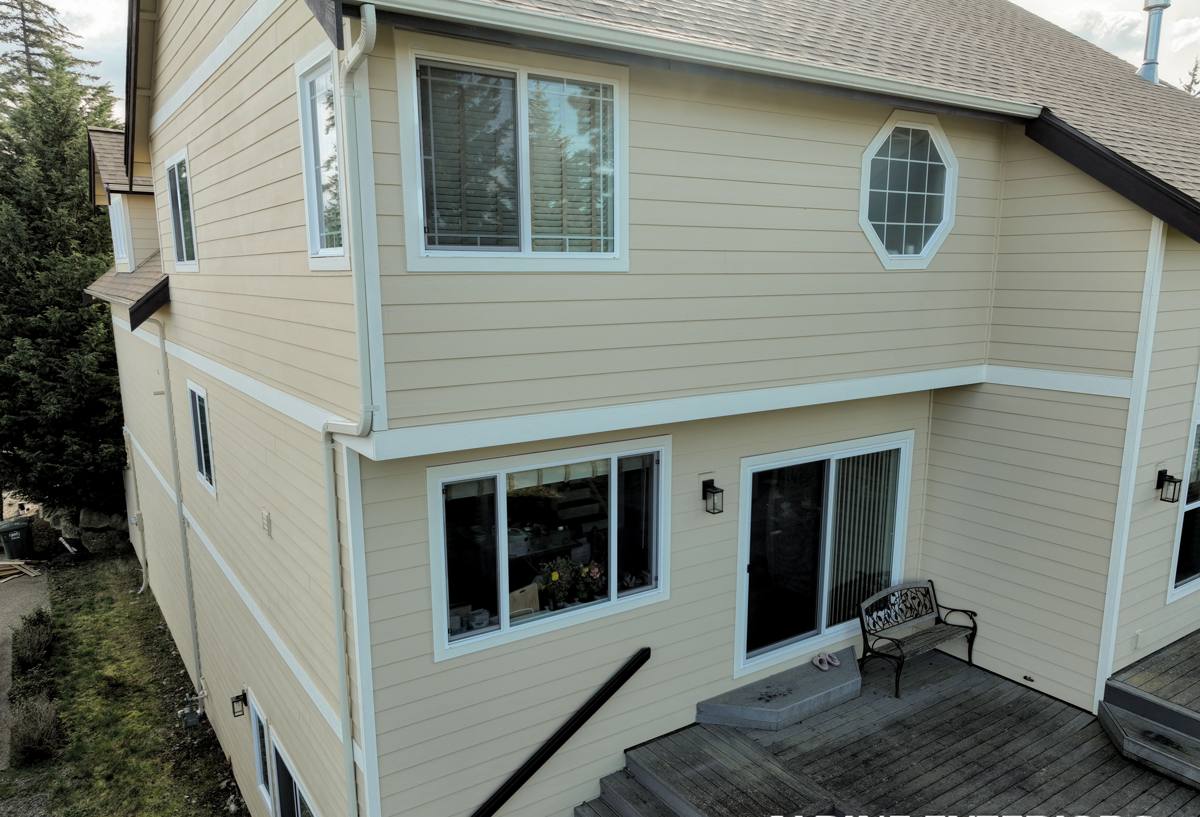
What Tampa Bay Weather Actually Does to Siding
It helps to be specific about what's working against your siding here, because it explains why we install what we install and how we install it.
- Wind-driven rain: Storms off the Gulf and Tampa Bay don't just fall straight down — wind pushes rain sideways and up under laps, trim, and seams that would stay dry in a calmer climate.
- Salt air: Even a few miles inland from open water, airborne salt accelerates corrosion of fasteners, trim flashing, and any exposed metal components.
- Year-round UV: Florida's sun exposure is intense nearly every month, which breaks down pigments and surface coatings on siding that wasn't engineered to hold color.
- Humidity: Constant moisture in the air keeps organic and wood-based siding materials damp longer than they're designed to tolerate, encouraging rot and mold growth at seams and edges.
- Hurricane-force wind gusts: Pinellas County sits in a high-velocity hurricane zone, which means siding and its fastening pattern have to hold up to sustained wind loads, not just the occasional gust.
Individually, each of these is manageable. Combined, and repeated every year for the life of the house, they're exactly the conditions that expose weak siding products and shortcut installations.
Why We Install Only James Hardie Fiber Cement
We standardized on James Hardie for every siding job we do, including here in Oldsmar, because it's engineered for the failure modes this climate actually causes. James Hardie's HZ5 product line is specifically formulated for higher-moisture, higher-humidity climate zones like ours, with a fiber cement composition that resists the swelling, cupping, and rot that plague wood-based and engineered-wood siding products when they take on repeated moisture exposure.
Fiber cement is also non-combustible, which matters in a state where lightning-driven wildfires and electrical fires are a real, if uncommon, risk. And James Hardie's ColorPlus finish is baked on at the factory under controlled conditions, which holds color and resists fading far better than field-applied paint exposed to Florida's UV load from day one.
We get asked from time to time about vinyl siding, LP SmartSide, or other fiber cement brands. Those products aren't without their own merits — vinyl is inexpensive and easy to install, and engineered wood has a lighter, easier installation profile than fiber cement. But vinyl can warp and become brittle under sustained heat and UV, its seams are a known weak point for wind-driven rain intrusion, and it's a poor match for the wind speeds Pinellas County can see. Engineered wood products carry inherent moisture sensitivity at cut edges and seams that requires near-perfect field sealing to avoid swelling over time — a maintenance and installation burden we're not willing to gamble a customer's home on. That's a professional judgment call we've made, not a claim that every other product is unusable everywhere. For this climate, on this coastline, James Hardie is what we're willing to put our name behind.
What a Correct James Hardie Installation Involves
The product only performs as well as the installation. A lot of the siding failures we get called out to inspect aren't material failures at all — they're installation shortcuts that let water in behind a perfectly good product.
Flashing and Water Management
Every window, door, and penetration needs proper flashing integrated with a weather-resistant barrier behind the siding, not caulk used as a substitute for flashing. Water management has to be built into the wall assembly, not patched on afterward.
Fastening for Wind Zones
James Hardie publishes a specific fastening schedule for high-wind regions, and Pinellas County's wind zone requires following it exactly — correct fastener type, spacing, and penetration depth. Under-fastened siding is one of the most common causes of wind damage in coastal storms, and it's invisible until the wind actually tests it.
Clearances and Caulking
Siding needs proper clearance from rooflines, decks, patios, and grade to prevent constant moisture wicking at the bottom edge. Seams and joints need the correct sealant, applied correctly, not just enough to look finished.
Our Process for Oldsmar Siding Projects
- On-site assessment: We evaluate the existing siding, wall assembly, and any moisture or rot already present before we quote anything.
- Removal and substrate prep: Old siding comes off, and we inspect and repair sheathing or framing issues before anything new goes on — problems don't get covered up.
- Weather barrier and flashing: A proper moisture barrier and flashing details go in around every opening and penetration.
- Hardie installation to manufacturer spec: Fastening, clearances, and seams are installed to James Hardie's published requirements for our wind zone and climate.
- Final walkthrough: We inspect the finished job with the homeowner before calling it complete.
James Hardie vs. Other Siding Options for This Climate
| Factor | James Hardie Fiber Cement (HZ5) | Vinyl Siding | Engineered Wood (e.g. LP SmartSide) |
|---|---|---|---|
| Moisture resistance | Engineered for high-humidity coastal climates | Doesn't absorb water, but seams are a leak risk | Requires precise sealing to avoid swelling at cut edges |
| Wind performance | Rated for high-velocity hurricane zones when fastened to spec | Can crack or blow off in sustained high winds | Adequate when installed correctly, sensitive to fastening errors |
| UV/color retention | Factory-baked ColorPlus finish resists fading | Can fade and become brittle under constant UV | Depends entirely on field-applied paint quality |
| Fire resistance | Non-combustible | Combustible | Combustible |
| Maintenance burden | Low when installed correctly | Low, but repairs are hard to color-match | Moderate — repainting and edge sealing over time |
Why Local Experience in Oldsmar and Pinellas County Matters
Siding contractors who don't regularly work this part of Pinellas County can underestimate what the climate demands. Wind zone requirements, permitting expectations, and inspection standards here aren't identical to what a crew might be used to from a job three counties inland. A crew that already works in and around Clearwater and Oldsmar knows which elevations of a house typically take the worst of the bay-driven wind and rain, understands the local permitting process, and isn't guessing at what a Pinellas County inspector expects to see on a fastening schedule or flashing detail.
That local familiarity also shows up in smaller ways — knowing how HOA color approval processes tend to run in this area, and being available for a callback or warranty question without having to travel across the region to get to you.
Maintenance and Warranty
James Hardie siding installed to spec is genuinely low-maintenance, but "low" isn't "none," especially this close to the bay. We recommend an occasional rinse to clear off accumulated salt residue and airborne debris, along with a yearly visual check of caulked joints and trim for any sign of separation. James Hardie backs its products with a manufacturer warranty that's transferable to a future homeowner, which is worth confirming in writing at the time of installation, along with the separate warranty coverage on the ColorPlus finish itself.
Questions to Ask Before You Hire a Siding Contractor
- Are they a certified James Hardie installer, and can they explain the fastening schedule they'll use for this wind zone?
- Will they pull the required local permits, or expect you to?
- Do they carry current liability insurance and workers' compensation coverage?
- Will they put the flashing and water management plan in writing before work starts?
- Do they have experience specifically with homes in the Clearwater/Oldsmar area, not just Florida in general?
If a siding job on your Oldsmar home is something you're weighing, we're happy to take a look and walk you through what it would actually involve — no pressure, no obligation. Use the form below to request a free estimate.