 Clearwater Roofing
 Island Estates sits closer to open water than most Clearwater neighborhoods, and that changes what "siding repair" actually means here. A cracked panel, a soft spot near a window, or a failed caulk line on a waterfront lot isn't just cosmetic — it's usually the visible sign of moisture that's already been working on the wall assembly behind it for a while. Homes on canals and waterfront lots take a heavier, more constant beating from salt air, sun, and wind than homes set back a mile or two inland, even within the same city.
We treat siding repair in this neighborhood as diagnostic work first and cosmetic work second. That means figuring out why a section failed before we patch it, matching the repair to the surrounding material so it doesn't stand out or fail again in a different spot, and building the fix to handle the same exposure that took out the original section. A quick patch that ignores the underlying cause is a callback waiting to happen on a waterfront lot.
Why Island Estates Homes Take More Damage Than Average
Being close to Clearwater Harbor and the surrounding waterways means Island Estates homes deal with a steadier dose of salt-laden air than properties further from the water. Salt air is corrosive to fasteners, trim hardware, and any lower-grade siding material, and it doesn't take a storm to do the damage — it happens gradually, every day, whether or not a hurricane ever makes landfall that year. Add in Pinellas County's intense, nearly year-round UV exposure and the wind-driven rain that comes with Gulf coast storms and squalls, and you've got three separate stressors working on the same wall at once: salt, sun, and water.
Waterfront Exposure vs. Inland Clearwater
A home a few blocks off the water in Clearwater still deals with Florida's climate, but a canal-front or waterfront lot in Island Estates gets it worse and gets it constantly. Wind has less to slow it down before it hits the house. Salt spray settles on siding, trim, and fasteners more consistently. And homes oriented toward open water often catch wind-driven rain at angles that push moisture into joints and seams that would stay dry on a more sheltered lot. None of this means siding repair is impossible to get right here — it means the repair has to account for a harsher baseline than a generic inland job would.
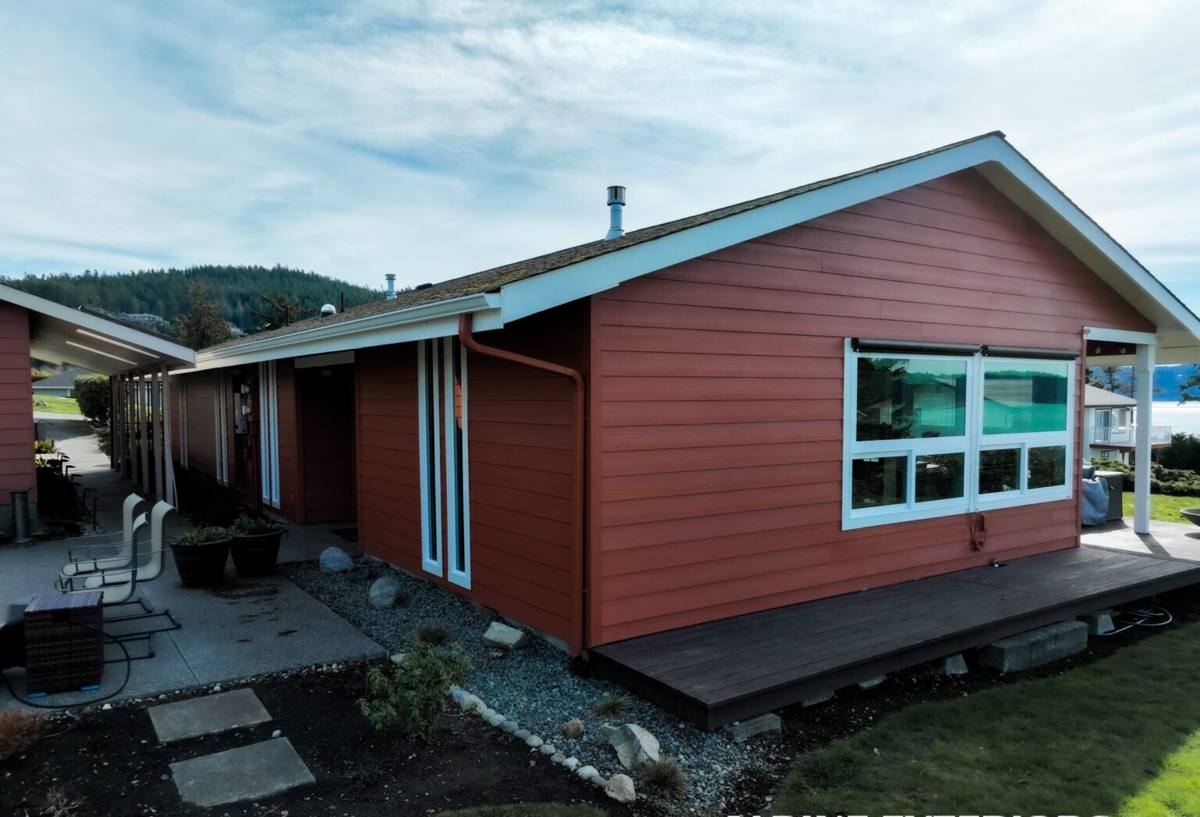
Common Siding Repair Issues We See in This Neighborhood
- Failed caulk and sealant joints — UV and salt exposure break down sealant faster here, opening gaps at trim, corners, and butt joints
- Moisture intrusion at panel seams — wind-driven rain finds poorly lapped or failing joints, especially on water-facing walls
- Corroded or failing fasteners — salt air accelerates corrosion on lower-grade nails and screws, leading to streaking, loose panels, or popped fastener heads
- Soft or damaged trim and panel edges — moisture that's been getting in for a while shows up as soft, swollen, or discolored material near windows, doors, and butt joints
- Impact damage from storms — debris and heavy wind-driven rain during Gulf coast weather events can crack, dent, or dislodge panels
- Mildew and staining on shaded or damp-prone walls — north-facing or heavily shaded sections near the water can stay damp longer, encouraging growth if not addressed
What a Correct Siding Repair Actually Involves
Diagnosing the Real Problem
The first question on any repair call isn't "how do we patch this" — it's "why did this section fail." A cracked panel might be simple impact damage, or it might be a symptom of trapped moisture that softened the material before it ever cracked. We open up the damaged area enough to see what's actually happening behind the surface before deciding on a repair plan. Patching over a moisture problem without addressing the source just moves the failure a little further down the wall.
Matching Material and Finish
A repair that doesn't match the surrounding siding in profile, texture, and color sticks out, especially with factory-finished products where field-matching an old color by eye rarely looks right. On homes with existing James Hardie siding, we match the plank profile and, where the original ColorPlus finish is still available, the factory color — so the repaired section blends in rather than becoming a visible patch.
Flashing and Water Management
Most of the repairs that actually last start with getting water management right, not just closing up the visible gap. That means correct flashing and lap sequencing at the repaired section, proper clearance where panels meet trim, and sealant used the way it's meant to be used — as a secondary barrier, not the only thing keeping water out. On a waterfront lot where wind-driven rain is a regular occurrence rather than an occasional event, skipping this step is exactly how a "repaired" section fails again within a year or two.
Repair vs. Full Re-Side: How to Think About the Decision
| Factor | Spot Repair | Full Re-Side |
|---|---|---|
| Extent of damage | Isolated to one or a few sections, rest of the siding is sound | Widespread failure, or damage spread across multiple walls |
| Underlying moisture | Localized, source identified and correctable | Repeated or systemic issues suggesting a wider moisture or installation problem |
| Age of existing siding | Relatively recent, still within useful service life | Original material near or past its practical lifespan |
| Color and finish match | Good match available, patch will blend in | Original finish discontinued or too faded to match confidently |
| Cost | Lower, scoped to the affected area | Higher, but resets the whole exterior and warranty clock |
| Best fit | Storm damage, isolated moisture spots, aging caulk and trim | Homes with siding nearing end of life or damage spread across most of the exterior |
There's no universal rule here — a well-built home with one damaged section from a storm is usually a repair candidate, while a home where several unrelated sections keep failing is often telling you the underlying installation or material has run its course. We'll give you a straight answer on which category your home falls into rather than defaulting to whichever option costs more.
Why We Repair With James Hardie, and Why That Matters Here
We install and repair with James Hardie fiber cement exclusively — we don't install vinyl, LP SmartSide, Cemplank, Allura, or wood siding, and we won't patch a repair with a mismatched or lower-grade material just because it's what's on hand. On a waterfront home in a salt-air, high-UV climate, that standard matters more than it would somewhere milder. Hardie's fiber cement is non-combustible and holds up to sustained moisture exposure without the swelling or rot risk that wood-based products carry, and its factory ColorPlus finish is engineered to resist the fading that intense, near-constant Florida sun causes on field-applied paint. Hardie's HZ5 product line is specifically engineered for high-humidity, moisture-prone climates like the Gulf Coast, which is the baseline condition on a lot like this, not an exception.
That standard shapes how we handle repairs, too. When an existing Hardie section fails, we can typically match it cleanly because the product line and ColorPlus color system are consistent and well documented. When we're repairing a different siding product for a homeowner who isn't ready for a full re-side yet, we'll be straightforward about what a patch can and can't achieve on that material, and what the honest long-term picture looks like.
Our Process for an Island Estates Siding Repair
- On-site assessment — we inspect the damaged area and open it up enough to see what's happening underneath, not just what's visible from the outside
- Honest diagnosis — impact damage, failed sealant, or a moisture problem, explained plainly along with whether a spot repair or a broader look is the right call
- Material match — sourcing the correct profile and, where possible, the matching factory finish so the repair blends into the rest of the wall
- Removal and prep — damaged material comes out, and we check the water-resistive barrier and framing underneath before anything new goes back on
- Repair and flashing — new material is installed with correct lapping, clearances, and flashing at the repaired section, not just caulked into place
- Final check — we walk the repair with you so you can see what was done and why, and flag anything nearby worth keeping an eye on
Practical Checklist Before You Hire Anyone for Siding Repair
- Ask them to explain why the section failed, not just how they'll patch it
- Confirm they'll open the area up to check for hidden moisture before closing it back up
- Ask how they plan to match the existing profile and finish
- Get current Florida contractor licensing and insurance in writing
- Ask what flashing and lapping details they'll use at the repaired section
- Get a written scope of work before anything is removed from the wall
Why a Local Clearwater Crew That Knows This Neighborhood Matters
Waterfront neighborhoods like Island Estates don't behave like the average Pinellas County lot, and a repair crew that mostly works inland jobs may not weigh flashing, sealant, and material choices the same way for a house that catches wind off the water most days of the year. A crew that has actually worked on canal-front and waterfront homes in this part of Clearwater knows which failure patterns show up here again and again — where sealant tends to give out first, which orientations stay damp the longest, which trim details need extra attention because of the added wind and salt exposure.
That familiarity also matters when it comes to code compliance. Repairs and replacements in this area need to meet current Florida Building Code wind and moisture requirements, and a crew that regularly works Gulf-coast waterfront properties already builds to that standard as a matter of habit rather than something they have to look up mid-job.
If you've got a damaged section, a failing seam, or siding that just isn't holding up the way it should on your Island Estates property, it's worth having someone take an honest look before you decide between a repair and something bigger. We offer free, no-pressure estimates for siding repair in Island Estates and the surrounding Clearwater area — use the form below to get a time on the schedule.