 Clearwater Roofing
 Siding Replacement for Coachman Ridge Homes
Coachman Ridge is one of the many established residential neighborhoods that make up Clearwater, and like the rest of Pinellas County, it sits fully exposed to everything the Gulf Coast throws at a house: relentless UV, sudden tropical downpours, salt-laden air moving in off the water, and the real possibility of hurricane-force wind during storm season. Homes here span a range of ages and construction styles, but they all share the same exposure. Siding is the single largest piece of a home's exterior skin, and when it starts to fail — through cracking, warping, moisture intrusion, or wind damage — it stops protecting the wood framing, sheathing, and insulation underneath it.
This page covers what siding replacement actually involves for a Coachman Ridge home, why the local climate makes material choice and installation quality non-negotiable, and how our process works from first estimate to finished job.
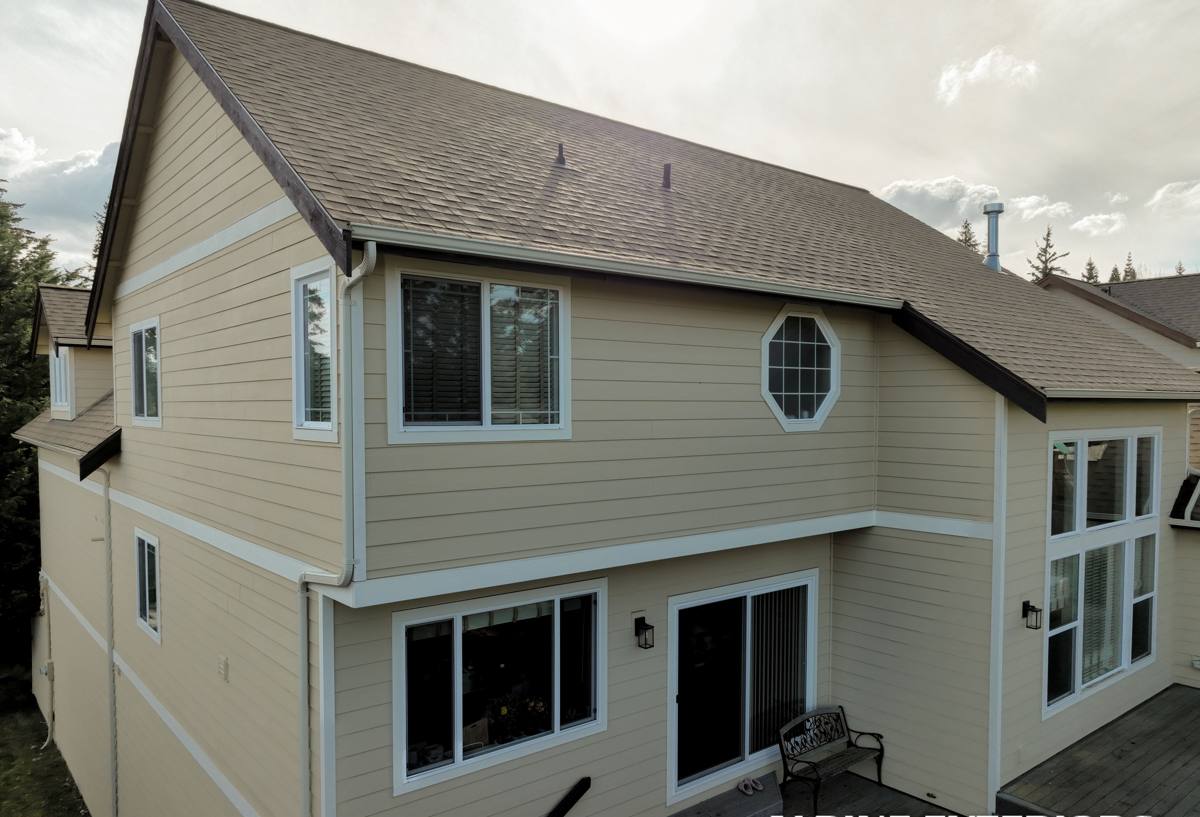
What Clearwater's Climate Does to Siding Over Time
Every siding material reacts differently to heat, moisture, and wind, but no material in this region gets a free pass. Understanding the specific stresses at play helps explain why some products hold up here and others don't.
Intense, Year-Round UV
Clearwater doesn't get a real off-season for sun exposure. Constant UV breaks down pigments and surface coatings, which is why siding painted or finished with lower-grade processes tends to fade, chalk, or need repainting far sooner here than it would in a milder climate.
Wind-Driven Rain and Humidity
Afternoon storms in this part of Florida don't just fall straight down — wind pushes rain sideways into wall assemblies, testing every seam, joint, and piece of flashing. Combined with year-round humidity, any gap in the water-resistive barrier behind the siding becomes an opportunity for moisture to get trapped against the sheathing and framing.
Salt Air
Clearwater's proximity to the Gulf means airborne salt travels well inland, accelerating corrosion on fasteners, trim, and any metal components in the wall assembly. Siding materials and installation hardware both need to be selected with that in mind.
Hurricane-Force Wind
Pinellas County sits in a wind zone where siding has to be rated and fastened to withstand real storm-force loads, not just everyday weather. Wind uplift on poorly fastened siding is one of the most common causes of panel loss during a storm — and once siding fails, the wall behind it is exposed to wind-driven water at the worst possible moment.
Signs a Coachman Ridge Home May Need Siding Replacement
Siding damage isn't always obvious from the street. A short walk around the exterior can reveal problems worth addressing before they get worse.
- Visible cracking, splitting, or buckling in siding panels
- Soft or spongy spots when pressed, especially near the bottom of walls
- Peeling, bubbling, or chalky paint that keeps returning after repainting
- Gaps opening up at seams, corners, or around window and door trim
- Staining or streaking that suggests water is running behind the siding rather than off it
- Visible rot, warping, or delamination on wood-based products
- Missing or loose panels after a storm
- Rising energy bills that point to a compromised building envelope
Why We Only Install James Hardie Fiber Cement
We install James Hardie fiber cement siding exclusively. We don't install vinyl, LP SmartSide, Cemplank, Allura, primed spruce, or cedar. That's a deliberate standard, not a sales pitch, and it comes down to how each material actually performs against sun, moisture, salt, and wind over the long haul — not just how it looks on installation day.
| Material | UV / Fade Resistance | Moisture Behavior | Wind Performance |
|---|---|---|---|
| Vinyl | Fades and can become brittle under sustained heat and sun | Doesn't absorb water, but expands/contracts with heat, opening gaps at seams | Lighter panels more prone to wind lift and cracking on impact |
| Wood / Cedar | Requires ongoing painting or staining to resist UV breakdown | Absorbs moisture, prone to rot and insect damage in humid climates | Performs adequately when well-maintained, but maintenance is constant |
| LP SmartSide | Needs factory or field coating maintained over time | Engineered wood strand product; edges and cut ends are moisture-sensitive if not sealed correctly | Rated for wind but installation precision matters more than with fiber cement |
| James Hardie Fiber Cement | ColorPlus factory finish engineered to resist fading and chalking | Non-combustible, dimensionally stable, resists moisture-driven warping | HZ product lines engineered for high-wind, high-humidity climates like ours |
James Hardie's HZ5 product line is engineered specifically for climates like Clearwater's — hot, humid, and hurricane-exposed — with moisture and impact resistance built into the product itself rather than relying entirely on maintenance. The ColorPlus finish is baked on at the factory under controlled conditions, which holds up to UV far better than field-applied paint, and it carries a real transferable finish warranty. When it's installed correctly, it's a product we're comfortable standing behind on a Coachman Ridge home for decades, not just for the first few storm seasons.
What a Correct Siding Replacement Actually Involves
Siding replacement is not just pulling old panels off and nailing new ones on. Done right, it's a full building envelope job, and skipping steps is exactly how homeowners end up with hidden rot or wind failures a few years down the road.
Full Tear-Off and Substrate Inspection
Old siding comes off completely so the sheathing underneath can be inspected. Any rotted or water-damaged wood gets identified and replaced before anything new goes up — covering damaged sheathing with new siding just hides a problem that will keep spreading.
Weather-Resistive Barrier
A proper water-resistive barrier goes over the sheathing before siding is installed, giving the wall a second line of defense against wind-driven rain that gets past the outer surface.
Flashing at Every Penetration
Windows, doors, hose bibs, vents, and any other wall penetration need correctly installed flashing so water is directed out and away rather than channeled behind the siding.
Fastening to Manufacturer and Wind-Zone Specification
James Hardie siding has specific fastener spacing, type, and placement requirements, and those requirements get tightened in high-wind zones like Pinellas County. Under-fastened siding is one of the most common causes of panel loss in a storm, and it's not something you can see from the ground once the job is finished — it only shows up when the wind tests it.
Trim, Caulking, and Finish Detail
The finish work — trim boards, corner details, caulking at joints — is what keeps water from finding its way in at the small gaps. It's also what makes the finished job look clean and consistent from the street.
Our Process, Start to Finish
- Free on-site estimate — we walk the exterior with you, look at the current siding and substrate condition, and talk through product and color options.
- Written scope and quote — a clear breakdown of what's included: tear-off, substrate repair, barrier, flashing, siding, trim, and cleanup.
- Scheduling — we plan around weather windows, which matters in a region where afternoon storms are a daily possibility for much of the year.
- Tear-off and inspection — old siding removed, substrate checked and repaired as needed.
- Installation to spec — weather barrier, flashing, and James Hardie siding installed per manufacturer and local wind-zone requirements.
- Final walkthrough — we go over the finished job with you before calling it complete.
Cost Factors for Siding Replacement
Every home is different, so we don't quote pricing sight unseen — but these are the main factors that move the number up or down on a typical Coachman Ridge project.
| Factor | How It Affects Cost |
|---|---|
| Home size and number of stories | More square footage and multi-story access increase material and labor time |
| Condition of existing sheathing | Rot or water damage found during tear-off adds repair scope before new siding goes up |
| Trim and architectural detail | Corners, dormers, and window/door trim add labor beyond flat wall runs |
| James Hardie product line selected | HZ5 lap and panel options vs. premium Artisan or Statement Collection profiles carry different material costs |
| Color and finish | Standard ColorPlus finish colors versus custom or premium selections |
| Site access | Landscaping, fencing, or tight lot lines can affect setup and labor time |
Why a Crew That Already Works Coachman Ridge Matters
Siding installed to a manufacturer's printed spec sheet in theory and siding installed correctly for a specific home's exposure, wind zone, and permitting requirements in practice are two different things. A crew that regularly works in Clearwater and Pinellas County already understands the county's permitting and inspection process, knows how local wind-zone requirements affect fastening schedules, and has seen firsthand how salt air and storm exposure age different products and details over time. That local track record shows up in the details — the flashing choices, the fastener spacing, the way trim is sealed — that separate siding that looks fine on day one from siding that's still performing after the next few hurricane seasons.
If your Coachman Ridge home's siding is showing its age, or you're planning ahead of the next storm season, we're happy to take a look and give you an honest read on what it needs. Reach out for a free, no-pressure estimate using the form below.