 Clearwater Roofing
 Why Decks in Sunset Point Wear Out Faster Than the Manufacturer's Numbers Suggest
Every decking product sold in Florida comes with a lifespan estimate printed by a manufacturer who tested it somewhere else. Sunset Point isn't "somewhere else." This is a Clearwater neighborhood close to the water, and decks here deal with a combination of stresses that inland decking rarely sees in the same intensity: constant UV exposure, salt-laden air off Clearwater Harbor and the Intracoastal, wind-driven rain that gets pushed sideways into framing and fastener heads, and the occasional hurricane-force wind event that tests every connection point at once.
None of that means a deck can't last. It means the materials, fasteners, and framing details have to be chosen for this environment specifically, not for a national average. A deck built the way it would be built in a dry inland climate will fail early here — usually at the connections and the framing before the decking boards themselves show much wear.
What Actually Breaks Down First
Fasteners and Hardware
Salt air corrodes metal faster than plain moisture does. Standard galvanized screws, joist hangers, and bolts that would hold up fine in a drier region can start rusting and losing grip strength within a few years this close to the water. This is one of the most common failure points we find on older Sunset Point decks — the boards look fine, but the fasteners underneath are compromised.
Ledger Boards and Framing Connections
The ledger board — where the deck attaches to the house — is the single most safety-critical part of any deck. Wind-driven rain pushes moisture into this joint over and over, and if it wasn't properly flashed when the deck was built, water gets trapped against the house structure. Combined with wind uplift from storm events, a weak ledger connection is how decks fail catastrophically, not gradually.
Decking Surface
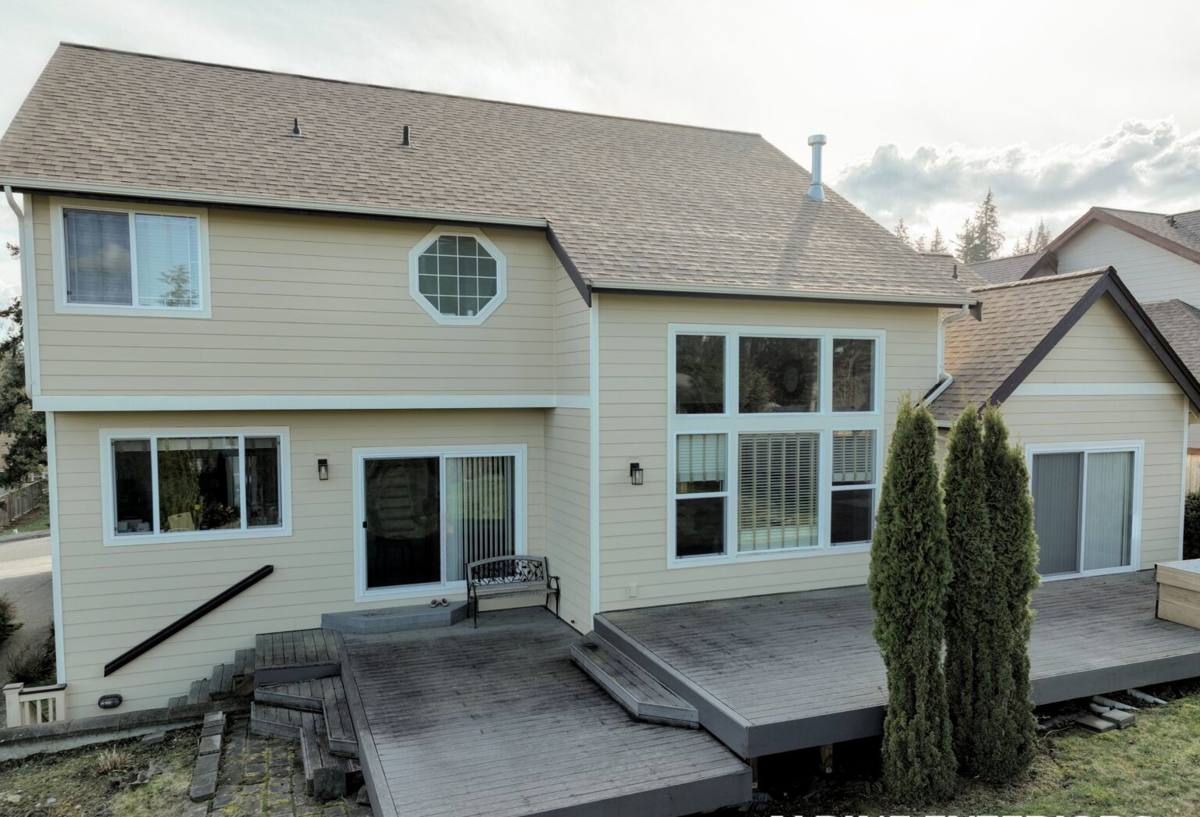
UV exposure here runs nearly year-round, not seasonal. Wood decking without diligent maintenance grays, splinters, and cups faster than in northern climates. Lower-grade composite boards can fade or chalk under sustained sun. The surface is usually the most visible sign of aging, but it's rarely the most dangerous problem — that's almost always underneath.
What a Correct Deck Replacement Involves
A full replacement is the right call when framing, ledger connections, or footings are compromised — patching boards on top of failing structure just hides the problem. Done correctly, a replacement in this climate includes:
- Proper ledger flashing and house-side waterproofing at the attachment point, not just a fresh ledger board
- Corrosion-resistant fasteners and hardware rated for coastal or salt-air exposure, not general-purpose galvanized
- Joist and beam sizing that accounts for local wind load requirements, not just span tables from a generic building guide
- Proper spacing and fastening pattern for whatever decking material is chosen, since composite, PVC, and wood all move differently with heat and moisture
- Railing and stair connections built to code, since these take direct wind load and are a common inspection failure point
- Footings set to the depth and bearing required for Pinellas County soil and code, not eyeballed
Decking Material Comparison for This Climate
There's no single "best" decking material — there's a best material for a given budget, maintenance appetite, and how close the deck sits to salt air and direct sun. Here's how the common options actually perform in a Clearwater coastal setting:
| Material | Upfront Cost | Maintenance | Coastal Sun & Salt Air Performance |
|---|---|---|---|
| Pressure-treated wood | Lowest | Annual sealing/staining recommended | Needs consistent upkeep to resist graying, splintering, and fastener corrosion staining |
| Composite (uncapped or basic) | Moderate | Low, but not zero | Handles moisture well; lower-tier products can fade or chalk under sustained UV |
| Capped composite / PVC | Highest | Lowest | Best resistance to fading, moisture absorption, and salt exposure; strongest warranty structure |
| Tropical hardwood | High | High — periodic oiling required | Naturally dense and durable, but needs discipline to maintain its appearance and resist checking |
We don't push one product on every job. The right choice depends on how much maintenance a homeowner actually wants to do, how exposed the deck is to direct sun and salt spray, and the budget for this project versus the next fifteen years of upkeep.
Our Replacement Process
1. On-Site Assessment
We look underneath the deck, not just at the surface. That means checking the ledger connection, probing framing for soft spots, and inspecting footings before recommending anything. A deck that "looks fine" from the top can have real structural problems below.
2. Permitting
Deck replacement in Pinellas County typically requires a permit and inspection, especially for anything attached to the house or built above a certain height. We handle that process as part of the job so it's not left to the homeowner to navigate.
3. Demolition and Disposal
Old decking, framing, and hardware get removed and hauled off. We check the ledger area and house framing behind it once the old deck is off, since that's often the first time hidden water damage becomes visible.
4. Framing and Structural Rebuild
This is where the coastal-specific decisions matter most — fastener grade, flashing detail, footing depth, and structural sizing. It's also the part of the job a homeowner can't easily inspect later, which is why it has to be done right the first time.
5. Decking, Railing, and Final Details
Surface material goes down per the manufacturer's fastening spec, railings and stairs are set to code, and everything gets a final check before we call it done.
6. Walk-Through
We walk the finished deck with the homeowner, point out anything they should know for maintenance, and answer questions before we consider the job finished.
Signs Your Sunset Point Deck Needs Replacement, Not Repair
- Soft, spongy, or bouncy spots underfoot, especially near the house
- Visible gaps, staining, or soft wood at the ledger board where the deck meets the house
- Rust streaks running down from screws, bolts, or joist hangers
- Railings or stair posts that wobble or flex under normal weight
- Boards that are cupping, splitting, or delaminating across large sections rather than isolated spots
- Visible movement or settling at one or more support posts or footings
- A deck older than 15-20 years that has never had framing inspected, only surface repairs
If what you're seeing is limited to a few boards or a single railing section, repair may genuinely be the right call — we'll tell you that when it's true. Replacement makes sense when the structure itself, not just the surface, is compromised.
What Drives the Cost of a Deck Replacement Here
| Factor | Why It Matters |
|---|---|
| Deck size and layout | Square footage and shape (straight run vs. multi-level or wraparound) directly drive material and labor |
| Framing condition | Compromised ledger, joists, or footings add rebuild scope beyond just the visible surface |
| Decking material chosen | Wood, composite, and PVC span a wide cost range with different long-term maintenance costs |
| Height and stairs | Elevated decks and multi-step stairs add structural and railing requirements |
| Permitting and inspection | Required for most attached or elevated decks in Pinellas County; adds time but protects the homeowner |
| Site access | Waterfront lots, tight side yards, or limited equipment access can add labor time |
We give honest ranges once we've actually seen the site and the existing structure — not a number quoted sight unseen over the phone.
Why a Crew That Already Works Sunset Point Matters
A deck built for a dry inland climate and a deck built for a property exposed to salt air and Gulf-driven storms are not the same project, even if the blueprint looks identical on paper. A crew that regularly works this specific area already knows which fastener grades hold up, which ledger flashing details actually keep water out, and what Pinellas County's permitting and inspection process expects before work starts — not after a failed inspection costs everyone time.
That familiarity also shows up in smaller ways: knowing how footings behave in the local soil conditions, understanding realistic timelines around Florida's rainy season, and being straightforward about which materials are worth the extra upfront cost for a property this close to the water versus which upgrades wouldn't make a meaningful difference.
Getting Started
If your deck is showing its age, feels less solid than it used to, or you're just planning ahead before a problem develops, we're happy to take a look. The estimate is free, there's no pressure attached to it, and you'll get a straight answer about whether you're looking at a repair or a full replacement. Fill out the form below to schedule a visit.