 Clearwater Roofing
 Board & Batten Siding Built for Safety Harbor's Waterfront Climate
Safety Harbor sits right on Old Tampa Bay, and that waterfront location shapes everything about how siding performs here. Homes in this part of Pinellas County take on a mix of open-water wind, near-constant humidity, and salt-laden air blowing in off the bay, on top of the same hurricane-season gusts and intense subtropical sun that hit the rest of the Clearwater area. Board and batten siding — the vertical-board look with narrow strips covering the seams — is a popular choice for both historic-style cottages and newer builds in Safety Harbor because of its clean, classic profile. But that profile only holds up if the material underneath it and the installation behind it are built for this specific climate, not for a mild inland market.
We install board and batten using James Hardie fiber cement exclusively. This page walks through what Safety Harbor's weather actually does to vertical siding, what a correct installation looks like, and why the material choice and the crew you hire both matter more here than they would somewhere without a coastline thirty seconds from the property line.
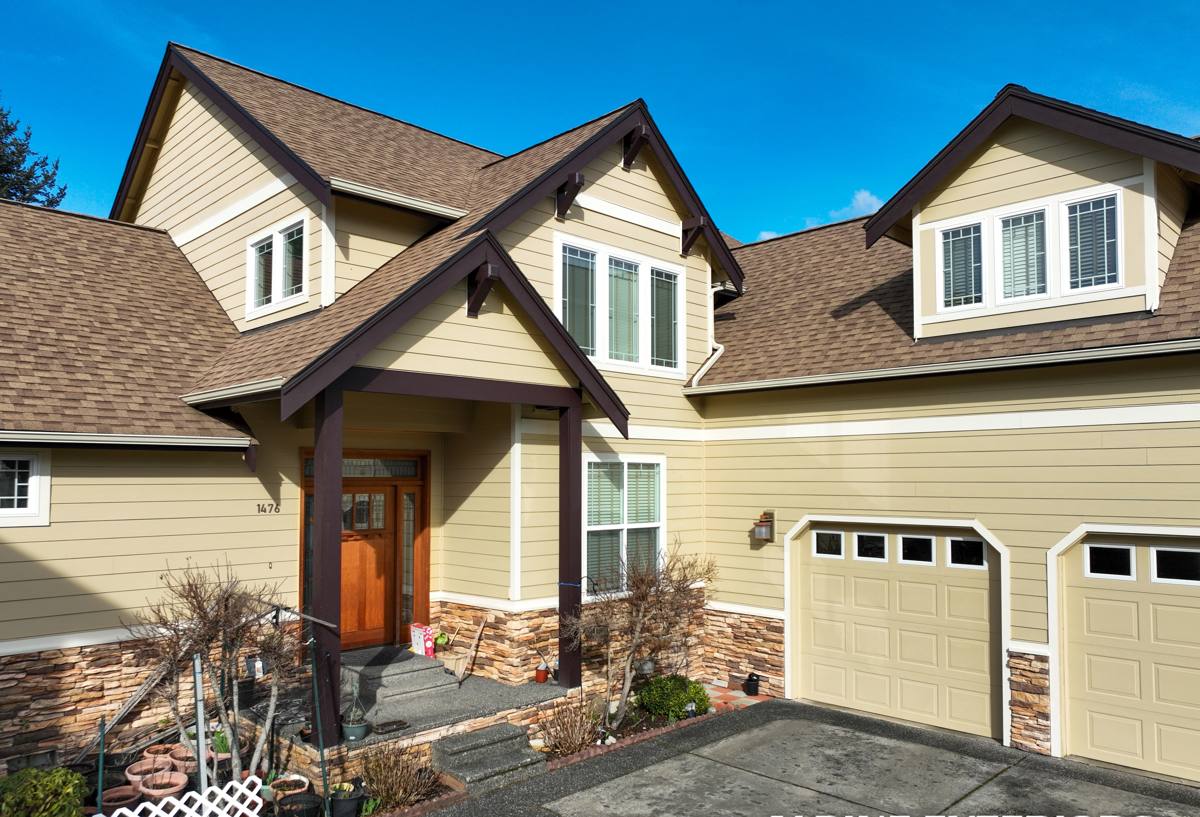
What Safety Harbor's Weather Does to Vertical Board Siding
Wind Load on Vertical Seams
Board and batten has more vertical seams per square foot of wall than horizontal lap siding, and every one of those seams is a place wind pressure can find a weakness. During tropical storms and hurricanes, sustained wind and gusts push and pull on siding panels repeatedly over hours, not seconds. A batten or panel that isn't fastened to the manufacturer's actual spec — correct fastener type, spacing, and embedment into structural sheathing — is the first thing to lift, crack, or pull loose in a real wind event.
UV Exposure and Finish Breakdown
Florida sun is brutal on painted wood and lower-grade composite panels. Vertical board and batten catches direct sun on wide, flat faces most of the day, which accelerates fading, chalking, and paint failure compared to shaded or angled surfaces. A finish that isn't engineered for this UV load will look tired within a few years, long before the underlying material itself is a problem.
Wind-Driven Rain and Moisture Intrusion
Hurricanes and even routine summer storms in this area rarely deliver rain straight down — wind pushes it sideways, into seams, under battens, and around window and door trim. Vertical siding is more exposed to this than horizontal lap because water has a straighter path down each seam. Flashing details and a proper water-resistive barrier behind the siding matter as much as the siding itself.
Salt Air Corrosion
Being close to Old Tampa Bay means airborne salt is a constant, low-level presence on exterior surfaces. Salt accelerates corrosion of fasteners, trim hardware, and any metal flashing components, and it degrades some coatings faster than inland exposure would. Fastener selection and finish quality aren't cosmetic details on a waterfront-adjacent property — they're the difference between a wall system that lasts decades and one that needs early rework.
Why We Install James Hardie for Board & Batten — and Not the Alternatives
Board and batten is available in several materials, and each one handles Safety Harbor's climate differently. We don't install vinyl board and batten, LP SmartSide, Cemplank, Allura, or primed wood species like spruce or cedar. That's not a knock on every use case for those products — it's a standard we've set because of what we see happen to them specifically in a coastal, high-UV, storm-exposed market like this one.
- Vinyl board and batten can warp, buckle, or become brittle under sustained heat and UV, and it has real limits in high-wind fastening compared to a heavier fiber cement panel.
- Wood species like cedar or primed spruce look great initially but require ongoing paint and moisture maintenance that Florida's humidity and UV load make expensive to keep up with long-term.
- LP SmartSide is an engineered wood product, meaning it's more moisture-sensitive at cut edges and panel joints than fiber cement — a real concern given how much wind-driven rain this area sees.
- Other fiber cement brands (Cemplank, Allura) compete on the same basic material category as James Hardie, but we've standardized on Hardie for its factory-applied ColorPlus finish, its HZ5 formulation engineered for humid climates, and its transferable warranty structure.
James Hardie's fiber cement is non-combustible, dimensionally stable in humidity swings, and available in vertical panel systems purpose-built for the board and batten look — meaning you get the aesthetic without relying on a moisture-sensitive substrate to hold it together.
What a Correct Board & Batten Installation Actually Involves
Starting With the Wall Behind the Siding
Before any panel goes up, the existing sheathing gets inspected for rot, delamination, or prior water damage — a step that gets skipped more often than it should, especially on re-side jobs. A proper water-resistive barrier goes over the sheathing, lapped correctly at every seam and opening, because that barrier is doing most of the actual waterproofing work; the siding is the weather-facing layer, not the last line of defense.
Panel Layout and Batten Spacing
HardiePanel vertical siding is installed with battens set to James Hardie's specified spacing and fastening pattern, not eyeballed for looks. Fasteners need to land in structural framing at the correct depth — overdriven or underdriven nails are one of the most common causes of early failure on any fiber cement job, board and batten included.
Flashing at Every Penetration
Every window, door, hose bib, and light fixture that penetrates a board and batten wall needs proper flashing integrated with the water-resistive barrier underneath. On a vertical wall system, a poorly flashed penetration gives wind-driven rain a direct path downward behind the siding.
Factory Finish, Not Field Paint
We use Hardie's ColorPlus factory-applied finish rather than field-painting panels after installation. The factory process bonds finish more consistently than job-site painting can, which matters directly for UV and fade resistance under Pinellas County sun.
Comparing Board & Batten Siding Materials for Safety Harbor Homes
| Factor | James Hardie Fiber Cement | Vinyl | LP SmartSide | Wood (Cedar/Spruce) |
|---|---|---|---|---|
| Wind performance | Engineered fastening spec, rigid panel | Can flex/crack under sustained gusts | Adequate but moisture-sensitive at seams | Adequate if maintained; prone to warping |
| UV/fade resistance | Factory ColorPlus finish | Can chalk/fade over time | Field-applied finish varies | Requires repainting on a cycle |
| Moisture behavior | Non-combustible, humidity-stable | Generally moisture-tolerant, can trap heat/moisture | Engineered wood core is moisture-sensitive | Absorbs moisture, needs sealing/paint upkeep |
| Salt air durability | Designed for humid/coastal-adjacent climates (HZ5) | Generally stable but can become brittle | More vulnerable at exposed edges | Vulnerable without diligent maintenance |
| Maintenance burden | Low — occasional wash, no repainting cycle | Low but limited repair options | Moderate — coating upkeep needed | High — regular paint/seal required |
Our Process From First Call to Finished Wall
We start with an on-site inspection of the existing siding and wall assembly, because the right scope of work on a Safety Harbor home depends heavily on what condition the sheathing and prior moisture barrier are in — not every job needs a full tear-off, but some do, and that's not something to guess at from a photo. From there we walk through the HardiePanel and batten layout for the specific elevations involved, note any trim, window, or transition details that need extra attention, and provide a clear, itemized estimate before anything is scheduled. During installation, we follow James Hardie's published fastening and flashing specifications rather than generic siding practice, because that's what keeps the manufacturer's warranty valid and keeps the wall system performing the way it's designed to in wind and rain. We walk the finished job with the homeowner before calling it complete.
Why a Crew That Already Works Safety Harbor Matters
Board and batten installed to code in Pinellas County has to account for the local wind zone requirements that apply to this part of Florida — fastening schedules and structural attachment aren't universal across the country, and a crew that doesn't regularly pull permits and pass inspections in this county is more likely to miss a requirement that only shows up as a problem during the next storm. A crew that already works in and around Safety Harbor also has a working sense of how close a given property sits to the bay, how much tree canopy shades or exposes different elevations, and how older versus newer construction in the area tends to be built underneath the existing siding — all of which affects the real scope of a proper job, not just the surface-level look.
Maintenance After Your Board & Batten Siding Is Installed
James Hardie board and batten is low-maintenance compared to wood or vinyl, but "low-maintenance" doesn't mean "no maintenance" — a little attention keeps it performing at its best in this climate.
- Rinse the exterior periodically to clear salt residue and airborne grime, especially on elevations facing open water.
- Inspect caulking around windows, doors, and penetrations annually and have any cracked or missing sealant redone promptly.
- Watch for any staining or discoloration at panel joints, which can indicate a flashing or sealant issue worth checking early.
- After major storms, do a visual walk-around for loose battens, cracked panels, or debris impact damage.
- Keep irrigation heads and sprinklers from spraying directly on siding long-term, which can cause mineral staining over time.
Get a Free, No-Pressure Estimate
If you're considering board and batten siding for a home in Safety Harbor, we're happy to come take a look, walk you through what your specific property needs, and give you a straightforward estimate — no pressure, no obligation. Use the form below to get started.