 Clearwater Roofing
 Why Clearwater Beach Decks Wear Out Faster
A deck on Clearwater Beach lives a harder life than a deck twenty miles inland. The barrier island sits directly in the path of salt spray, near-constant humidity, and some of the most intense year-round UV exposure in the continental United States. Add in wind-driven rain from summer storms and the occasional hurricane-force gust, and you have an environment that attacks wood, fasteners, and connections from multiple directions at once. Homeowners who bought decks built to a generic spec, or who inherited a deck from a previous owner who didn't maintain it with this climate in mind, often find themselves dealing with problems years before they expected to.
Salt air is the biggest hidden threat. It doesn't just sit on the surface — it works into fastener heads, ledger board connections, and any exposed metal hardware, accelerating corrosion in ways that aren't always visible from the top of the deck. Combine that with UV breakdown of wood fibers and finish coatings, plus moisture cycling from frequent rain and high humidity, and you get a structure that ages unevenly. The boards might look fine from a distance while the framing underneath is quietly losing integrity.
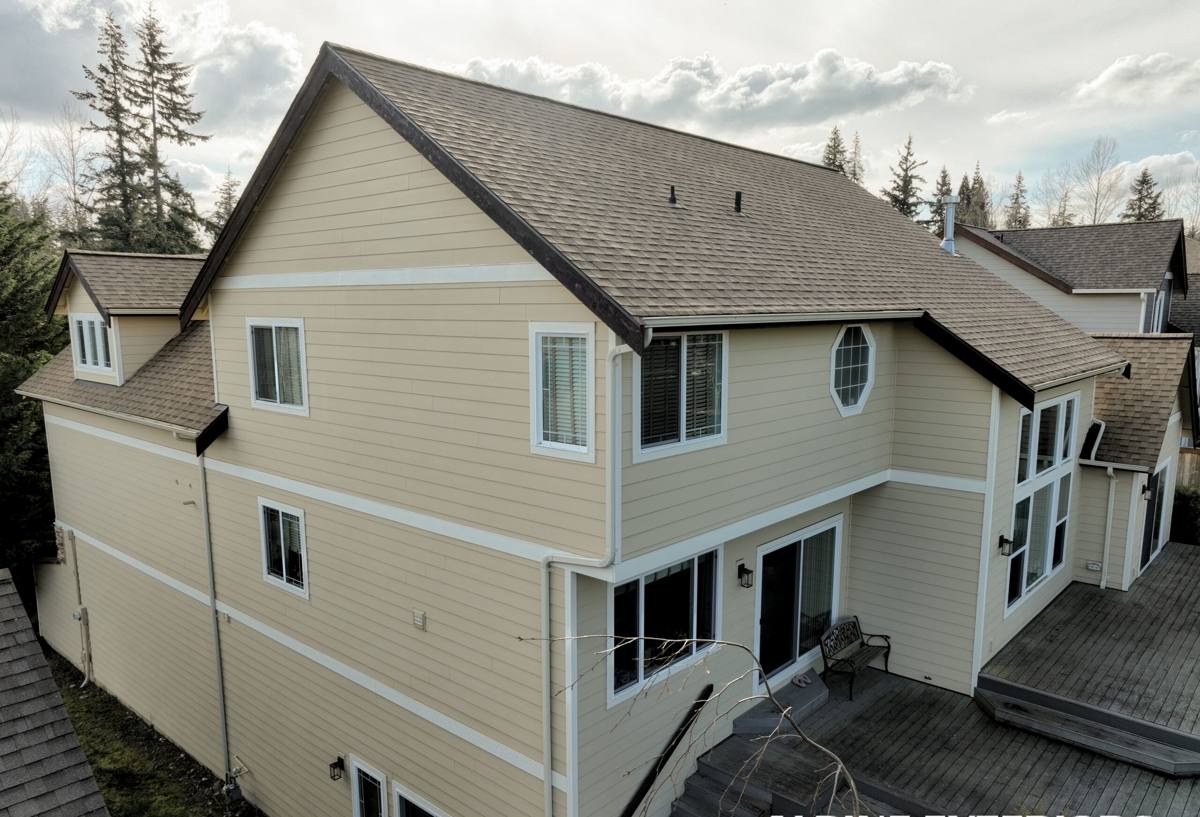
Signs a Clearwater Beach Deck Needs Repair
Because the visible surface often outlasts the structure underneath, it pays to know what to actually check rather than relying on how the deck looks from a chair. Here's what we look for on every inspection, and what homeowners can check themselves between visits:
- Soft, spongy, or bouncy spots underfoot, especially near stair landings or the point where the deck meets the house
- Rust streaks running down from screw or bolt heads, or visibly corroded hardware
- Gaps opening up between the ledger board and the house wall
- Cracked, split, or cupped boards, particularly on the side that gets the most afternoon sun
- Wobbly or loose railings and posts — a safety issue as much as a repair issue
- Stair stringers that flex or creak more than they used to
- Visible gaps or separation at joist hangers
- A musty smell or dark staining underneath the deck, which usually points to trapped moisture
Any one of these on its own might be minor. Several together, or anything involving the ledger board or main support posts, means it's time for a proper structural look before someone gets hurt.
The Ledger Board Deserves Special Attention
The ledger board — the piece that bolts the deck to the house — is the single most important connection on the whole structure, and it's also the one most exposed to water intrusion where the deck meets the exterior wall. In a coastal environment with frequent wind-driven rain, a poorly flashed or aging ledger connection is one of the most common failure points we find. It's rarely obvious from a casual look, which is exactly why it needs a trained eye rather than a guess.
Deck Materials and How They Hold Up Locally
What your deck is built from changes both how it fails and how it should be repaired. Here's an honest comparison of what we typically see on Clearwater Beach properties:
| Material | Common issues near the coast | Repair considerations |
|---|---|---|
| Pressure-treated pine | Cracking, warping, fastener corrosion, checking from UV exposure | Individual board replacement is usually straightforward; framing needs careful inspection for hidden rot |
| Cedar or other natural hardwoods | Graying, surface checking, softening if finish isn't maintained | Repairs should match grain and species where possible; refinishing is often part of the job |
| Composite decking | Fading, occasional swelling at cut edges, fastener plate issues | Boards typically get replaced rather than patched; substructure still needs the same wood inspection |
| Structural framing (any deck) | Corroded hardware, ledger separation, joist hanger failure | This is the part that actually determines whether the deck is safe — surface material is secondary |
One point worth being direct about: regardless of what the walking surface is made of, the framing underneath is almost always wood, and almost always the same wood no matter what brand of decking sits on top. That's why we treat every repair as a structural inspection first and a surface-material job second.
What a Correct Deck Repair Actually Involves
A repair that only replaces the boards you can see is a cosmetic fix, not a real repair. Done properly, deck repair work here should include:
Structural Assessment
Checking joists, beams, posts, and footings for rot, corrosion, or movement — not just the board someone complained about, but everything connected to it. In a coastal climate, damage rarely stays isolated to one spot.
Fastener and Hardware Upgrades
Salt air corrodes standard hardware faster than it corrodes the wood around it. Where we find degraded fasteners, joist hangers, or brackets, we replace them with hardware rated for coastal or treated-lumber exposure rather than putting new boards on old, weakened connections.
Ledger Board and Flashing Repair
If water has been getting behind the ledger board, patching the boards above it without fixing the flashing just guarantees the same problem returns. This is one of the most important — and most often skipped — parts of a proper repair.
Proper Board Replacement
Matching fastener spacing, gap sizing for drainage and material expansion, and finish or sealant appropriate for the board material — not just screwing down whatever's available.
Railing and Stair Safety Checks
Loose railings and shifting stair stringers are code and safety issues, not cosmetic ones, and we address them as part of any repair scope, not as a separate upsell.
Our Process for Clearwater Beach Deck Repairs
- On-site inspection. We walk the full deck, check underneath where possible, and test framing and connections rather than just looking at the surface.
- Honest scope and estimate. We tell you what's actually needed — structural work, board replacement, hardware upgrades — and what can reasonably wait.
- Permitting, when required. Structural repairs in Pinellas County can trigger permit requirements depending on scope; we handle that process rather than leaving it to you.
- Repair work. Framing and structural fixes first, then surface materials, then finish work like sealing or staining.
- Final walkthrough. We check the deck is solid, safe, and that railings and stairs meet a standard we'd be comfortable with on our own homes.
Repair or Replace? Weighing the Real Factors
Not every deck problem calls for full replacement, and not every repair is worth doing instead of starting fresh. Here's how we help homeowners think through it:
| Factor | Leans toward repair | Leans toward replacement |
|---|---|---|
| Extent of framing damage | Isolated to one section or connection point | Widespread rot or corrosion across multiple joists/posts |
| Age of the deck | Relatively young, one focused problem | Original construction is old and multiple systems are failing together |
| Ledger/flashing condition | Sound, or a contained fix | Chronic water intrusion has damaged the house rim joist too |
| Budget and timeline | Targeted repair fits the need now | Recurring repairs are starting to add up to more than a rebuild would cost |
We won't push a full rebuild when a repair will genuinely hold up, and we won't recommend patchwork on a deck where the framing is compromised in multiple places. Either way, you get a straight answer, not the option that happens to be more profitable for us.
Permits and Pinellas County Building Requirements
Deck work that touches structural framing, the ledger connection, or railings typically falls under Florida Building Code requirements, and Pinellas County has its own permitting process on top of that. Coastal construction standards exist because this area genuinely needs them — a deck that isn't properly anchored and flashed is a real liability in a wind event, not just a paperwork technicality. We handle the permitting side of structural repairs so you're not left guessing whether your repair is actually up to code.
Why a Crew That Already Works Clearwater Beach Matters
Deck repair knowledge that works fine in a drier, inland climate doesn't automatically transfer to a barrier island. A crew that regularly works Clearwater and the surrounding Pinellas County coastline already knows which hardware actually holds up to salt exposure, where ledger boards on local homes tend to fail first, and how wind-driven rain finds its way into connections that look fine from the outside. That's the kind of judgment that only comes from doing this work in this specific environment repeatedly — not from a general contracting checklist.
It also means faster, more realistic scheduling around Florida's storm season and rain patterns, and a crew that isn't learning the local building department's requirements for the first time on your job.
Keeping a Repaired Deck in Good Shape
A repair is only as good as the maintenance that follows it. A few habits go a long way in this climate:
- Rinse salt residue off the deck surface periodically, especially after storms
- Reseal or refinish wood decking on a regular schedule rather than waiting until it looks bad
- Check hardware and railings for looseness once or twice a year
- Keep gutters and downspouts clear so runoff isn't dumping extra water near the ledger board
- Address small issues — a loose board, a hairline crack — before they turn into structural ones
If you're seeing soft spots, corroded hardware, or a deck that just doesn't feel as solid as it used to, we're happy to take a look. We offer free, no-pressure estimates for Clearwater Beach homeowners — just fill out the form below and we'll get back to you with an honest assessment.