 Clearwater Roofing
 Why Decks in Countryside Take a Different Kind of Beating
Countryside sits inland from the immediate coastline, but that doesn't mean the deck on the back of your house gets an easy ride. Clearwater's climate doesn't spare any neighborhood: intense year-round UV breaks down wood fibers and fades or chalks composite surfaces, wind-driven rain during summer storms and hurricane season drives moisture into joints and fastener holes, and salt-laden air carried in off Tampa Bay and the Gulf slowly corrodes metal hardware even miles from open water. Add in the humidity that keeps everything damp longer after a storm than it would in a drier climate, and you have a recipe for decks that look fine from a distance but are quietly failing underneath.
We work on decks throughout Pinellas County, and the pattern in Countryside is consistent: homes built or re-decked at different points over the years, a mix of original wood construction and later composite upgrades, and a lot of decks that were never built with hurricane-strength wind uplift in mind. Repairing a deck here isn't just cosmetic work — it's about restoring a structure that has to survive real weather, not just look good for a season.
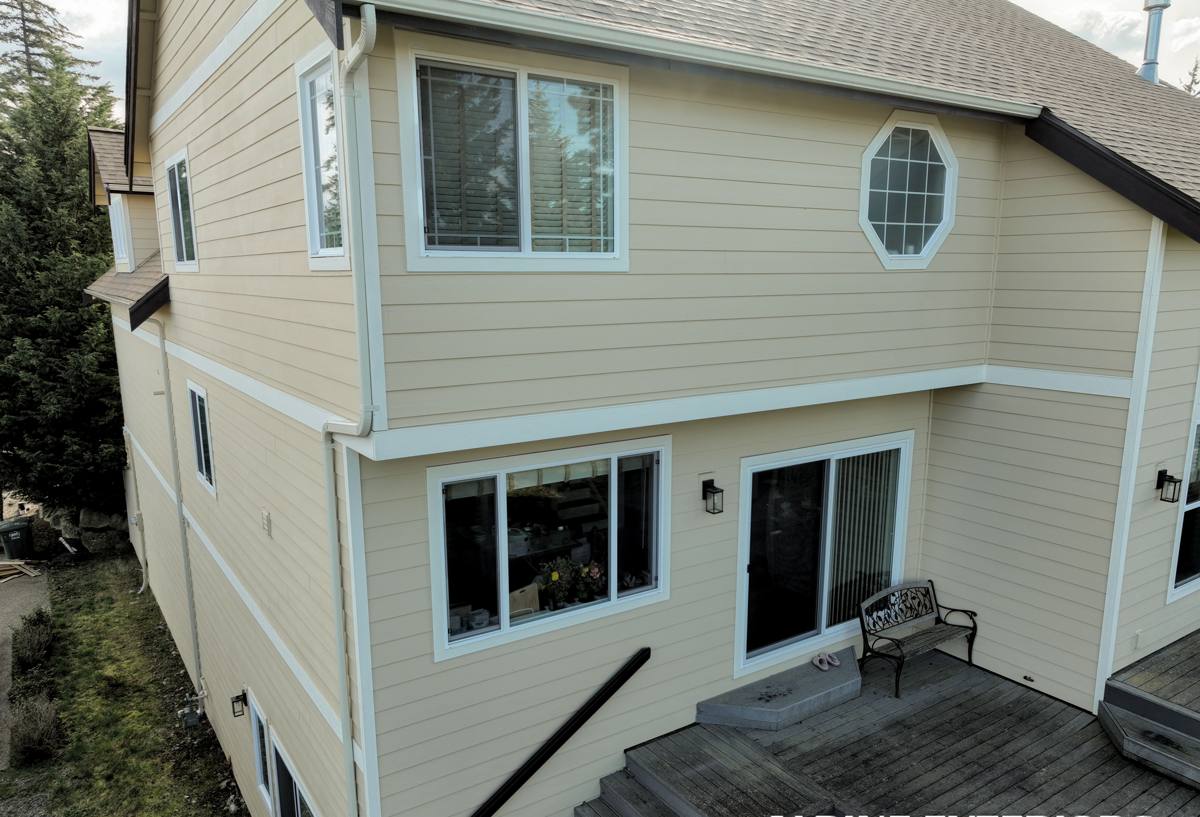
Signs a Deck Needs Repair, Not Just a Cleaning
Wood Decks
Soft or spongy spots underfoot, boards that have visibly cupped or split, nail heads that have popped up, and dark staining around fasteners are all signs that moisture has gotten past the surface. Railings that wiggle or posts that flex when you lean on them usually mean the connection hardware or the post base has weakened, not just the visible wood.
Composite and PVC Decks
Composite boards don't rot the way wood does, but they can still fail. Watch for boards that have started to sag between joists (often a sign the joist spacing wasn't right for that product), fastener heads that have worked loose from thermal expansion and contraction, and any softness at the substructure below — because most composite deck failures actually start in the wood framing underneath, not the decking itself.
Structural Warning Signs
The most serious issues are the ones you can't always see from the top: a ledger board pulling away from the house, rusted or corroded joist hangers, and support posts that have shifted or settled. These affect the whole structure's ability to handle wind and weight, and they're the reason we always inspect from underneath, not just the walking surface.
What a Correct Deck Repair Actually Involves
A repair that only replaces what's visible on top often leaves the real problem in place. A correct repair addresses the whole load path:
- The ledger board connection to the house, including flashing that keeps water from tracking behind it
- Joists and beams, checked for rot, splitting, or corrosion at hanger connections
- Post bases and footings, especially where wood has been in direct or near-constant ground contact
- Fasteners and connectors rated for the actual loads and wind conditions, not just whatever was on hand
- Railings and guard posts, which take constant stress from people leaning and gripping
- The decking surface itself, replaced or repaired to match structural spacing requirements
Skipping any of these steps to save time or money just moves the problem a year or two down the road — usually to right after the next tropical storm.
Repair vs. Replacement: How We Help You Decide
Not every deck problem calls for a full tear-out, but not every deck is worth patching either. We look at the age of the structure, how much of the framing is still sound, and how the deck was built in the first place.
| Factor | Leans Toward Repair | Leans Toward Replacement |
|---|---|---|
| Framing condition | Joists and beams are structurally sound, isolated problem areas | Widespread rot, corrosion, or undersized framing throughout |
| Age of structure | Newer deck with a localized issue (one bad board, one loose rail) | Older deck nearing or past its practical service life |
| Original build quality | Built to code with adequate fasteners and spacing | Under-built, wrong fastener types, or non-code footings |
| Storm or moisture damage | Damage contained to a specific section | Water intrusion has spread through multiple structural members |
| Long-term cost | Lower upfront cost, shorter remaining lifespan | Higher upfront cost, resets the clock on the whole structure |
We'll walk the deck with you, point out what we find, and give you an honest read on which path makes more sense for your budget and how long you plan to stay in the home.
Our Deck Repair Process for Countryside Homes
- On-site inspection. We check the deck from above and below, testing railings, probing wood for soft spots, and inspecting hardware for corrosion.
- Written scope and estimate. You get a clear breakdown of what needs repair, what we recommend replacing, and why — no vague line items.
- Demolition of failed sections. We remove only what's compromised, protecting sound structure and landscaping around the work area.
- Structural repair. Ledger, joists, beams, and posts are repaired or replaced first, since everything else depends on this being right.
- Hardware and fastener upgrades. Corroded or undersized connectors are replaced with hardware suited to Florida's humidity and salt exposure.
- Decking and railing work. New boards and railing components are installed to proper spacing and attachment standards.
- Final walkthrough. We check the deck is solid, level, and safe before we consider the job done.
Materials That Actually Hold Up Here
Framing Lumber
For structural repairs, we use pressure-treated lumber rated for ground contact where relevant, since even framing that isn't touching soil gets enough moisture exposure in this climate to need that protection.
Decking Surfaces
Whether we're matching existing wood decking or transitioning a repaired section to composite, the decision comes down to your maintenance appetite. Wood costs less upfront but needs regular sealing and inspection in Florida's UV and humidity. Composite costs more but resists fading, splintering, and moisture absorption better over time — though it still depends entirely on a sound frame underneath.
Fasteners and Hardware
This is where a lot of older decks fail early, and it's not a minor detail. Standard galvanized hardware corrodes faster near the coast than most homeowners expect. We use stainless steel or heavy hot-dip galvanized fasteners and connectors rated for coastal and high-corrosion environments, because replacing a deck board is a lot cheaper than replacing a rusted-through joist hanger holding up the whole structure.
Permits and Local Code Considerations
Deck repair work in Clearwater and unincorporated Pinellas County can require a permit depending on the scope — generally the more structural the work (framing, footings, railings), the more likely a permit applies, while minor board-level repairs may not. Wind load requirements in this part of Florida are also a real factor in how railings, posts, and connections need to be attached, not just a formality. We handle the permitting conversation as part of the estimate so you're not left guessing whether your repair is compliant.
Keeping a Repaired Deck in Good Shape
Once a deck is repaired correctly, a little routine attention goes a long way in this climate:
- Inspect railings and stair connections for movement a few times a year, especially after any major storm
- Sweep debris out from between boards so moisture doesn't sit trapped against the wood
- Reseal or restain wood decking on a regular schedule rather than waiting until it looks worn
- Check the underside periodically for new signs of moisture, rust streaks, or insect activity
- Keep sprinklers and downspouts from soaking the same section of the deck repeatedly
None of this takes much time, but it's the difference between a repair that lasts and one that needs redoing in a few years.
Why It Matters That We Already Work in Countryside
A crew that regularly works decks in this part of Clearwater has already seen how the local combination of sun, storms, and salt air plays out on real structures — which framing details tend to fail first, which fastener types hold up and which don't, and what the permitting process actually looks like for this jurisdiction. That's different from general handyman repair work, and it shows up in the quality and longevity of the fix. We'd rather diagnose the real problem once than have you calling us back about the same deck in two years.
If you're dealing with a soft spot, a wobbly railing, or storm damage on a Countryside deck, we're happy to take a look and give you a straight answer on what it needs. Reach out for a free, no-pressure estimate using the form below.