 Clearwater Roofing
 Palm Harbor's Climate Is Hard on Siding — Here's What That Means for Your Home
Palm Harbor sits close enough to the Gulf that salt air is part of daily life, and like the rest of Pinellas County it takes the full brunt of Florida's weather cycle: intense year-round UV that breaks down cheap coatings, sudden wind-driven rain that finds every gap in a wall system, and the real possibility of hurricane-force wind loads during storm season. Siding here isn't just a cosmetic layer. It's the first line of defense between your framing and a climate that works against exterior materials every single day of the year.
That combination is why we install James Hardie fiber cement siding exclusively and don't offer vinyl, LP SmartSide, Cemplank, Allura, primed spruce, or cedar. Each of those products has a reasonable case in a milder climate. In a coastal Florida market like Palm Harbor, the trade-offs — heat distortion, moisture absorption, coating breakdown, or ongoing maintenance — show up faster and cost homeowners more over time than most people expect when they're comparing sticker prices.
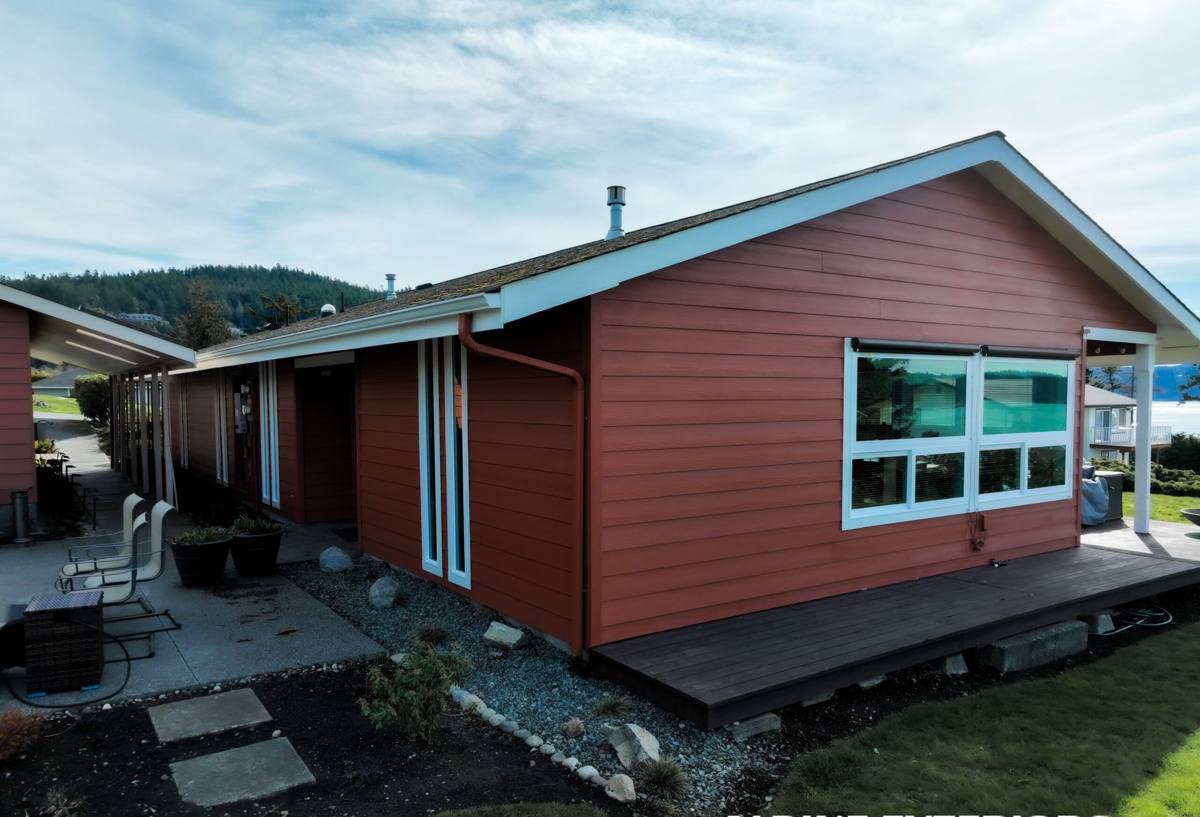
Why We Standardized on James Hardie for Homes Like Yours
James Hardie fiber cement is cement, sand, and cellulose fiber, engineered and factory-baked into planks and panels. It doesn't soften or warp in direct sun the way vinyl can, it's non-combustible, and it holds paint and factory finish far longer than wood-based products in humid, salt-laden air. Hardie also builds a version of its product specifically for this climate zone — the HZ5 formulation — engineered for high-moisture, high-humidity regions like ours, with better resistance to moisture-related damage than the standard HZ10 version used in drier, colder parts of the country.
We're not going to tell you every other siding product is worthless — that's not honest and it's not our call to make about a homeowner's budget. What we will say is that after years of installation work in this market, fiber cement done correctly is the product we're willing to warranty and put our name behind for Palm Harbor's specific conditions. Vinyl can crack and fade under sustained UV; wood-based products like LP SmartSide and cedar need more diligent moisture management and repainting; other fiber cement brands may not offer the same climate-specific engineering or factory finish backing as Hardie. That's the case for Hardie in plain terms — not hype, just what holds up here.
What "Installed to Spec" Actually Means
Fiber cement's reputation is only as good as the crew installing it. Hardie's own warranty can be voided by incorrect installation — wrong fasteners, missing clearances, bad flashing details — and a botched install will fail here faster than almost anywhere else in the country because of how much moisture and wind this coastline throws at a wall assembly. This is a product where correct installation matters as much as product selection.
What a Correct James Hardie Installation Involves Here
A proper Hardie install in Palm Harbor is a system, not just a material swap. The details below are where jobs succeed or fail over a 10-15 year horizon:
- Weather-resistive barrier: A continuous, properly lapped moisture barrier behind the siding, installed so wind-driven rain sheds outward instead of tracking behind the cladding.
- Flashing at every penetration: Windows, doors, hose bibs, vents, and any wall penetration need correctly lapped flashing — this is the single most common failure point we find on older or poorly installed siding jobs.
- Fastening schedule matched to wind exposure: Pinellas County's wind zone requirements call for specific fastener type, spacing, and embedment. This isn't optional, and it's not a place to cut corners to save labor time.
- Proper clearances: Hardie specifies minimum clearance from roof lines, decks, and grade to keep the bottom edge of the siding away from standing water and splash-back.
- Caulking and joint treatment per Hardie's published details: Not generic caulk applied wherever it looks needed, but joint treatment matching Hardie's installation manual for this climate zone.
- Factory-primed and factory-painted (ColorPlus) product where possible: Field-painted cut edges get sealed per spec so raw fiber cement edges aren't left exposed to moisture.
Skip any one of these and you haven't installed cheaper siding — you've installed a warranty claim waiting to happen, usually discovered only after water has already gotten behind the wall.
Choosing the Right Hardie Product Line for Your Home
Hardie makes several distinct siding profiles, and the right one depends on your home's architecture, HOA requirements (common in many Palm Harbor communities), and how much of the existing wall detail you want to preserve or change.
| Hardie Product | Look | Best Fit |
|---|---|---|
| HardiePlank Lap Siding | Traditional horizontal lap, multiple textures | Most single-family homes; the standard replacement choice |
| HardiePanel Vertical Siding | Vertical panel with battens optional | Modern or Florida coastal-style homes, accent walls, gable ends |
| HardieShingle Siding | Staggered or straight-edge shingle profile | Craftsman or cottage-style homes wanting shingle character without cedar's upkeep |
| HardieTrim Boards | Smooth or woodgrain trim stock | Fascia, corner boards, window and door trim to match the field siding |
Most Palm Harbor projects we quote use HardiePlank as the primary field material with HardieTrim boards for a finished, consistent look, but homes with unique architectural features sometimes mix in panel or shingle sections for accent areas.
ColorPlus Finish: Why It Matters More on This Coastline
Standard field-painted siding relies on a paint job holding up against sun and salt air indefinitely — and repainting siding every several years is a real, recurring cost that's easy to underestimate when comparing products up front. Hardie's ColorPlus technology is a factory-applied, baked-on finish that's engineered to resist fading and hold color consistency far longer than a typical field-applied paint job, backed by its own finish warranty separate from the substrate warranty. For a home exposed to this much direct UV and salt air, that finish durability is one of the more overlooked reasons to choose Hardie over a product that requires you to manage the paint job yourself.
Our Process, Start to Finish
- On-site assessment: We inspect existing siding, sheathing, and any moisture damage before quoting anything — you can't price a job honestly without knowing what's underneath the current siding.
- Written scope and product selection: We walk you through product line, color, and trim options, and put the fastening and flashing details in writing, not just the finish product.
- Tear-off and substrate inspection: Removing old siding exposes sheathing and framing — this is when hidden rot or moisture intrusion gets found and addressed, not covered over.
- Weather barrier and flashing installation: Done to Hardie's published details and current Florida Building Code requirements for this wind zone.
- Hardie siding installation: Fastened to the manufacturer's specified schedule for our wind exposure, with proper clearances at every transition.
- Trim, caulking, and final finish work: Joint treatment and any field touch-up handled per spec so cut edges are sealed.
- Final walkthrough: We review the completed work with you before calling the job done.
Why Hiring a Crew That Already Works Palm Harbor Matters
Siding installation is regulated by the Florida Building Code, and wind-zone-specific requirements around fastening and attachment aren't the same everywhere in the state — a crew that mostly works inland or in a different wind exposure zone may not have the muscle memory for what Pinellas County's coastal conditions demand. A crew that already works this immediate area also knows the practical details: the HOA architectural review patterns common in many Palm Harbor communities, permitting expectations with the county, and how quickly an exposed wall can take on water damage during an afternoon storm if a job isn't sequenced correctly.
That local familiarity isn't a marketing line — it affects real decisions on the job, like how much wall to open up at once during tear-off so an unexpected storm doesn't catch bare sheathing exposed overnight.
What Affects the Cost of a Palm Harbor Siding Project
| Factor | Why It Matters |
|---|---|
| Home size and wall complexity | More corners, gables, and penetrations mean more flashing detail and labor time |
| Substrate condition | Rotted sheathing found during tear-off adds repair scope before new siding goes on |
| Product line and profile | Lap, panel, and shingle profiles carry different material and labor costs |
| Trim scope | Full trim replacement vs. reusing sound existing trim changes the total significantly |
| Color and finish | Factory ColorPlus finish vs. field-painted product affects both cost and long-term upkeep |
| Access and site conditions | Tight lot lines, existing landscaping, or multi-story sections can add labor time |
We won't quote a firm number without seeing the house, but we'll give you a clear, itemized estimate that separates material, labor, and any substrate repair so you know exactly what you're paying for.
Signs Your Current Siding Is Already Past Its Point of Rescue
- Visible warping, buckling, or soft spots when pressed by hand
- Paint that's chalking, peeling, or fading unevenly across a wall
- Soft or spongy trim boards, especially near rooflines and windows
- Gaps opening up at seams, corners, or where siding meets trim
- Visible staining or streaking that suggests water tracking behind the cladding
- Increasing interior humidity or musty odor along exterior walls
Any one of these on its own might just need a repair. Several together, especially on a home that's had the same siding for a decade or more in this climate, usually means it's time to talk about full replacement before hidden damage spreads.
If your Palm Harbor home is due for new siding, we're happy to take a look and give you a straightforward, no-pressure estimate — including an honest answer if repair still makes more sense than replacement. Use the form below to get started.