 Clearwater Roofing
 Largo sits inland enough from the Gulf to avoid direct surf, but close enough that salt-laden air, heavy afternoon humidity, and the same hurricane-season wind loads that hit the rest of Pinellas County all reach every home in the area. Siding here doesn't get an easy life. It absorbs UV for most of the year, takes wind-driven rain sideways during summer storms, and sits in humidity levels that punish anything prone to swelling, rotting, or holding moisture against a wall. For homeowners in Largo replacing old siding or building new, the material choice and the installation quality matter more than they would somewhere with a milder climate.
We install James Hardie fiber cement siding exclusively. This page covers what that means specifically for a Largo home: what the climate demands, what a correct installation actually involves, and what to look for in a contractor before you sign a contract.
What Largo's Climate Actually Does to Siding
Pinellas County doesn't have extreme winters, but it makes up for that with a longer list of everyday stressors that add up over years, not months.
Heat and UV Exposure
Florida sun is intense nearly year-round. Siding that isn't engineered for UV resistance fades, chalks, or becomes brittle well before a homeowner expects to replace it. Paint film on wood-based products breaks down faster here than in cooler climates, which means more frequent repainting cycles just to keep the exterior looking maintained.
Humidity and Moisture
Largo's humidity stays high for most of the year. Any siding material that can absorb or wick moisture is working against the local climate from day one. Materials with wood content are especially vulnerable — sustained moisture exposure is what leads to swelling, delamination, or rot in products that aren't built to resist it.
Wind-Driven Rain and Storm Exposure
During hurricane season, rain in this area rarely falls straight down. Wind pushes it sideways and up under laps, trim, and penetrations. Siding systems that aren't installed with correct clearances, flashing, and fastening patterns are the ones that let water behind the cladding — and once water gets behind siding, the damage often shows up in the sheathing and framing long before it's visible on the surface.
Salt Air
Largo isn't beachfront, but it's close enough to the Gulf and Tampa Bay that airborne salt is a real factor, especially with onshore winds. Salt exposure accelerates corrosion on fasteners, trim, and any hardware that isn't rated for coastal-adjacent conditions.
Why We Only Install James Hardie in This Market
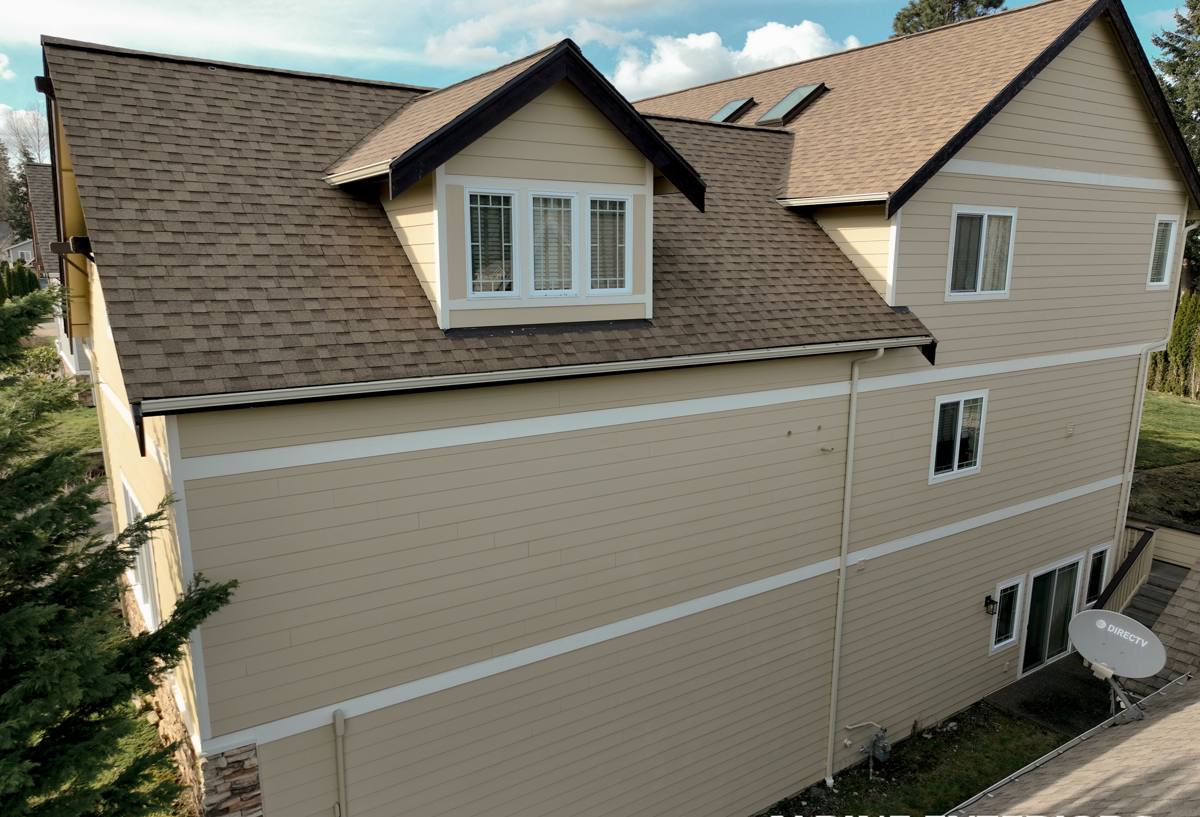
Fiber cement siding is cement, sand, and cellulose fiber formed under pressure and cured. It doesn't have the moisture vulnerability of wood-based products, it's non-combustible, and it holds paint and factory finish far longer than wood siding does in this climate. James Hardie is the manufacturer we've standardized on, for a few specific reasons that matter in a Pinellas County climate:
- HZ5 climate-engineered product line — Hardie manufactures siding formulated for specific climate zones, and their HZ5 line is built for hot, humid, high-moisture regions like ours.
- ColorPlus factory finish — a baked-on finish applied under controlled conditions, which holds color and resists fading far better than field-applied paint exposed to Florida sun.
- Non-combustible core — fiber cement doesn't feed a fire the way wood-based siding can, which matters for both safety and, in many cases, insurance considerations.
- Long track record in coastal and Gulf climates — Hardie's product line has been used and refined for decades in exactly the kind of heat, humidity, and storm exposure Largo sees.
- Transferable warranty backed by a manufacturer with a substantial market presence — a warranty is only as good as the company standing behind it, and Hardie's is well-established.
We don't install vinyl, LP SmartSide, Cemplank, Allura, or primed wood siding. That's a deliberate standard, not a lack of options. Each of those products has legitimate uses in the right context, but we've made the call that for the way we build and warranty our work, Hardie fiber cement is the material we're willing to put our name behind in this climate.
What a Correct Fiber Cement Installation Involves
Fiber cement siding is only as good as its installation. A product rated for hurricane-prone, humid climates can still fail early if it's hung wrong. Correct installation in Largo means paying attention to details that aren't always visible once the job is finished.
Clearance and Drainage
Hardie's installation specifications call for specific clearances from grade, roof lines, decks, and other flat surfaces, along with a drainage plane behind the siding. Skipping this is one of the most common ways fiber cement installs go wrong — it traps moisture against the wall assembly instead of letting it escape.
Fastening Pattern and Fastener Selection
Wind uplift and lateral wind loads during storms put real stress on fastener holds. Correct nail or screw spacing, fastener type, and embedment depth all affect how well the siding stays put in a wind event. In a salt-air-adjacent area, fastener material matters too — the wrong hardware corrodes faster and weakens the hold over time.
Flashing and Penetrations
Every window, door, vent, and utility penetration is a place water can get behind the siding if it isn't flashed correctly. This is detail work that doesn't show up in a quick visual inspection after the job, but it's often the difference between siding that performs for decades and siding that hides a moisture problem behind it.
Joint and Seam Treatment
Butt joints, corners, and trim transitions need to be treated according to spec — caulked, flashed, or fastened correctly depending on the detail. Done wrong, these are the first places moisture intrusion shows up.
Painting and Finish Care
Even with ColorPlus factory finish, cut edges and field touch-ups need proper sealing. Leaving raw cut edges exposed defeats part of the moisture resistance the product is designed to provide.
Our Process for a Largo Siding Project
| Step | What Happens |
|---|---|
| Inspection & Estimate | We assess existing siding, sheathing condition, and any moisture or storm damage, and provide a written estimate. |
| Product Selection | We walk through Hardie's plank, shingle, and panel options along with HZ5 profile and ColorPlus color choices suited to the home. |
| Prep & Removal | Old siding is removed and the sheathing is inspected for hidden moisture damage before anything new goes up. |
| Weather Barrier Installation | A drainage plane and weather-resistant barrier are installed per manufacturer specification. |
| Siding Installation | Hardie siding is installed to spec — correct clearances, fastening pattern, flashing, and joint treatment. |
| Trim, Caulk & Final Finish | Trim work, caulking at penetrations and joints, and a final walkthrough with the homeowner. |
Cost Factors for a Largo Fiber Cement Project
Every home is different, so we don't quote pricing without seeing the job, but the main factors that affect cost on a Largo siding project are generally consistent:
| Factor | Why It Affects Cost |
|---|---|
| Home size and wall complexity | More square footage, more corners, gables, and dormers all add labor time. |
| Existing siding removal | Tear-off of old material adds labor and disposal costs versus new construction. |
| Sheathing condition | Hidden rot or moisture damage found during removal may need repair before new siding goes up. |
| Product line and profile | Lap width, shingle-style siding, and panel systems carry different material costs. |
| Trim and detail work | Homes with more windows, doors, and architectural detail require more precision work at penetrations. |
Why Local Experience in Largo Matters
A crew that regularly works in Largo and the surrounding Clearwater and Pinellas County area already understands the wind load requirements, the humidity behavior of building materials in this climate, and the kind of moisture issues that tend to show up in homes here. That's not something a crew unfamiliar with Gulf Coast conditions picks up on the first job. It shows in the small decisions — how clearances are handled, how flashing is detailed, how fastener corrosion resistance is chosen — the parts of a siding job that determine whether it holds up through the next decade of Florida summers and storm seasons.
Signs Your Largo Home May Need New Siding
- Visible warping, buckling, or soft spots when pressed
- Paint that's peeling, bubbling, or failing faster than it should
- Cracks or gaps at seams, corners, or trim
- Discoloration or staining that suggests moisture behind the siding
- Rising energy bills that may point to a failing building envelope
- Visible mold, mildew, or a persistent musty smell near exterior walls
- Siding that's original to a home built more than 20-25 years ago
If your Largo home is showing any of these signs, or you're planning ahead for a replacement before storm season, we're happy to take a look and give you a straightforward assessment. Reach out for a free, no-pressure estimate using the form below.