 Clearwater Roofing
 Asphalt Shingle Roofing Built for Oldsmar's Weather
Oldsmar sits along the northern edge of Pinellas County, close enough to Tampa Bay and Old Tampa Bay's open water that homes here take on a specific mix of exposures: salt-tinged humidity drifting in off the water, direct year-round UV that doesn't let up in winter the way it does farther north, and the same hurricane-season wind risk that the rest of the Tampa Bay area plans around every June through November. Asphalt shingle roofs remain the most common choice in this pocket of the county because, installed correctly, they hold up well against all three of those stressors without the cost of tile or metal. The catch is "installed correctly" — a shingle roof that's cut corners on underlayment, fastening pattern, or ventilation will show its age in Oldsmar years before it should.
We're a Clearwater-based roofing crew that works Oldsmar regularly as part of our normal Pinellas County service area. That matters more than it sounds like it should: a crew that's already up on Oldsmar roofs knows which streets sit in flood-prone low spots, which subdivisions have HOA color and material restrictions, and how the local permitting office at the City of Oldsmar (or Pinellas County, depending on the parcel) actually wants a re-roof packaged. None of that is exotic knowledge, but it's the difference between a job that moves smoothly and one that stalls on paperwork.
Why Local Climate Conditions Drive the Spec
Every material and installation decision on an Oldsmar roof should trace back to one of four regional realities:
- Hurricane-force wind exposure: Pinellas County requires wind-rated shingle assemblies and enhanced nailing patterns for a reason — sustained tropical-storm and hurricane winds are a "when," not an "if," for any roof with a long service life here.
- Intense, near-constant UV: Florida's sun angle and clear-sky days mean shingle mat and granules degrade faster here than in most of the country. UV is the single biggest driver of shingle aging in this climate, more than age in years alone.
- Wind-driven rain: Storms in this area rarely drop rain straight down. Wind pushes it sideways and up under shingle edges, ridge caps, and anything with an exposed seam, which is why underlayment and flashing detail work carries more weight here than in drier climates.
- Salt air: Proximity to Tampa Bay means metal components — nails, flashing, vents, drip edge — corrode faster than they would inland. Material grade on the metal parts of a shingle roof is not a place to economize near the water.
A shingle roof spec'd for, say, inland Georgia and installed as-is in Oldsmar will underperform. The materials, fastening, and flashing choices below are specifically what this climate calls for.
What a Correct Shingle Roof Includes Here
Shingle Product and Wind Rating
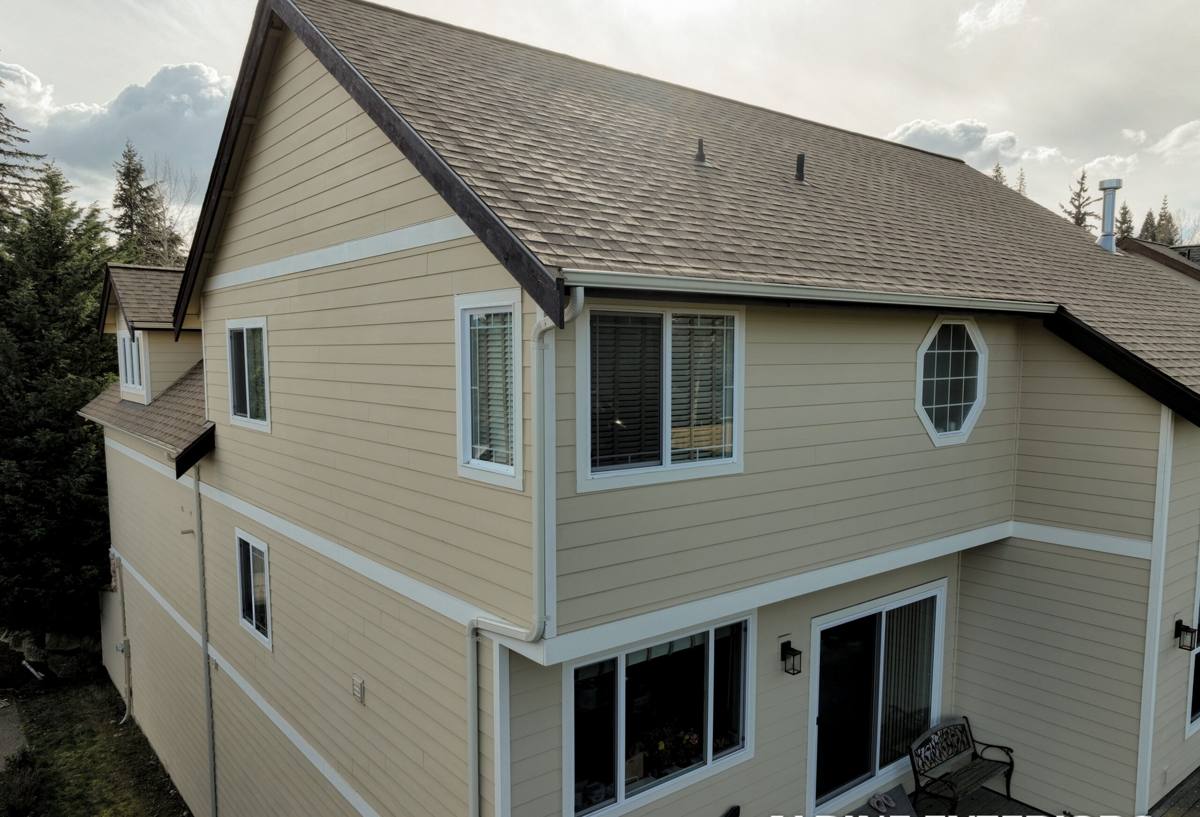
Architectural (laminated) shingles are the standard recommendation for Oldsmar homes over older 3-tab styles. They're heavier, carry higher wind ratings, and their layered profile sheds wind-driven rain better. Look for a shingle rated for the wind speeds Pinellas County's building code requires in this zone — your contractor should be able to state the rating plainly, not just say "hurricane rated" without a number attached.
Underlayment
Synthetic underlayment has largely replaced felt on quality installs because it holds up better to the humidity and heat cycling typical of a Tampa Bay attic before the shingles even go down. In valleys, around penetrations, and along eaves, self-adhered ("peel and stick") underlayment adds a second line of defense against wind-driven rain finding its way under the shingle field.
Fastening Pattern
Six nails per shingle, placed in the manufacturer's specified nail zone, is the baseline for wind-rated installs in this part of Florida — not the four-nail pattern that's still legal in calmer climates. This is one of the most common shortcuts we see on re-roofs that weren't done by a crew used to local code, and it's invisible until a storm tests it.
Flashing and Edge Metal
Drip edge, valley metal, pipe boots, and step flashing around chimneys or wall intersections should be corrosion-resistant metal, properly lapped, and sealed at every penetration. Given the salt air off the bay, we typically recommend upgrading beyond the bare-minimum galvanized hardware, especially on homes within a few miles of open water.
Ventilation
Ridge and soffit ventilation keeps attic temperatures down and moisture moving, which protects the shingles from the underside as much as good underlayment protects them from above. Under-ventilated attics in this climate cook shingles from beneath and shorten their service life regardless of the surface material's quality.
Our Process for an Oldsmar Re-Roof
- On-site inspection and estimate. We look at the existing roof deck, flashing condition, ventilation, and any signs of past leaks before quoting anything — not a drive-by number.
- Material selection. We walk through shingle options, wind ratings, and color choices, flagging anything an Oldsmar HOA is likely to weigh in on.
- Permitting. We pull the required roofing permit before work starts, matched to whichever jurisdiction the property falls under.
- Tear-off and deck inspection. Old shingles come off down to the deck so we can check for soft spots, rot, or prior damage that needs to be addressed before new material goes on — this step is where hidden problems get caught, not covered up.
- Underlayment and flashing. Synthetic underlayment, peel-and-stick in vulnerable areas, and new flashing and edge metal throughout.
- Shingle installation. Installed to the wind-rated nailing pattern the product and code require, not a faster shortcut pattern.
- Final walkthrough and cleanup. We review the finished roof with the homeowner and clear the site of debris and stray fasteners before we consider the job done.
What to Check Before You Sign a Roofing Contract
- Is the contractor licensed to work in Florida, and can they provide proof of insurance?
- Does the written estimate specify shingle brand, wind rating, and underlayment type — or just "shingles"?
- Does it state the nailing pattern (six-nail is the standard to ask for)?
- Is a permit included, and will they handle the inspection process?
- Does the quote separate tear-off, deck repair (if needed), and installation as line items?
- What's covered under workmanship warranty, and for how long, separate from the manufacturer's material warranty?
Any contractor unwilling to answer these plainly, in writing, is a reason to keep looking.
Cost Factors on an Oldsmar Shingle Roof
Exact pricing depends on roof size, pitch, layers to remove, and deck condition, but the factors below are what actually move a quote up or down — useful to know before you compare bids.
| Factor | Why It Affects Cost |
|---|---|
| Roof size and complexity | More valleys, hips, and penetrations mean more flashing labor and material waste |
| Number of existing layers | Tear-off of multiple old layers takes longer and adds disposal cost |
| Deck condition | Rotted or soft decking found during tear-off requires replacement before shingles go down |
| Shingle tier and wind rating | Higher wind-rated, heavier architectural shingles cost more per square than basic 3-tab |
| Ventilation upgrades | Adding or improving ridge/soffit ventilation is additional labor and material |
| Access and pitch | Steep or hard-to-access roofs take longer and require more safety setup |
Get a written, itemized estimate from anyone bidding the job so you're comparing the same scope of work, not just a bottom-line number.
Maintenance That Extends the Roof's Life
A well-installed shingle roof in this climate still benefits from periodic attention. We recommend a visual check after any major storm, keeping gutters and valleys clear of debris so water isn't pooling against shingle edges, and a professional look-over every couple of years to catch granule loss, lifted shingles, or flashing sealant that's started to fail before it becomes a leak. Most shingle roof failures we see in Pinellas County trace back to small, unaddressed issues — a lifted shingle after a windstorm, a cracked pipe boot — that had months or years to worsen before anyone caught them.
Why a Local Crew Matters for This Job
Roofing code, permitting requirements, and even material recommendations shift somewhat from one Florida county to the next, and sometimes from one municipality to the next inside the same county. A crew based in Clearwater that already services Oldsmar on a regular basis isn't learning the local wind zone requirements or permitting process on your job — that knowledge is already built into how we quote and install. We're also positioned to respond quickly if a storm damages the roof later, rather than being a company that has to travel a long distance or juggle an unfamiliar jurisdiction's paperwork after the fact.
Get a Free, No-Pressure Estimate
If your Oldsmar home needs a new roof, a repair, or simply a professional opinion on how much life is left in the current one, we're glad to take a look. Fill out the form below and we'll set up a time to inspect the roof and put together a straightforward, written estimate — no pressure, no obligation.