 Clearwater Roofing
 Oldsmar's Climate Puts Real Demands on Exterior Siding
Oldsmar sits in Pinellas County along the northern edge of Tampa Bay, which means homes here deal with a specific combination of stresses that inland Florida properties don't face to the same degree. Salt-laden air moves in off the water and settles on exterior surfaces year-round, accelerating corrosion on fasteners, trim, and any siding material that isn't built to resist it. Add in intense, near-constant UV exposure, wind-driven rain during summer storms, and the real possibility of hurricane-force gusts during the June-to-November season, and you have a climate that will find every weak point in a siding system within a few years if the material or the installation cuts corners.
This isn't a generic "Florida is hot and rainy" problem. It's a combination of factors — coastal humidity, salt exposure, UV load, and wind — that specifically punishes siding that can absorb moisture, that isn't fastened to withstand uplift, or that relies on paint alone to survive the sun. A siding installation done right in Oldsmar has to account for all of it at once, not just check a box on wind rating.
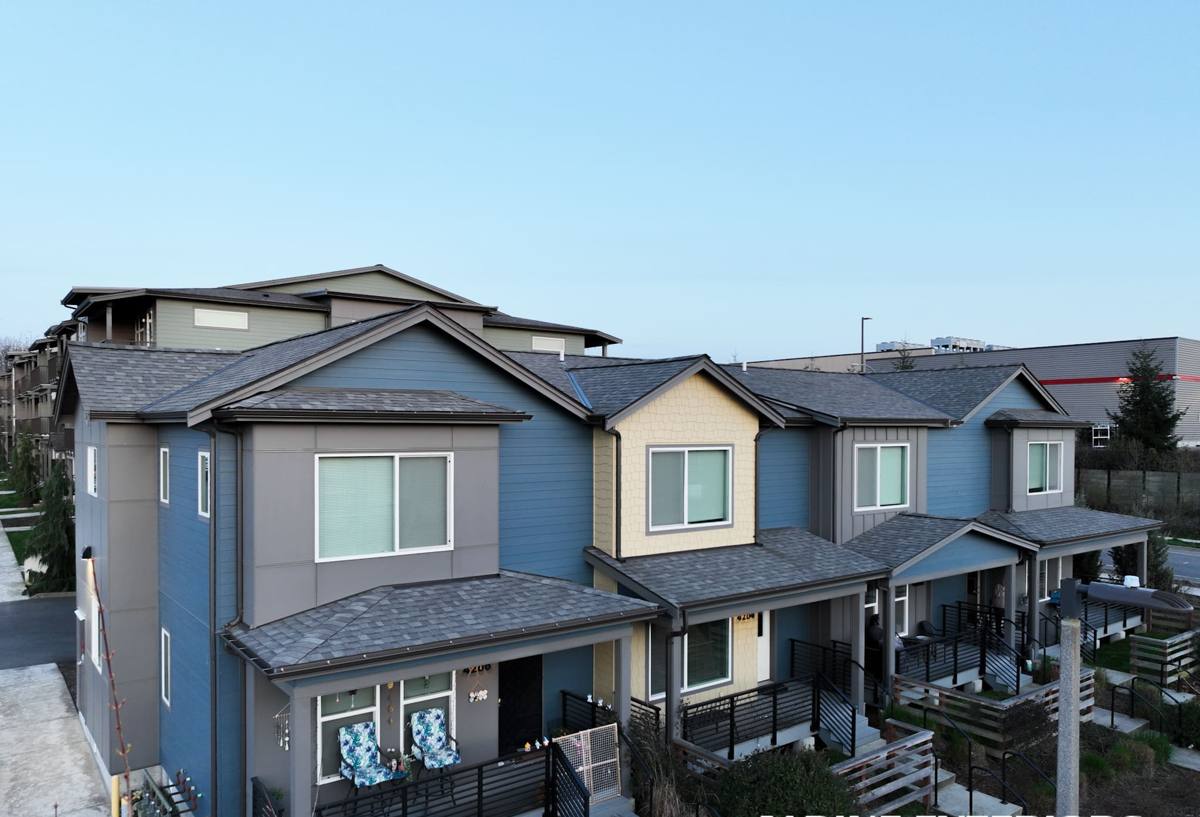
What a Correct Siding Installation Actually Involves
Siding is a system, not just a surface. The board or panel you see is the last layer of several that have to work together to keep water out and hold up under wind load. Skipping or rushing any one of these layers is how homeowners end up with rot, mold, or blown-off siding after a storm that the material itself was rated to handle.
Water-Resistive Barrier and Flashing
Behind every properly installed siding job is a continuous water-resistive barrier — typically a weather-resistant house wrap — installed with the correct overlaps and sealed at every penetration: windows, doors, vents, and utility penetrations. Flashing has to be integrated at every horizontal joint and opening so that any water that gets behind the siding (and some always will, in wind-driven rain) has a path to drain back out instead of sitting against the sheathing. This step is invisible once the job is done, which is exactly why it's the step most often shortchanged by crews trying to move fast.
Fastening for Wind Resistance
Fastener type, spacing, and placement determine whether siding stays on the wall during a tropical storm or peels off in the first serious gust. Correct installation means following the manufacturer's fastening schedule for the local wind zone, using corrosion-resistant fasteners appropriate for coastal exposure, and never relying on adhesive or a handful of extra nails to compensate for undersized fastening elsewhere. This is one of the most common places we see prior installations fail — not because the siding material was wrong, but because it wasn't attached the way it was engineered to be attached.
Why We Install Only James Hardie Fiber Cement
We made a deliberate decision to install one siding product across every job we do, including here in Oldsmar: James Hardie fiber cement. We don't install vinyl, LP SmartSide, primed wood, or other fiber cement brands. That's not a marketing position — it's a professional judgment about which product actually holds up to the specific conditions this part of Florida throws at a house year after year.
Engineered for This Climate Zone
James Hardie manufactures HZ5 product lines specifically engineered for high-humidity, hurricane-prone climates like ours. Fiber cement is non-combustible, doesn't expand and contract with moisture the way wood-based products can, and doesn't provide the food source that pests and mold look for in organic siding materials. In a market where wind-driven rain and salt air are a fact of life, that combination matters more than it does in a drier, milder climate.
ColorPlus Factory Finish
Rather than relying on a job-site paint job to survive Florida's UV exposure, Hardie's ColorPlus finish is baked on in a controlled factory environment, which gives it better fade and chip resistance than field-applied paint and reduces how often the exterior needs to be repainted. That matters directly for cost — repainting a full exterior every several years adds up, and it's one of the maintenance burdens homeowners are often not warned about before installing a lower-cost material.
None of this means other siding materials are junk — vinyl, wood, and LP SmartSide all have legitimate uses and reasonable installations exist for all of them. Our position is narrower: given what we've seen fail and hold up in coastal Pinellas County conditions specifically, fiber cement is the material we're willing to put our name behind.
Comparing Siding Materials for an Oldsmar Home
| Factor | Vinyl | Wood / LP SmartSide | James Hardie Fiber Cement |
|---|---|---|---|
| Wind resistance | Can crack or blow off in high gusts if under-fastened | Adequate when installed correctly, but fasteners can back out over time | Rated for high-wind zones when installed to spec |
| Moisture behavior | Doesn't absorb water, but can trap it behind the panel | Wood-based; vulnerable to swelling, rot if moisture gets in | Doesn't rot or swell; engineered for humid climates |
| UV / fade resistance | Can fade and become brittle over years of Florida sun | Paint finish fades and needs recoating | Factory ColorPlus finish resists fading longer than field paint |
| Salt air exposure | Generally tolerant, but fasteners and trim can corrode | More vulnerable without diligent maintenance | Holds up well with correct corrosion-resistant fastening |
| Maintenance burden | Low, but limited repair options if damaged | Higher — periodic painting and moisture checks needed | Low; occasional caulk and paint touch-up over a long service life |
Our Siding Installation Process
Every siding job we run in Oldsmar follows the same sequence, whether it's a full re-side or replacing damaged sections:
- On-site assessment. We inspect the existing siding, sheathing, and any moisture or rot issues before quoting the job, so there are no surprises once walls are opened up.
- Tear-off and sheathing check. Old siding comes off and the sheathing underneath is inspected and repaired as needed — this is where hidden water damage from a prior installation often shows up.
- Water-resistive barrier installation. A continuous weather barrier goes on with correct overlaps and sealed penetrations before any siding is hung.
- Flashing at every opening. Windows, doors, and penetrations get properly integrated flashing, not just caulk over a gap.
- Hardie installation to manufacturer spec. Fastening schedule, clearances from grade and roofline, and joint treatment all follow James Hardie's published installation requirements for our wind zone.
- Final inspection and cleanup. We walk the job before calling it done, checking caulking, trim, and fastener lines.
Signs Your Oldsmar Home May Need New Siding
Some warning signs are obvious; others take a closer look. Watch for:
- Visible cracking, warping, or buckling in panels or boards
- Soft spots when you press on siding near the bottom of walls or below windows
- Paint that's peeling or bubbling repeatedly in the same spots, even after repainting
- Gaps or separation at seams, corners, or around window and door trim
- A musty smell or visible mold/mildew on interior walls that share an exterior wall
- Rising energy bills that can't be explained by HVAC issues alone
- Siding that's more than 20-25 years old, regardless of visible damage
Why Hiring a Crew That Already Works in Oldsmar Matters
Siding installation isn't just a manufacturer's spec sheet applied identically everywhere — the correct fastening schedule, flashing details, and clearances depend on local wind zone requirements and how a specific house sits relative to the water and prevailing weather. A crew that regularly works Pinellas County jobs already knows what inspectors here expect, what permitting looks like locally, and which details tend to get missed on homes exposed to Old Tampa Bay's salt air and storm patterns. That local repetition is what turns a correct installation from a one-off effort into a consistent standard.
It also means faster response when something needs a second look after the job is done — storm damage, a warranty question, or simply a homeowner wanting a professional opinion on their exterior a few years down the line.
Maintenance, Warranty, and What to Expect After Installation
James Hardie fiber cement is low-maintenance compared to wood-based siding, but "low-maintenance" isn't "zero-maintenance." Expect to rinse the exterior periodically to keep salt residue from building up, inspect caulking at joints and trim every year or two, and touch up paint on cut edges or any areas exposed during minor repairs. James Hardie backs its products with a strong transferable warranty, and correct installation is part of what keeps that warranty intact — which is another reason installation quality matters as much as the material choice itself.
If your Oldsmar home's siding is showing its age, or you're planning ahead of the next storm season, we're happy to take a look and walk you through what your home actually needs — no pressure, no upsell to a product we don't stand behind. Reach out for a free estimate using the form below.