 Clearwater Roofing
 Siding Repair Built for Seminole's Coastal Climate
Seminole sits close enough to the Gulf that homes here take on a specific combination of punishment: salt-laden air drifting in off the water, intense year-round UV that doesn't let up even in the cooler months, sudden wind-driven rain squalls, and the outright hurricane-force gusts that come through Pinellas County during storm season. Siding in this neighborhood isn't just a cosmetic layer — it's the first line of defense between that weather and the wood framing, insulation, and interior of the house. When siding starts failing, it rarely announces itself with a dramatic collapse. It shows up as a soft spot near a window, a section that's pulled away from the wall, or paint that keeps blistering no matter how many times it's redone.
We repair siding on Seminole homes regularly, and the patterns are consistent enough that we can usually tell a homeowner what's going on before we even get a ladder out. That familiarity matters — a repair that looks fine on the surface but ignores what's happening underneath just buys a few more months before the same problem reappears, often worse.
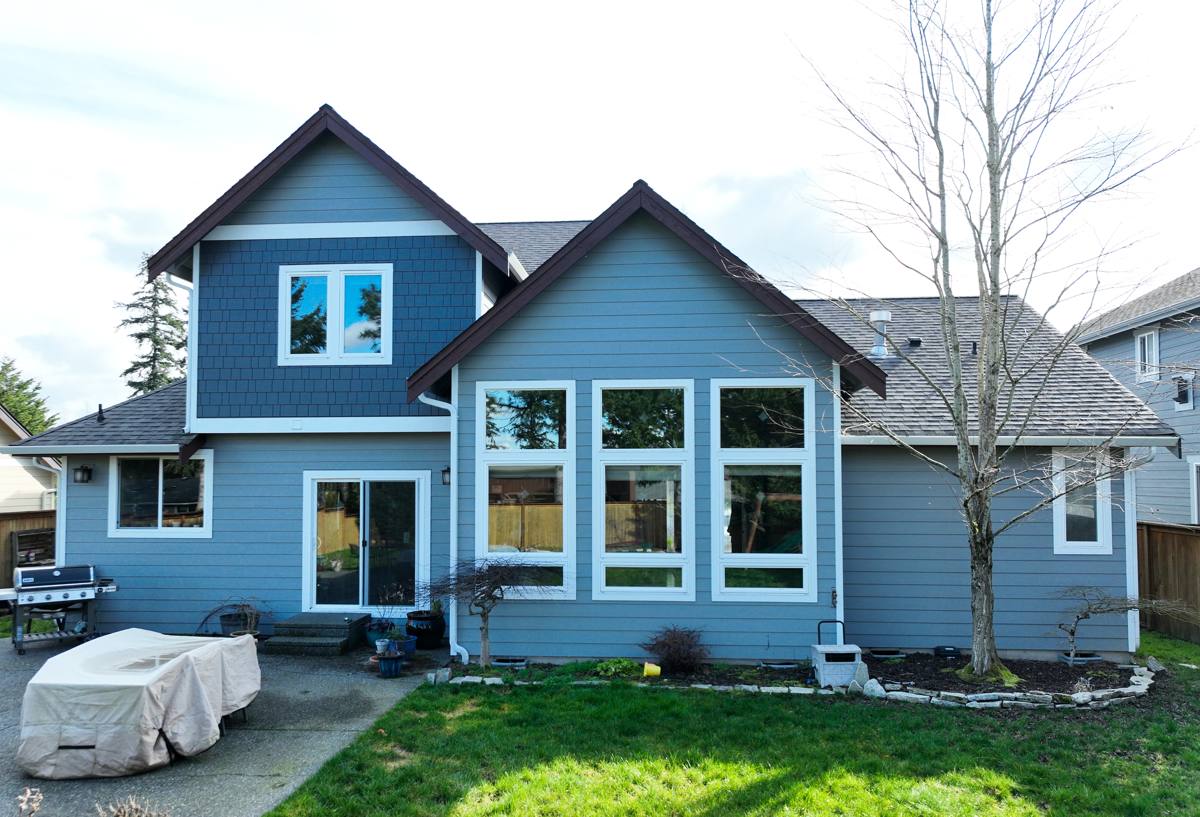
What Seminole's Weather Actually Does to Siding
Salt Air and Corrosion
Even a few miles from the immediate coastline, airborne salt settles on exterior surfaces and accelerates the breakdown of fasteners, trim flashing, and any siding material that isn't built to resist it. Over years, this shows up as rust streaking below nail heads, corroded J-channel, and fasteners that have lost their grip in the substrate.
UV Exposure
Florida sun is relentless, and siding facing west or south in Seminole takes the brunt of it. UV breaks down paint film, dries out caulking, and — on materials that aren't engineered for it — causes warping, cracking, or fading that's uneven across the wall. A siding repair that ignores UV exposure on the replacement panels will just fail again on the same schedule as the original.
Wind-Driven Rain
Rain that comes in sideways during a squall doesn't behave like rain falling straight down. It gets forced up under laps, around trim, and into any gap in the siding's water management system. This is why so many "siding" problems are actually water intrusion problems — the siding is the visible symptom, but the real issue is a breach in the drainage plane behind it.
Hurricane-Force Wind Loads
Pinellas County sees direct hits and near-misses from tropical systems most years. Wind uplift on siding — especially at corners, eaves, and any section with marginal fastening — is a real structural concern, not just an aesthetic one. Siding that's been compromised by a storm needs to be evaluated for what's underneath it, not just patched on the surface.
Common Siding Repair Calls We See in Seminole
- Panels cracked or split after wind-blown debris impact
- Soft, spongy siding near window and door trim — usually a sign of water intrusion behind the panel
- Buckled or warped sections on sun-exposed walls
- Corroded or backed-out fasteners letting panels shift or rattle in wind
- Caulk failure at seams and trim joints, allowing moisture behind the siding
- Staining or streaking at panel laps that signals water is tracking somewhere it shouldn't
- Sections pulled loose or missing entirely after a storm
Any one of these can look like a small cosmetic issue from the ground. The difference between a repair that lasts and one that doesn't is whether the crew checks what's happening behind the siding before closing it back up.
What a Correct Siding Repair Actually Involves
A siding repair done right isn't just "replace the damaged piece and move on." It's a short diagnostic process followed by a repair that respects how the whole wall system is supposed to shed water.
1. Diagnose Before Touching Anything
We pull back the damaged section far enough to see the underlying water-resistive barrier, flashing, and sheathing. If there's staining, soft wood, or mold on the sheathing, that has to be addressed — patching new siding over a wet or damaged substrate just hides the problem for a while.
2. Match the Water Management, Not Just the Panel
Siding sheds water through overlapping courses, properly lapped house wrap, and flashing at every penetration — windows, doors, hose bibs, light fixtures. A repair that gets the panel color right but skips the flashing detail underneath will leak again, usually in the same spot.
3. Use Compatible, Climate-Rated Material
Whatever goes back on the wall needs to handle the same UV, humidity, and wind exposure as the surrounding siding. Mismatched materials age at different rates, which shows up as uneven fading and inconsistent performance over time — one section holding up fine while the patch next to it deteriorates early.
4. Fasten for Wind, Not Just for Looks
Fastener type, spacing, and placement all affect how a panel performs in wind uplift. This is not a place to cut corners on a repair — it's exactly the detail that determines whether the fix survives the next storm season.
Repair or Replace? An Honest Read
Not every siding problem needs a full replacement, and we'll tell you plainly when a repair is the right call. But there's a point where patching stops making financial sense.
| Situation | Repair Usually Makes Sense | Replacement Should Be Considered |
|---|---|---|
| Damage extent | Isolated to one or two panels/areas | Scattered across multiple walls or elevations |
| Underlying substrate | Dry, sound sheathing found behind damage | Rot, mold, or repeated moisture found in more than one spot |
| Siding age | Well within expected service life | Nearing or past the age where the material is known to decline |
| Material type | Durable, climate-appropriate siding with a good track record | Original material has a history of moisture or warping issues in coastal exposure |
| Storm history | Single, identifiable event caused the damage | Cumulative wear from repeated storm seasons |
If we're standing at your house and the honest answer is "this is a $400 repair," that's what we'll say. If the underlying material is compromised in multiple places, we'll explain why patching it will likely mean another service call within a year or two — and let you decide from there.
Why We Only Install James Hardie Fiber Cement
When a repair turns into a "this section needs to be replaced" conversation, or when a homeowner decides it's time to re-side rather than keep patching, our answer is James Hardie fiber cement — and only James Hardie. We don't install vinyl, LP SmartSide, Cemplank, Allura, or primed wood siding, and we think Seminole homeowners deserve the real reasons why, not a sales pitch.
Vinyl is inexpensive and easy to install, and in some climates that's a reasonable trade-off. In Pinellas County's heat and direct sun, vinyl is prone to warping and can become brittle over time, and it offers essentially no fire resistance. Engineered wood products like LP SmartSide perform well in many parts of the country, but wood-based siding is inherently more vulnerable to moisture intrusion — a real concern given how much wind-driven rain this area sees. Other fiber cement brands make a similar product to Hardie's, but we've standardized on Hardie specifically for its ColorPlus factory-baked finish (which resists the fading that constant Florida UV causes on field-painted siding), its HZ5 product engineering built for humid, storm-prone climates, and a transferable warranty that holds up when the house changes hands.
Fiber cement is also non-combustible, which matters in a state where lightning-sparked and wind-related fire risks are a real, if often overlooked, consideration. None of this means other products are unusable — plenty of homes wear them without issue. It means that after years of repair calls, we've settled on the material that holds up best against the specific combination of salt, sun, wind, and rain that Seminole homes face, and we'd rather install one system well than offer several we don't fully stand behind.
Our Repair Process
- Inspection and diagnosis — we assess visible damage and check behind it for moisture or substrate issues
- Honest scope discussion — repair, partial replacement, or full re-side, explained in plain terms with the reasoning behind the recommendation
- Water management check — flashing, house wrap, and drainage details are corrected wherever the repair opens them up, not just left as-is
- Material match — repairs use compatible, climate-appropriate material so the fix ages consistently with the rest of the wall
- Proper fastening — installed to withstand coastal wind loads, not just to look finished
- Final walkthrough — we point out exactly what was done and why, so you know what you're looking at
Why Hiring a Crew That Works Seminole Regularly Matters
Siding repair isn't one-size-fits-all across Florida, let alone across the country. A crew that mostly works inland, dry climates may not think twice about skipping a flashing detail that's non-negotiable a few miles from the Gulf. Working in Seminole and the surrounding Clearwater area consistently means we already know which walls take the worst UV exposure, which storm patterns cause the most wind-driven rain intrusion, and which original siding installations in this area tend to develop problems first. That local pattern recognition shortens the diagnostic process and reduces the chance of a repair that looks right but misses the actual cause.
It also means accountability. A contractor who's planning to keep working in this community has every incentive to get the repair right the first time, because a callback is a phone call away, not a drive across the state.
Signs It's Time to Call
- Siding feels soft or gives slightly when pressed
- Visible cracks, splits, or missing sections, especially after a storm
- Persistent staining, streaking, or discoloration at seams
- Paint that keeps peeling or blistering in the same spots
- Panels that rattle, shift, or have visibly loosened
- Musty smell or signs of moisture on interior walls near exterior siding
Catching any of these early is almost always cheaper and less invasive than waiting until the damage spreads to the sheathing or framing behind it.
If you're seeing any of these signs on your Seminole home, we're glad to take a look and give you a straightforward assessment — no pressure, no upsell, just an honest read on what your siding needs. Request a free estimate using the form below.