 Clearwater Roofing
 Siding That Has to Work in Seminole's Climate, Not Just Look Good
Seminole sits close enough to the Gulf that salt air is a daily fact of life, and far enough inland that afternoon heat builds without much relief. Add Pinellas County's humidity, the wind-driven rain that comes with every summer storm cycle, and the real risk of hurricane-force gusts, and you have a set of conditions that will find every weakness in a siding job within a few years. Siding here isn't just an exterior finish — it's a weather barrier that gets tested constantly.
Homes in this part of Florida see UV exposure that's intense nearly year-round, not just in a short summer window like it is farther north. That constant sun bombardment breaks down coatings, fades color, and dries out anything with organic material in it faster than most manufacturers' warranty language assumes. Combine that with humidity that keeps moisture in contact with exterior walls for long stretches, and salt-laden air that accelerates corrosion on fasteners and hardware, and it becomes clear why siding decisions made for a home in Ohio or Colorado don't translate well to a home in Seminole.
This page is specifically about siding installation for Seminole homes — what the climate demands, what a correct installation actually looks like, and why we install only one product system because of what we've seen work and not work here.
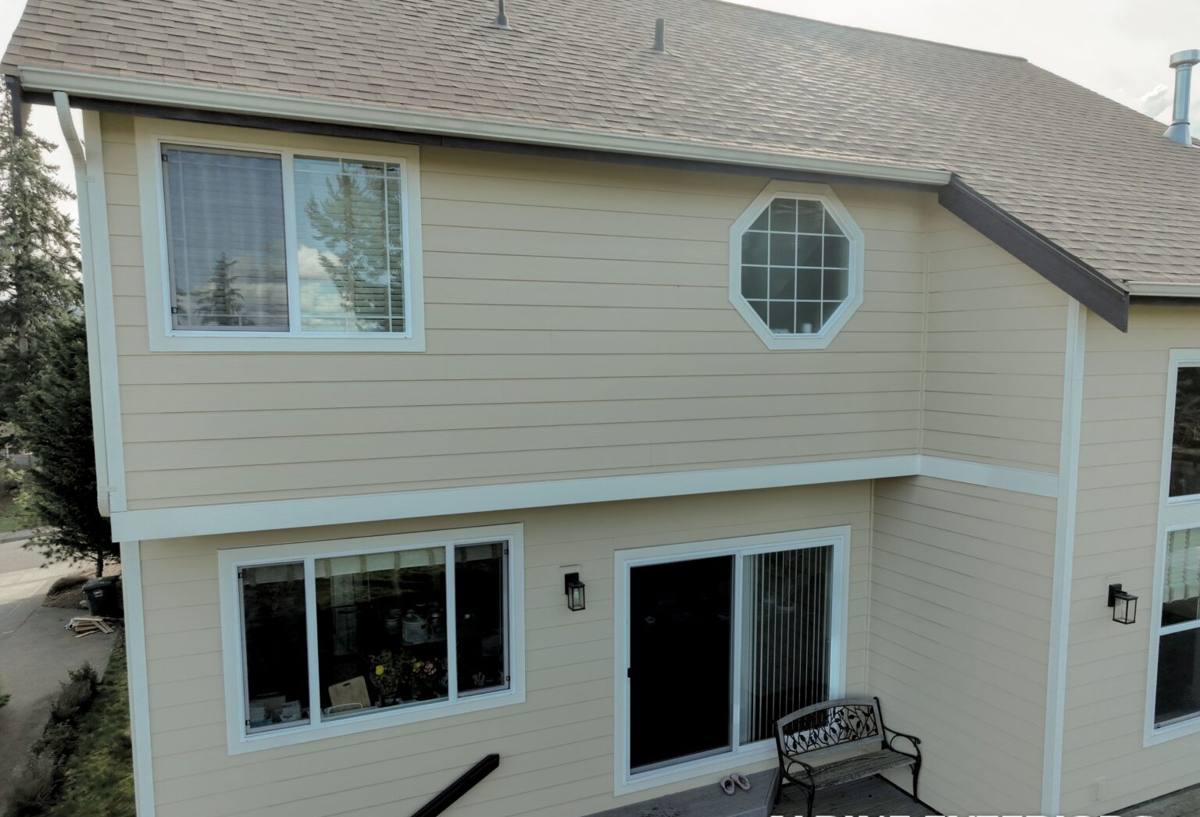
What Local Homes Actually Need From Their Siding
Before talking about products or installation steps, it helps to be clear about the job siding needs to do in this specific environment:
- Resist moisture intrusion during wind-driven rain, not just vertical rainfall
- Hold color and finish under near-constant UV without chalking or fading within a few seasons
- Stand up to salt air without the panel material corroding or breaking down from the inside
- Stay dimensionally stable through Florida's humidity swings so seams and joints don't open up
- Perform as part of the wall assembly during high-wind events, staying fastened and intact
- Resist pest and moisture damage at penetrations — hose bibs, vents, light fixtures, and utility lines
Any siding product can claim to do these things on a spec sheet. What separates a product and installation that actually holds up in Seminole from one that doesn't is how it performs after five, ten, and twenty years of this specific climate — not the first year, when almost everything looks fine.
Why We Install Only James Hardie Fiber Cement
We get asked regularly why we don't offer vinyl, LP SmartSide, or other engineered wood siding products. It's a fair question, and the honest answer is that we made a standard for ourselves based on what holds up in this climate and what doesn't, and we'd rather turn down jobs that don't fit that standard than install something we don't believe in.
Vinyl siding is inexpensive and easy to install, but it's a thin plastic product that expands and contracts significantly with heat, which matters a great deal under direct Florida sun. It can warp, become brittle over time, and in high wind events it's more prone to popping off the wall than a mechanically fastened fiber cement panel. Engineered wood products like LP SmartSide use wood strand cores with a resin coating — a reasonable product in drier climates, but wood-based cores and constant Gulf Coast humidity are a combination that requires near-perfect maintenance discipline to avoid moisture problems at cut edges and joints.
James Hardie fiber cement is a cement, sand, and cellulose fiber composite. It doesn't expand and contract with heat the way vinyl does, it has no wood core to absorb moisture, and it's non-combustible. Hardie's ColorPlus factory-applied finish is baked on under controlled conditions rather than field-applied, which gives it more consistent UV resistance than site-painted products — directly relevant given how much sun exposure a Seminole home takes on. Hardie also engineers specific product lines (their HZ5 designation, for example) for high-humidity, high-moisture climates like ours, rather than selling one universal product nationwide.
None of this means other products are junk — plenty of homes around the country use vinyl or engineered wood siding without issue. It means that for this specific climate, with this specific combination of UV, humidity, salt air, and wind, we've concluded fiber cement is the more durable long-term choice, and we've built our business around installing it correctly rather than offering several products at varying quality levels.
Siding Material Comparison for a Gulf Coast Climate
| Factor | Vinyl | Engineered Wood | James Hardie Fiber Cement |
|---|---|---|---|
| Moisture tolerance | Doesn't absorb water, but seams can trap it | Wood core vulnerable to moisture at damaged edges | No wood core; engineered for high-humidity climates |
| UV / fade resistance | Fades and chalks over time | Depends on field-applied coating quality | Factory-baked ColorPlus finish resists fading |
| High-wind performance | Can crack or blow off in gusts | Good if properly fastened and sealed | Heavier, mechanically fastened, rated for high-wind zones |
| Combustibility | Melts/deforms under heat | Combustible, wood-based | Non-combustible |
| Typical lifespan when properly installed | 15–25 years | 20–30 years with maintenance | 30+ years, factory finish warranted separately |
What Correct Siding Installation Actually Involves
The product is only half the equation. Fiber cement siding installed incorrectly will fail early regardless of the manufacturer's engineering, and installation mistakes are the leading cause of warranty claims industry-wide. A correct installation for a Seminole home includes:
Substrate and Moisture Barrier Prep
Before any siding goes up, the wall sheathing needs to be sound, and a proper water-resistive barrier (house wrap or equivalent) needs to be installed and lapped correctly so water sheds outward at every seam. In a climate with wind-driven rain, the moisture barrier behind the siding matters as much as the siding itself.
Flashing at Every Penetration
Windows, doors, hose bibs, vents, and any other penetration through the wall plane needs proper flashing integrated with the moisture barrier — not caulk alone. Caulk degrades under UV and heat cycling; flashing is a mechanical water management system that doesn't depend on a sealant staying intact for the life of the house.
Correct Fastening
James Hardie specifies fastener type, spacing, and placement based on wind zone, and Pinellas County's wind zone requirements are not optional guidelines — they're what the siding needs to actually perform in a named storm. Hand-nailing versus pneumatic fastening, fastener depth, and blind-nailing versus face-nailing all affect both wind performance and appearance.
Proper Clearances
Fiber cement siding needs clearance from the ground, roofline, and any adjacent hard surface. Siding installed too close to grade, a patio slab, or a roof deck will wick moisture and fail early regardless of the product — this is one of the most common shortcuts on rushed installations.
Joint and Seam Treatment
Butt joints, corners, and trim intersections need to be treated according to manufacturer specification, whether that's factory-primed cut edges, sealed joints, or specific trim details. Field-cut edges that aren't sealed are a common point of early moisture entry.
Our Process for a Seminole Siding Installation
- On-site assessment: We look at the current siding or exterior condition, wall substrate, existing moisture damage, and any problem areas specific to the home's exposure and orientation.
- Product and color selection: We walk through the applicable James Hardie product line and ColorPlus finish options for the home's style and HOA or neighborhood expectations, where relevant.
- Detailed proposal: Scope of work, product specifications, and a clear cost breakdown before any work starts — no vague allowances.
- Removal and substrate inspection: Old siding comes off, and we inspect sheathing for rot or damage before covering it back up — this is the point where hidden problems get found and fixed, not papered over.
- Moisture barrier and flashing installation: Done to manufacturer and code specification before a single piece of siding goes up.
- Siding installation: Installed per James Hardie's fastening and clearance specifications for our wind zone.
- Trim, caulking, and final detailing: Corners, trim boards, and joints finished to spec.
- Final walkthrough: We review the completed work with the homeowner before considering the job done.
Signs a Seminole Home May Need New Siding
- Visible warping, buckling, or panels that flex when pressed
- Cracking or splitting, especially after a storm season
- Soft spots or discoloration suggesting moisture behind the siding
- Paint or finish that's chalking, peeling, or fading unevenly
- Rising energy bills that suggest the wall assembly is no longer performing as insulation
- Visible gaps at trim, corners, or window and door surrounds
- Persistent mildew or staining that pressure washing doesn't resolve
Any one of these on its own might just need a repair. Several at once, or a home with siding original to its construction from decades ago, usually points to a full replacement being the more cost-effective long-term move rather than continuing to patch a system that's reached the end of its service life.
Warranty and Long-Term Maintenance
James Hardie backs its fiber cement substrate with a long-term limited warranty, and the ColorPlus factory finish carries its own separate finish warranty — a structure worth understanding because it covers two different things: the material itself and the color/finish performance. Warranty coverage is also generally transferable to a subsequent homeowner within a defined window, which matters for resale value in a market like Seminole where buyers increasingly ask about exterior material and age.
Maintenance on a correctly installed Hardie system is modest compared to alternatives — periodic rinsing to remove salt residue and organic buildup, prompt attention to any caulk lines that show wear, and keeping an eye on clearances if landscaping or hardscape changes over time. It's not a zero-maintenance product, but it's a low-maintenance one relative to what wood-based or vinyl systems typically require in this climate.
Why Local Experience in Seminole Specifically Matters
A crew that regularly works in Seminole and the surrounding Clearwater area already understands the practical realities that generic installation guides don't cover — how local wind exposure varies by proximity to open water, how salt air accumulation differs block to block, and what inspection and permitting expectations look like in Pinellas County. That's different knowledge than a crew that installs siding occasionally as one of a dozen services, or a crew unfamiliar with Gulf Coast conditions entirely. Consistency in workmanship comes from doing the same job, to the same standard, on homes with the same climate exposure, over and over.
Get a Straightforward Siding Estimate
If your Seminole home's siding is showing its age, or you're planning ahead rather than waiting for a failure, we're happy to take a look and give you an honest read on what it needs. There's no pressure and no obligation — just a clear assessment and a straightforward estimate using the form below.